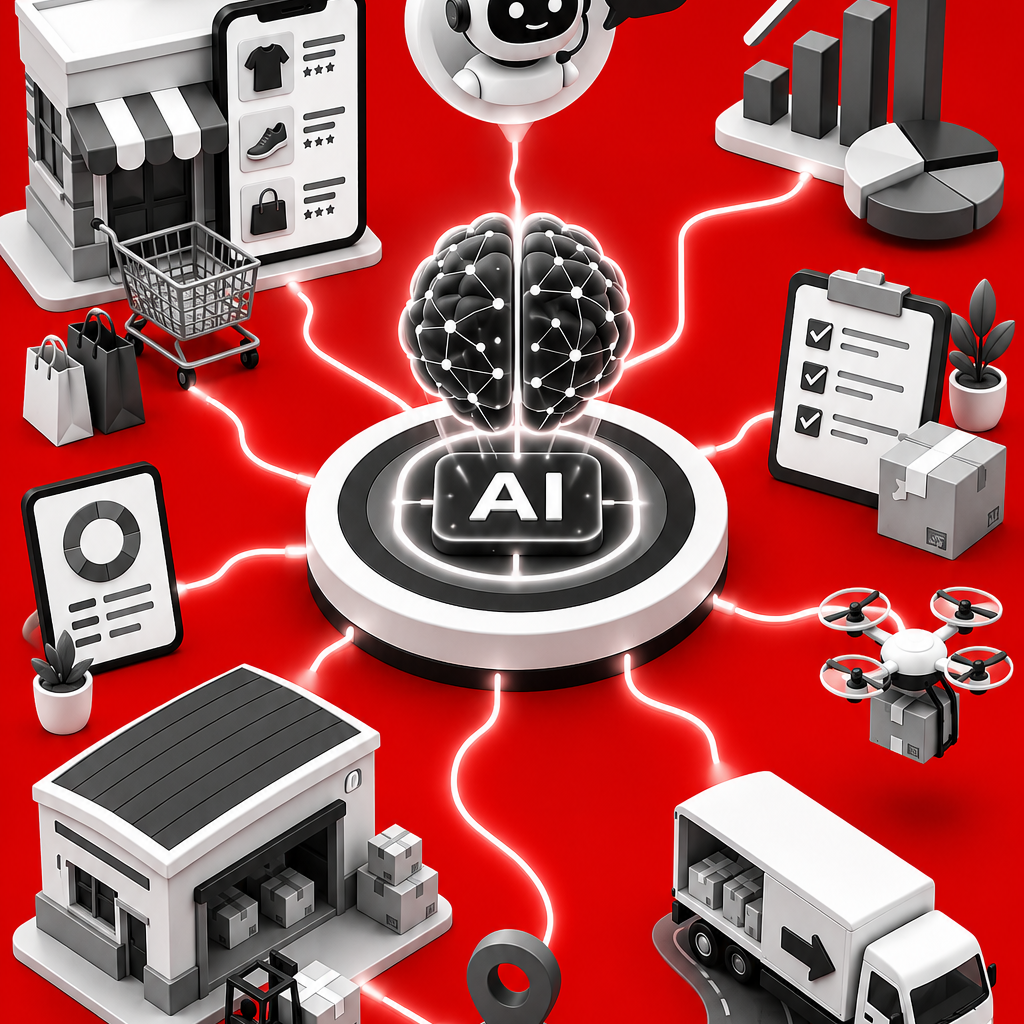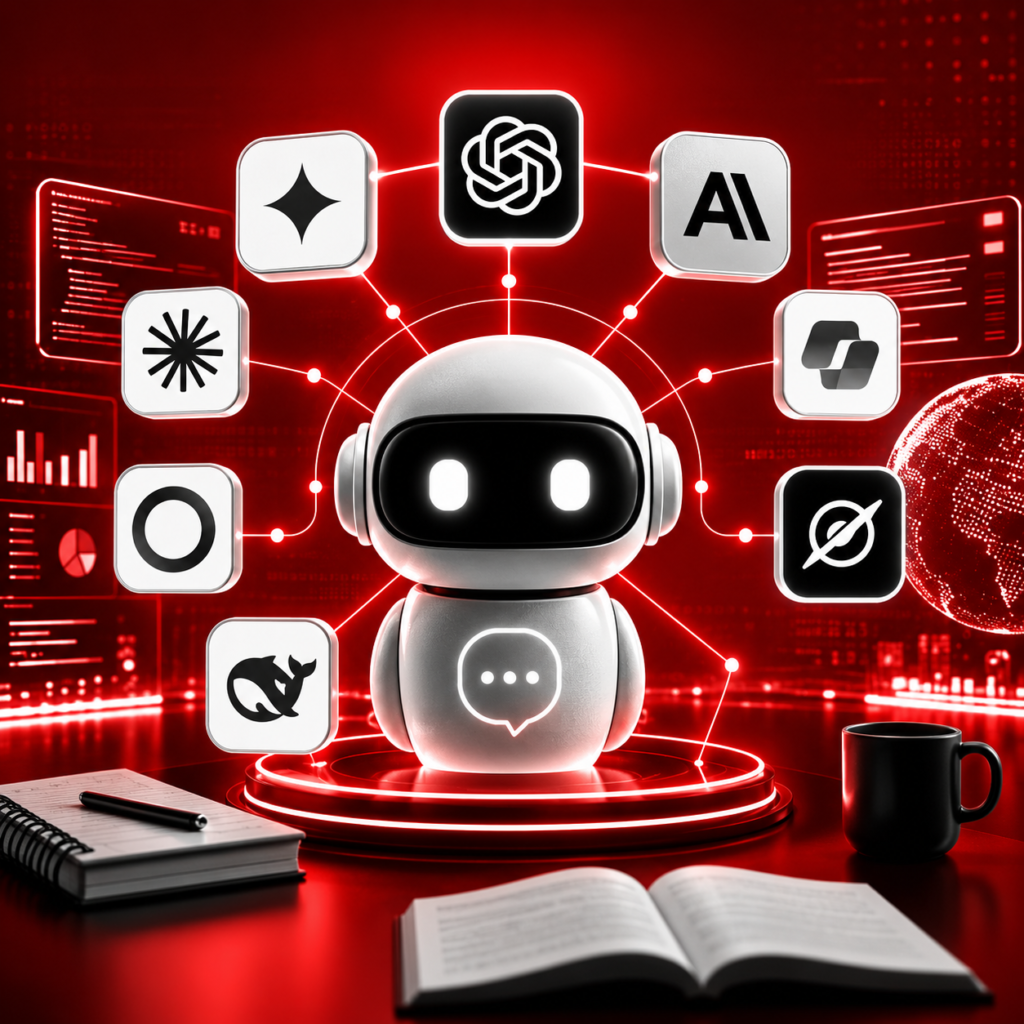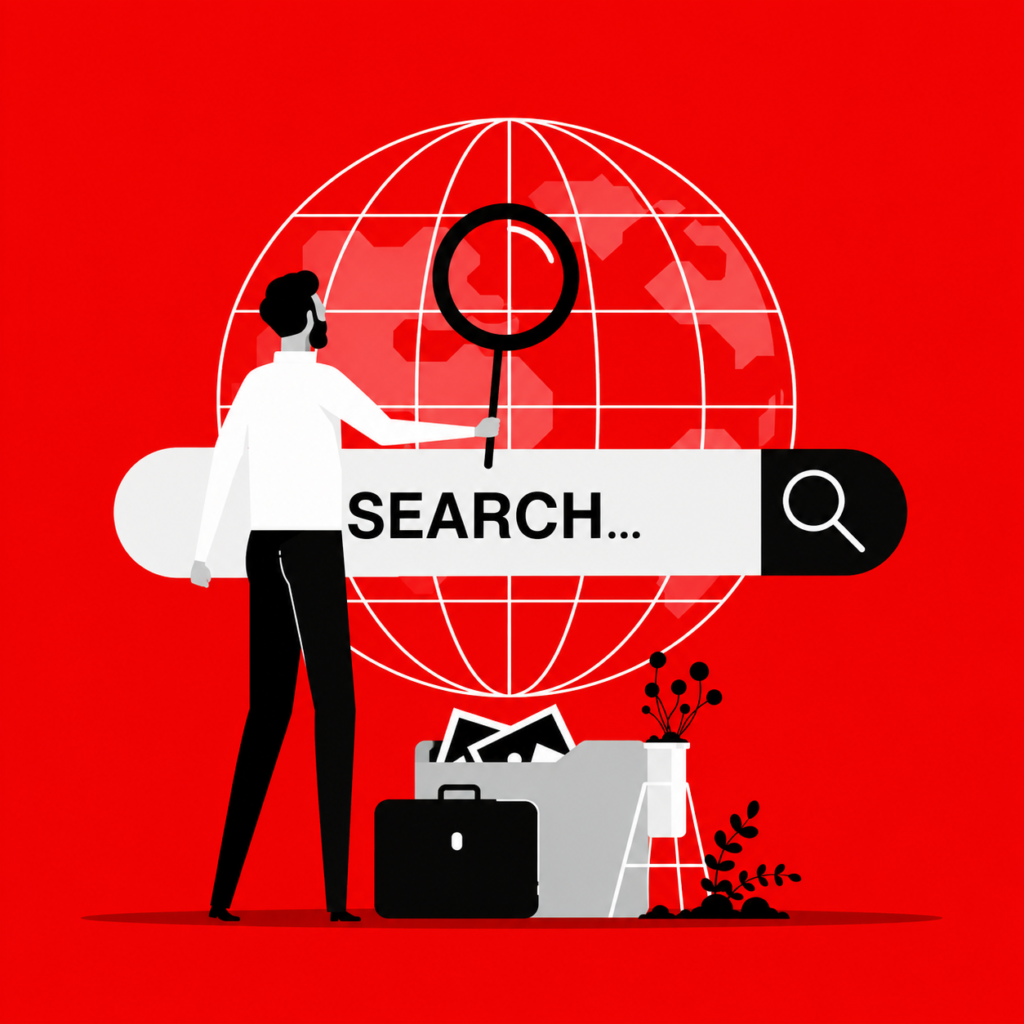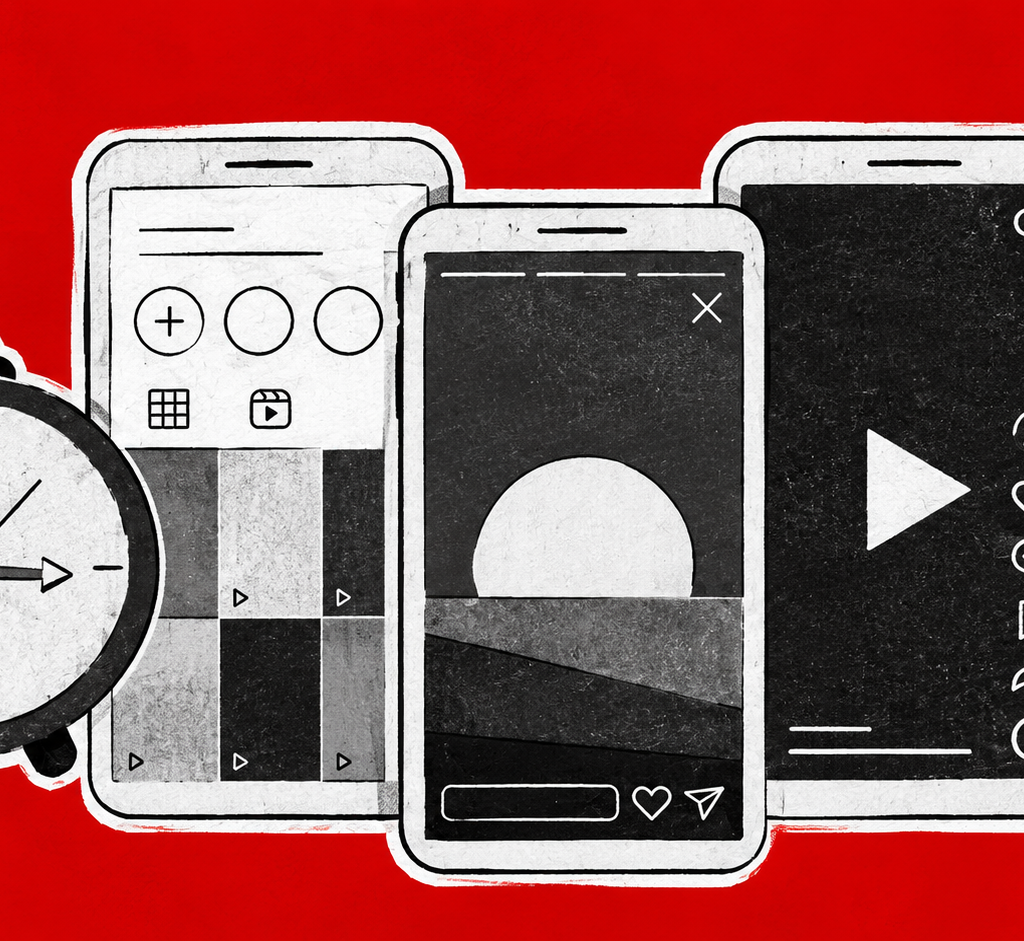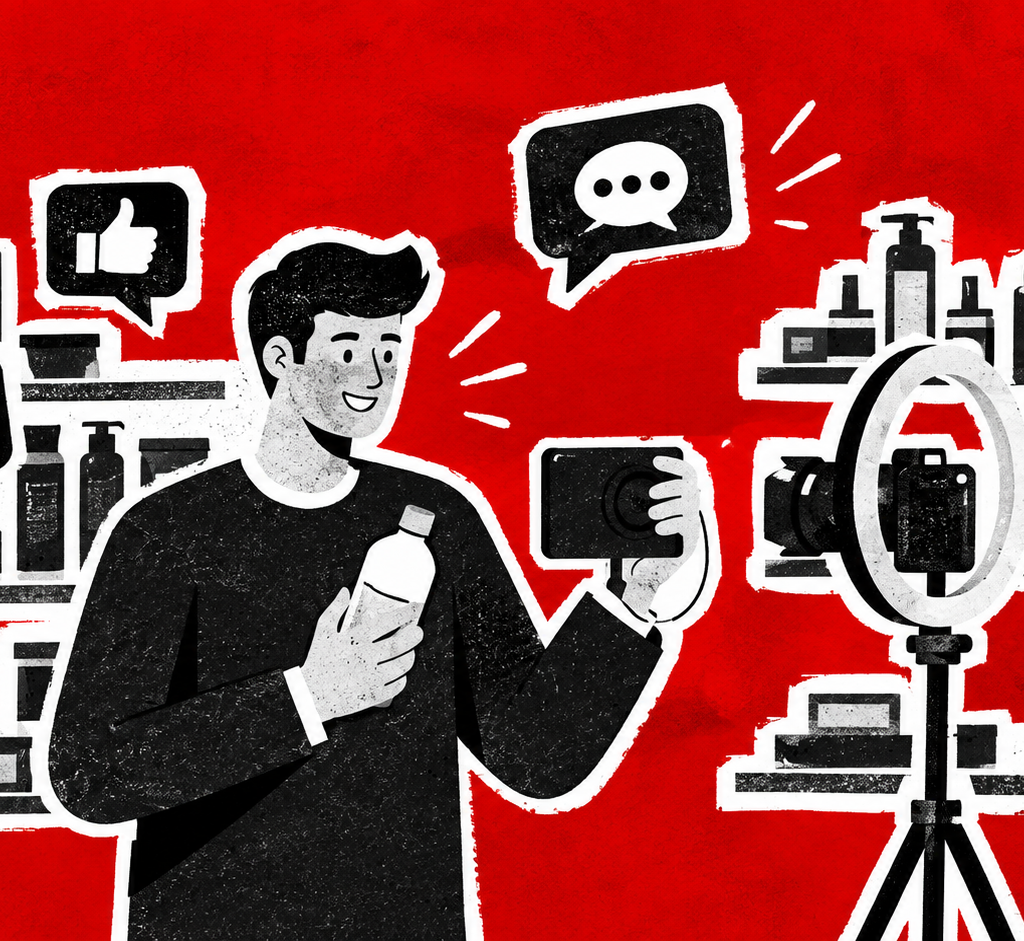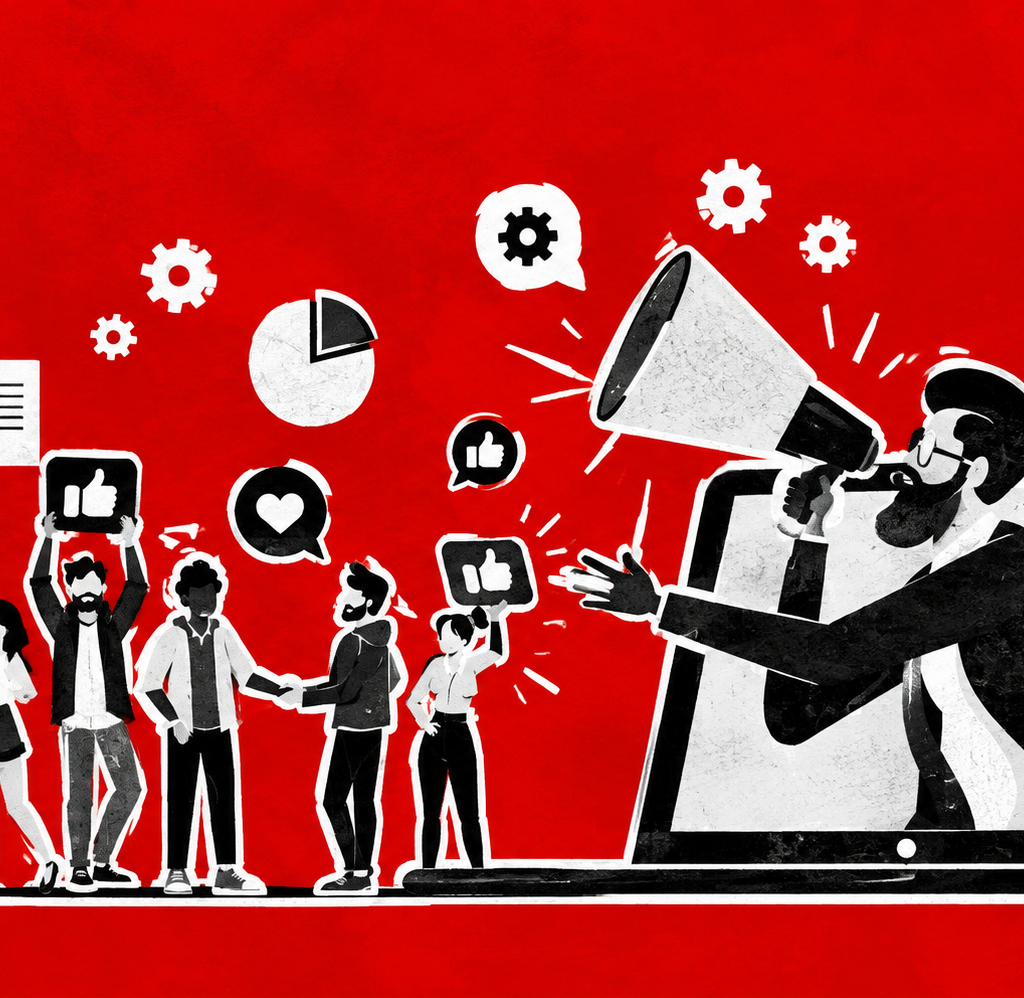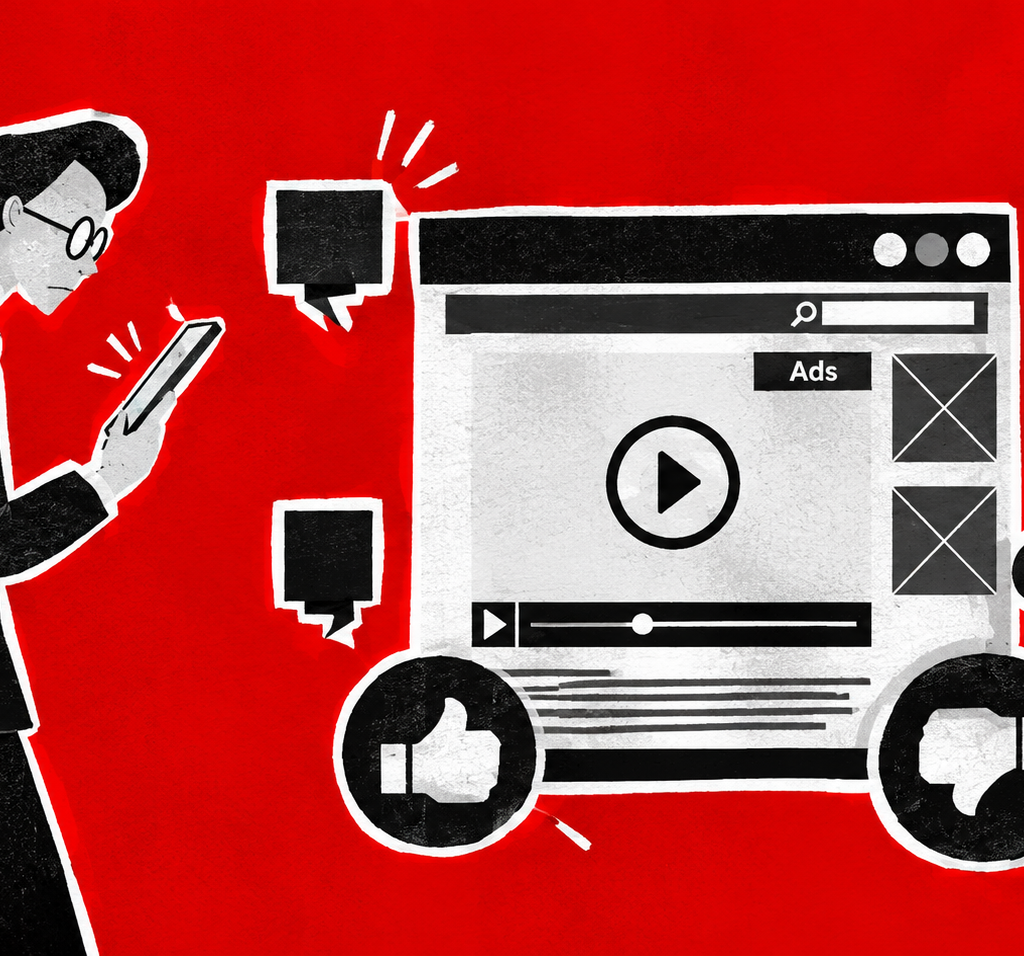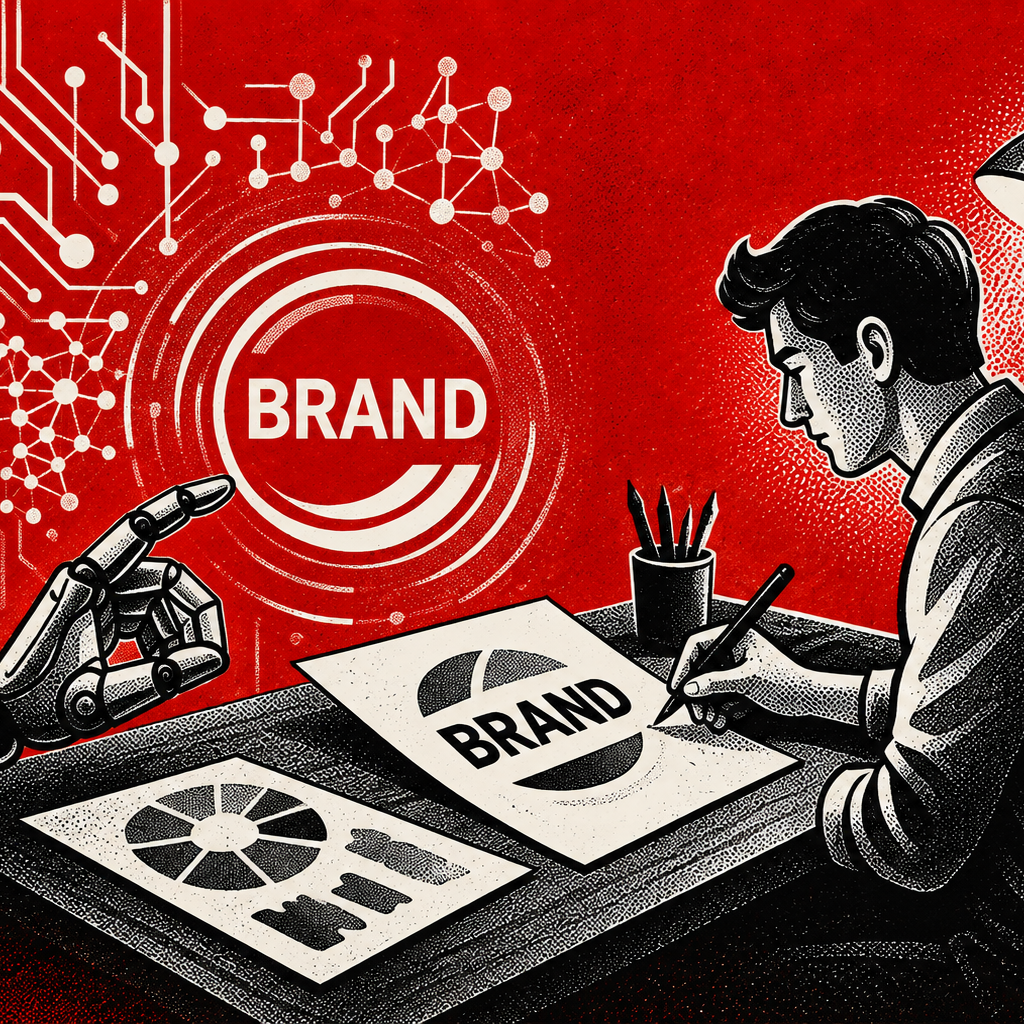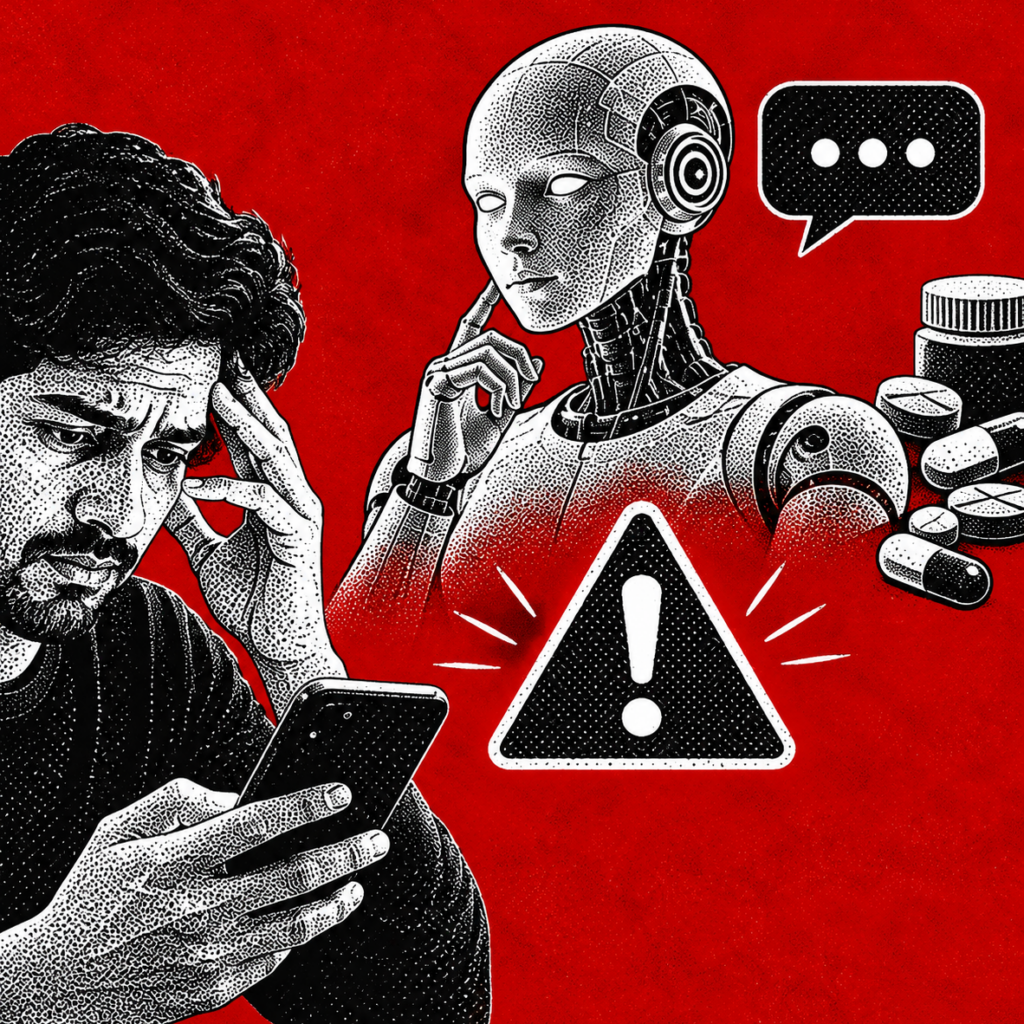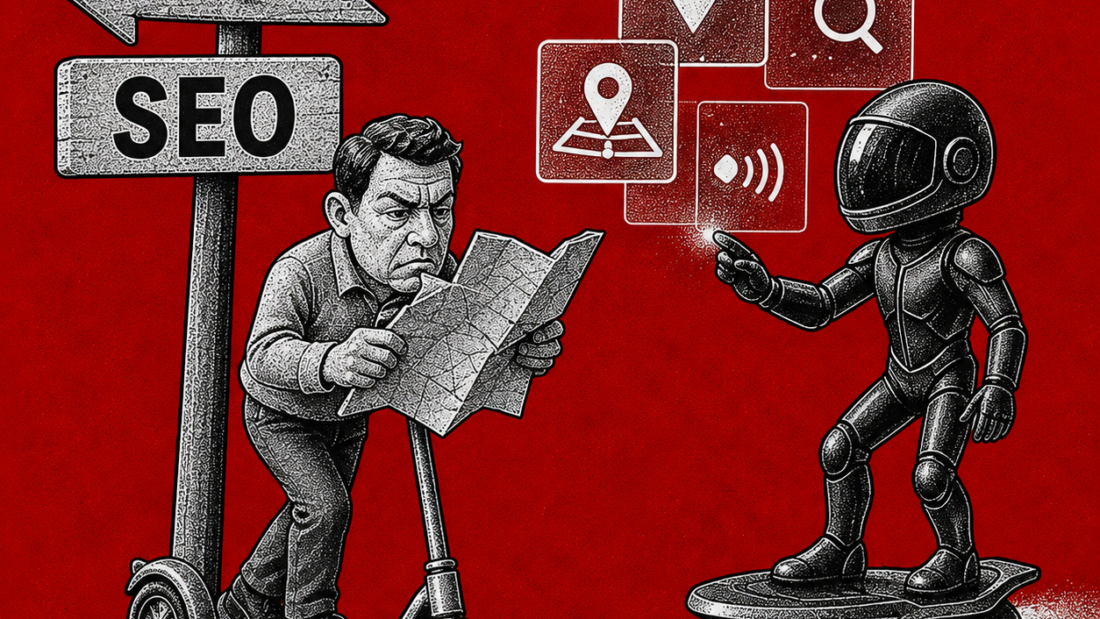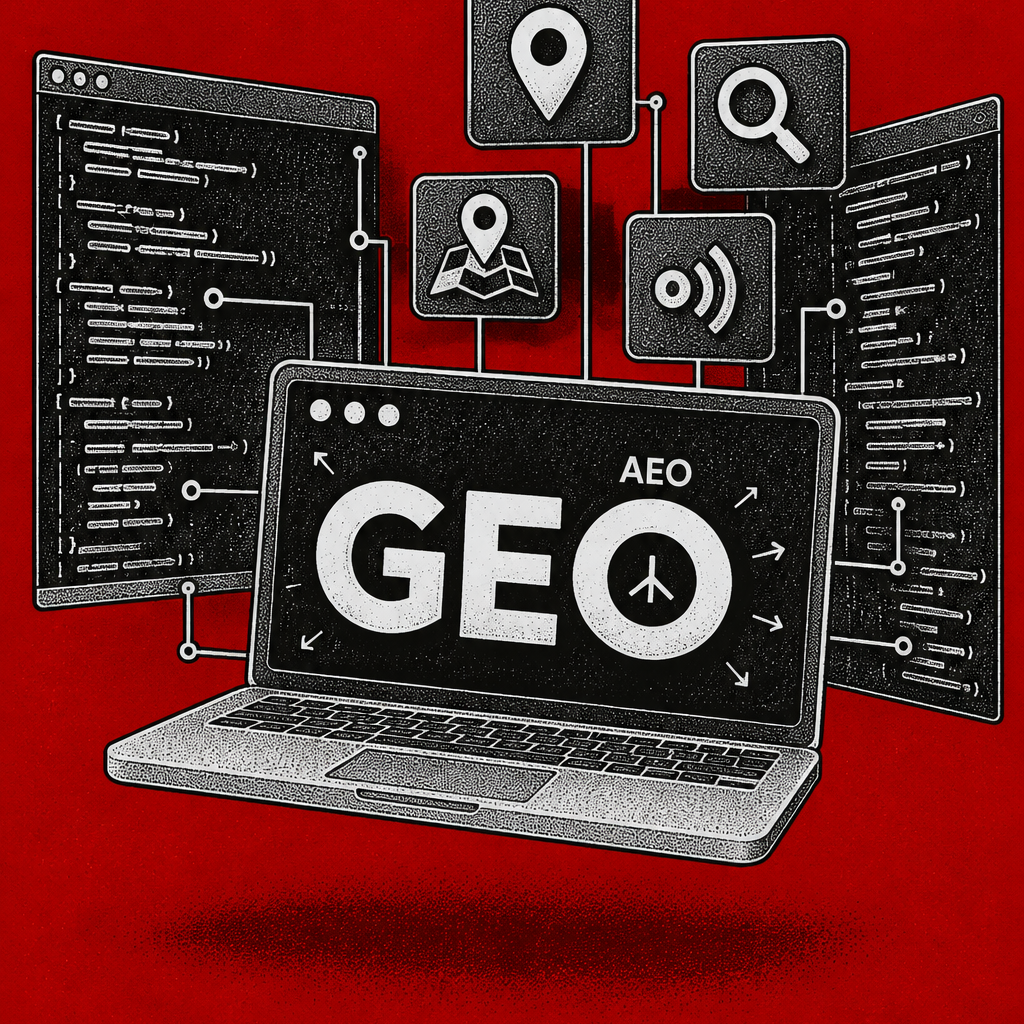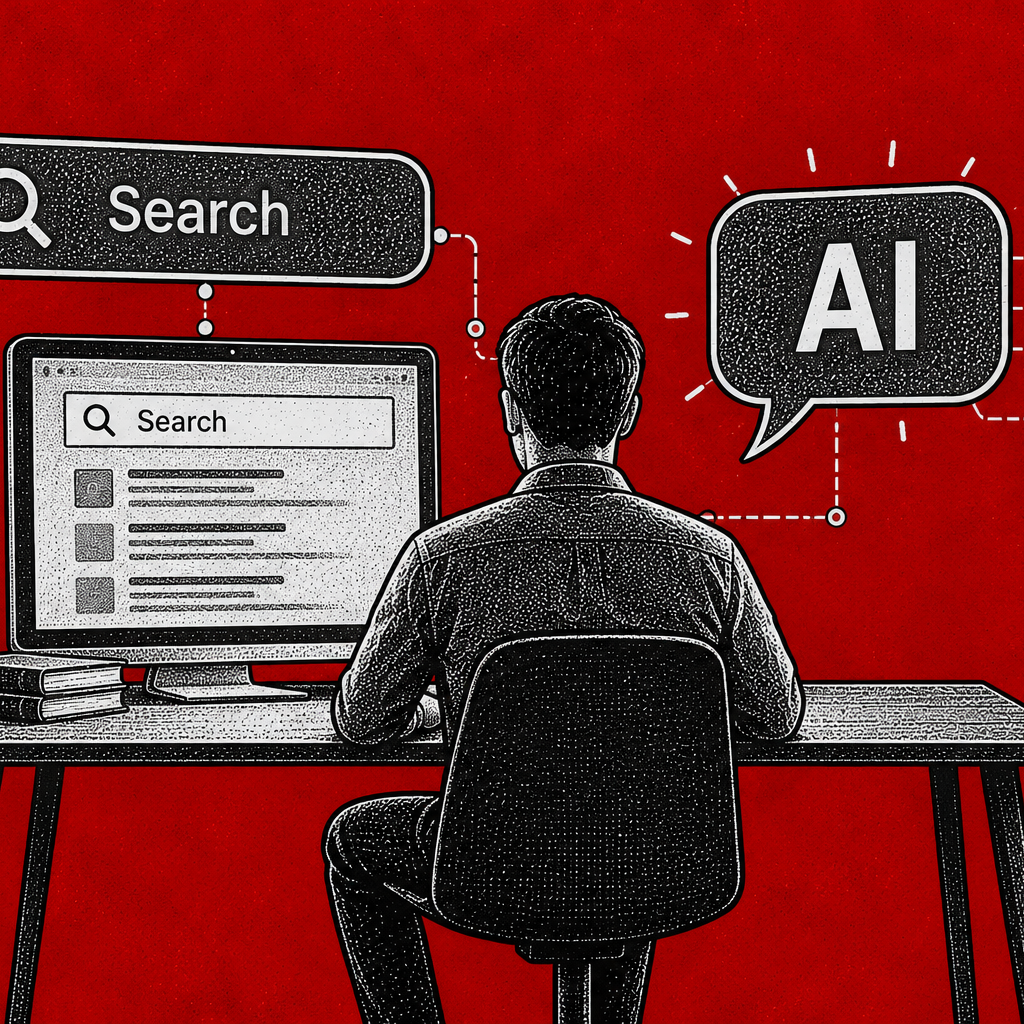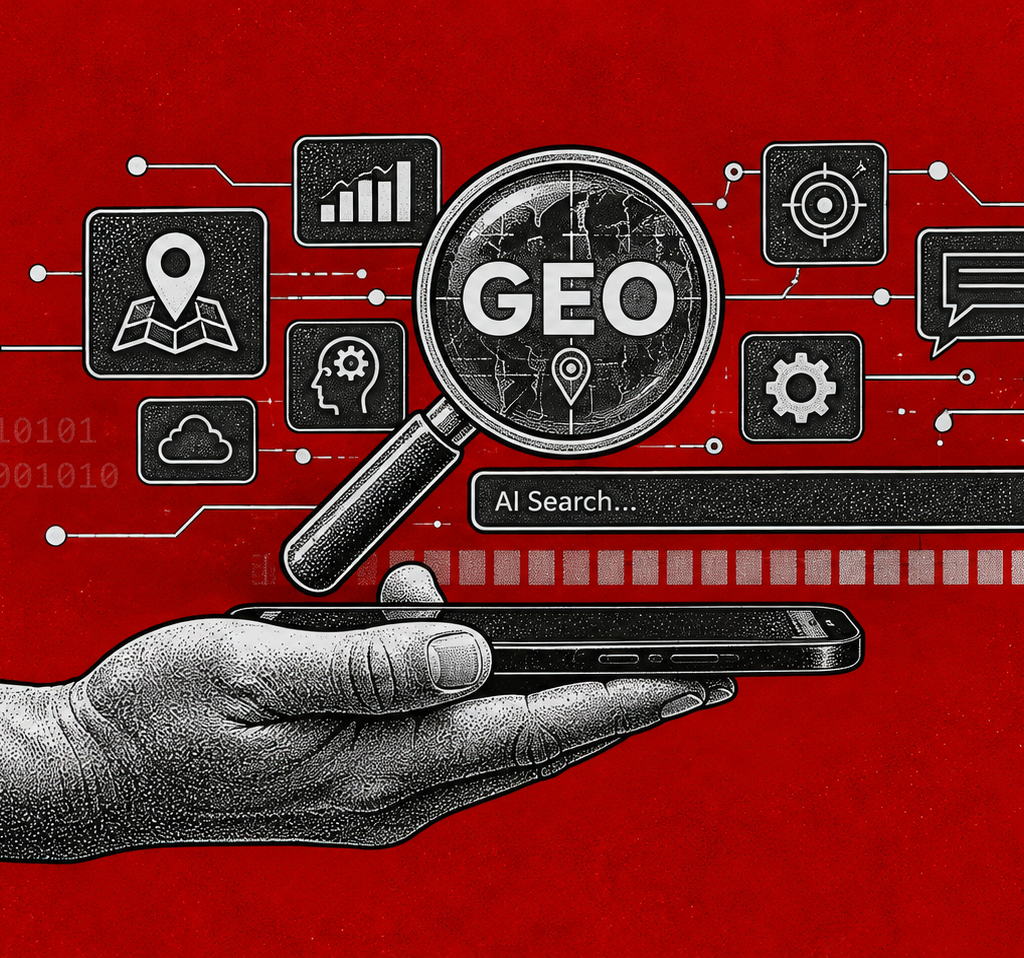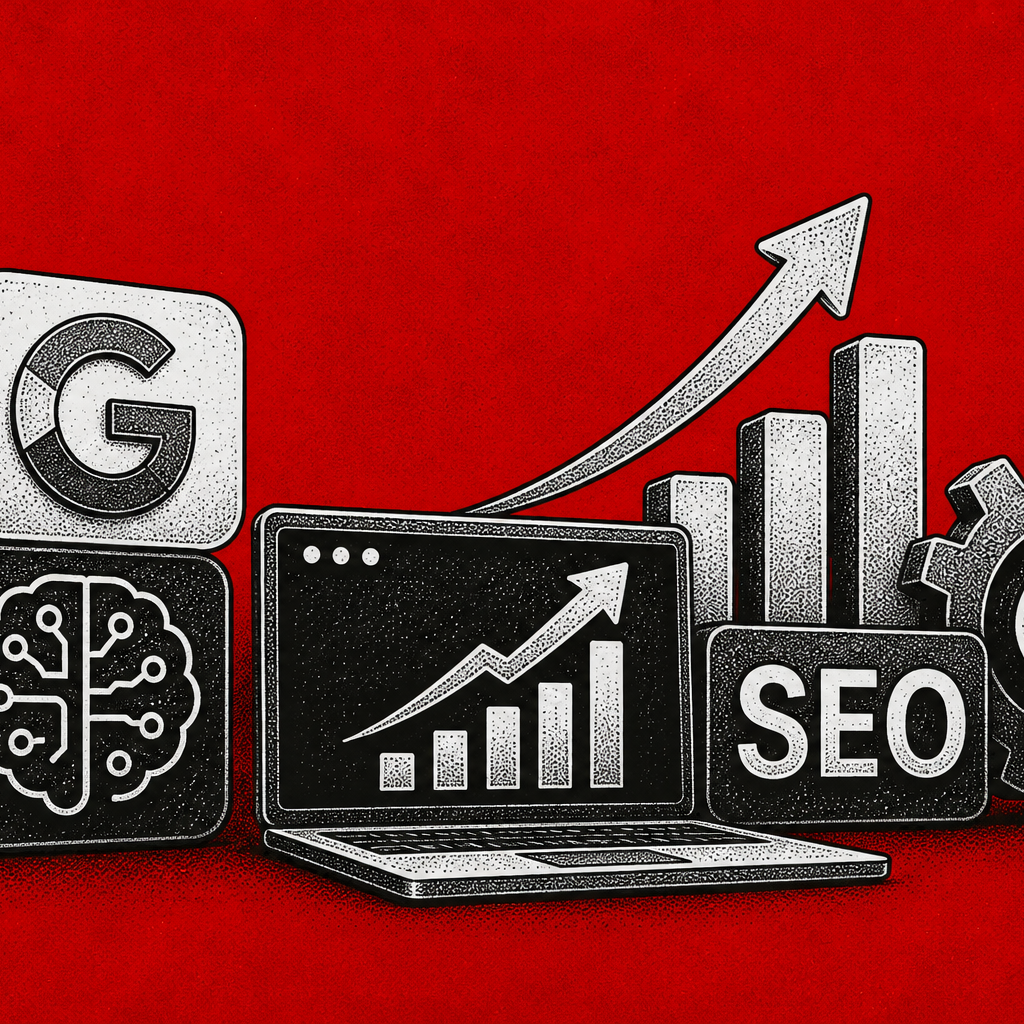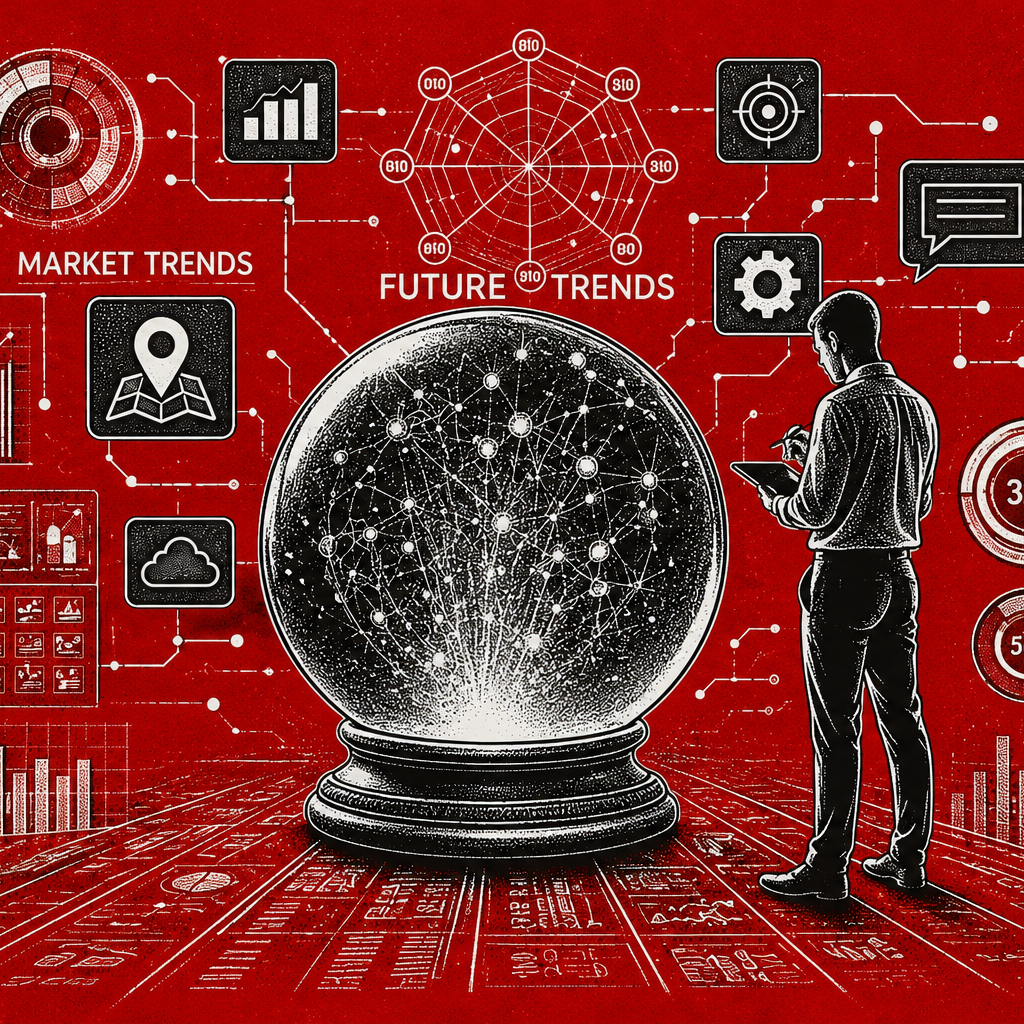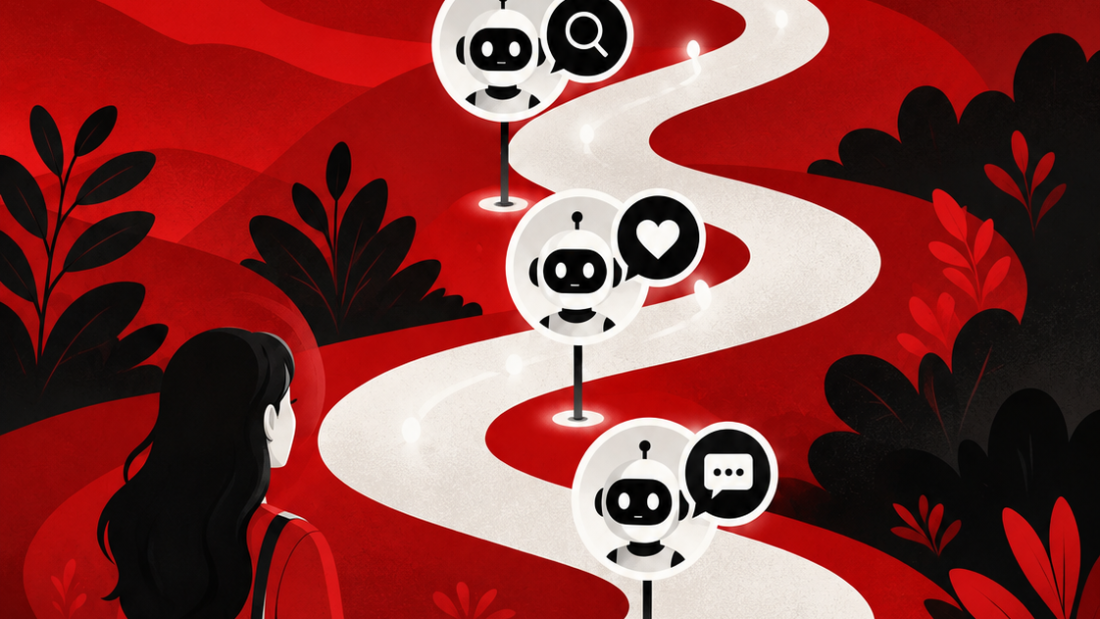
AI search concept with a glowing “AI” symbol surrounded by digital orbit lines on a red background, representing the rise of AI-powered search.

From ChatGPT to AI Overviews: How Search Behaviour Is Changing

For years, search was simple: type a few keywords into Google, scan the results and click through to a website.

Today, that journey is changing.

People can ask ChatGPT a detailed question, use Google’s AI Overviews to get a summary directly in Search, or continue a conversation with AI Mode. Instead of searching through several pages to piece together an answer, users increasingly expect search platforms to understand context, compare information and provide a useful response.

This shift is changing not only how people search, but also how brands need to approach SEO, content marketing and digital visibility.

So, what does the new search landscape look like?


The Evolution of Search

ChatGPT Image Sep 24, 2026, 05 06 32 PM

Search has continuously evolved with technology.

It started with simple directories and keyword-based search. Google then transformed the experience by making it easier to find relevant webpages based on a query.

The next major shift is conversational and AI-powered search.

Tools such as ChatGPT Search allow users to ask questions naturally and receive answers supported by web sources. Google has also integrated generative AI into Search through AI Overviews and AI Mode, creating a more conversational search experience. (OpenAI)

The difference is important.

Traditional search:
Query → Search results → Website → Information

AI-powered search:
Question → AI-generated response → Sources → Follow-up questions

Search is moving from finding information to understanding information.


What Are AI Overviews?

ChatGPT Image Sep 24, 2026, 05 11 04 PM

Google’s AI Overviews are AI-generated summaries that appear within Google Search for relevant queries.

Instead of presenting only a list of links, Google can provide an AI-generated response designed to help users understand a topic, with links that allow them to explore further. Google says AI Overviews are integrated with its core Search systems and are designed to help with more complex questions.

For example, instead of searching:

“best digital marketing strategies”

a user might ask:

“What digital marketing strategies should a small business use if it has a limited budget?”

The second query contains more context and intent.

AI-powered Search is designed to handle this kind of conversational and complex query.


ChatGPT Has Changed What People Expect From Search

ChatGPT has also contributed to the shift from keyword-based search towards conversational discovery.

With ChatGPT Search, users can ask questions in natural language and receive responses that incorporate current web information and links to relevant sources. Follow-up questions can continue within the same conversation, allowing users to explore a topic without starting a completely new search each time.

This creates a different search mindset.

Users don’t necessarily have to figure out the perfect keywords anymore.

They can simply ask.

And that has major implications for digital marketing.


Search Queries Are Becoming Longer and More Conversational

One of the clearest changes in search behaviour is the move towards detailed questions.

Google reported that early AI Mode users in India were asking queries 2–3 times longer than traditional searches. Google also said AI Mode was particularly useful for complex questions involving comparisons, planning and detailed how-to information.

Consider the difference:

Traditional Search

“Best cafes Mumbai”

Conversational Search

“What are some quiet cafes in Mumbai where I can work for three hours and get good coffee?”

The second query tells the search system much more about the user’s intent.

This means marketers need to understand search intent, not simply search volume.


From Keywords to Questions

Keywords will continue to matter, but the way people use them is evolving.

A strong SEO strategy can no longer focus only on individual keywords.

Brands should also understand:

  • What questions are customers asking?
  • What problems are they trying to solve?
  • What information do they need before making a decision?
  • What comparisons are they making?
  • What follow-up questions could they have?
  • What language do they naturally use?

This creates an opportunity for brands to build answer-focused content.

Instead of writing an article simply because a keyword has high search volume, marketers can build content around the entire information journey.


The Rise of Zero-Click Search

ChatGPT Image Sep 24, 2026, 05 14 26 PM

Another important change is the growing importance of zero-click search.

A user doesn’t always need to visit a website to get an answer anymore.

AI Overviews can provide information directly within Google Search, while AI search platforms can summarise information from multiple sources.

That creates a challenge for traditional SEO.

Historically, marketers often measured success through:

Ranking → Click → Website Visit

But AI search introduces another layer:

Search → AI Response → Brand/Source Mention → Possible Click

Google continues to provide links within its AI Search experiences, and in 2026 said its AI features were sending billions of clicks to websites each week. (blog.google)

So the website isn’t necessarily disappearing from the journey.

The journey to the website is changing.


SEO Is Not Dead. It Is Evolving.

ChatGPT Image Sep 24, 2026, 05 17 12 PM

Whenever a new search technology appears, one question comes up:

“Is SEO dead?”

The answer is more complicated than that.

SEO remains important because AI-powered search still relies heavily on information from the web. Google says its AI Search experiences continue to connect users with websites, original content and sources.

But SEO is expanding beyond traditional rankings.

Brands now need to think about:

Traditional SEO

  • Keywords
  • Technical SEO
  • Internal linking
  • Backlinks
  • Search rankings
  • Website experience

AI Search Optimisation

  • Clear answers
  • Topical authority
  • Original information
  • Strong brand signals
  • Structured content
  • First-hand expertise
  • Context-rich content
  • Source credibility

The goal is no longer simply to rank for a keyword.

It is to become a useful and credible source when someone asks a question about your industry.


Why Original Content Matters More

ChatGPT Image Sep 24, 2026, 05 51 27 PM

AI can generate huge amounts of generic content.

That makes originality more valuable.

If every website publishes the same five tips about digital marketing, AI-generated search experiences have less reason to surface one generic article over another.

Brands can differentiate themselves by publishing:

  • Original research
  • First-hand experiences
  • Expert opinions
  • Unique case studies
  • Proprietary data
  • Industry insights
  • Real examples
  • Original visuals and frameworks

Google has also introduced features intended to help users discover original content and preferred sources within AI Search.

For marketers, this reinforces an important principle:

Don’t just create more content. Create content worth discovering.


Search Is Becoming Multimodal

Search isn’t limited to typing anymore.

Google’s newer AI Search experiences allow users to interact using different forms of input, including text, images, files and videos.

This means the future of search can involve questions such as:

  • “What is this product?”
  • “How can I style this?”
  • “What does this chart mean?”
  • “Compare these two products.”
  • “Explain this image.”
  • “Find something similar.”

For brands, this creates another reason to think beyond text.

Images, videos, product information, social content and other digital assets can all become part of the discovery experience.


Social Search Is Part of the Bigger Picture

AI isn’t the only thing changing search.

Social platforms have also become discovery engines.

People use platforms such as Instagram, YouTube and TikTok to discover:

  • Products
  • Restaurants
  • Travel destinations
  • Trends
  • Creators
  • Beauty products
  • Fashion
  • Entertainment
  • Recommendations

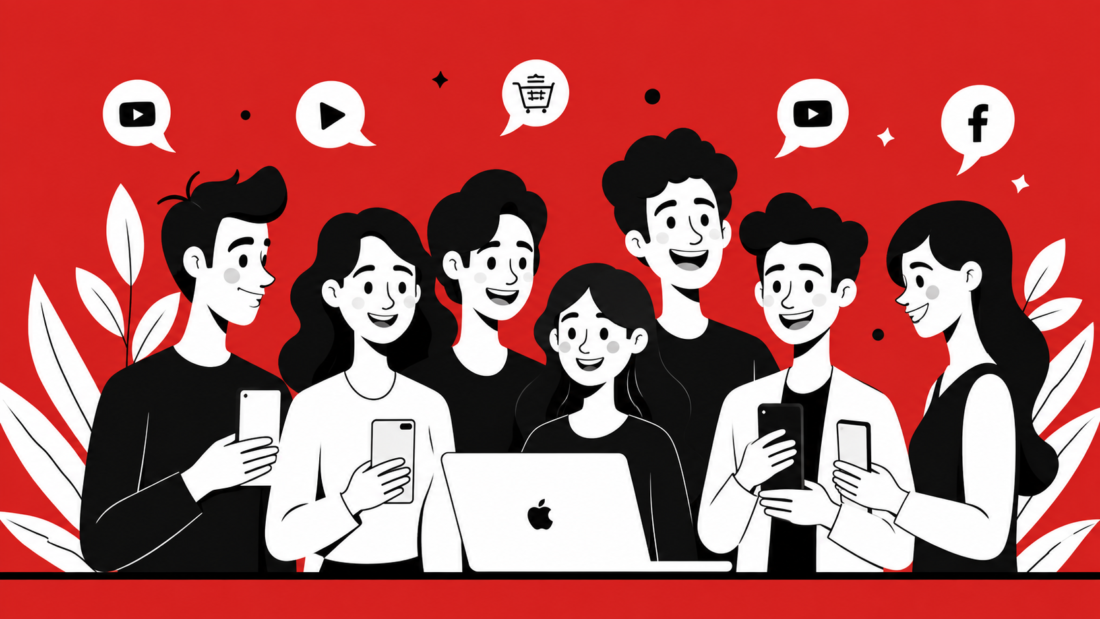
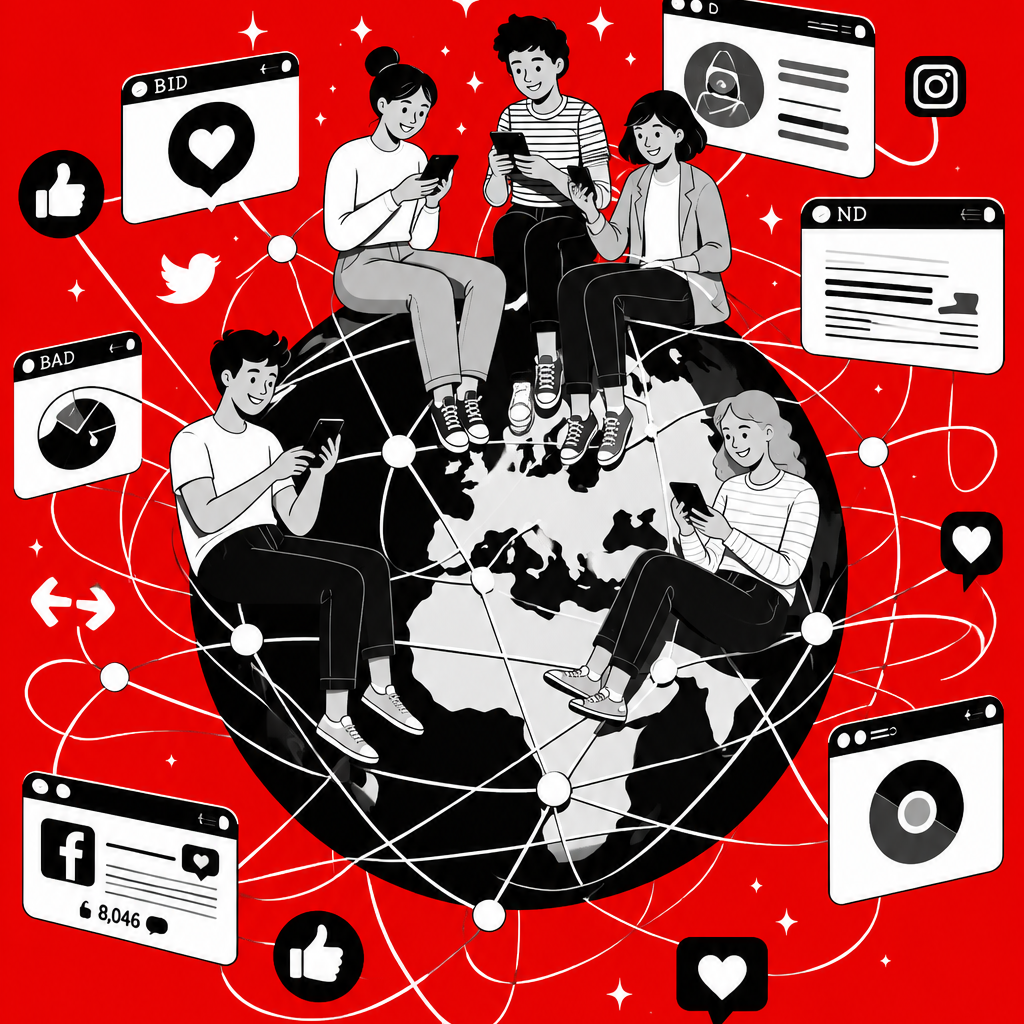
This means consumers can now move between Google Search, AI Search and Social Search depending on what they are looking for.

The modern customer journey might look something like:

Instagram → Google → YouTube → ChatGPT → Brand Website → Purchase

There is no longer one universal search journey.


What Does This Mean for Brands?

The biggest change is that brands need to become discoverable across multiple search environments.

A website still matters.

SEO still matters.

But brands should also consider how they appear across:

  • Google Search
  • AI Search
  • Social Search
  • YouTube
  • Review platforms
  • Industry websites
  • Online communities
  • Digital publications

Your audience may encounter your brand before they ever visit your website.

That makes digital presence and brand authority increasingly important.


6 Ways Brands Can Prepare for AI Search

1. Create Content That Answers Real Questions

Start with your audience’s problems rather than just keywords.

Build content around the questions people actually ask.

2. Build Topical Authority

Instead of publishing unrelated articles, create connected content around the subjects your brand genuinely understands.

3. Add Original Insights

Give people something they cannot get from hundreds of generic AI-generated articles.

Use research, examples, data, experiences and expert perspectives.

4. Make Content Easy to Understand

Use:

  • Clear headings
  • Short paragraphs
  • Bullet points
  • FAQs
  • Definitions
  • Examples
  • Structured explanations

Make it easy for both people and search systems to understand your content.

5. Think Beyond Google Rankings

Track more than rankings and traffic.

Consider brand mentions, visibility across search experiences, citations, engagement and conversions as part of your broader digital strategy.

6. Keep Your SEO Foundations Strong

AI Search doesn’t eliminate the fundamentals.

A technically healthy website, useful content, strong internal linking and a trustworthy digital presence remain important parts of search visibility.


The Future of Search Is Conversational

The biggest change isn’t simply that AI has entered search.

It’s that the relationship between users and search engines is becoming more conversational.

Instead of asking:

“What should I search for?”

people can increasingly ask:

“Here’s what I’m trying to do. Help me figure it out.”

Google’s latest Search developments are moving toward a more conversational experience, while AI search tools such as ChatGPT are making natural-language research part of everyday information discovery.

This means search is becoming less about finding a page and more about finding an answer.


Final Thoughts

From Google’s traditional search results to ChatGPT Search and AI Overviews, the internet is entering a new era of discovery.

The search box isn’t disappearing.

It’s becoming smarter.

For marketers, this means SEO needs to evolve from a narrow focus on keywords and rankings into a broader strategy built around intent, authority, originality and discoverability.

The brands that understand what their audiences are asking, create genuinely useful answers and build credibility across digital platforms will be better positioned for the changing search landscape.

Because the future of search isn’t just about where you rank.

It’s about whether your brand becomes part of the answer.

AI-themed collage with a human hand, robotic hand, search bar, AI chip, brain, and lightbulb icons on a bold red background.

AI Search Is Changing the Internet: Is Google Still the First Stop?

For more than two decades, Google has been the starting point for finding information online. We searched for restaurants, products, answers, services, reviews and almost everything in between.

But search behaviour is changing.

Instead of typing a few keywords into Google and opening multiple links, people are increasingly asking AI tools direct questions and expecting complete, conversational answers. From ChatGPT and Google’s AI-powered search experiences to AI assistants and other generative AI platforms, the way people discover information is becoming more conversational, personalised and immediate.

This shift raises an important question:

Is Google still the first stop on the internet, or is AI search creating an entirely new way to find information?

The Rise of AI Search

ChatGPT Image Sep 24, 2026, 12 58 57 PM

Traditional search engines work largely by matching a user’s query with relevant web pages. Users enter keywords, scan search results and choose which links to visit.

AI search changes this experience.

Instead of simply providing a list of links, AI-powered search tools can understand the context behind a question, process information from multiple sources and generate a conversational response.

For example, instead of searching:

“Best cafes in Mumbai”

a user might ask an AI assistant:

“What are some quiet cafes in Mumbai where I can work for a few hours, with good coffee and Wi-Fi?”

The second query reflects intent, preferences and context.

This is one of the biggest changes brought by AI search: users are moving from searching for keywords to asking questions.

Are People Still Using Google?

ChatGPT Image Sep 24, 2026, 01 03 50 PM

Yes. Google remains a major part of how people discover information online.

However, the search journey is becoming more fragmented.

A consumer might use Google to find a website, Instagram to discover a brand, YouTube to learn how something works and an AI assistant to compare options or understand a complex topic.

In other words, search is no longer happening in just one place.

Search behaviour is becoming multi-platform.

For brands, this means simply ranking on Google may no longer be enough.

Google Search vs AI Search

Traditional search and AI search serve different purposes.

Traditional Search

Google search is particularly useful when users want to:

  • Find a specific website
  • Compare multiple sources
  • Locate a business
  • Find current news
  • Research products
  • Navigate to a specific destination

AI Search

AI-powered search can be particularly useful when users want to:

  • Understand a complicated topic
  • Summarise information
  • Compare multiple options
  • Brainstorm ideas
  • Ask follow-up questions
  • Get a personalised explanation

The key difference is the experience.

Traditional search gives you results. AI search increasingly gives you an answer.

The Search Box Is Becoming a Conversation

ChatGPT Image Sep 24, 2026, 01 05 54 PM

One of the biggest changes in search behaviour is the move from short keyword queries to longer, conversational prompts.

People are no longer restricted to thinking like search engines.

They can simply ask questions the way they would ask another person.

For example:

Traditional SEO query:
“Best digital marketing agency Mumbai”

AI-style query:
“I’m a startup in Mumbai looking for a digital marketing agency. What should I consider before choosing one?”

The second query contains more context and intent.

This creates a new challenge for marketers: understanding not just what people search for, but why they search for it.

What Does This Mean for SEO?

ChatGPT Image Sep 24, 2026, 01 12 43 PM

SEO isn’t disappearing.

It is evolving.

For years, SEO strategies focused heavily on keywords, backlinks, technical optimisation and search rankings. These elements remain important, but AI search is creating another layer of optimisation.

Brands now need to think about how their content can become a trusted source that AI systems understand, reference and potentially surface in answers.

This is where Generative Engine Optimisation (GEO) is becoming increasingly relevant.

Instead of asking only:

“How do I rank on Google?”

marketers also need to ask:

“How do I make my brand visible when someone asks an AI about my category?”

From Ranking on Page One to Being Mentioned in an Answer

In traditional search, visibility often means appearing prominently in search results.

In AI search, visibility can look different.

A user may never see ten blue links. Instead, an AI system might provide a direct answer and mention a handful of brands, websites or sources.

This changes the value of being discoverable.

A brand could have strong website traffic and search rankings, but if AI systems don’t understand its expertise, products or relevance, it may have less visibility within conversational search experiences.

This is why brands need to start thinking beyond rankings.

The future of search visibility may involve both ranking and recognition.

Why Brand Authority Matters More Than Ever

AI search makes trustworthy information increasingly important.

Brands that consistently publish useful, original and credible content have more opportunities to establish authority around their subject.

This means businesses should focus on creating content that:

  • Answers real customer questions
  • Demonstrates genuine expertise
  • Provides original insights
  • Uses clear and accurate information
  • Builds topical authority
  • Is easy for both humans and search systems to understand

Instead of creating ten articles targeting slightly different versions of the same keyword, brands can build comprehensive resources that genuinely answer their audience’s questions.

The Rise of Zero-Click Search

Another major change is the growth of zero-click search.

A zero-click search happens when a user gets the information they need directly from the search experience without clicking through to another website.

AI-generated answers can accelerate this behaviour.

For brands, this creates a challenge.

If users receive an answer without visiting a website, traditional traffic-based metrics may not tell the entire story.

Brand visibility, mentions, citations, engagement and eventual conversions may become increasingly important alongside website traffic.

Social Media Is Part of Search Too

ChatGPT Image Sep 24, 2026, 01 14 53 PM

Search is no longer limited to search engines.

Younger audiences increasingly use platforms such as Instagram, YouTube and TikTok to discover products, restaurants, creators, trends and recommendations.

This means brands need to think about social search alongside traditional SEO and AI search.

A consumer might discover a restaurant through an Instagram Reel, check reviews through Google, watch a YouTube video and then ask an AI tool to compare similar options.

The customer journey can involve several discovery platforms before a purchase happens.

So, Is Google Still the First Stop?

For many searches, yes.

But the bigger change is that there may no longer be one universal first stop.

The starting point depends on what the user wants.

Someone looking for directions may open Google Maps.

Someone looking for a product recommendation may open Instagram or YouTube.

Someone trying to understand a complicated subject may ask an AI assistant.

Someone looking for a specific website may go directly to Google.

The internet is moving towards a multi-search ecosystem, where different platforms compete for different moments of consumer intent.

What Should Brands Do Now?

Brands don’t need to abandon traditional SEO.

Instead, they need to expand their approach.

1. Continue Building Strong SEO Foundations

Technical SEO, relevant keywords, quality backlinks, structured content and a healthy website still matter.

2. Create Answer-Focused Content

Write content around the questions your audience actually asks.

Think beyond keywords and understand search intent.

3. Build Topical Authority

Instead of publishing isolated articles, create interconnected content that establishes your brand as an expert within a specific subject area.

4. Optimise for Conversational Search

Consider how people naturally phrase questions.

Create content that directly answers those questions in clear, useful language.

5. Strengthen Your Brand Presence Across Platforms

Your website isn’t the only place where people discover your brand.

Build a consistent presence across search engines, social media, video platforms, review platforms and other relevant digital channels.

6. Focus on Originality

AI can generate endless amounts of generic content.

That makes original opinions, experiences, data, examples and expertise more valuable.

The brands that provide something genuinely useful will have more opportunities to stand out.

The Future of Search Is Not Google vs AI

The real story isn’t necessarily Google vs AI.

It’s about how consumers are changing the way they find information.

Search is becoming more conversational. Discovery is becoming more visual. Recommendations are becoming more personalised. And AI is becoming another layer between users and the information they need.

For marketers, the question is no longer simply:

“Are we ranking on Google?”

The bigger question is:

“Can people discover, understand and trust our brand wherever they search?”

That is the future of digital visibility.

Google isn’t disappearing overnight. But the definition of search is changing.

And for brands, adapting to that change now could be far more valuable than waiting for the next search revolution to arrive.

Final Thoughts

The internet has always evolved around how people discover information.

From directories to search engines, from desktop search to mobile search, and now from keywords to conversations, every shift has changed the way brands compete for attention.

AI search is the next major evolution.

The brands that succeed won’t necessarily be the ones producing the most content. They will be the ones creating useful, credible, original and discoverable content across the places where their audiences are searching.

Because the future of search isn’t about choosing between Google and AI.

It’s about being ready for wherever your audience searches next.

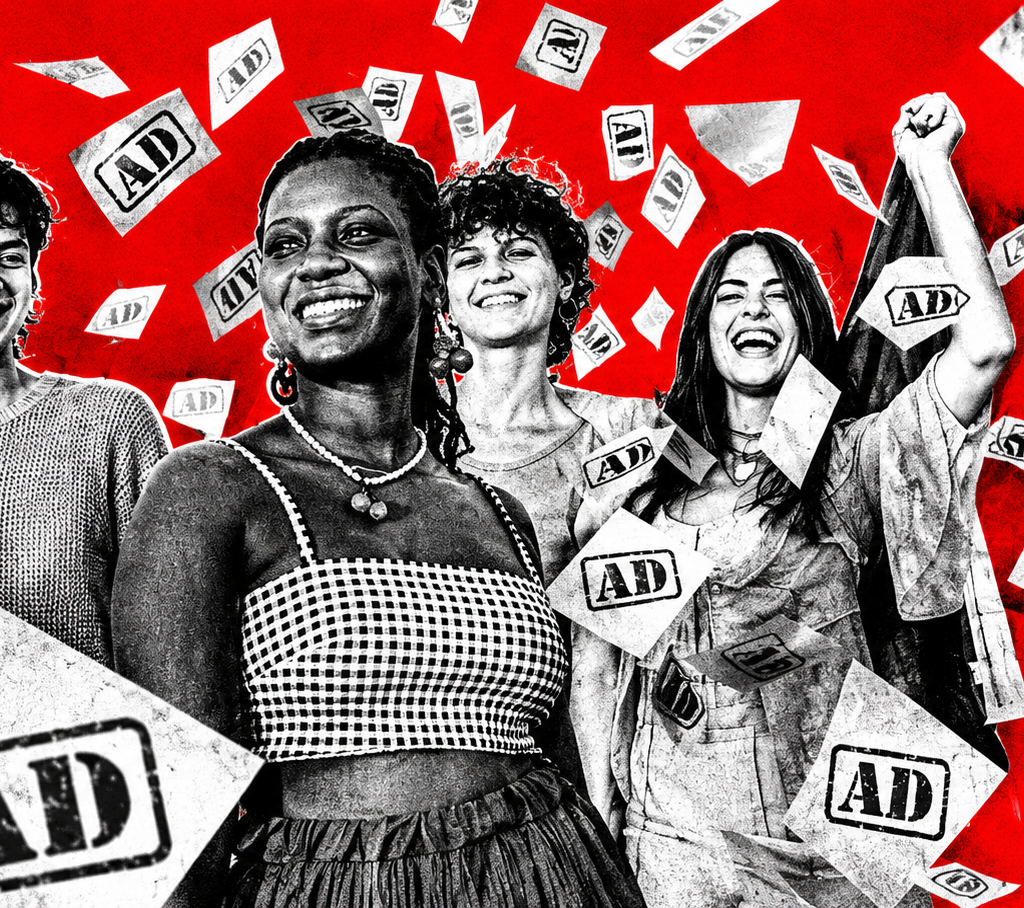
DON'T ADVERTISE THIS TO GEN Z

Why Gen Z Doesn’t Want to Be Advertised To

For decades, advertising followed a familiar formula: show the product, explain why it is better, add a memorable tagline and ask people to buy it.

Gen Z has grown up in a completely different media environment.

They have spent years scrolling through social feeds, watching creators, discovering products through recommendations, reading comments before purchasing and switching between platforms without thinking twice. For them, advertising is no longer something that only happens between pieces of content. It is built into the content ecosystem itself.

And that changes the rules.

Gen Z isn’t necessarily against brands, products or even advertising. In fact, social media ads and product reviews remain influential in their purchasing decisions. Deloitte’s 2025 Digital Media Trends found that 63% of surveyed Gen Z respondents said social media ads or product reviews were the most influential media channel for their purchasing decisions.

The bigger shift is how they want brands to communicate.

They don’t want to feel like they are being interrupted by an advertisement. They want content that entertains them, informs them, reflects their interests or gives them a reason to participate.

So, if brands want Gen Z’s attention in 2026, the question isn’t:

“How do we advertise to Gen Z?”

It is:

“How do we create something Gen Z actually wants to engage with?”

1. Gen Z Doesn’t Hate Advertising. They Hate Feeling Sold To

This distinction is important.

Gen Z still discovers products through social media. They still respond to recommendations, reviews, creators and paid content. But traditional advertising language can create immediate distance.

Think about the difference between:

“Introducing our new skincare range. Shop now.”

and:

“We tested 17 moisturisers so you don’t have to.”

Both can ultimately promote a skincare product.

But the second starts with a piece of content rather than a sales pitch.

That is the shift brands need to understand.

The product can be part of the story without being the entire story.


2. Authenticity Has Become Part of the Product Experience

ChatGPT Image Sep 23, 2026, 01 15 23 PM

Gen Z is highly exposed to polished advertising, influencer content, brand campaigns and increasingly AI-generated content.

As a result, production quality alone is no longer enough to create credibility.

Research found that consumers want brands to prioritize human-generated content, while two-thirds of Gen Z and Millennials surveyed said they were more likely to trust brands that publish human-generated content.

Social media research similarly found that 77% of marketers surveyed believe authenticity is more important than production value on social media.

This doesn’t mean brands should suddenly make everything look messy.

It means polish should not erase personality.

A phone-shot founder video, behind-the-scenes moment, employee story or genuine customer reaction can sometimes communicate more personality than a highly produced commercial.

The goal isn’t to make content look amateur.

The goal is to make it feel human.


3. Creators Feel More Like People Than Advertisements

ChatGPT Image Sep 23, 2026, 01 25 58 PM

One of the biggest changes in Gen Z marketing is the relationship between audiences and creators.

Creators don’t simply distribute products. They provide context.

They explain why something is useful, show how they use it, review it, compare it and sometimes even tell their audience when they wouldn’t buy it.

Research found that 52% of Gen Z respondents surveyed feel a stronger personal connection to social media creators than to TV personalities or actors.

That connection changes the role of influencer marketing.

The old model was:

Brand → Advertisement → Audience

The emerging model is:

Brand → Creator → Community → Conversation

The creator becomes part of the storytelling rather than simply becoming the face holding the product.

For brands, this means choosing creators based on relevance, credibility and community fit, rather than treating follower count as the only measure of influence.


4. Entertainment Is the New Entry Point

ChatGPT Image Sep 23, 2026, 01 30 06 PM

If a brand wants Gen Z to stop scrolling, the content needs to earn that attention.

Research found that Gen Z showed particularly strong interest in episodic content, behind-the-scenes content, memes and skits.

This is why the traditional advertising structure is becoming less effective on social platforms.

Instead of:

Hook → Product → Features → CTA

brands can think:

Hook → Entertainment → Story → Brand → Action

The product doesn’t have to disappear.

It simply doesn’t have to arrive in the first second saying:

“Hi. I’m an advertisement.”

A food brand can create a recurring comedy series.

A fashion brand can create styling challenges.

A coffee brand can build content around everyday coffee culture.

A tech brand can turn common user problems into relatable sketches.

When people follow the content even when they aren’t ready to buy, the brand earns something more valuable than a single click: attention with permission.


5. Gen Z Wants Brands to Have a Personality

A brand that only talks about its products can start feeling like a catalogue.

Social media gives brands an opportunity to become something more.

They can have:

  • A sense of humour
  • A distinct voice
  • Cultural awareness
  • Opinions
  • Recurring characters
  • Inside jokes
  • Community language
  • A recognizable visual identity

This doesn’t mean every brand needs to behave like a creator.

It means brands need to understand what makes people want to hear from them.

A strong social identity gives people a reason to follow a brand even when they aren’t shopping.

And that matters because Gen Z doesn’t necessarily separate “brand content” and “entertainment” as neatly as traditional advertising does.

If the content is useful, funny, interesting or relatable, the brand can earn attention without demanding it.


6. Don’t Force Every Trend

Brands have spent years trying to “join the conversation.”

But there is a difference between being culturally relevant and simply copying whatever is trending.

Consumer research found that 9% of respondents specifically wanted brands to stop using trending audio or memes when they feel forced, while 23% wanted brands to stop using engagement-bait tactics.

The lesson is simple:

A trend is not a strategy.

Before jumping onto a trending sound, meme or format, ask:

Does this make sense for our brand?

Would our audience expect us to talk about this?

Can we add something original?

Will the content still make sense after the trend disappears?

Sometimes the smartest move is not participating.

Sometimes it is taking the cultural insight behind the trend and turning it into something uniquely yours.


7. Engagement Bait Is Easy to Spot

“Comment YES if you agree.”

“Tag three friends.”

“Wait till the end.”

“Nobody is ready for this.”

“Don’t scroll.”

These tactics can generate interaction, but audiences increasingly recognize when engagement is being engineered.

Research found engagement-bait tactics were among the behaviours consumers wanted brands to stop using.

The alternative is to create natural participation.

Instead of asking people to comment for the algorithm, give them something worth responding to.

Instead of:

“Comment your answer below!”

Try:

“We asked 100 people what their most overrated purchase was. Here are the answers.”

The first asks for engagement.

The second creates a reason for engagement.

That distinction matters.


8. AI Makes Human Content More Valuable

ChatGPT Image Sep 23, 2026, 01 42 39 PM

AI is changing how quickly brands can produce content.

It can generate scripts, images, videos, captions and creative variations at scale.

But that creates another problem.

If everyone can create content faster, content itself becomes less scarce.

Research found that AI-generated content without labels was the top behaviour consumers wanted brands to stop, with 28% selecting it overall. Gen Z was among the generations most averse to unlabeled AI content.

The opportunity for brands is not necessarily to reject AI.

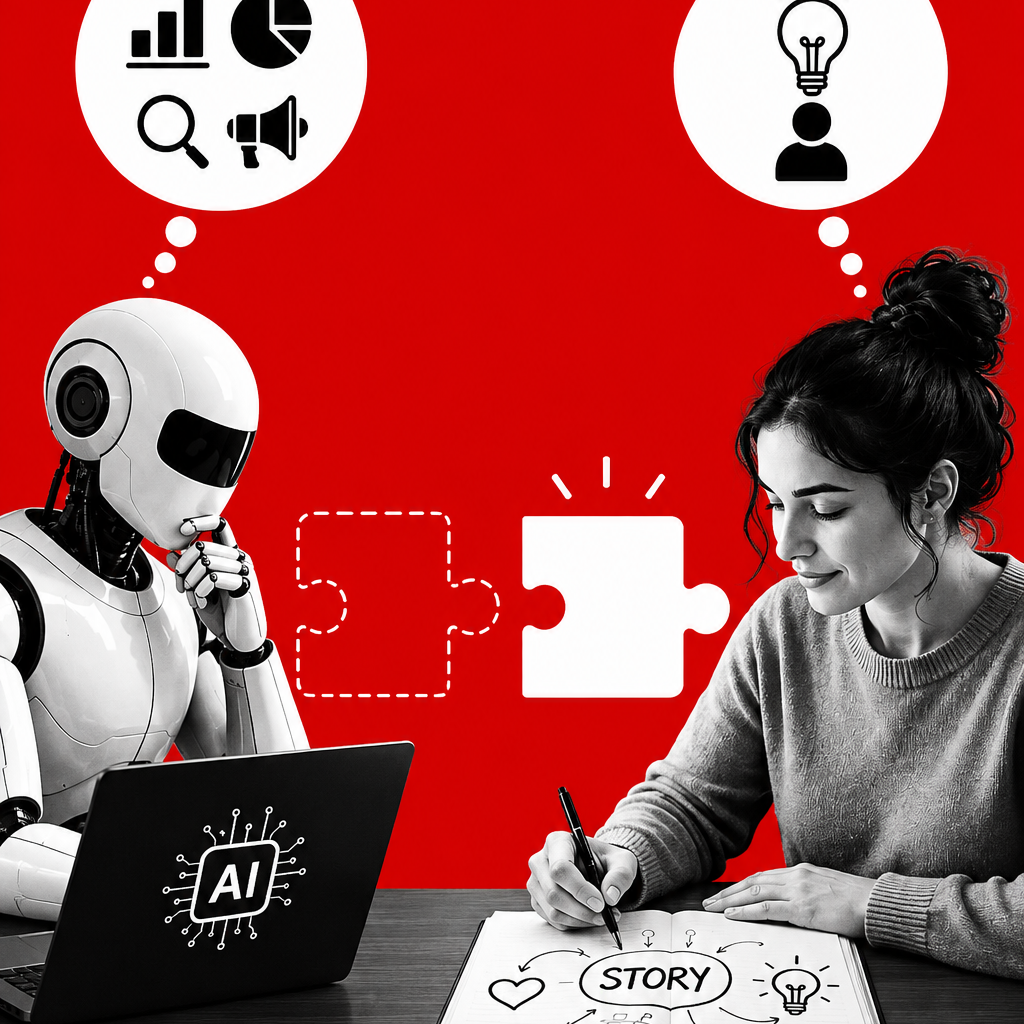
It is to use AI where it improves the process while keeping human taste, experience and perspective at the centre.

AI can help generate ideas.

A person decides which idea is worth making.

AI can help edit.

A creator decides what feels authentic.

AI can accelerate production.

A brand still needs something meaningful to say.


9. Gen Z Searches Differently

Gen Z isn’t just scrolling social media for entertainment.

Social platforms have increasingly become discovery engines.

Generational marketing research reports that social is now the top place Gen Z searches, ahead of Google and traditional search engines, particularly for discovering news, researching products and shopping.

That means brands need to think about social search alongside traditional SEO.

Content should answer questions people actually have.

Instead of only posting:

“Our new running shoes are here.”

A brand could create:

“Best running shoes for beginners: what actually matters?”

Instead of:

“Our new restaurant menu.”

Try:

“What to order if it’s your first time here.”

The content becomes useful before it becomes promotional.

And useful content is more likely to be searched, saved, shared and revisited.


10. Community Is More Important Than Reach

A brand with a million passive followers doesn’t necessarily have a strong community.

A brand with a smaller but highly engaged audience can have much deeper relationships.

This is particularly important for Gen Z, whose social behaviour is increasingly built around communities, creators, niches and shared interests.

Instead of asking:

“How many people saw our campaign?”

brands should also ask:

“Who cared enough to respond?”

Look at:

  • Saves
  • Shares
  • Comments
  • DMs
  • Mentions
  • User-generated content
  • Repeat viewers
  • Community participation
  • Returning customers

These signals can tell a brand whether its content created an actual relationship or simply generated temporary exposure.


11. The New Gen Z Advertising Formula

The traditional advertising model looked something like this:

Product → Message → Audience → Purchase

The social-first model is increasingly different:

Culture → Content → Community → Conversation → Consideration → Purchase

The product still matters.

The sale still matters.

But the journey between the two has become more social.

A successful Gen Z campaign doesn’t necessarily hide the fact that it is marketing.

Instead, it gives people a reason to engage before asking them to buy.


What Brands Should Do Differently in 2026

If your brand wants to connect with Gen Z, start with these principles:

1. Create content, not just advertisements

Give people something worth watching even when they aren’t planning to buy.

2. Give the brand a personality

Develop a recognizable tone, humour and perspective.

3. Work with creators as collaborators

Let creators bring their own voice and understanding of their community.

4. Prioritize authenticity

Use real people, real experiences and human storytelling where they add value.

5. Make entertainment part of the strategy

Memes, skits, episodic content and cultural storytelling can create stronger reasons to engage.

6. Stop forcing trends

Only participate when the trend naturally fits the brand and audience.

7. Build for conversation

Create content that encourages genuine reactions rather than manufactured engagement.

8. Think about social search

Use the questions, language and topics your audience is actually searching for.

9. Use AI carefully

Let technology improve efficiency without replacing human creativity and judgment.

10. Measure relationships, not just reach

Track shares, saves, conversations, community growth and business outcomes alongside views.


The Future of Advertising Is Less About Advertising

Gen Z hasn’t made advertising irrelevant.

It has made interruptive advertising less interesting.

The brands that understand this shift won’t necessarily stop selling. They will change the way they earn attention before they sell.

They will create content people want to watch.

They will collaborate with creators people already trust.

They will participate in culture without forcing themselves into every trend.

They will use technology without losing the human voice behind the brand.

And most importantly, they will stop treating Gen Z as an audience that needs to be convinced to watch an advertisement.

Because the real question isn’t whether Gen Z wants to see your ad.

It’s whether you’ve created something they wanted to see in the first place.

The reason behind virality in 2026

The New Rules of Going Viral in 2026

Going viral used to feel like the ultimate social media win. One unexpected Reel, a clever meme, a celebrity moment or a perfectly timed trend could put a brand in front of millions overnight.

But in 2026, virality works differently.

The internet is more crowded, audiences are more selective, and platforms are becoming increasingly discovery-driven. Short-form video continues to dominate attention, creators are becoming powerful distribution channels, and audiences are not simply consuming content anymore. They are searching, commenting, sharing, remixing and actively participating in conversations.

In India, Meta reports that 97% of surveyed users watch video on its platforms daily, while 89% of surveyed Gen Z users engage with Reels daily. (About Facebook) Meanwhile, TikTok’s 2026 trend forecast highlights curiosity, real-world relevance, community and emotional value as important drivers of engagement. (TikTok Newsroom)

So, what does it actually take to go viral in 2026?

The answer is no longer simply “make something people will watch.”

It is about making something people want to watch, share, discuss, search for and remember.

Here are the new rules of going viral in 2026.


1. Stop Chasing Virality. Start With a Reason to Share

ChatGPT Image Sep 21, 2026, 05 10 03 PM

The first rule of going viral in 2026 is understanding why people share content.

People rarely share something simply because it has a lot of views. They share because the content makes them:

  • Laugh
  • Feel understood
  • Learn something
  • Look informed
  • Express an opinion
  • Relate to a situation
  • Enter a conversation
  • Make someone else laugh
  • Discover something unexpected

This means brands need to move beyond asking, “Will this get views?”

The better question is:

“Why would someone send this to another person?”

A relatable observation, an unexpected brand response, a useful tip or a culturally relevant joke can have stronger sharing potential than an expensive production with no clear emotional trigger.

Virality begins when content becomes socially useful.


2. The First Few Seconds Matter More Than Ever

Attention is the entry point to virality.

People scroll quickly, which means your content needs to create curiosity almost immediately.

That does not necessarily mean shouting a controversial statement or using clickbait. It means giving the audience a reason to stay.

Your opening could be:

  • A surprising statement
  • A question
  • An unexpected visual
  • A strong opinion
  • A relatable situation
  • A problem people recognise
  • The beginning of a story
  • A result shown before the explanation

For example, instead of:

“Here are five social media trends brands should know in 2026.”

Try:

“Your brand doesn’t need more content. It needs this.”

The second approach creates an information gap. The audience wants to know what “this” is.

That curiosity can be the difference between a scroll and a view.


3. Originality Is Becoming a Distribution Advantage

In 2026, copying what already went viral is becoming less useful.

Platforms are increasingly focused on original content and recommendations. Meta said that 75% of Instagram recommendations in the US in Q4 2025 came from original posts. (About Facebook)

That does not mean trends are dead.

It means your interpretation of a trend matters more than simply participating in it.

Instead of copying a trending format exactly, ask:

How can our brand make this trend feel like ours?

A fashion brand could reinterpret a meme through styling.

A coffee brand could turn a cultural moment into a coffee-related observation.

A travel brand could use a trending audio to tell a destination story.

A filmmaker could use a trend to reveal something about a character.

The trend gets attention.

Your point of view creates differentiation.


4. Authenticity Is Not the Opposite of Strategy

There is a misconception that authentic content means unplanned content.

It doesn’t.

The most effective “raw” content can still have a strong strategy behind it.

A phone-shot video can have:

  • A carefully written hook
  • A clear narrative
  • A defined audience
  • Strategic editing
  • A strong CTA
  • A specific business objective

The difference is that it doesn’t necessarily feel like advertising.

TikTok’s 2026 trend forecast specifically highlights real stories, humour, imperfection and human connection as important elements of brand engagement. (TikTok Newsroom)

This is particularly important in an environment where audiences are increasingly exposed to AI-generated content.

When everything can look polished, polished alone becomes less distinctive.

Sometimes the shaky camera, imperfect delivery or spontaneous reaction is exactly what makes a piece of content feel believable.


5. Build for the Platform, Not Just for the Feed

One piece of content cannot simply be copied everywhere and expected to perform the same way.

Instagram, YouTube Shorts, TikTok, LinkedIn and other platforms have different cultures, audiences and consumption behaviours.

A 20-second Instagram Reel might work because of its visual storytelling.

A YouTube Short might work as an entry point into a longer piece of content.

A LinkedIn post might need more context and a stronger professional insight.

The idea can remain the same.

The execution should change.

YouTube itself has highlighted that Shorts views do not automatically translate into long-term fans, encouraging creators to think about how short-form viewers can move into deeper engagement with their content. (blog.youtube)

The lesson for brands is simple:

Don’t create one piece of content and distribute it everywhere. Build one idea and adapt it for every platform.


6. Searchability Is Part of Virality

ChatGPT Image Sep 21, 2026, 05 23 07 PM

Going viral is no longer limited to someone’s feed.

People are searching social platforms for answers, recommendations, products, opinions, tutorials and ideas.

TikTok’s 2026 forecast describes users increasingly entering the platform with active curiosity and discovering useful information beyond their original search. (TikTok Newsroom)

This changes how brands should think about viral content.

A viral video should not only be entertaining. When relevant, it should also be discoverable.

That means thinking about:

  • Keywords in captions
  • Search-friendly titles
  • Spoken keywords
  • On-screen text
  • Relevant hashtags
  • Questions people actually search
  • Clear descriptions of the topic

For example, instead of creating a generic video titled:

“Things I wish I knew earlier…”

A creator could use:

“5 Instagram SEO mistakes small businesses make”

The second one has a clearer search intent.

Virality can bring attention.

Searchability can help that attention continue after the initial spike.


7. Make Content People Can Participate In

The strongest viral moments increasingly turn audiences from viewers into participants.

Ask questions.

Create debates.

Invite opinions.

Use comments as part of the content.

Give people something to complete.

Create formats that encourage responses.

YouTube’s own guidance around Shorts emphasises the difference between simply generating views and building an actual community, with conversation and interaction playing an important role in turning viewers into fans. (blog.youtube)

For brands, this could look like:

“Which one are you?”

“Complete this sentence.”

“Unpopular opinion…”

“Tell us your city’s version of this.”

“What would you choose?”

The objective isn’t to manufacture comments.

It is to create content where commenting feels like a natural part of the experience.


8. Creators Are Not Just Amplifiers

Influencer marketing used to be largely about borrowing someone’s audience.

In 2026, creators can play a much bigger role.

They can contribute:

  • Ideas
  • Cultural context
  • Storytelling
  • Community insight
  • Credibility
  • Distribution
  • Platform-native execution

Meta’s 2026 research on India highlights creators as a major part of discovery and says Reels generates significantly higher creator engagement than other surveyed short-form video platforms. (About Facebook)

This means brands should not always ask:

“Which creator has the biggest following?”

A better question is:

“Which creator understands the audience we want to reach?”

A smaller creator with a highly relevant community can sometimes offer something a massive creator cannot: contextual credibility.

The right creator should feel like part of the idea, not an advertisement inserted into it.


9. Culture Beats Calendar Content

Brands have historically planned social media weeks or months in advance.

But culture moves much faster.

A meme can peak and disappear within days.

A phrase can suddenly become everywhere.

A celebrity moment can change the conversation overnight.

A new format can emerge without warning.

TikTok’s 2026 forecast recommends leaving room for brands to respond to conversations as they develop rather than locking every piece of content months in advance. (TikTok Newsroom)

This doesn’t mean abandoning content calendars.

It means leaving space for spontaneity.

A good 2026 social media calendar should have two layers:

Planned content
Campaigns, launches, product stories, educational content and brand narratives.

Reactive content
Memes, cultural moments, conversations, trends and unexpected opportunities.

The brands that can move quickly without losing their identity have an advantage.


10. Emotion Is More Powerful Than Information

Information tells people something.

Emotion gives them a reason to care.

That is why some of the most shareable content isn’t necessarily the most informative.

It makes people feel something.

Think about the emotions that naturally trigger sharing:

EmotionPossible Content Direction
HumourRelatable situations
NostalgiaMemories and cultural references
SurpriseUnexpected reveals
InspirationTransformations and journeys
CuriosityMysteries and unanswered questions
AngerStrong opinions or cultural observations
JoyCelebrations and feel-good moments
BelongingCommunity-specific experiences

TikTok’s 2026 forecast refers to this shift as “Emotional ROI”, arguing that audiences increasingly respond to content that provides meaning, relevance and emotional value rather than simply pushing a product. (TikTok Newsroom)

The takeaway:

Don’t just ask what your content says. Ask what your audience feels after watching it.


11. Don’t Confuse Views With Impact

A million views can look impressive.

But views alone don’t tell you whether the content helped your brand.

A viral post should be evaluated based on what happens after people see it.

Depending on the campaign objective, brands should look at:

Awareness

  • Reach
  • Impressions
  • Video views
  • Unique viewers
  • Watch time
  • Completion rate

Engagement

  • Shares
  • Saves
  • Comments
  • Replies
  • Mentions
  • Profile visits

Consideration

  • Website visits
  • Product-page views
  • Search activity
  • DMs
  • Branded searches
  • Content interactions

Conversion

  • Leads
  • Sign-ups
  • Purchases
  • Revenue
  • Conversion rate
  • Cost per acquisition
  • ROAS

Loyalty

  • Repeat engagement
  • Community growth
  • User-generated content
  • Returning customers
  • Brand advocacy

This is why a Reel with 200,000 highly relevant views can potentially be more valuable to a business than a Reel with 5 million views from an unrelated audience.

Reach tells you how far content travelled. Impact tells you what it actually did.


12. Think Beyond the Viral Post

The biggest mistake brands make after going viral is doing nothing with the attention.

Imagine a Reel suddenly reaches millions of people.

What happens next?

Do people know what the brand does?

Is the profile optimised?

Is there another piece of content waiting?

Can they find the product?

Is there a clear CTA?

Can they understand the brand in five seconds?

Virality creates a temporary increase in attention.

Your job is to convert that attention into something lasting.

That could mean:

Viral Reel → Profile visit → Follow → Community → Website visit → Purchase

Or:

Viral Reel → Comment → Conversation → Creator collaboration → Campaign → Brand affinity

The viral post should be treated as the beginning of a journey, not the destination.


The New Viral Content Checklist

Before publishing content designed to break through, ask:

1. Is there a clear reason to watch?
If the audience doesn’t understand why they should stay, the hook needs work.

2. Is there a reason to share?
Would someone genuinely send this to a friend?

3. Does it feel native to the platform?
Or does it look like an advertisement copied onto a social platform?

4. Does it have a point of view?
Could another 100 brands post exactly the same thing?

5. Does it create an emotion?
What should someone feel after watching?

6. Can people participate?
Is there an opportunity to comment, remix, respond or contribute?

7. Is it searchable?
Could someone discover this content through a relevant search?

8. Is there a next step?
What do you want people to do after watching?

9. Can you build on the idea?
Could one viral post become a series?

10. Are you measuring more than views?
What business or brand outcome does the content contribute to?


So, What Does Going Viral Actually Mean in 2026?

The definition of viral is changing.

It is no longer simply about creating a piece of content that reaches millions of people.

It is about creating something that travels because people choose to carry it forward.

They share it.

They discuss it.

They search for it.

They recreate it.

They tag someone in it.

They remember it.

And eventually, they connect it back to the brand that created it.

Short-form video, creators and social discovery are making the opportunity for mass reach bigger than ever. In India, Meta’s latest research describes Reels as increasingly central to discovery, creator engagement and commerce. (About Facebook)

But the brands that understand virality in 2026 will look beyond the view count.

They will focus on originality over imitation, relevance over randomness, participation over passive consumption, and impact over vanity metrics.

Because going viral can get you noticed.

Creating something worth remembering is what makes the attention matter.

Viral reels become prime time in the economy.

The Reels Economy: How Short-Form Video Became the New Prime Time

Prime time used to mean 8 PM.

Families would gather around the television. Advertisers would compete for the biggest shows. Brands would spend heavily to get a few seconds in front of a mass audience.

Today, prime time fits inside a smartphone screen.

A Reel can reach millions of people without waiting for a television slot. A creator can turn a 30-second video into a cultural moment. A product can go from unknown to trending through a single piece of short-form content.

This is the Reels economy.

Short-form video has transformed how people consume entertainment, discover brands, follow creators and make purchasing decisions. In India, the shift is particularly significant. Meta-commissioned research published in 2026 found that 97% of consumers watch short-form video daily, while Reels has become a major destination for discovery, culture and commerce.

The question for brands is no longer whether they should be creating short-form video.

It is how well they can compete in it.

What Is the Reels Economy?

ChatGPT Image Sep 11, 2026, 01 01 45 PM

The Reels economy refers to the ecosystem that has developed around short-form video platforms such as Instagram Reels, YouTube Shorts and TikTok.

It includes:

  • Creators
  • Brands
  • Influencers
  • Production teams
  • Social media platforms
  • Advertisers
  • Audiences
  • E-commerce platforms
  • Creator-led communities

Together, these players have created an entirely new digital attention economy.

The most important currency in this economy is not television ratings or newspaper circulation.

It is attention.

And short-form video has become exceptionally good at capturing it.

From Prime-Time TV to Prime-Time Scrolling

ChatGPT Image Sep 11, 2026, 01 13 49 PM

Traditional television had a limited number of channels and programming slots.

Social media has billions of potential content combinations.

Instead of waiting for a particular show to begin, audiences can open Instagram or YouTube and immediately enter a personalised stream of content.

One person might see a fashion creator.

Another might see a food review.

Someone else might see a comedy sketch, football highlight, beauty tutorial or product recommendation.

This personalisation has fundamentally changed the idea of prime time.

There is no longer one universal moment when everyone is watching.

Prime time is now whenever your audience is scrolling.

That is a significant change for marketers because brands are no longer competing only against other advertisements.

They are competing against everything that can capture attention on the screen.

Why Short-Form Video Has Become So Powerful

ChatGPT Image Sep 11, 2026, 01 18 12 PM

The appeal of short-form video is not simply that it is short.

It is that the format combines speed, entertainment, storytelling and discovery in a way that suits modern digital behaviour.

According to HubSpot’s 2025 State of Marketing research, short-form video was identified as the leading content format for ROI, with 21% of marketers naming it their highest-ROI format.

The format also makes content easier to share.

A viewer does not need to commit to a 20-minute video to understand the idea. A strong 20- or 30-second video can communicate a product benefit, tell a story, deliver a joke or introduce a new trend almost instantly.

That makes short-form video particularly effective for the discovery stage of the customer journey.

Reels Are No Longer Just Entertainment

For years, brands treated Reels as an awareness tool.

Today, that is only one part of the opportunity.

Short-form video increasingly connects entertainment with discovery and commerce.

Meta’s 2026 research on India found that Reels delivered stronger product discovery and influenced purchase decisions, reinforcing its role as more than an entertainment format.

This changes the role of a Reel in a marketing funnel.

A single video can:

Create awareness → Build interest → Demonstrate a product → Generate social proof → Drive consideration → Lead to purchase

The path is no longer linear.

Someone can discover a product through a creator, read the comments, visit the brand profile, watch another Reel and make a purchase without ever encountering a traditional advertisement.

The Creator Is the New Broadcaster

ChatGPT Image Sep 11, 2026, 01 27 23 PM

One of the biggest changes brought by the Reels economy is the rise of the creator as a media channel.

Creators do not need a television studio or a production house to reach an audience.

They need a smartphone, an idea and an understanding of their community.

This has created a new form of media where individual creators can build audiences that rival traditional media properties in niche categories.

And their influence is not limited to entertainment.

Creators can shape:

  • Fashion trends
  • Food choices
  • Travel decisions
  • Beauty routines
  • Fitness habits
  • Technology purchases
  • Cultural conversations
  • Brand perceptions

For marketers, this means creators should not simply be viewed as influencers who post sponsored content.

They can be viewed as distribution partners, storytellers and community builders.

Why Authenticity Matters More Than Production Value

The rise of short-form video has also challenged traditional ideas about what branded content should look like.

A highly produced advertisement can still be effective.

But on platforms dominated by creator content, overly polished advertising can sometimes feel out of place.

Audiences are increasingly comfortable with:

  • Handheld footage
  • Talking-head videos
  • Behind-the-scenes content
  • Customer testimonials
  • Employee-generated content
  • Creator reviews
  • Day-in-the-life videos
  • Raw product demonstrations

The lesson is not that brands should make low-quality content.

It is that quality should serve the story rather than overpower it.

A beautifully shot video with no interesting idea will struggle.

A simple video with a compelling idea can travel much further.

The First Three Seconds Matter

In the Reels economy, attention is earned immediately.

The opening of a video needs to give people a reason to continue watching.

That could be:

A question:
“Why does your coffee always taste different at home?”

A surprising statement:
“Your skincare routine might be doing more harm than good.”

A relatable situation:
“When your client says they only need one small change…”

A curiosity gap:
“We tested this so you don’t have to.”

The exact hook depends on the brand and audience.

But the principle remains the same:

Do not make people wait for the interesting part.

Give them the interesting part first.

Short-Form Video Is Also a Search Behaviour

The evolution of short-form video is changing how people discover information.

Consumers are not only scrolling for entertainment. They are also using social platforms to research products, restaurants, destinations, trends and solutions.

This means a Reel can become part of a brand’s social search strategy.

For example, instead of creating a generic Reel about a skincare product, a brand could create:

  • “Best skincare routine for oily skin”
  • “3 mistakes people make with sunscreen”
  • “How to layer your skincare products”
  • “What to use after a chemical exfoliant”

These videos can answer specific questions while naturally introducing the product.

The content becomes useful before it becomes promotional.

What This Means for Brands

The rise of the Reels economy requires brands to rethink their content strategy.

Posting occasionally is not enough.

Brands need to build systems that allow them to consistently identify ideas, produce content, test formats and learn from performance.

1. Build Content Around Audience Interests

ChatGPT Image Sep 11, 2026, 01 37 36 PM

Do not start with:

“What do we want to sell?”

Start with:

“What does our audience care about?”

Look at questions, comments, trends, cultural conversations and recurring problems within your category.

Then find the connection to your brand.

2. Develop Repeatable Content Series

A single viral Reel is exciting.

A repeatable content series is more valuable.

For example:

  • “Things nobody tells you about…”
  • “3-minute tips”
  • “Behind the brand”
  • “Myth vs fact”
  • “Ask an expert”
  • “What we learned this week”

Series create familiarity and make content production more sustainable.

3. Work With Creators, Not Just Influencers

Follower count should not be the only consideration.

Look at:

  • Audience relevance
  • Content quality
  • Engagement
  • Storytelling ability
  • Cultural relevance
  • Community trust
  • Brand fit

A creator with 50,000 highly relevant followers can sometimes be more valuable than a creator with millions of passive followers.

4. Test More Ideas

The best-performing Reel cannot always be predicted before publishing.

That is why brands should experiment with:

  • Hooks
  • Formats
  • Lengths
  • Creators
  • Topics
  • Editing styles
  • CTAs
  • Storytelling approaches

Then use performance data to identify patterns.

5. Measure Attention, Not Just Views

Views are useful, but they do not tell the whole story.

Brands should track:

  • Watch time
  • Completion rate
  • Shares
  • Saves
  • Comments
  • Profile visits
  • Website clicks
  • Leads
  • Sales
  • Repeat engagement

A Reel with fewer views but thousands of saves may be more valuable than a Reel with a million passive impressions.

The Rise of Video-First Marketing

ChatGPT Image Sep 11, 2026, 01 42 59 PM

The shift towards short-form video is not limited to Instagram.

YouTube Shorts has also become a massive part of the global video ecosystem. YouTube currently reports that Shorts averages more than 200 billion daily views.

This demonstrates the scale of the behaviour.

Short-form video is no longer a social media experiment.

It is a mainstream content format.

And brands that build strong capabilities around it can use the same idea across multiple platforms while adapting the execution to each audience and environment.

Does This Mean Long-Form Content Is Dead?

Absolutely not.

Short-form video is excellent at discovery.

Long-form content is often better for depth.

A 30-second Reel might introduce a topic.

A YouTube video can explore it in detail.

A blog can answer the search intent.

A podcast can build a deeper relationship.

A newsletter can retain the audience.

The smartest brands are not choosing between short-form and long-form content.

They are building content ecosystems where different formats perform different jobs.

Think of short-form video as the front door.

Once someone walks through it, longer content can give them a reason to stay.

The Future of Brand Discovery Is Vertical

The biggest lesson from the Reels economy is not that every brand needs to make viral videos.

It is that consumer attention has moved.

Discovery is increasingly happening inside feeds.

Recommendations are coming from creators.

Entertainment and commerce are blending together.

And audiences are deciding what deserves their attention one swipe at a time.

In this environment, brands need to think less like advertisers and more like media companies and creators.

They need ideas.

They need speed.

They need cultural awareness.

They need consistency.

And most importantly, they need to understand their audience well enough to create content that feels worth watching.

Conclusion: Prime Time Is Now in Your Pocket

Television once decided what millions of people watched at prime time.

Today, the audience decides what deserves prime time.

A Reel can be created in minutes, reach audiences across cities and countries, become part of a cultural conversation and influence what people buy.

That is the real power of the Reels economy.

For brands, the opportunity is enormous, but so is the competition.

The future will not belong to brands that simply produce more content.

It will belong to brands that understand what makes people stop scrolling.

Because in the new prime time, you do not get a guaranteed time slot.

You get a few seconds.

Make them count.

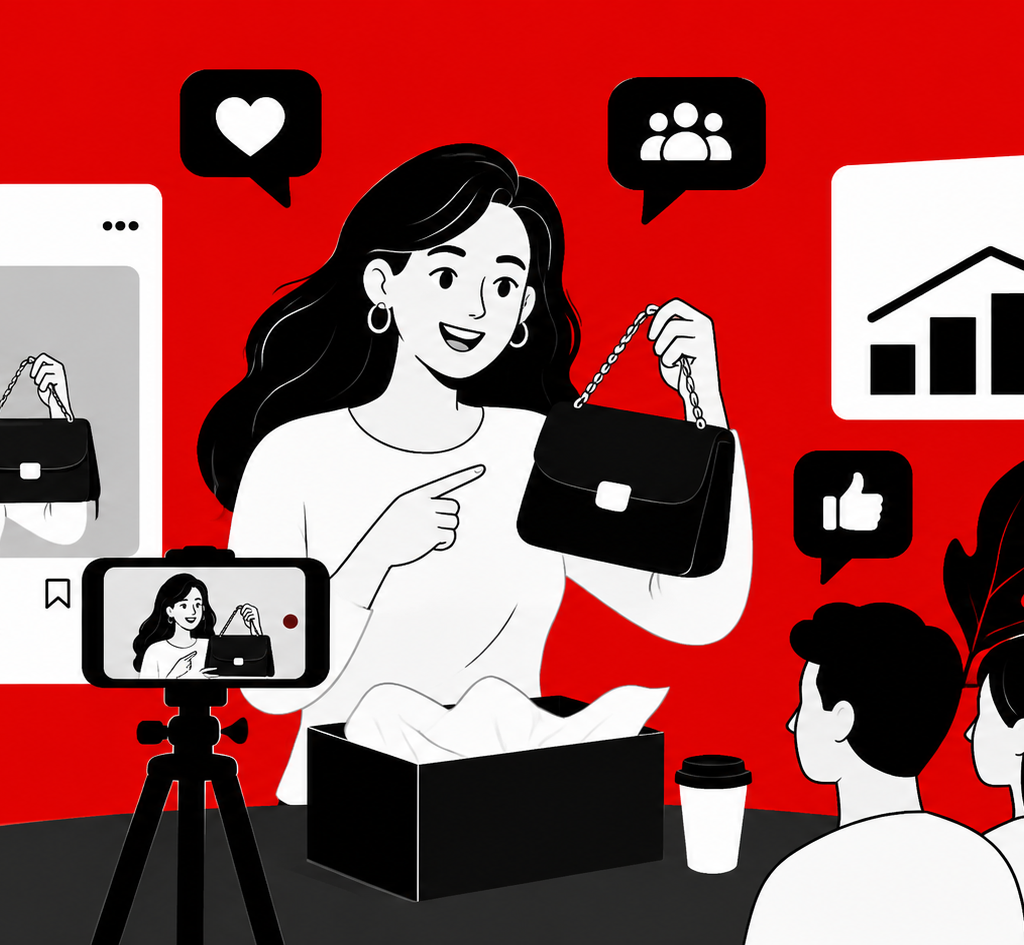
Brand marketing strategy inspired by creators and social media content

Why Your Brand Needs to Think Like a Creator

The internet has changed the way people discover brands.

A few years ago, brands could rely on polished campaigns, big productions and carefully planned advertisements to capture attention. Today, consumers are scrolling past traditional advertising and stopping for something that feels more immediate, relatable and human.

This is where creators have changed the game.

Creators understand attention. They know how to turn an everyday moment into a story, a thought into a conversation and a product into something people actually want to talk about. They do not simply create content. They build communities around personalities, perspectives and shared interests.

For brands, this presents a bigger opportunity than simply collaborating with influencers.

Brands need to start thinking like creators.

That does not mean every brand needs to become an influencer. It means adopting the mindset that makes creator content effective: being culturally relevant, experimenting quickly, understanding your audience and creating content people genuinely want to consume.

What Does It Mean for a Brand to Think Like a Creator?

Thinking like a creator means moving from “What do we want to say?” to “What does our audience want to see, share or talk about?”

ChatGPT Image Sep 10, 2026, 02 03 27 PM

Traditional brand communication often starts with the product.

Creator-led communication often starts with the audience.

Instead of asking:

“How do we advertise this product?”

A creator mindset asks:

“What story can we tell around this product that people will actually care about?”

That shift can completely change how a brand approaches social media marketing.

A creator thinks about:

  • What is happening in culture right now?
  • What conversations are people having?
  • What formats are performing?
  • What would make someone stop scrolling?
  • What would make someone share this with a friend?
  • How can we make this feel native to the platform?
  • What can we test today instead of waiting weeks for approval?

For brands competing for attention in crowded digital spaces, these questions are becoming increasingly important.

Why Creator Thinking Matters for Brands

Social media is no longer just a distribution channel for advertising.

It is a place where people discover products, search for information, follow trends, build communities and make purchasing decisions.

This has made the quality of a brand’s content just as important as the quality of its product.

A beautifully produced advertisement may still struggle if it feels disconnected from the way people naturally consume content online.

Creators, on the other hand, have spent years learning how to communicate within these environments.

They understand the language of platforms.

They understand pacing.

They understand hooks.

Most importantly, they understand that attention has to be earned.

1. Creators Understand the First Three Seconds

On social media, you are competing with everything else on someone’s screen.

The opening seconds of a Reel, Short or video can determine whether someone keeps watching or scrolls away.

Creators have become exceptionally good at building strong hooks.

That could be:

  • A surprising statement
  • An unexpected visual
  • A relatable situation
  • A question
  • A strong opinion
  • A curiosity gap
  • A trend with a new perspective

Brands can apply the same principle.

Instead of beginning every video with a logo or product shot, brands can start with the story.

Instead of:

“Introducing our new product…”

Try:

“POV: You finally found the one thing your morning routine was missing.”

The product can still be the hero. But the content gives people a reason to stay.

2. Creators Prioritise Stories Over Sales

One of the biggest differences between traditional advertising and creator content is the role of storytelling.

People do not necessarily want to be sold to every time they open Instagram or TikTok.

They want to be entertained, informed, inspired or included.

That is why brands need to think beyond promotional content.

A skincare brand can talk about skincare myths.

A coffee brand can build content around morning rituals.

A fashion brand can explore styling problems.

A fitness brand can talk about motivation, routines and everyday struggles.

The product becomes part of a larger narrative.

When brands stop treating every post like an advertisement, they create more opportunities for people to engage with them.

3. Creator Thinking Makes Brands More Human

People connect with people.

This is one of the biggest advantages creators have over traditional brand communication.

Creators have personalities, opinions, quirks and stories. Their audiences know what to expect from them.

Brands can create their own version of this human connection.

That could mean showing the people behind the business, sharing behind-the-scenes moments, embracing humour or allowing employees and founders to become part of the content.

It could also mean developing a distinct brand personality.

Is the brand witty?

Curious?

Bold?

Playful?

Opinionated?

Premium?

The goal is not to sound like everyone else.

The goal is to sound recognisable.

4. Authenticity Is Becoming More Valuable

The rise of AI-generated content, highly polished advertising and endless branded content has created an interesting paradox.

Technology makes it easier than ever to create content.

But that also means audiences have more content to ignore.

As content becomes easier to produce, authenticity becomes harder to fake and more valuable to brands.

This is why raw footage, behind-the-scenes content, customer stories, employee-generated content and creator collaborations can often feel more engaging than highly controlled brand communication.

This does not mean brands should stop producing high-quality campaigns.

It means they should balance polished storytelling with content that feels real.

The goal is not to make everything look imperfect.

The goal is to make the brand feel human.

5. Creators Experiment. Brands Need to Do the Same.

A traditional campaign can take weeks or months to plan.

Creators can test an idea today, see how audiences respond and create another version tomorrow.

That speed is a major competitive advantage.

Brands can adopt a similar approach through content experimentation.

Instead of putting the entire marketing budget behind one idea, brands can test:

  • Different hooks
  • Different video lengths
  • Different storytelling formats
  • Different creators
  • Different CTAs
  • Different visual styles
  • Different content pillars

The data can then inform what gets scaled.

This turns social media from a publishing calendar into a continuous learning engine.

6. The Creator Mindset Is Platform-First

One piece of content should not necessarily look identical everywhere.

A creator understands that every platform has its own culture.

Instagram may reward visually strong Reels, carousels and shareable content.

YouTube can support deeper storytelling.

LinkedIn may favour professional insights and founder-led perspectives.

TikTok can thrive on trends, personality and fast-moving cultural conversations.

Thinking like a creator means asking:

“How should this idea exist on this platform?”

Rather than:

“How do we put the same campaign everywhere?”

The central brand idea can remain consistent while the execution changes according to the platform.

7. Creators Build Communities, Not Just Audiences

There is an important difference between having followers and having a community.

An audience watches.

A community participates.

Creators often build communities by encouraging conversations, responding to comments, asking questions, creating inside jokes and making followers feel like they are part of something.

Brands can do the same.

Instead of ending every post with a sales CTA, brands can occasionally ask:

  • What do you think?
  • Which one would you choose?
  • Tell us your experience.
  • What should we try next?
  • Tag someone who needs this.

These small interactions can turn passive followers into active participants.

8. Creator-Led Content Can Make Products More Discoverable

The traditional customer journey was relatively straightforward:

See an ad → Visit a website → Research → Purchase

Today, the journey can look very different.

Someone might discover a product through a Reel, see a creator using it, read comments, search for reviews, watch another video and then purchase it.

In other words, discovery and entertainment are increasingly intertwined.

This makes creator-led content particularly powerful for brands looking to improve social media discovery and product consideration.

The product does not always need to be introduced through a conventional product advertisement.

It can enter the conversation naturally.

How Brands Can Start Thinking Like Creators

Adopting a creator mindset does not require a complete marketing overhaul.

Start small.

Build a Strong Content Point of View

Know what your brand wants to be known for beyond its product.

A strong point of view gives your content consistency and makes it easier to create ideas.

Create Content Around Culture

Look beyond your category.

What conversations, memes, behaviours, trends and cultural moments are relevant to your audience?

The best brands often find connections between their product and what people are already talking about.

Give Your Team More Creative Freedom

Creator-style content requires speed.

If every social post has to pass through multiple layers of approval, the brand may struggle to participate in real-time conversations.

Create clear brand guardrails, then give your creative team room to experiment.

Work With the Right Creators

Creator partnerships should not be based purely on follower count.

Look for creators whose:

  • Audience matches your target consumer
  • Content style fits your brand
  • Values align with your positioning
  • Engagement feels genuine
  • Storytelling feels natural

The right creator can make a brand feel like part of a conversation instead of an interruption.

Measure More Than Likes

Creator thinking should not mean chasing vanity metrics.

Look at:

  • Watch time
  • Shares
  • Saves
  • Comments
  • Engagement rate
  • Profile visits
  • Website traffic
  • Leads
  • Conversions
  • Repeat engagement

Different content has different jobs.

A funny Reel may build awareness.

A tutorial may drive saves.

A creator review may drive consideration.

A product demonstration may drive conversions.

The right metric depends on the objective.

The Future Belongs to Brands That Behave Like Creators

ChatGPT Image Sep 10, 2026, 02 01 50 PM

The creator economy has changed more than influencer marketing.

It has changed what audiences expect from brands.

People expect brands to participate in culture, understand platforms, respond quickly and communicate like humans.

That does not mean every company needs a celebrity spokesperson or an influencer-led strategy.

It means every brand needs to become better at creating reasons for people to pay attention.

The brands that win will not necessarily be the ones with the biggest budgets.

They will be the ones that understand their audience deeply enough to create content that feels relevant to them.

Because in a world where everyone is publishing, being seen is not enough.

You need to be worth stopping for.

And that is exactly where thinking like a creator can give your brand an edge.

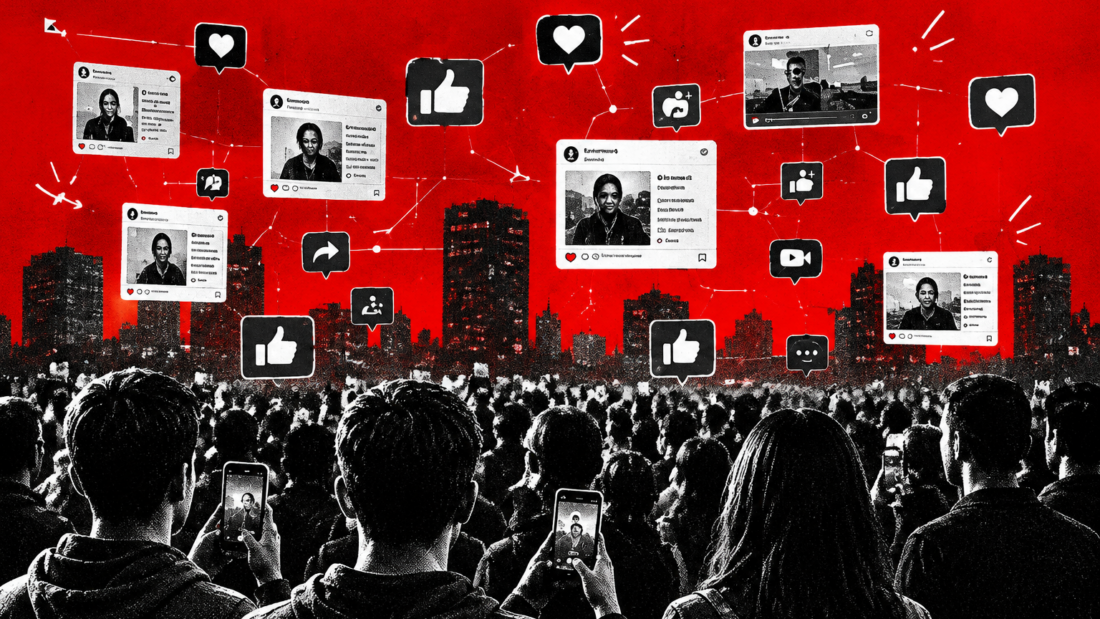
Black-and-white crowd using smartphones with social media posts and engagement icons against a red cityscape background

The Death of the Perfect Ad: Why Raw, Unfiltered Content Is Winning

For decades, advertising followed a familiar formula.

Perfect lighting.
Perfect locations.
Perfect models.
Perfect scripts.
Perfect product shots.

Brands spent huge budgets making advertisements look as polished as possible.

But then social media changed the rules.

Today, some of the content generating the most attention doesn’t look like advertising at all.

It looks like a phone camera recording a real moment.

A creator talking directly to the camera.

A customer reviewing a product from their bedroom.

A behind-the-scenes clip that wasn’t perfectly framed.

A founder sharing an honest opinion.

A product being used in real life rather than sitting perfectly against a studio backdrop.

The perfect ad isn’t necessarily dead. But the perfect-looking ad is no longer the only thing audiences want to see.

Welcome to the era of raw, authentic and unfiltered content.

Why Are Audiences Moving Away From Perfect Ads?

ChatGPT Image Sep 10, 2026, 01 21 55 PM

The average consumer sees an enormous amount of branded content every day.

Advertisements are everywhere.

On social media.

On streaming platforms.

In search results.

Inside apps.

Across websites.

And because audiences have become so familiar with advertising conventions, they have also become better at recognising them.

A beautifully produced advertisement can still be effective.

But if every brand looks polished in exactly the same way, polish stops being a differentiator.

This is where authentic content has an advantage.

It feels less like an interruption and more like something that belongs in the feed.

What Is Authentic Content?

Authentic content is content that feels natural, relatable and connected to real people or real experiences.

It can include:

  • User-generated content
  • Creator content
  • Behind-the-scenes videos
  • Founder-led content
  • Employee-generated content
  • Customer testimonials
  • Product demonstrations
  • Unscripted videos
  • Real-life reviews
  • Day-in-the-life content

The defining characteristic isn’t necessarily poor production quality.

It’s believability.

Authentic content makes the audience feel like they are seeing something rather than being sold something.

And that distinction matters.

The Rise of the Creator Has Changed Advertising

ChatGPT Image Sep 10, 2026, 01 17 26 PM

One of the biggest changes in digital marketing has been the rise of creators.

Creators have built audiences by developing something traditional advertising often struggles to create:

a relationship with the viewer.

When a creator recommends a product, their audience already understands their personality, preferences and style.

The content can therefore feel more like a recommendation from someone they follow than a conventional advertisement.

This has fundamentally changed influencer marketing.

Creators are no longer simply another media placement.

They are becoming storytellers, content creators and distribution channels for brands.

Why UGC Is So Powerful

ChatGPT Image Sep 10, 2026, 01 15 02 PM

User-generated content, or UGC, has become one of the most valuable formats in social media marketing.

Why?

Because it provides social proof.

Instead of a brand saying:

“Our product is amazing.”

A customer demonstrates how they use it.

Instead of a brand saying:

“Our restaurant has great food.”

A customer records their meal.

Instead of a beauty brand saying:

“This product works.”

A creator or customer shows the product as part of their routine.

The message becomes less corporate and more experiential.

The customer becomes part of the advertisement.

People Don’t Always Want to See the Product. They Want to See Themselves Using It.

ChatGPT Image Sep 10, 2026, 01 13 11 PM

This is one of the biggest advantages of authentic content.

A traditional product advertisement might show you exactly what the product looks like.

Authentic content can show you what life with the product looks like.

Imagine a fashion brand.

A studio shoot tells you:

“This is our new collection.”

A creator wearing the outfit while getting ready for a night out tells you:

“This is how you could actually wear it.”

The second approach creates context.

And context can create desire.

The Phone Camera Has Become a Production Studio

ChatGPT Image Sep 10, 2026, 01 10 34 PM

There was a time when brands needed expensive cameras, production crews and elaborate sets to create video content.

Today, a smartphone can capture, edit and publish a piece of content within minutes.

This has dramatically lowered the barrier to content creation.

But more importantly, it has changed what audiences perceive as valuable.

A phone-shot video can sometimes outperform a highly produced advertisement because it feels immediate.

It doesn’t look like it went through ten layers of approvals.

It feels like something happening right now.

That sense of immediacy is particularly powerful on short-form video platforms.

Authenticity Doesn’t Mean “Low Quality”

This distinction is important.

There is a difference between raw and careless.

Authentic content doesn’t mean brands should stop caring about quality.

It means quality should serve the story rather than overpower it.

A well-shot creator video can still feel authentic.

A professionally edited Reel can still feel natural.

A beautifully designed campaign can still have personality.

The goal isn’t to make content look bad.

The goal is to make content feel real.

Think:

High-quality production + human personality

rather than:

High-production polish + corporate distance

Why Relatability Is Becoming a Marketing Superpower

ChatGPT Image Sep 10, 2026, 01 08 31 PM

People connect with things they recognise.

A perfect model in a perfect setting can create aspiration.

But someone who looks, behaves or speaks like your audience can create identification.

That’s why content such as:

“Get ready with me”

“Come with me to…”

“Things I wish I knew before…”

“A day in my life…”

“Here’s what nobody tells you about…”

works so well.

These formats invite audiences into an experience.

They don’t simply present a message.

They create a feeling of participation.

The New Advertising Funnel

Traditional advertising often followed:

Awareness → Consideration → Conversion

But social content can add something more human to the journey:

Discovery → Relatability → Trust → Consideration → Conversion

A consumer discovers a creator.

They relate to their content.

They trust their recommendation.

They consider the product.

Then they buy.

This is one reason creator-led marketing and UGC have become increasingly important components of digital marketing strategies.

Raw Content Can Build Trust

Trust is becoming increasingly valuable in a digital environment where consumers are surrounded by sponsored content, targeted advertising and AI-generated media.

When a customer shares an honest experience, it can provide a different kind of credibility.

The content doesn’t necessarily need to be positive all the time either.

Sometimes, admitting a limitation can make a review feel more trustworthy.

For brands, this creates an important lesson:

You don’t always need to control the narrative.

Sometimes, allowing real people to tell the story can make the story more believable.

Why Brands Are Embracing Founder-Led Content

ChatGPT Image Sep 10, 2026, 01 06 03 PM

Another major shift is the rise of founder-led marketing.

Instead of hiding behind a corporate brand identity, founders are increasingly becoming visible voices for their businesses.

A founder can talk about:

  • Why the company was created
  • What problem they wanted to solve
  • Mistakes they made
  • Lessons they’ve learned
  • Industry trends
  • Customer stories
  • Product decisions

This creates something a conventional advertisement can’t easily manufacture:

a human face behind the brand.

The audience isn’t just interacting with a logo.

They’re interacting with a person.

Behind-the-Scenes Content Is Becoming Brand Content

ChatGPT Image Sep 10, 2026, 01 01 01 PM

Consumers are also becoming increasingly interested in what happens behind the finished product.

A restaurant showing its kitchen.

A fashion brand showing the design process.

A production house showing a shoot.

A startup showing its team.

A creator showing how a video was made.

These moments make brands feel less distant.

And they turn the process itself into content.

The lesson is simple:

Don’t only show the final product. Show the journey behind it.

What Does This Mean for Brands?

The rise of authentic content doesn’t mean brands should abandon traditional advertising.

Instead, brands need a mix of polished campaigns and authentic content.

1. Keep Big Campaigns Big

There is still a place for high-production advertising.

Launch campaigns, films, outdoor advertising and major brand moments can create scale and impact.

The mistake is assuming every piece of content needs to look like a television commercial.

2. Let Creators Create

If you hire a creator, don’t turn their content into a brand commercial.

Their value comes from their voice and relationship with their audience.

Give them a brief.

Give them direction.

Then let them create.

3. Make UGC Part of the Strategy

Don’t treat user-generated content as an occasional bonus.

Build systems that encourage customers to create, share and participate.

4. Show the People Behind the Brand

Founders, employees, designers, chefs, marketers and creators can all become part of your brand story.

5. Stop Over-Scripting Everything

A strong strategy doesn’t require every word to be scripted.

Sometimes the most engaging moments happen when someone speaks naturally.

6. Focus on the Idea, Not Just the Production

A beautifully produced bad idea is still a bad advertisement.

A simple idea executed authentically can be far more memorable.

The Rise of “Lo-Fi” Advertising

The term lo-fi content has become increasingly relevant in modern social media marketing.

Lo-fi doesn’t necessarily mean amateur.

It means content that retains a sense of immediacy and imperfection.

A handheld camera.
Natural lighting.

A real environment.

Conversational delivery.

A spontaneous reaction.

These elements can make content feel native to social media rather than imported from traditional advertising.

And that’s important.

The best social content often feels like social content.

AI Makes Authenticity Even More Valuable

ChatGPT Image Sep 10, 2026, 12 54 42 PM

There is another reason this shift matters.

Generative AI has made it easier than ever to produce polished content.

AI can generate images.

Write scripts.

Create variations.

Edit videos.

Produce voiceovers.

Generate advertisements.

As this technology becomes more accessible, polished content will become easier to create.

And when everyone can create polished content, polish becomes less distinctive.

What becomes harder to replicate?

Real experiences.

Real communities.

Real customer stories.

Real opinions.

Real personalities.

Real brand history.

In other words:

Authenticity.

The Future Is Not “Raw vs Polished”

The future of advertising isn’t going to be completely raw.

Nor will polished advertising disappear.

Instead, successful brands will know when to use each.

Use cinematic storytelling when the idea demands it.

Use creator content when relatability matters.

Use UGC when social proof matters.

Use founder-led content when trust matters.

Use product demonstrations when education matters.

Use raw, spontaneous content when immediacy matters.

The smartest brands won’t choose between polish and authenticity.

They’ll know how to combine them.

The New Definition of a “Perfect Ad”

Perhaps the biggest change is that we need to redefine what “perfect” means.

A perfect ad isn’t necessarily the one with:

  • The biggest production budget
  • The most expensive camera
  • The most elaborate set
  • The most polished visuals

A perfect ad is one that makes someone:

Stop.

Feel.

Remember.

Share.

Act.

And sometimes, achieving that requires nothing more than a phone, a real person and a genuinely good idea.

The Brands That Feel Human Will Win

ChatGPT Image Sep 10, 2026, 12 42 21 PM

Advertising has changed because audiences have changed.
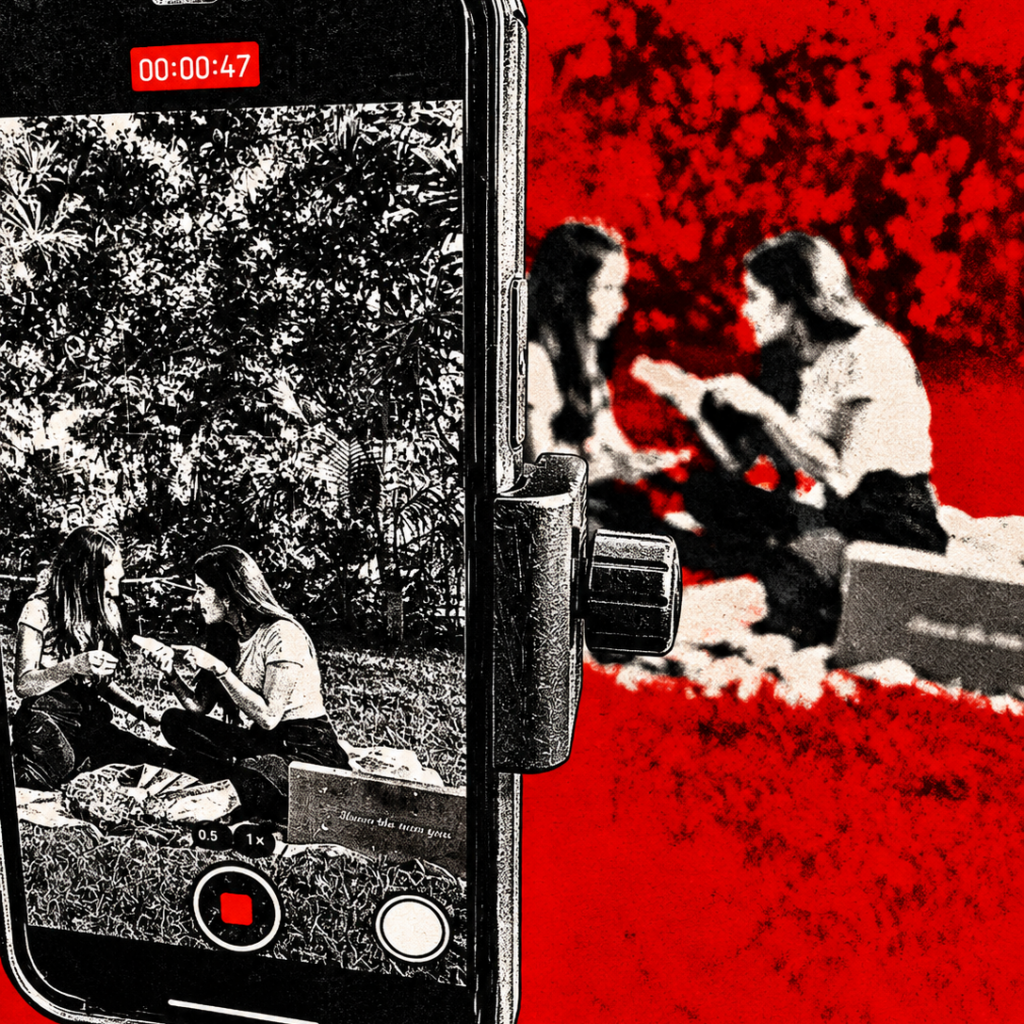
People are more exposed to brands than ever before.

They are also more aware of how advertising works.

That’s why authenticity is becoming increasingly valuable.

The future isn’t about making every advertisement look imperfect.

It’s about making more of your marketing feel human.

Because when consumers have endless content to choose from, they don’t necessarily stop for the most polished thing in their feed.

They stop for the thing that feels real.

And perhaps that’s the biggest lesson of modern advertising:

You don’t always need to make your brand look perfect. You need to give people a reason to believe it.

AI-generated content and authentic brand marketing in the digital age

AI Slop Is Everywhere. Here’s Why Authenticity Is Becoming a Competitive Advantage

The internet has never had more content.

And somehow, it has never felt more repetitive.

Scroll through social media and you will see polished captions that sound strangely familiar, generic AI-generated images, videos with the same hooks, recycled listicles and articles that technically answer a question but say nothing new.

Welcome to the age of AI slop.

As generative AI becomes part of everyday content creation, brands can now produce blogs, social posts, images, videos and advertisements faster than ever before.

But there is a problem.

When everyone can create more content, creating more content stops being the competitive advantage.

Instead, the brands that stand out will be the ones that feel human, distinctive and authentic.

What Is AI Slop?

“AI slop” is a term increasingly used online to describe low-quality, mass-produced or generic content created with the help of artificial intelligence.

AI itself isn’t the problem.

The problem is what happens when brands use AI to produce content without adding:

  • Original thinking
  • Human experience
  • Creativity
  • Context
  • Personality
  • Fact-checking
  • A clear point of view

The result is content that may be grammatically perfect but emotionally empty.

It answers the question.

It just doesn’t give you a reason to remember the answer.

And as AI-generated content becomes easier to produce, the internet risks becoming increasingly crowded with content that looks different but sounds exactly the same.

AI Has Solved the Content Problem. Or Has It?

For years, marketers complained about not having enough content.

Not enough blogs.

Not enough social posts.

Not enough videos.

Not enough campaign ideas.

Generative AI has changed that.

A marketer can now generate dozens of content ideas in minutes. AI can help write first drafts, analyse data, create variations, brainstorm headlines and accelerate production.

That’s a huge advantage.

But it also creates a new problem:

Content abundance.

When producing content becomes cheap and fast, the value shifts from production to differentiation.

Think about photography.

Everyone has a camera in their pocket today.

That didn’t make everyone a great photographer.

The same principle applies to AI.

Everyone can generate content. Not everyone can create something worth consuming.

Why Authenticity Is Becoming More Valuable

When audiences are surrounded by polished, predictable content, something imperfect can suddenly feel more interesting.

A founder speaking honestly about a business mistake.

A creator sharing an unscripted opinion.

A customer showing how they actually use a product.

A brand admitting that something didn’t work.

These moments can feel more believable because they don’t feel manufactured.

Authenticity creates something AI-generated content often struggles to replicate:

human connection.

People don’t just consume information.

They connect with stories, opinions, experiences and personalities.

And that’s where brands have an opportunity.

The Internet Is Becoming More Polished and Less Personal

There is an interesting contradiction happening online.

Technology is making content look better.

But sometimes, it is making content feel worse.

The same AI tools that can create beautiful visuals can also produce images that feel interchangeable.

The same tools that can write perfectly structured articles can produce paragraphs filled with generic observations.

The same tools that can create social captions can make every brand sound like the same brand.

You start seeing phrases such as:

“In today’s fast-paced digital world…”

“It’s important to note…”

“Here are five game-changing strategies…”

Again and again.

The problem isn’t that these sentences are incorrect.

It’s that they don’t sound like anyone.

And brands without a recognisable voice become increasingly difficult to remember.

Authenticity Doesn’t Mean Anti-Technology

ChatGPT Image Sep 4, 2026, 05 42 38 PM

This is an important distinction.

The answer isn’t to stop using AI.

AI can be an incredibly powerful tool for marketers.

It can help with:

  • Research
  • Brainstorming
  • Content planning
  • Data analysis
  • Transcription
  • Editing
  • Personalisation
  • Workflow automation
  • Content repurposing
  • Creative exploration

The difference is how you use it.

There is a big difference between:

“AI, write my entire brand campaign.”

and

“Here is our idea, audience insight and brand voice. Help us explore ten creative directions.”

The first replaces thinking.

The second accelerates thinking.

And that distinction will become increasingly important.

The Human Advantage

Ironically, the more AI-generated content we see, the more valuable human qualities become.

Experience

AI can summarise what people have said.

But your brand’s actual experience is unique.

A campaign you ran.

A customer problem you solved.

A mistake you made.

A lesson you learned.

These are difficult to replicate because they come from your real-world experience.

Perspective

Two brands can have access to the same information.

What separates them is what they think about it.

A strong point of view can turn an ordinary topic into compelling content.

Personality

Your audience should be able to recognise your brand without seeing the logo.

That comes from tone, humour, storytelling, opinions and distinctive creative choices.

Emotion

Data can tell you what happened.

A human story can tell you why it matters.

That emotional layer is often what turns content into something people remember.

Why Generic Content Is Becoming a Brand Problem

AI slop isn’t just an editorial problem.

It can become a branding problem.

Imagine a consumer discovering five brands in the same category.

Every brand uses identical AI-generated visuals.

Every caption uses the same tone.

Every Reel follows the same trend.

Every blog says the same things.

How does the consumer decide?

Usually, they look for something that feels real.

That could be:

  • A recognisable founder
  • A distinctive brand voice
  • Strong creative direction
  • Customer stories
  • Behind-the-scenes content
  • Original research
  • A unique opinion
  • Community interaction

In other words:

Authenticity becomes a differentiator.

The Rise of Human-Led Content

This is why we are seeing growing interest in formats that feel less polished and more personal.

Think:

Behind-the-scenes content

Show how something is actually made.

Founder-led content

Let people hear directly from the people behind the brand.

User-generated content

Let customers tell the story.

Employee-generated content

Give audiences a look inside the organisation.

Expert-led content

Put actual expertise behind your claims.

Unfiltered storytelling

Not everything needs to look like a television commercial.

These formats work because they provide something that generic content often doesn’t:

evidence of a human being behind the brand.

Authenticity Is Not the Same as Being Unpolished

There’s another misconception worth addressing.

Authenticity doesn’t mean posting badly shot videos, ignoring brand guidelines or publishing whatever comes to mind.

A brand can be highly strategic and still feel authentic.

The goal isn’t:

Perfect vs imperfect.

It’s:

Manufactured vs meaningful.

You can have excellent production, strong design and sophisticated marketing while still communicating like a real human.

Authenticity is about truth, transparency and distinctiveness, not poor execution.

How Brands Can Avoid Becoming Part of the AI Slop Problem

ChatGPT Image Sep 4, 2026, 05 30 50 PM (1)

1. Use AI as a Starting Point, Not the Finish Line

AI can generate the first draft.

Your team should make it worth publishing.

Add examples, opinions, experiences and insights that couldn’t have come from a generic prompt.

2. Develop a Distinct Brand Voice

Define how your brand speaks.

Is it witty?

Direct?

Bold?

Warm?

Technical?

Conversational?

Your audience should be able to recognise your voice.

3. Create Original Insights

Don’t simply rewrite information that already exists online.

Publish:

  • Original research
  • Surveys
  • Case studies
  • Campaign learnings
  • Expert interviews
  • Industry observations
  • Proprietary data

Original information gives people a reason to choose your content over the hundreds of similar articles generated elsewhere.

4. Put People in Your Content

Your customers, employees, founders, creators and experts can make a brand feel more human.

People connect with people.

5. Have an Opinion

Safe content is forgettable content.

You don’t need to be controversial for the sake of being controversial.

But you should have something to say.

Instead of:

“Social media is changing rapidly.”

say what you actually believe about where it’s going.

A perspective gives your content a point of view.

6. Prioritise Quality Over Quantity

AI makes it tempting to publish more.

Resist that temptation.

One genuinely useful article can be more valuable than ten generic ones.

One memorable campaign can outperform dozens of forgettable posts.

The goal isn’t to fill the internet.

It’s to earn attention.

Authenticity Can Also Improve SEO

There is an important SEO angle here.

Search engines increasingly emphasise helpful, reliable, people-first content.

Google’s guidance encourages publishers to create original, useful content for people rather than content primarily designed to manipulate search rankings.

That means authenticity isn’t simply a branding trend.

It can support a stronger content strategy.

Original research, first-hand experience, expert commentary and genuinely useful information can give your content greater value than another generic article that simply summarises what already exists.

And as AI-powered search becomes more prominent, this becomes even more important.

If AI systems are selecting sources to help answer questions, brands need to give those systems something worth referencing.

Originality becomes discoverability.

The New Competitive Advantage

ChatGPT Image Sep 4, 2026, 05 07 10 PM

For years, brands competed on things like:

Budget.

Reach.

Technology.

Speed.

Now AI is making some of these advantages more accessible.

A small brand can use the same AI tools as a large brand.

A solo creator can generate content at a scale that once required a team.

A startup can produce polished creative without a huge production budget.

So what becomes difficult to copy?

A point of view.

A reputation.

A community.

A story.

Real experience.

Trust.

These are built over time.

And AI can’t simply generate them for you.

The Future Isn’t AI vs Humans

The future of marketing isn’t going to be about choosing between AI and human creativity.

It’s going to be about combining them intelligently.

AI can help brands move faster.

Humans decide where to go.

AI can analyse information.

Humans decide what it means.

AI can generate options.

Humans choose the idea worth pursuing.

AI can automate production.

Humans create the culture around the brand.

The winning formula isn’t:

AI instead of humans.

It’s:

AI + human creativity + authentic brand thinking.

In a World Full of AI, Be More Human

AI has made content creation easier than ever.

That means content itself is becoming less scarce.

Attention is still scarce.

And when audiences are exposed to an endless stream of generic content, the things that feel real become more valuable.

The brands that win won’t necessarily be the ones publishing the most.

They’ll be the ones with something genuinely worth saying.

So use AI.

Experiment with it.

Let it make your teams faster.

But don’t let it erase the thing that makes your brand different.

Because when everyone can create content with AI, authenticity might just become the most powerful competitive advantage of all.

Generative Engine Optimization and AI search strategy for brands

From SEO to GEO: How Brands Can Win in AI Search

For more than two decades, digital marketing has revolved around one question:

How do I get my brand to rank on Google?

Brands built websites, researched keywords, created backlinks and published content to compete for that coveted spot on page one.

But search is changing.

Today, consumers are increasingly asking AI-powered platforms for recommendations, comparisons, explanations and answers. Instead of browsing through ten blue links, they can ask an AI tool a question and receive a synthesised response based on information gathered from multiple sources.

That creates a new challenge for brands:

What happens when your customer doesn’t search for you on Google, but asks AI about you instead?

This is where Generative Engine Optimization, or GEO, enters the conversation.

What Is GEO?

ChatGPT Image Sep 4, 2026, 12 54 31 PM

Generative Engine Optimization (GEO) is the practice of improving a brand’s visibility across AI-powered search and answer experiences.

Traditional SEO focuses largely on helping search engines discover, understand and rank web pages.

GEO focuses on making a brand’s information easier for AI systems to understand, retrieve, reference and potentially cite in generated answers.

Think of the difference this way:

SEO: “How do I rank for this search?”

GEO: “How do I become a credible source when AI answers this question?”

The terminology is relatively new, but the underlying goal isn’t completely different.

Google’s own guidance makes this clear: SEO best practices continue to apply to generative AI search because Google’s AI search features use its existing Search systems to retrieve relevant information.

So GEO isn’t the death of SEO.

It’s the next layer of search visibility.

Why AI Search Is Changing Brand Discovery

ChatGPT Image Sep 4, 2026, 01 01 08 PM

Traditional search gives users a list of options.

AI search can give users a direct answer.

Imagine someone asks:

“What are the best digital marketing agencies in Mumbai for entertainment brands?”

A traditional search engine might return websites, directories, articles and business listings.

An AI-powered search experience could instead generate a shortlist, explain why each agency is relevant and reference information from across the web.

Suddenly, the competition isn’t simply about ranking for a keyword.

It’s about being considered a credible answer.

That changes the way brands need to think about digital visibility.

SEO vs GEO: What’s the Difference?

SEO and GEO have different immediate objectives, but they work together.

SEOGEO
Optimises for traditional searchOptimises for AI-powered search experiences
Focuses on rankings and organic visibilityFocuses on mentions, citations and inclusion in AI answers
Targets search engine results pagesTargets AI-generated responses and summaries
Keyword and search-intent drivenContext, relevance and authority driven
Drives users to web pagesCan influence how AI describes or recommends a brand

But this isn’t an either-or decision.

Strong GEO starts with strong SEO foundations.

A technically weak, poorly structured website won’t suddenly become authoritative because a brand adds a few AI-focused tactics.

Google specifically recommends maintaining crawlability, technical SEO, clear site structure and helpful, people-first content for visibility in its generative AI search experiences.

The New Search Journey

ChatGPT Image Sep 4, 2026, 01 21 31 PM

The traditional customer journey looked something like:

Search → Click → Website → Research → Purchase

The AI-assisted journey can look more like:

Question → AI Answer → Recommendation → Validation → Purchase

This changes where brands need to establish credibility.

Your website still matters.

But so do the other places where information about your brand exists.

That includes:

  • Industry publications
  • News websites
  • Reviews
  • Interviews
  • Expert articles
  • Social platforms
  • Business directories
  • Creator content
  • Customer discussions
  • Third-party websites

The more consistent and credible your digital presence is, the easier it becomes for systems to understand who you are, what you do and why you are relevant.

How Can Brands Optimise for GEO?

ChatGPT Image Sep 4, 2026, 12 57 04 PM

There isn’t a magic GEO checklist that guarantees your brand will appear in every AI answer.

In fact, Google warns against chasing supposed AI-search “hacks” and emphasises valuable, original content instead.

However, brands can build a stronger foundation for AI search visibility.

1. Create Original, Expert-Led Content

AI systems have access to enormous amounts of information.

So why would they need another generic article saying:

“10 Digital Marketing Tips for Businesses”?

They don’t.

Brands need to create content that offers something distinctive.

That could be:

  • Original research
  • First-hand insights
  • Expert opinions
  • Case studies
  • Proprietary data
  • Unique perspectives
  • Industry analysis
  • Real examples

Google’s current guidance specifically recommends creating unique, useful, non-commodity content rather than simply rewriting information that already exists online.

The takeaway?

Don’t create more content. Create more valuable content.

2. Answer Real Questions

AI search is fundamentally conversational.

People don’t always search using short keywords anymore.

They ask complete questions.

Instead of:

“social media marketing agency Mumbai”

someone might ask:

“What should a Mumbai brand look for when choosing a social media marketing agency?”

Your content should anticipate those questions.

Create dedicated sections that clearly answer:

  • What is it?
  • Why does it matter?
  • How does it work?
  • Who is it for?
  • What are the benefits?
  • What are the limitations?
  • How much does it cost?
  • What should you consider before choosing it?

This makes your content useful to humans while also creating clear, structured information for search systems.

3. Build Topical Authority

One article rarely establishes expertise.

Imagine a digital marketing agency publishing one article about influencer marketing.

Now imagine that same agency publishing a complete knowledge ecosystem covering:

  • Influencer marketing
  • Creator strategy
  • UGC
  • Creator-led commerce
  • Social media strategy
  • Influencer measurement
  • Campaign optimisation
  • Creator selection
  • Social commerce

The second brand demonstrates much deeper topical knowledge.

This is why brands should think in terms of content ecosystems, not isolated blog posts.

4. Make Your Brand Easy to Understand

AI systems need to understand entities and relationships.

Your website should make basic information extremely clear.

Who are you?

What do you do?

Who do you serve?

Where are you based?

What industries do you specialise in?

What services do you offer?

Who are your experts?

What work have you done?

Consistency matters.

Your brand name, services, descriptions and key information should not contradict themselves across different platforms.

Clarity builds discoverability.

5. Strengthen Your Digital Authority

A brand shouldn’t rely entirely on its own website to establish credibility.

Third-party signals matter because AI search experiences can draw information from across the web.

Think about where your brand appears outside its own channels.

Are you mentioned in relevant publications?

Do customers review you?

Are your experts quoted?

Are your campaigns discussed?

Are your founders contributing to industry conversations?

Are credible websites referencing your work?

This isn’t about generating artificial mentions.

Google explicitly cautions against pursuing inauthentic mentions simply to influence AI-generated answers.

The goal is real authority, not manufactured authority.

6. Structure Content Clearly

Good structure helps both people and machines understand information.

Use:

  • Clear H1 and H2 headings
  • Short paragraphs
  • Descriptive subheadings
  • Lists where appropriate
  • Tables for comparisons
  • FAQs
  • Clear definitions
  • Supporting examples

But don’t over-engineer your content for AI.

Google says there is no requirement to break content into tiny pieces or rewrite content in a special format specifically for generative AI.

Write clearly because humans deserve clear content first.

7. Keep Your Information Fresh

AI search is increasingly being used for questions where freshness matters.

Consider queries around:

  • Current trends
  • Prices
  • Product features
  • Industry statistics
  • Regulations
  • Market developments
  • New technologies

Outdated information can hurt credibility.

Review important pages regularly and update statistics, examples, links and claims when necessary.

What About Keywords?

ChatGPT Image Sep 4, 2026, 01 22 55 PM

Keywords aren’t disappearing.

But the way we think about them needs to evolve.

Traditional SEO often starts with:

“What keyword should we rank for?”

GEO encourages a broader question:

“What questions is our audience asking?”

For example, instead of creating five separate articles around slightly different versions of:

“best digital marketing agency”

you might create a comprehensive resource answering:

“How to choose the right digital marketing agency for your brand.”

That resource can naturally address services, pricing, expertise, industries, campaign strategy, measurement and selection criteria.

You’re still using keywords.

You’re simply putting intent before keywords.

GEO Is Not About “Tricking” AI

As GEO becomes more popular, marketers are naturally looking for shortcuts.

But trying to manipulate AI systems with keyword stuffing, artificial mentions or low-quality mass-produced content is unlikely to create sustainable visibility.

Google’s current guidance specifically advises against creating large quantities of pages simply to manipulate rankings or generative AI responses.

The better approach is surprisingly familiar:

Be useful. Be credible. Be original. Be clear.

The difference is that now those principles matter across a much broader search ecosystem.

How Should Brands Measure GEO?

ChatGPT Image Sep 4, 2026, 01 28 44 PM

Traditional SEO gives marketers familiar metrics:

  • Rankings
  • Organic traffic
  • Click-through rate
  • Backlinks
  • Conversions

GEO introduces another layer.

Brands can start monitoring:

  • How frequently they appear in AI-generated answers
  • Whether AI platforms mention the brand for relevant queries
  • What descriptions are being used
  • Which competitors are being recommended
  • Which sources are being cited
  • Whether brand information is accurate
  • Referral traffic from AI platforms

Google also provides a Generative AI performance report in Search Console to help site owners understand how their content performs in Google’s generative AI experiences.

The important thing is to treat AI visibility as an additional discovery channel, not a replacement for existing SEO measurement.

The Biggest Mistake Brands Can Make

The biggest mistake isn’t ignoring GEO.

It’s treating GEO as a completely separate marketing discipline.

Your website, SEO, PR, social media, content marketing, influencer strategy and brand communications all contribute to your digital footprint.

If your website says one thing, your LinkedIn says another and third-party websites contain outdated information, you’re creating a fragmented brand presence.

The future of search rewards brands that are consistent across the ecosystem.

SEO Isn’t Dead. It’s Evolving.

ChatGPT Image Sep 4, 2026, 01 26 00 PM

Every major change in search creates the same question:

“Is SEO dead?”

We’ve heard it with social media.

We’ve heard it with voice search.

Now we’re hearing it with AI.

But the fundamentals remain remarkably consistent.

People still need useful information.

Search systems still need reliable sources.

Brands still need authority.

Websites still need to be discoverable.

What’s changing is how people consume the information once they find it.

Google’s current position is particularly important here: AI search still relies on core Search ranking and quality systems, meaning foundational SEO remains relevant.

So the future isn’t:

SEO → GEO

It’s:

SEO + GEO + Social Search + Brand Authority

The Future Belongs to the Most Discoverable Brands

ChatGPT Image Sep 4, 2026, 01 27 30 PM

Search is becoming less about a single results page and more about an interconnected digital ecosystem.

A customer might discover your brand through Google.

Ask an AI tool about you.

Watch your Instagram content.

Read a review.

See a creator recommendation.

Then visit your website.

Every one of those touchpoints contributes to the decision.

That means brands need to stop thinking only about where they rank and start thinking about how they are represented across the internet.

Because in the age of AI search, being visible isn’t enough.

Your brand needs to be understandable, credible and worth recommending.

That’s the real opportunity behind GEO.

Instagram social search and digital marketing on a smartphone

Instagram Is the New Search Engine: Are People Still Googling Everything?

For years, if you wanted an answer, you Googled it.

Looking for a restaurant? Google it.
Want to buy a new phone? Google it.
Planning a holiday? Google it.
Need a product recommendation? Google it.

But search behaviour is changing.

Today, someone looking for the best cafés in Mumbai might open Instagram. Someone looking for a makeup tutorial might search YouTube or Instagram. Someone looking for an honest product review might turn to TikTok or Reddit. And someone looking for a quick, personalised answer might ask an AI tool.

The search bar is no longer limited to search engines.

Social media platforms are becoming discovery engines, recommendation engines and increasingly, search engines in their own right.

So, are people still Googling everything?

Not quite.

Search Is No Longer a One-Platform Game

Google still plays a huge role in how people find information. In fact, Google’s own 2025 research on Gen Z in India found that 79% of Gen Z consumers surveyed use Google and/or YouTube daily.

But that doesn’t mean every search begins on Google.

Younger audiences are increasingly choosing platforms based on what they are looking for.

Want restaurant inspiration? Instagram.

Want a tutorial? YouTube.

Want product opinions? Instagram, TikTok or Reddit.

Want a quick explanation? AI.

Want a traditional answer? Google.

Search has evolved from:

“Where do I search?”

to:

“What am I looking for, and where am I most likely to find it?”

That’s a major shift for marketers.

Why Are People Searching on Instagram?

ChatGPT Image Sep 3, 2026, 07 14 43 PM

The biggest advantage social platforms have is that they combine search with context.

Imagine searching for:

“Best cafés in Mumbai.”

A Google search might give you websites, maps, listings and reviews.

An Instagram search can give you Reels of the café, what the interiors look like, what people are ordering, creator recommendations and comments from people who have actually visited.

The information isn’t just searchable.

It’s visual, immediate and experiential.

That’s particularly powerful for categories where seeing the product or experience matters.

Think:

  • Fashion
  • Beauty
  • Food
  • Travel
  • Fitness
  • Entertainment
  • Lifestyle
  • Home décor
  • Restaurants
  • Events

For these categories, consumers don’t necessarily want a paragraph telling them something is good.

They want to see it.

Gen Z Is Changing the Meaning of “Search”

This shift is particularly visible among Gen Z.

A 2025 survey reported by Search Engine Land found that among 18–27-year-olds, Instagram was the most commonly cited platform for discovering new products at 30.4%, ahead of TikTok at 23.2%, Google at 18.8% and YouTube at 14.5%.

Another 2025 study from Sprout Social found that 41% of Gen Z respondents in its survey turn to social platforms first when looking for information, compared with 32% who start with traditional search engines.

The important point isn’t that “Gen Z has stopped using Google.”

They haven’t.

It’s that they have become platform-agnostic searchers.

They go where the answer feels most useful.

And increasingly, that answer is being found inside social content.

Instagram Isn’t Just a Social Network Anymore

ChatGPT Image Sep 3, 2026, 07 18 10 PM

For brands, this is where things get interesting.

Instagram used to be primarily about:

Post → Like → Comment → Follow

Now the journey can look more like:

Search → Discover → Explore → Compare → Trust → Buy

A user can search for a category, discover a Reel, visit a brand’s profile, look through tagged posts, read comments, watch customer content and eventually make a purchase.

That makes Instagram more than a content platform.

It becomes part of the consumer’s decision-making process.

Instagram itself has recognised the importance of search. In 2025, Instagram head Adam Mosseri said the platform was investing more in content search to help users find specific content more easily.

That tells brands something important:

If people are searching on Instagram, brands need to start thinking about Instagram SEO.

Welcome to Instagram SEO

SEO is no longer just about ranking on Google.

Social platforms have their own discovery systems, and brands need to create content that is understandable and searchable within those environments.

That means thinking about:

Keywords

Don’t just write captions for the algorithm.

Use language your audience actually searches for.

If you’re a Mumbai restaurant, phrases such as:

“best restaurants in Mumbai”
“romantic restaurants in Mumbai”
“best date night restaurants”

can naturally become part of your captions, videos and profile content.

Captions

Captions aren’t just spaces for witty one-liners.

They can provide context around your content and help platforms understand what your post is about.

On-Screen Text

If your Reel is about “3 places to visit in Mumbai this weekend,” say it on screen.

Don’t make your audience guess what the video is about.

Alt Text

Accessibility features can also provide additional context about visual content.

Hashtags

Hashtags still have a role, but the strategy has changed.

Instead of using dozens of generic hashtags, brands should focus on relevance and intent.

Content That Answers Questions

One of the simplest ways to improve discoverability is to create content around questions people are already asking.

Instead of:

“Our new collection is here.”

Try:

“What to wear for a Mumbai monsoon date night?”

The second approach gives the audience a reason to search, watch and engage.

The Rise of “Search Everywhere Optimization”

This is where traditional SEO thinking needs to evolve.

Brands shouldn’t only ask:

“How do we rank on Google?”

They should also ask:

“Where does our audience search for this information?”

A consumer looking for a skincare recommendation may search Google.

Another may search Instagram.

Someone else may watch YouTube reviews.

Another might ask ChatGPT.

Someone looking for unfiltered opinions could search Reddit.

This means the future of discoverability isn’t necessarily about winning one search engine.

It’s about being visible across the places where your audience looks for answers.

Call it:

Search Everywhere Optimization.

What Does This Mean for Brands?

The shift towards social search changes how brands need to approach content.

1. Stop Creating Only for the Feed

A piece of content shouldn’t have a lifespan of 24 hours.

Create content that can continue being discovered weeks or months later.

Think tutorials, guides, explainers, FAQs, recommendations and evergreen Reels.

2. Create Content Around Search Intent

Ask yourself:

What would someone type if they wanted what we offer?

Then turn those questions into content.

3. Make Your Content Understandable

Aesthetic content is great.

But if nobody knows what it is about, it isn’t searchable.

Give your content clear context through your hook, caption, voiceover and on-screen text.

4. Think Like Your Audience

Don’t use industry jargon just because your marketing team understands it.

Use the language your customers actually use.

The words they type into search bars are often very different from the words brands use in campaigns.

5. Don’t Abandon Google

This is perhaps the most important point.

Social search isn’t replacing Google.

It’s expanding the search ecosystem.

Google remains incredibly important, particularly for traditional information discovery and many high-intent searches. Google’s own India research shows that Gen Z remains highly active on Google and YouTube.

The smart strategy isn’t Google vs Instagram.

It’s Google + Instagram + YouTube + TikTok + AI + whatever platform your audience uses next.

The Future of Search Is Fragmented

The internet used to have a fairly simple discovery journey.

Search → Website → Information

Today, it looks more like:

Search → Social → Creator → Community → AI → Website → Purchase

And sometimes, the website isn’t even part of the journey.

That’s what makes social search so powerful.

People aren’t necessarily searching for brands anymore.

They’re searching for answers, experiences, opinions and recommendations.

The brands that appear naturally within those answers have an advantage.

So, Are People Still Googling Everything?

Absolutely.

ChatGPT Image Sep 3, 2026, 07 28 14 PM

But they aren’t only Googling anymore.

Search has become more visual, more social, more personalised and more fragmented.

And that means the brands that want to stay discoverable need to stop thinking about SEO as something that happens only on Google.

Because your next customer might not Google your brand.

They might search for it on Instagram.

And if you’re not there, you may not even enter the consideration set.

The future of search isn’t one search engine. It’s everywhere your audience is looking.