For years, if you wanted an answer, you Googled it.
Looking for a restaurant? Google it.
Want to buy a new phone? Google it.
Planning a holiday? Google it.
Need a product recommendation? Google it.
But search behaviour is changing.
Today, someone looking for the best cafés in Mumbai might open Instagram. Someone looking for a makeup tutorial might search YouTube or Instagram. Someone looking for an honest product review might turn to TikTok or Reddit. And someone looking for a quick, personalised answer might ask an AI tool.
The search bar is no longer limited to search engines.
Social media platforms are becoming discovery engines, recommendation engines and increasingly, search engines in their own right.
So, are people still Googling everything?
Not quite.
Search Is No Longer a One-Platform Game
Google still plays a huge role in how people find information. In fact, Google’s own 2025 research on Gen Z in India found that 79% of Gen Z consumers surveyed use Google and/or YouTube daily.
But that doesn’t mean every search begins on Google.
Younger audiences are increasingly choosing platforms based on what they are looking for.
Want restaurant inspiration? Instagram.
Want a tutorial? YouTube.
Want product opinions? Instagram, TikTok or Reddit.
Want a quick explanation? AI.
Want a traditional answer? Google.
Search has evolved from:
“Where do I search?”
to:
“What am I looking for, and where am I most likely to find it?”
That’s a major shift for marketers.
Why Are People Searching on Instagram?

The biggest advantage social platforms have is that they combine search with context.
Imagine searching for:
“Best cafés in Mumbai.”
A Google search might give you websites, maps, listings and reviews.
An Instagram search can give you Reels of the café, what the interiors look like, what people are ordering, creator recommendations and comments from people who have actually visited.
The information isn’t just searchable.
It’s visual, immediate and experiential.
That’s particularly powerful for categories where seeing the product or experience matters.
Think:
- Fashion
- Beauty
- Food
- Travel
- Fitness
- Entertainment
- Lifestyle
- Home décor
- Restaurants
- Events
For these categories, consumers don’t necessarily want a paragraph telling them something is good.
They want to see it.
Gen Z Is Changing the Meaning of “Search”
This shift is particularly visible among Gen Z.
A 2025 survey reported by Search Engine Land found that among 18–27-year-olds, Instagram was the most commonly cited platform for discovering new products at 30.4%, ahead of TikTok at 23.2%, Google at 18.8% and YouTube at 14.5%.
Another 2025 study from Sprout Social found that 41% of Gen Z respondents in its survey turn to social platforms first when looking for information, compared with 32% who start with traditional search engines.
The important point isn’t that “Gen Z has stopped using Google.”
They haven’t.
It’s that they have become platform-agnostic searchers.
They go where the answer feels most useful.
And increasingly, that answer is being found inside social content.
Instagram Isn’t Just a Social Network Anymore
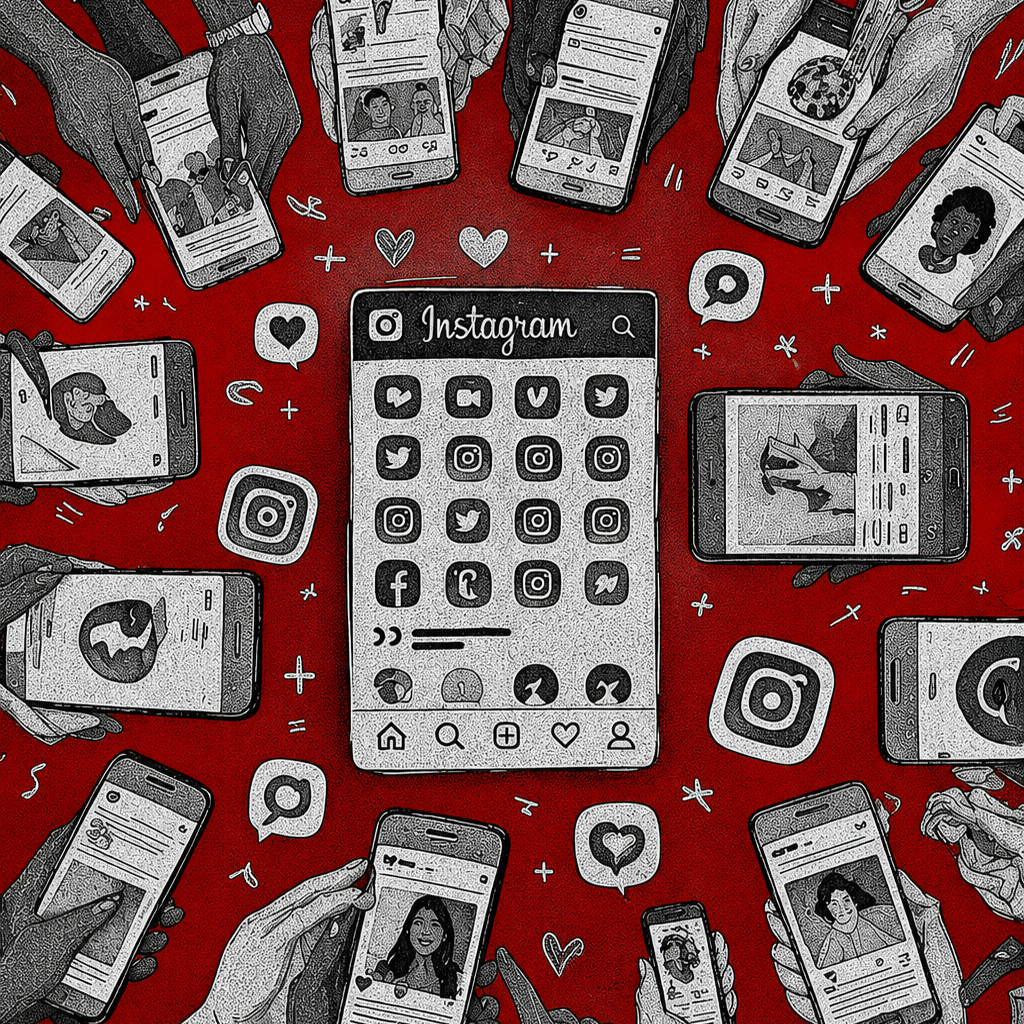
For brands, this is where things get interesting.
Instagram used to be primarily about:
Post → Like → Comment → Follow
Now the journey can look more like:
Search → Discover → Explore → Compare → Trust → Buy
A user can search for a category, discover a Reel, visit a brand’s profile, look through tagged posts, read comments, watch customer content and eventually make a purchase.
That makes Instagram more than a content platform.
It becomes part of the consumer’s decision-making process.
Instagram itself has recognised the importance of search. In 2025, Instagram head Adam Mosseri said the platform was investing more in content search to help users find specific content more easily.
That tells brands something important:
If people are searching on Instagram, brands need to start thinking about Instagram SEO.
Welcome to Instagram SEO
SEO is no longer just about ranking on Google.
Social platforms have their own discovery systems, and brands need to create content that is understandable and searchable within those environments.
That means thinking about:
Keywords
Don’t just write captions for the algorithm.
Use language your audience actually searches for.
If you’re a Mumbai restaurant, phrases such as:
“best restaurants in Mumbai”
“romantic restaurants in Mumbai”
“best date night restaurants”
can naturally become part of your captions, videos and profile content.
Captions
Captions aren’t just spaces for witty one-liners.
They can provide context around your content and help platforms understand what your post is about.
On-Screen Text
If your Reel is about “3 places to visit in Mumbai this weekend,” say it on screen.
Don’t make your audience guess what the video is about.
Alt Text
Accessibility features can also provide additional context about visual content.
Hashtags
Hashtags still have a role, but the strategy has changed.
Instead of using dozens of generic hashtags, brands should focus on relevance and intent.
Content That Answers Questions
One of the simplest ways to improve discoverability is to create content around questions people are already asking.
Instead of:
“Our new collection is here.”
Try:
“What to wear for a Mumbai monsoon date night?”
The second approach gives the audience a reason to search, watch and engage.
The Rise of “Search Everywhere Optimization”
This is where traditional SEO thinking needs to evolve.
Brands shouldn’t only ask:
“How do we rank on Google?”
They should also ask:
“Where does our audience search for this information?”
A consumer looking for a skincare recommendation may search Google.
Another may search Instagram.
Someone else may watch YouTube reviews.
Another might ask ChatGPT.
Someone looking for unfiltered opinions could search Reddit.
This means the future of discoverability isn’t necessarily about winning one search engine.
It’s about being visible across the places where your audience looks for answers.
Call it:
Search Everywhere Optimization.
What Does This Mean for Brands?
The shift towards social search changes how brands need to approach content.
1. Stop Creating Only for the Feed
A piece of content shouldn’t have a lifespan of 24 hours.
Create content that can continue being discovered weeks or months later.
Think tutorials, guides, explainers, FAQs, recommendations and evergreen Reels.
2. Create Content Around Search Intent
Ask yourself:
What would someone type if they wanted what we offer?
Then turn those questions into content.
3. Make Your Content Understandable
Aesthetic content is great.
But if nobody knows what it is about, it isn’t searchable.
Give your content clear context through your hook, caption, voiceover and on-screen text.
4. Think Like Your Audience
Don’t use industry jargon just because your marketing team understands it.
Use the language your customers actually use.
The words they type into search bars are often very different from the words brands use in campaigns.
5. Don’t Abandon Google
This is perhaps the most important point.
Social search isn’t replacing Google.
It’s expanding the search ecosystem.
Google remains incredibly important, particularly for traditional information discovery and many high-intent searches. Google’s own India research shows that Gen Z remains highly active on Google and YouTube.
The smart strategy isn’t Google vs Instagram.
It’s Google + Instagram + YouTube + TikTok + AI + whatever platform your audience uses next.
The Future of Search Is Fragmented
The internet used to have a fairly simple discovery journey.
Search → Website → Information
Today, it looks more like:
Search → Social → Creator → Community → AI → Website → Purchase
And sometimes, the website isn’t even part of the journey.
That’s what makes social search so powerful.
People aren’t necessarily searching for brands anymore.
They’re searching for answers, experiences, opinions and recommendations.
The brands that appear naturally within those answers have an advantage.
So, Are People Still Googling Everything?
Absolutely.
But they aren’t only Googling anymore.
Search has become more visual, more social, more personalised and more fragmented.
And that means the brands that want to stay discoverable need to stop thinking about SEO as something that happens only on Google.
Because your next customer might not Google your brand.
They might search for it on Instagram.
And if you’re not there, you may not even enter the consideration set.
The future of search isn’t one search engine. It’s everywhere your audience is looking.