For more than two decades, Google has been the starting point for finding information online. We searched for restaurants, products, answers, services, reviews and almost everything in between.
But search behaviour is changing.
Instead of typing a few keywords into Google and opening multiple links, people are increasingly asking AI tools direct questions and expecting complete, conversational answers. From ChatGPT and Google’s AI-powered search experiences to AI assistants and other generative AI platforms, the way people discover information is becoming more conversational, personalised and immediate.
This shift raises an important question:
Is Google still the first stop on the internet, or is AI search creating an entirely new way to find information?
The Rise of AI Search
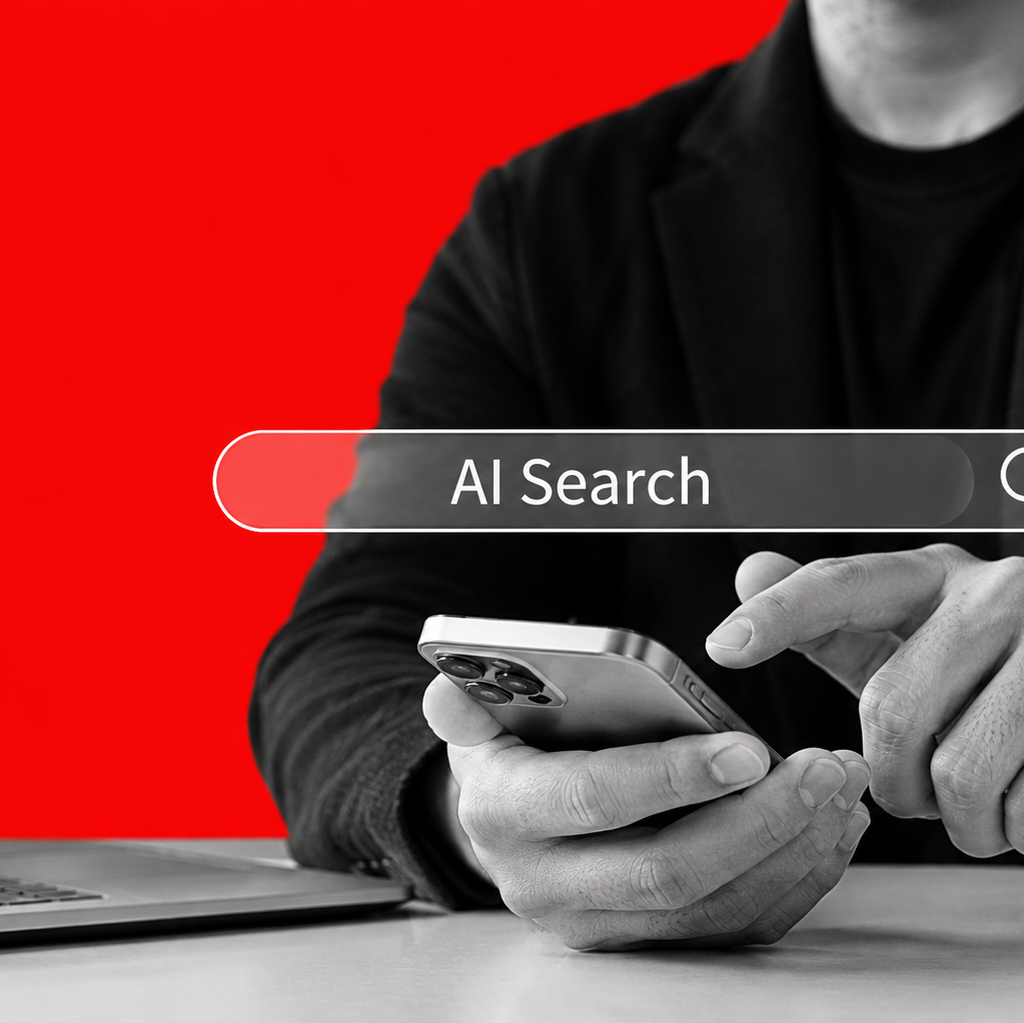
Traditional search engines work largely by matching a user’s query with relevant web pages. Users enter keywords, scan search results and choose which links to visit.
AI search changes this experience.
Instead of simply providing a list of links, AI-powered search tools can understand the context behind a question, process information from multiple sources and generate a conversational response.
For example, instead of searching:
“Best cafes in Mumbai”
a user might ask an AI assistant:
“What are some quiet cafes in Mumbai where I can work for a few hours, with good coffee and Wi-Fi?”
The second query reflects intent, preferences and context.
This is one of the biggest changes brought by AI search: users are moving from searching for keywords to asking questions.
Are People Still Using Google?
Yes. Google remains a major part of how people discover information online.
However, the search journey is becoming more fragmented.
A consumer might use Google to find a website, Instagram to discover a brand, YouTube to learn how something works and an AI assistant to compare options or understand a complex topic.
In other words, search is no longer happening in just one place.
Search behaviour is becoming multi-platform.
For brands, this means simply ranking on Google may no longer be enough.
Google Search vs AI Search
Traditional search and AI search serve different purposes.
Traditional Search
Google search is particularly useful when users want to:
- Find a specific website
- Compare multiple sources
- Locate a business
- Find current news
- Research products
- Navigate to a specific destination
AI Search
AI-powered search can be particularly useful when users want to:
- Understand a complicated topic
- Summarise information
- Compare multiple options
- Brainstorm ideas
- Ask follow-up questions
- Get a personalised explanation
The key difference is the experience.
Traditional search gives you results. AI search increasingly gives you an answer.
The Search Box Is Becoming a Conversation
One of the biggest changes in search behaviour is the move from short keyword queries to longer, conversational prompts.
People are no longer restricted to thinking like search engines.
They can simply ask questions the way they would ask another person.
For example:
Traditional SEO query:
“Best digital marketing agency Mumbai”
AI-style query:
“I’m a startup in Mumbai looking for a digital marketing agency. What should I consider before choosing one?”
The second query contains more context and intent.
This creates a new challenge for marketers: understanding not just what people search for, but why they search for it.
What Does This Mean for SEO?
SEO isn’t disappearing.
It is evolving.
For years, SEO strategies focused heavily on keywords, backlinks, technical optimisation and search rankings. These elements remain important, but AI search is creating another layer of optimisation.
Brands now need to think about how their content can become a trusted source that AI systems understand, reference and potentially surface in answers.
This is where Generative Engine Optimisation (GEO) is becoming increasingly relevant.
Instead of asking only:
“How do I rank on Google?”
marketers also need to ask:
“How do I make my brand visible when someone asks an AI about my category?”
From Ranking on Page One to Being Mentioned in an Answer
In traditional search, visibility often means appearing prominently in search results.
In AI search, visibility can look different.
A user may never see ten blue links. Instead, an AI system might provide a direct answer and mention a handful of brands, websites or sources.
This changes the value of being discoverable.
A brand could have strong website traffic and search rankings, but if AI systems don’t understand its expertise, products or relevance, it may have less visibility within conversational search experiences.
This is why brands need to start thinking beyond rankings.
The future of search visibility may involve both ranking and recognition.
Why Brand Authority Matters More Than Ever
AI search makes trustworthy information increasingly important.
Brands that consistently publish useful, original and credible content have more opportunities to establish authority around their subject.
This means businesses should focus on creating content that:
- Answers real customer questions
- Demonstrates genuine expertise
- Provides original insights
- Uses clear and accurate information
- Builds topical authority
- Is easy for both humans and search systems to understand
Instead of creating ten articles targeting slightly different versions of the same keyword, brands can build comprehensive resources that genuinely answer their audience’s questions.
The Rise of Zero-Click Search
Another major change is the growth of zero-click search.
A zero-click search happens when a user gets the information they need directly from the search experience without clicking through to another website.
AI-generated answers can accelerate this behaviour.
For brands, this creates a challenge.
If users receive an answer without visiting a website, traditional traffic-based metrics may not tell the entire story.
Brand visibility, mentions, citations, engagement and eventual conversions may become increasingly important alongside website traffic.
Social Media Is Part of Search Too

Search is no longer limited to search engines.
Younger audiences increasingly use platforms such as Instagram, YouTube and TikTok to discover products, restaurants, creators, trends and recommendations.
This means brands need to think about social search alongside traditional SEO and AI search.
A consumer might discover a restaurant through an Instagram Reel, check reviews through Google, watch a YouTube video and then ask an AI tool to compare similar options.
The customer journey can involve several discovery platforms before a purchase happens.
So, Is Google Still the First Stop?
For many searches, yes.
But the bigger change is that there may no longer be one universal first stop.
The starting point depends on what the user wants.
Someone looking for directions may open Google Maps.
Someone looking for a product recommendation may open Instagram or YouTube.
Someone trying to understand a complicated subject may ask an AI assistant.
Someone looking for a specific website may go directly to Google.
The internet is moving towards a multi-search ecosystem, where different platforms compete for different moments of consumer intent.
What Should Brands Do Now?
Brands don’t need to abandon traditional SEO.
Instead, they need to expand their approach.
1. Continue Building Strong SEO Foundations
Technical SEO, relevant keywords, quality backlinks, structured content and a healthy website still matter.
2. Create Answer-Focused Content
Write content around the questions your audience actually asks.
Think beyond keywords and understand search intent.
3. Build Topical Authority
Instead of publishing isolated articles, create interconnected content that establishes your brand as an expert within a specific subject area.
4. Optimise for Conversational Search
Consider how people naturally phrase questions.
Create content that directly answers those questions in clear, useful language.
5. Strengthen Your Brand Presence Across Platforms
Your website isn’t the only place where people discover your brand.
Build a consistent presence across search engines, social media, video platforms, review platforms and other relevant digital channels.
6. Focus on Originality
AI can generate endless amounts of generic content.
That makes original opinions, experiences, data, examples and expertise more valuable.
The brands that provide something genuinely useful will have more opportunities to stand out.
The Future of Search Is Not Google vs AI
The real story isn’t necessarily Google vs AI.
It’s about how consumers are changing the way they find information.
Search is becoming more conversational. Discovery is becoming more visual. Recommendations are becoming more personalised. And AI is becoming another layer between users and the information they need.
For marketers, the question is no longer simply:
“Are we ranking on Google?”
The bigger question is:
“Can people discover, understand and trust our brand wherever they search?”
That is the future of digital visibility.
Google isn’t disappearing overnight. But the definition of search is changing.
And for brands, adapting to that change now could be far more valuable than waiting for the next search revolution to arrive.
Final Thoughts
The internet has always evolved around how people discover information.
From directories to search engines, from desktop search to mobile search, and now from keywords to conversations, every shift has changed the way brands compete for attention.
AI search is the next major evolution.
The brands that succeed won’t necessarily be the ones producing the most content. They will be the ones creating useful, credible, original and discoverable content across the places where their audiences are searching.
Because the future of search isn’t about choosing between Google and AI.
It’s about being ready for wherever your audience searches next.