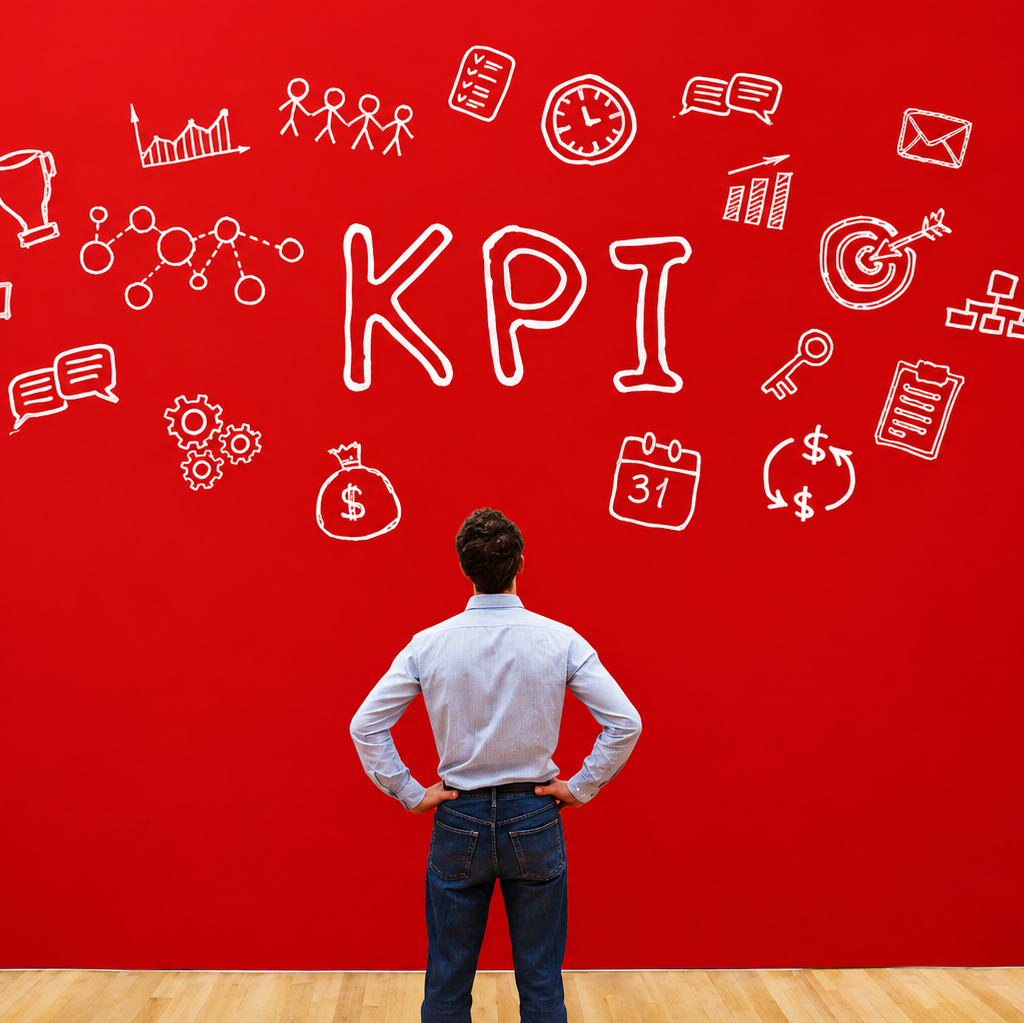
Measuring digital marketing ROI by tracking campaign performance, conversions, revenue, and marketing KPIs.

How to Measure the ROI of Your Digital Marketing Campaigns

Digital marketing gives businesses access to a wide range of opportunities to reach potential customers. From search engine optimisation and social media to paid advertising, email marketing, and content marketing, businesses can use multiple channels to promote their products and services.

But simply investing money in digital marketing does not guarantee success.

The more important question is: Is your digital marketing actually generating a return on your investment?

This is where Digital Marketing ROI (Return on Investment) becomes important.

Measuring ROI helps businesses understand how much value they are generating from their marketing investments. It allows marketers to identify profitable campaigns, improve underperforming strategies, allocate budgets more effectively, and make decisions based on actual business results rather than assumptions.

For example, spending ₹1,00,000 on a digital marketing campaign may sound expensive. But if that campaign generates ₹5,00,000 in attributable revenue, the investment may be worthwhile. On the other hand, a campaign that generates thousands of clicks but very few customers may not be delivering the expected business value.

In this blog, we explore four important steps to measure the ROI of your digital marketing campaigns effectively.


1. Define Your Goals and Identify the Right KPIs

Before measuring ROI, businesses need to clearly define what they want their digital marketing campaigns to achieve.

Not every campaign has the same objective.

An ecommerce brand may want to increase online purchases, while a B2B company may want to generate qualified leads. A new business may focus on brand awareness, while an established company may focus on customer retention and repeat purchases.

Without a clear goal, it becomes difficult to determine whether a campaign has actually been successful.

Common Digital Marketing Goals

Businesses may use digital marketing to:

  • Generate leads
  • Increase online sales
  • Improve website traffic
  • Increase brand awareness
  • Generate app downloads
  • Increase enquiries
  • Improve customer engagement
  • Increase repeat purchases
  • Reduce customer acquisition costs
  • Improve customer lifetime value

Once the goal is established, businesses need to select Key Performance Indicators (KPIs) that help measure progress toward that goal.

Important Digital Marketing KPIs

Some commonly used KPIs include:

Website Traffic:
Measures how many people visit your website.

Conversion Rate:
Measures the percentage of visitors who complete a desired action.

Cost Per Lead (CPL):
Shows how much it costs to generate one lead.

Customer Acquisition Cost (CAC):
Measures the average cost of acquiring a new customer.

Return on Ad Spend (ROAS):
Measures revenue attributed to advertising relative to advertising spend.

Customer Lifetime Value (CLV):
Estimates the value a customer generates throughout their relationship with the business.

Marketing ROI:
Measures the financial return generated from marketing investments.

For example, if your goal is lead generation, website traffic alone is not enough to measure success. You should also track leads, qualified leads, CPL, lead-to-customer conversion rate, and revenue generated from those leads.

Key takeaway: Start with a clear business objective and choose KPIs that directly connect marketing activity to that objective.


2. Calculate Your Marketing Investment and Revenue

Once goals and KPIs have been established, the next step is to calculate how much you are investing and how much revenue your campaigns are generating.

A basic ROI formula is:

ROI = [(Revenue Generated − Marketing Cost) ÷ Marketing Cost] × 100

For example, imagine a business spends ₹1,00,000 on a digital marketing campaign and generates ₹3,00,000 in attributable revenue.

The calculation would be:

ROI = [(₹3,00,000 − ₹1,00,000) ÷ ₹1,00,000] × 100

ROI = 200%

This means the campaign generated a return equivalent to 200% of the marketing investment under this simplified calculation.

However, measuring digital marketing ROI can become more complicated because businesses often use multiple channels at the same time.

For example, a customer may:

  1. Discover a brand through Instagram.
  2. Search for the company on Google.
  3. Visit the website through organic search.
  4. Read a blog.
  5. Click a remarketing advertisement.
  6. Finally make a purchase.

Which channel deserves credit for the conversion?

This is where attribution becomes important.

Understanding Marketing Attribution

Marketing attribution is the process of assigning credit for a conversion to one or more marketing touchpoints.

Different attribution approaches can produce different results.

For example:

First-touch attribution:
Gives credit to the first marketing interaction.

Last-touch attribution:
Gives credit to the final interaction before conversion.

Multi-touch attribution:
Distributes credit across multiple interactions in the customer journey.

No single model perfectly represents every customer journey. Businesses should select an approach that fits their sales cycle, data availability, and objectives.

Don’t Forget the Full Cost

Another common mistake is calculating ROI using only advertising spend.

For example, if a business spends ₹50,000 on Meta Ads, it may be tempting to consider ₹50,000 as the total marketing cost.

But the campaign may also involve:

  • Agency fees
  • Creative production
  • Video production
  • Copywriting
  • Marketing software
  • Landing page development
  • Email marketing tools
  • Analytics tools
  • Employee time

Depending on the purpose of the analysis, these costs may need to be included to get a more realistic picture of marketing profitability.

Key takeaway: Accurate ROI measurement requires businesses to understand both the revenue generated and the complete cost associated with generating that revenue.


3. Track Conversions and Connect Marketing Data With Sales

One of the biggest challenges in measuring digital marketing ROI is understanding what happens after a user clicks an advertisement or submits a form.

A campaign may generate 1,000 leads, but how many of those leads actually become customers?

This is why businesses should connect their marketing platforms with their CRM and sales data wherever possible.

Consider this example:

A company runs two advertising campaigns.

Campaign A

  • Spend: ₹50,000
  • Leads: 250
  • Qualified leads: 50
  • Customers: 10
  • Revenue: ₹2,00,000

Campaign B

  • Spend: ₹50,000
  • Leads: 100
  • Qualified leads: 60
  • Customers: 25
  • Revenue: ₹5,00,000

At first glance, Campaign A appears better because it generates more leads.

But Campaign B produces more qualified leads, more customers, and significantly more revenue.

If the business only measures the number of leads, it may incorrectly decide that Campaign A is the better campaign.

This demonstrates why businesses should measure the entire marketing funnel.

Track the Customer Journey

A useful measurement framework could look like:

Impressions → Clicks → Website Visits → Leads → Qualified Leads → Customers → Revenue

Each stage provides valuable information.

If you receive many impressions but very few clicks, your advertisement or targeting may need improvement.

If you receive many clicks but few leads, your landing page or offer may be the problem.

If you generate many leads but very few customers, the issue could be lead quality or the sales process.

If customers are converting but generating low revenue, your pricing, product mix, or customer value may need attention.

This approach helps businesses identify where money is being lost and where performance can be improved.

Use Conversion Tracking

Proper conversion tracking is essential for measuring ROI.

Businesses can track actions such as:

  • Purchases
  • Form submissions
  • Phone calls
  • Demo requests
  • Consultation bookings
  • Newsletter sign-ups
  • App downloads
  • Product enquiries

For ecommerce businesses, purchase value can be particularly useful because it allows marketers to compare advertising costs with attributed revenue.

For lead-generation businesses, connecting advertising platforms with CRM data can help determine which campaigns are generating actual customers rather than just enquiries.

Key takeaway: Don’t stop measuring at clicks or leads. Connect marketing activity to qualified leads, customers, and revenue whenever possible.


4. Analyse Performance and Optimise Your Marketing Budget

Measuring ROI is only useful if the insights are used to improve future marketing decisions.

After calculating the ROI of your campaigns, compare performance across different channels, campaigns, audiences, creatives, and customer segments.

For example, you may discover that:

  • SEO generates consistent organic leads.
  • Instagram generates strong engagement but fewer conversions.
  • Google Ads generates high-intent leads.
  • Email marketing generates strong repeat purchases.
  • Remarketing produces a strong conversion rate.
  • One particular audience segment has a significantly lower CAC.

These insights can help you determine where to invest more and where to reduce unnecessary spending.

Compare Channels Based on Business Results

Imagine a business has the following results:

ChannelMarketing CostRevenueROI
Google Ads₹1,00,000₹3,00,000200%
Social Media Ads₹1,00,000₹2,00,000100%
Email Marketing₹50,000₹2,00,000300%
SEO₹1,50,000₹4,50,000200%

Based on this simplified example, email marketing delivers the highest ROI.

However, this does not automatically mean the business should stop investing in other channels.

Different channels may play different roles in the customer journey.

SEO may build long-term organic visibility, while paid advertising can generate immediate traffic. Social media may contribute to brand discovery, while email marketing can encourage repeat purchases.

Therefore, businesses should look at ROI as part of a broader marketing performance picture.

Look Beyond Short-Term ROI

Some marketing activities take time to produce results.

SEO, content marketing, and brand-building campaigns may not generate significant revenue immediately.

For example, a business might invest in creating high-quality content today and begin receiving substantial organic traffic several months later.

If the company evaluates the campaign after only a few weeks, it may conclude that the investment was unsuccessful.

This is why ROI should be evaluated according to the expected timeframe and customer buying cycle.

Continuously Test and Optimise

Digital marketing provides businesses with the ability to test different approaches.

You can experiment with:

  • Ad creatives
  • Headlines
  • Landing pages
  • Audience segments
  • Offers
  • Calls-to-action
  • Content formats
  • Keywords
  • Campaign objectives

The goal is to identify which combinations produce better business outcomes.

Over time, continuous optimisation can help businesses improve conversion rates, reduce acquisition costs, and increase marketing efficiency.

Key takeaway: ROI measurement should not be the final step. Use the insights to continuously improve campaigns and allocate your budget more effectively.


Common Mistakes When Measuring Digital Marketing ROI

Even businesses that track their marketing performance can make mistakes.

Focusing Only on Clicks

Clicks show that people interacted with an advertisement, but they do not necessarily indicate revenue or profitability.

Measuring Only Leads

A campaign can generate thousands of leads but produce very few customers. Lead quality matters.

Ignoring Marketing Costs

If you only include advertising spend and ignore other relevant campaign costs, your ROI calculation may be misleading.

Using the Wrong Attribution Model

Giving all credit to one channel can make it difficult to understand the role played by other marketing touchpoints.

Expecting Immediate Results

Some channels, especially SEO and content marketing, can require time before their full value becomes visible.

Tracking Too Many Metrics

More data does not automatically mean better decision-making. Focus on metrics that connect directly to your business goals.


Tools That Can Help Measure Digital Marketing ROI

Businesses can use a combination of tools to track and analyse campaign performance.

These may include:

  • Website analytics platforms
  • Advertising platform dashboards
  • CRM systems
  • SEO platforms
  • Social media analytics
  • Email marketing platforms
  • Conversion tracking systems
  • Business intelligence dashboards

The most important factor is not the number of tools you use but whether the data from those tools can help answer important business questions.

For example:

Which campaign generates the most qualified customers?

Which channel has the lowest customer acquisition cost?

Which audience generates the highest revenue?

Which marketing activity provides the strongest long-term return?

These questions are much more useful than simply asking how many clicks a campaign received.


Final Thoughts

Measuring the ROI of digital marketing campaigns is essential for businesses that want to make smarter and more profitable marketing decisions.

Instead of judging campaigns based only on impressions, clicks, followers, or website traffic, businesses should connect marketing activity to leads, customers, revenue, and overall business growth.

The four key steps are:

  1. Define Your Goals and Identify the Right KPIs
  2. Calculate Your Marketing Investment and Revenue
  3. Track Conversions and Connect Marketing Data With Sales
  4. Analyse Performance and Optimise Your Marketing Budget

The goal of ROI measurement is not simply to prove that marketing is working. It is to understand why it is working, where it is working, and how it can work better.

When businesses consistently measure performance, connect marketing data with sales outcomes, and use insights to optimise their campaigns, they can make better use of their budgets and build a more effective digital marketing strategy.

Ultimately, successful digital marketing is not about spending more. It is about understanding what generates value and investing more intelligently in what works.


Frequently Asked Questions

What is digital marketing ROI?

Digital marketing ROI measures the financial return generated from a business’s digital marketing investment. A basic formula is: [(Revenue − Marketing Cost) ÷ Marketing Cost] × 100.

Why is measuring marketing ROI important?

It helps businesses understand whether their marketing investments are generating meaningful results and allows them to make better decisions about future budgets and strategies.

What KPIs should I track to measure digital marketing ROI?

Important KPIs can include conversion rate, CPL, CAC, ROAS, qualified leads, customer lifetime value, revenue, and overall marketing ROI.

Can digital marketing ROI be measured for SEO?

Yes. SEO ROI can be evaluated by tracking organic traffic, conversions, leads, customers, revenue, and the costs associated with SEO activities over an appropriate timeframe.

Is ROAS the same as ROI?

No. ROAS generally measures attributed revenue relative to advertising spend, while ROI considers the return relative to investment and can incorporate broader costs.


How Remarketing Helps Businesses Recover Lost Customers

How Remarketing Helps Businesses Recover Lost Customers

Not every person who visits a website is ready to make a purchase immediately. A potential customer may browse products, explore services, compare prices, read a blog, or even add something to their cart before leaving the website without completing an action.

For businesses, these visitors can feel like lost opportunities. However, leaving a website does not always mean that a customer has lost interest. They may have been distracted, still comparing options, waiting for the right time to buy, or simply not convinced enough to take the next step.

This is where remarketing becomes an important digital marketing strategy.

Remarketing allows businesses to reconnect with people who have previously interacted with their brand and show them relevant advertisements or messages. Instead of constantly searching for completely new audiences, businesses can continue engaging with people who have already demonstrated some level of interest.

When implemented strategically, remarketing can help businesses bring previous visitors back, recover abandoned purchases, generate additional leads, and improve overall marketing efficiency.

In this blog, we explore four important ways remarketing helps businesses recover lost customers and improve conversions.


1. Remarketing Brings Interested Visitors Back

One of the biggest advantages of remarketing is its ability to reconnect businesses with people who have already visited their website.

Imagine a customer searching for a new laptop. They visit an online electronics store, compare a few models, check the specifications, and then leave the website without making a purchase.

There can be many reasons for this.

Maybe they want to compare prices with other websites. Maybe they need to discuss the purchase with someone. Perhaps they are waiting for their salary or a special offer. Or they may simply need more time before making a decision.

Without remarketing, the business may have very little opportunity to reconnect with that visitor.

With remarketing, however, the business can continue showing relevant advertisements to that person after they leave the website.

For example, the customer may later see an advertisement featuring the product they were interested in, information about its features, customer reviews, or a relevant offer.

This keeps the brand visible while the customer is still considering their options.

Why Staying Visible Matters

Customers are exposed to a huge amount of information every day. They may discover several competing brands while researching a product or service.

If a business disappears from the customer’s consideration immediately after their first website visit, competitors have an opportunity to capture that customer.

Remarketing helps businesses maintain visibility during the consideration stage.

For example, a person researching digital marketing agencies might visit several agency websites before deciding whom to contact. A remarketing campaign can keep a particular agency visible while that person continues their research.

The purpose is not simply to show advertisements repeatedly. The goal is to provide a useful reminder that encourages the customer to return and continue their journey.

Remarketing Can Reach Different Types of Visitors

Businesses can create different audience groups based on how people interacted with their website.

For example:

  • People who visited the homepage
  • People who viewed a particular service
  • People who viewed a product
  • People who visited the pricing page
  • People who started filling out a form
  • People who added an item to their cart
  • People who previously purchased

Each group can receive a different message.

Someone who only visited the homepage may need more information about the brand, while someone who viewed a specific product may respond better to product-focused advertising.

This makes remarketing more relevant and allows businesses to communicate with customers according to their stage in the buying journey.

Key takeaway: Remarketing helps businesses stay connected with interested visitors instead of allowing potential customers to disappear after their first interaction.


2. Remarketing Helps Recover Abandoned Carts and Incomplete Actions

For ecommerce businesses, one of the most valuable applications of remarketing is abandoned cart recovery.

A customer may spend several minutes browsing products, select an item, add it to their shopping cart, and then leave before completing the purchase.

From the business’s perspective, this can be frustrating because the customer has already demonstrated strong purchase intent.

However, an abandoned cart does not necessarily mean the customer has rejected the product.

There could be many reasons behind the decision:

  • Unexpected costs
  • Shipping concerns
  • Need for additional information
  • Comparison with competitors
  • Lack of time
  • Payment issues
  • Change of mind
  • Distraction during checkout

Remarketing gives businesses an opportunity to reconnect with these customers.

For example, a brand can remind a customer about the product they previously considered and direct them back to the checkout page.

The Right Message Matters

Businesses should not assume that every abandoned cart requires a discount.

Sometimes the customer does not need a lower price. They may simply need reassurance.

A remarketing advertisement could highlight:

  • Product reviews
  • Easy returns
  • Delivery information
  • Product benefits
  • Warranty details
  • Customer testimonials
  • Frequently asked questions

For example, instead of immediately offering a discount, an online fashion brand could remind the customer about the product and highlight its easy return policy.

Similarly, a software company could use remarketing to remind someone who started a free trial or demo registration but did not complete the process.

The message should address potential barriers and give customers a clear reason to return.

Remarketing Beyond Ecommerce

Abandoned actions are not limited to shopping carts.

Businesses can also remarket to people who:

  • Started a lead form but did not submit it
  • Viewed a pricing page
  • Started a booking process
  • Watched part of a product video
  • Downloaded content
  • Visited a service page
  • Started a free trial

For example, a real estate company may have visitors who browse several property listings but do not enquire.

A remarketing campaign can reconnect with those visitors and show relevant properties, financing information, testimonials, or consultation options.

This can help move potential customers further through the decision-making process.

Key takeaway: Remarketing can recover incomplete actions by reminding customers about what they previously considered and addressing the reasons that may have prevented conversion.


3. Remarketing Creates More Relevant and Personalised Marketing

One of the biggest weaknesses of traditional advertising is that the same message may be shown to a large audience regardless of their individual interests.

Remarketing provides businesses with an opportunity to create more relevant advertising based on previous customer behaviour.

For example, imagine an online beauty store has three visitors.

Visitor A browsed skincare products.

Visitor B viewed makeup products.

Visitor C added a skincare product to their cart.

Showing all three people the same advertisement would not be the most effective strategy.

Instead, the business could create different remarketing messages.

Visitor A could see educational content about skincare.

Visitor B could see advertisements featuring makeup products.

Visitor C could receive a reminder about the product they added to their cart.

This type of segmentation makes advertising more relevant.

Personalisation Can Improve Customer Experience

Customers are more likely to engage with marketing when the message is connected to their interests.

For example, someone who previously viewed running shoes may find an advertisement about running footwear more relevant than a generic advertisement for an entire sports store.

Similarly, someone who previously visited a digital marketing service page may be more interested in seeing a case study or client success story than a general advertisement about the agency.

This allows businesses to move away from generic advertising and create messages that are connected to the customer’s previous interaction.

Different Messages for Different Customer Stages

Remarketing can also support different stages of the customer journey.

Awareness stage:
Introduce the brand and explain what the business offers.

Consideration stage:
Show testimonials, reviews, comparisons, case studies, or product benefits.

Decision stage:
Provide a strong call-to-action, consultation, demo, or purchase opportunity.

Post-purchase stage:
Promote related products, upgrades, repeat purchases, or loyalty programs.

This approach makes remarketing more than just a reminder campaign. It becomes part of a broader customer journey strategy.

Avoid Overexposure

Personalisation does not mean showing the same advertisement continuously.

If a customer sees the same advertisement too many times, it can become irritating and may create a negative perception of the brand.

Businesses should therefore use appropriate frequency controls, rotate creatives, and exclude customers from campaigns when they have already completed the intended action.

For example, someone who has already purchased a product should generally not continue receiving advertisements asking them to buy that exact product.

Key takeaway: Effective remarketing is relevant, personalised, and appropriately timed rather than repetitive.


4. Remarketing Improves Marketing Efficiency and Customer Value

The ultimate purpose of remarketing is not simply to increase the number of advertisements people see.

It is to make marketing more efficient and help businesses generate greater value from the audiences they have already reached.

A business may spend money attracting thousands of visitors to its website through:

  • Google Ads
  • Social media advertising
  • SEO
  • Influencer marketing
  • Content marketing
  • Email campaigns
  • Referral traffic

But only a percentage of those visitors may convert during their first interaction.

Remarketing gives businesses another opportunity to engage with the remaining audience.

Making Better Use of Existing Traffic

Suppose a business attracts 10,000 website visitors in a month but only 300 become leads or customers.

Instead of focusing entirely on acquiring another 10,000 visitors, the business can also investigate why the remaining visitors did not convert.

Remarketing can be one part of that strategy.

The business can create campaigns for visitors who:

  • Viewed important pages
  • Spent significant time on the website
  • Viewed products
  • Engaged with content
  • Started a conversion action
  • Abandoned their cart

This can help businesses get more value from the traffic they have already paid to acquire.

Measuring the Right Results

Businesses should not judge remarketing campaigns solely by impressions or clicks.

Important metrics include:

  • Conversion rate
  • Cost per conversion
  • Revenue generated
  • Return on ad spend
  • Cost per qualified lead
  • Lead-to-customer conversion rate
  • Customer acquisition cost
  • Repeat purchase rate

For example, a remarketing campaign may have a higher cost per click than another campaign but generate significantly more customers.

In that situation, looking only at clicks could lead to the wrong conclusion.

Businesses should focus on business outcomes rather than vanity metrics.

Remarketing Can Support Customer Retention

Remarketing is also useful after someone has already become a customer.

Businesses can use customer audiences to promote relevant products or services.

For example:

A clothing brand could promote complementary products.

A software company could promote an upgrade.

A fitness business could promote another membership plan.

An ecommerce brand could remind previous customers about products they may need to purchase again.

This can increase customer lifetime value and encourage repeat business.

The objective changes from “How do we get this person to become a customer?” to “How do we continue providing value to this customer?”

This makes remarketing useful across multiple stages of the customer lifecycle.

Key takeaway: Remarketing can improve marketing efficiency by creating additional opportunities from existing audiences while also supporting repeat purchases and long-term customer value.


Best Practices for a Successful Remarketing Strategy

A successful remarketing campaign requires more than simply creating an audience and running advertisements.

Businesses should consider the following practices:

Segment Audiences Carefully

Create different audience groups based on customer behaviour and intent.

Match Ads With Customer Intent

A person who viewed a product should receive a different message from someone who only visited the homepage.

Use Multiple Creatives

Test different images, videos, headlines, offers, and calls-to-action to avoid ad fatigue.

Set Frequency Controls

Avoid showing the same advertisement excessively.

Exclude Converted Users

If a customer has already completed the desired action, remove them from the relevant acquisition campaign.

Improve the Landing Page

Remarketing can bring customers back, but the landing page still needs to provide a smooth experience.

Track Meaningful Conversions

Measure leads, purchases, revenue, qualified leads, and ROI rather than focusing only on clicks and impressions.

Respect Privacy

Businesses should use audience and tracking data responsibly and comply with applicable privacy laws, consent requirements, and advertising platform policies.


Final Thoughts

Losing a potential customer after their first website visit does not necessarily mean losing the customer forever.

People often need time to research, compare options, ask questions, or simply return when they are ready to make a decision.

Remarketing gives businesses another opportunity to reconnect with those potential customers.

The four major ways remarketing helps businesses are:

  1. Bringing interested visitors back
  2. Recovering abandoned carts and incomplete actions
  3. Creating more relevant and personalised marketing
  4. Improving marketing efficiency and customer value

The most successful remarketing strategies are not based on showing advertisements as frequently as possible. They are based on understanding customer behaviour and delivering the right message at the right stage of the customer journey.

When businesses combine effective audience segmentation, relevant creative, strong landing pages, responsible targeting, and accurate performance tracking, remarketing can become a valuable part of their digital marketing strategy.

Ultimately, the goal is simple: turn missed opportunities into meaningful conversations, conversions, and long-term customer relationships.


Frequently Asked Questions

What is remarketing in digital marketing?

Remarketing is a digital advertising strategy that allows businesses to reconnect with people who have previously interacted with their website, app, or brand.

How does remarketing help recover lost customers?

Remarketing keeps businesses connected with potential customers after they leave a website. Relevant advertisements can encourage them to return and complete a purchase, submit an enquiry, or take another desired action.

Is remarketing useful for small businesses?

Yes. Remarketing can help small businesses reconnect with previous website visitors and potential customers instead of relying entirely on acquiring new audiences.

Can remarketing recover abandoned carts?

Yes. Ecommerce businesses can use remarketing campaigns to reconnect with customers who added products to their cart but did not complete their purchase.

What is the difference between remarketing and retargeting?

The terms are often used interchangeably. Both generally refer to strategies designed to reconnect with people who have previously interacted with a brand, although terminology can vary between advertising platforms.

Is remarketing only useful for ecommerce businesses?

No. Remarketing can be used by service businesses, educational institutions, real estate companies, SaaS businesses, agencies, consultants, and many other organisations to reconnect with potential leads and customers.

5 effective ways to reduce cost per lead through digital marketing strategies

5 Ways to Reduce Your Cost Per Lead

Generating leads is an important part of digital marketing, but generating leads at a sustainable cost is what makes a campaign truly effective. Many businesses invest heavily in Google Ads, Meta Ads, social media, and other digital channels without understanding why their Cost Per Lead (CPL) keeps increasing.

Cost Per Lead is calculated by dividing your total marketing or advertising spend by the number of leads generated:

CPL = Total Marketing Spend ÷ Number of Leads Generated

For example, if a business spends ₹50,000 on a campaign and generates 100 leads, its CPL is ₹500.

However, a lower CPL does not automatically mean a better campaign. A ₹300 lead that never responds may be less valuable than a ₹700 lead that becomes a paying customer. Therefore, businesses should focus on reducing CPL while maintaining or improving lead quality.

Here are 5 effective ways to reduce your Cost Per Lead and improve the efficiency of your digital marketing campaigns.

1. Improve Your Landing Page

One of the biggest factors affecting CPL is what happens after someone clicks your advertisement.

You may have an attractive ad and strong targeting, but if your landing page is confusing, slow, or difficult to navigate, visitors may leave without submitting their information.

Instead of sending every visitor to your homepage, create a dedicated landing page that matches the message and objective of your campaign.

Your landing page should have:

  • A clear and relevant headline
  • One primary call-to-action
  • Short and simple forms
  • Strong benefits of your product or service
  • Customer testimonials or social proof
  • Relevant images or videos
  • Mobile-friendly design
  • Fast loading speed
  • Clear contact or enquiry options

For example, if your advertisement says “Get a Free Digital Marketing Consultation,” the landing page should immediately reinforce that offer rather than making users search through multiple pages.

Improving the conversion rate of your landing page can reduce CPL without necessarily increasing your advertising budget.

Key takeaway: Before increasing your ad budget, make sure your landing page is converting the traffic you already have.


2. Target the Right Audience

Your advertising campaign can generate hundreds of leads, but if most of them are irrelevant, your marketing budget is being wasted.

Audience targeting helps businesses reach people who are more likely to be interested in their products or services.

Instead of targeting everyone, define your ideal customer based on factors such as:

  • Age
  • Location
  • Interests
  • Profession
  • Buying behaviour
  • Previous website activity
  • Search intent
  • Previous interactions with your brand

For example, a premium interior design company may not benefit from targeting every person interested in “home décor.” It may achieve better results by targeting homeowners in specific locations who are actively looking for interior design services.

Businesses can also use data from existing customers to create stronger audience segments and improve campaign targeting.

Google recommends using valuable conversion data and appropriate audience signals to help automated campaigns optimise toward better outcomes.

Key takeaway: Better targeting can help you spend your budget on people who are more likely to become genuine prospects.


3. Create Better Ads and Refresh Your Creatives

Your advertisement is often the first interaction a potential customer has with your business.

If your ad fails to capture attention or communicate a clear benefit, people may ignore it. This can result in inefficient spending and higher acquisition costs.

Your ads should clearly communicate:

Problem → Solution → Benefit → Action

For example:

Instead of:

“Digital Marketing Services Available.”

Try:

“Generate More Qualified Leads With a Data-Driven Digital Marketing Strategy.”

The second message communicates a specific benefit and is more likely to attract businesses interested in lead generation.

Businesses should also test different versions of:

  • Headlines
  • Primary copy
  • Images
  • Videos
  • CTAs
  • Offers
  • Ad formats

Creative variety is particularly important for paid social campaigns because audiences can become less responsive when repeatedly exposed to the same content.

Google also recommends providing varied, high-quality creative assets so its advertising systems can test and optimise different combinations.

Key takeaway: Don’t rely on one advertisement. Continuously test and improve your creative strategy.


4. Focus on Lead Quality, Not Just Lead Quantity

One of the biggest mistakes businesses make is trying to achieve the lowest possible CPL.

A cheap lead is not necessarily a good lead.

Imagine two campaigns:

CampaignCPLLeadsQualified Leads
Campaign A₹25020020
Campaign B₹50010050

Campaign A appears cheaper because its CPL is lower. But Campaign B generates more qualified leads despite having a higher CPL.

This is why businesses should track metrics beyond basic CPL, including:

  • Cost Per Qualified Lead
  • Lead-to-customer conversion rate
  • Customer Acquisition Cost
  • Sales-qualified leads
  • Revenue generated
  • Return on Ad Spend

A more expensive lead can ultimately be more profitable if it has a higher probability of becoming a customer.

Google also recommends optimising campaigns toward meaningful conversion goals further down the sales funnel rather than simply optimising for low-level actions.

Key takeaway: The goal isn’t to generate the cheapest leads. The goal is to generate valuable leads at an efficient cost.


5. Analyse Your Campaign Data and Cut Wasted Spend

Reducing CPL requires continuous optimisation.

Instead of running campaigns for weeks without reviewing performance, regularly analyse which campaigns, audiences, keywords, placements, and creatives are generating meaningful results.

Look for:

  • High-spending campaigns with few conversions
  • Keywords generating clicks but no leads
  • Audiences with low conversion rates
  • Ads with poor engagement
  • Landing pages with high drop-off
  • Duplicate or overlapping targeting
  • Low-quality lead sources

For Google Ads, businesses can also use conversion data to guide automated bidding and optimise toward more valuable conversion actions.

For example, if one keyword has generated ₹20,000 worth of clicks but no qualified leads while another has generated ₹15,000 in spend and several high-quality enquiries, budget allocation should be reviewed.

The same principle applies to social media campaigns.

Key takeaway: Don’t let your budget continue flowing into areas that consistently fail to produce meaningful results.


Bonus Tip: Improve Your Lead Follow-Up

Reducing CPL is not only about advertising.

What happens after a lead is generated can also influence the overall profitability of your marketing campaign.

If your sales team takes several hours or days to contact a potential customer, the lead may lose interest or choose a competitor.

Businesses should therefore:

  • Respond quickly to enquiries
  • Use CRM systems to organise leads
  • Score leads based on quality
  • Track lead sources
  • Follow up consistently
  • Connect marketing data with sales results

This allows businesses to understand which marketing campaigns are actually producing customers rather than simply producing form submissions.


How to Know If Your CPL Is Actually Improving

Don’t evaluate CPL in isolation.

A strong campaign should ideally improve several metrics together:

Lower CPL + Better Lead Quality + Higher Conversion Rate + Better Customer Acquisition Cost = More Efficient Marketing

For example, reducing CPL from ₹1,000 to ₹500 sounds impressive. But if the percentage of leads becoming customers falls dramatically, the campaign may not actually be performing better.

Instead, compare:

  • Cost Per Lead
  • Cost Per Qualified Lead
  • Lead-to-Customer Conversion Rate
  • Customer Acquisition Cost
  • Revenue
  • Marketing ROI

This gives you a much clearer picture of campaign performance.


Final Thoughts

Reducing Cost Per Lead isn’t simply about finding cheaper advertising.

It is about improving the entire lead-generation journey from targeting and creative to landing pages, conversion tracking, lead quality, and follow-up.

The five key strategies are:

  1. Improve Your Landing Page
  2. Target the Right Audience
  3. Create Better Ads and Refresh Your Creatives
  4. Focus on Lead Quality, Not Just Lead Quantity
  5. Analyse Campaign Data and Cut Wasted Spend

Businesses that focus only on getting cheap leads may end up sacrificing quality. A better approach is to build a system that generates qualified leads at a sustainable cost.

By continuously testing, analysing, and optimising each stage of the funnel, businesses can make better use of their marketing budget and create stronger opportunities for long-term growth.

Frequently Asked Questions

What is Cost Per Lead?

Cost Per Lead (CPL) is the average amount a business spends to generate one lead. It is calculated by dividing total marketing spend by the number of leads generated.

How can I reduce my Cost Per Lead?

You can reduce CPL by improving your landing page, targeting the right audience, testing better creatives, focusing on qualified leads, and regularly optimising campaign performance.

Is a lower CPL always better?

No. A lower CPL is not necessarily better if the leads are low quality. Businesses should also measure qualified leads, customer acquisition cost, conversion rates, and revenue.

What is more important: CPL or lead quality?

Both matter, but lead quality should not be sacrificed simply to achieve a lower CPL. A higher-cost lead can generate greater revenue if it has a stronger chance of becoming a customer.

How often should I optimise my digital marketing campaigns?

Campaign performance should be reviewed regularly, but optimisation frequency depends on your campaign size, platform, budget, and amount of conversion data. Avoid making major changes based on very small data sets.


7 essential digital marketing KPIs every business should track for better performance

7 Digital Marketing KPIs Every Business Should Track

In today’s competitive digital landscape, simply running marketing campaigns is not enough. Businesses need to understand whether their marketing efforts are actually delivering results. This is where Digital Marketing KPIs (Key Performance Indicators) become important.

KPIs help businesses measure the performance of their digital marketing campaigns, understand customer behaviour, identify what is working, and make better marketing decisions. Whether you are investing in SEO, social media, paid advertising, or content marketing, tracking the right metrics can help you improve your overall digital marketing ROI.

But with hundreds of available metrics, businesses often struggle to identify which KPIs actually matter.

In this blog, we explore 7 important digital marketing KPIs every business should track to measure performance and support sustainable growth.

What Are Digital Marketing KPIs?

Digital marketing KPIs are measurable values that help businesses evaluate the success of their online marketing activities.

For example, if a business runs a Google Ads campaign, simply knowing that the campaign received thousands of clicks does not tell the complete story. A more useful question is: How many of those clicks turned into customers?

KPIs provide businesses with measurable insights into areas such as:

  • Website performance
  • Lead generation
  • Customer acquisition
  • Advertising efficiency
  • Social media engagement
  • Sales and conversions
  • Marketing ROI

The right KPIs allow marketers to move from simply collecting data to making data-driven marketing decisions.


7 Digital Marketing KPIs Every Business Should Track

1. Website Traffic

Website traffic is one of the most basic but important digital marketing KPIs.

It measures the number of people visiting your website over a specific period. Tracking traffic can help businesses understand whether their SEO, social media, content marketing, and paid campaigns are successfully attracting visitors.

Businesses can monitor:

  • Total website visitors
  • New vs returning visitors
  • Traffic sources
  • Organic traffic
  • Paid traffic
  • Social media traffic
  • Referral traffic

For example, if organic traffic increases after publishing a series of SEO-focused blogs, it may indicate that the content strategy is helping the website gain visibility in search results.

However, high traffic alone does not guarantee business growth. The quality and behaviour of those visitors are equally important.

Key takeaway: Use website traffic to understand how effectively your marketing efforts are bringing potential customers to your website.


2. Conversion Rate

Getting visitors to your website is only the first step. The next goal is to encourage them to take a valuable action.

The conversion rate measures the percentage of visitors who complete a desired action.

These actions could include:

  • Filling out a contact form
  • Making a purchase
  • Signing up for a newsletter
  • Booking a consultation
  • Downloading an ebook
  • Registering for an event

The basic conversion rate formula is:

Conversion Rate = (Number of Conversions ÷ Number of Visitors) × 100

For example, if 1,000 people visit your website and 50 complete a desired action, your conversion rate is 5%.

Tracking conversion rates helps businesses identify whether their website and marketing campaigns are successfully turning visitors into leads or customers.

Key takeaway: Traffic brings people to your website, but conversions show whether those visitors are taking meaningful actions.


3. Cost Per Lead (CPL)

For businesses focused on lead generation, Cost Per Lead (CPL) is an important KPI.

CPL measures how much a business spends to generate one lead through its marketing campaigns.

The formula is:

CPL = Total Marketing Spend ÷ Number of Leads Generated

For example, if a business spends ₹50,000 on a campaign and generates 500 leads:

₹50,000 ÷ 500 = ₹100 per lead

A lower CPL can indicate that a campaign is generating leads efficiently. However, businesses should not focus on reducing CPL alone.

A campaign generating inexpensive but low-quality leads may be less valuable than a campaign generating fewer, high-quality leads.

Therefore, CPL should be evaluated alongside lead quality and conversion rates.

Key takeaway: A good CPL is not necessarily the lowest CPL; it is one that generates valuable leads at a sustainable cost.


4. Customer Acquisition Cost (CAC)

Customer Acquisition Cost (CAC) measures how much a business spends to acquire a new customer.

Unlike CPL, which focuses on leads, CAC focuses on actual customers.

The formula is:

CAC = Total Sales and Marketing Costs ÷ Number of New Customers Acquired

For example, if a company spends ₹2,00,000 on sales and marketing and gains 100 new customers:

₹2,00,000 ÷ 100 = ₹2,000 CAC

Tracking CAC helps businesses understand whether their customer acquisition strategy is financially sustainable.

If CAC continues to increase while customer value remains unchanged, the business may need to improve its targeting, conversion process, advertising strategy, or customer retention.

Key takeaway: CAC helps businesses understand the real cost of turning marketing efforts into paying customers.


5. Return on Ad Spend (ROAS)

Businesses investing in paid advertising should closely monitor Return on Ad Spend (ROAS).

ROAS measures the revenue generated for every rupee spent on advertising.

The formula is:

ROAS = Revenue Generated From Ads ÷ Advertising Cost

For example, if a company spends ₹50,000 on advertising and generates ₹2,00,000 in attributed revenue:

₹2,00,000 ÷ ₹50,000 = 4

This means the business generated ₹4 in revenue for every ₹1 spent on advertising.

ROAS can help marketers compare advertising campaigns, identify high-performing channels, and allocate budgets more effectively.

However, ROAS does not account for every business expense. Businesses should consider other costs and profitability metrics before deciding whether a campaign is financially successful.

Key takeaway: ROAS helps businesses evaluate how effectively their advertising budget is generating attributed revenue.


6. Customer Lifetime Value (CLV)

A customer’s value does not necessarily end with their first purchase.

Customer Lifetime Value (CLV) estimates the total value a customer may generate throughout their relationship with a business.

A simplified calculation can be:

CLV = Average Purchase Value × Purchase Frequency × Average Customer Lifespan

For example, if a customer spends ₹2,000 per purchase, makes five purchases per year, and remains a customer for three years:

₹2,000 × 5 × 3 = ₹30,000

This means the estimated customer lifetime value is ₹30,000.

CLV is particularly useful when evaluating customer acquisition costs. If a business spends ₹5,000 to acquire a customer who generates ₹30,000 over time, the acquisition strategy may be more sustainable than the initial acquisition cost suggests.

Key takeaway: CLV helps businesses focus on long-term customer value instead of only looking at the first purchase.


7. Marketing ROI

One of the most important KPIs for business decision-making is Marketing Return on Investment (ROI).

Marketing ROI helps businesses understand whether their overall marketing investment is generating sufficient financial returns.

A commonly used formula is:

Marketing ROI = [(Marketing Revenue − Marketing Cost) ÷ Marketing Cost] × 100

For example, if a business spends ₹1,00,000 on marketing and generates ₹3,00,000 in attributable revenue:

[(₹3,00,000 − ₹1,00,000) ÷ ₹1,00,000] × 100 = 200%

A positive ROI indicates that the return exceeds the measured investment, although the exact calculation should account for the business’s chosen attribution and cost methodology.

Marketing ROI allows business leaders to evaluate their overall marketing performance and make informed decisions about future budgets.

Key takeaway: Marketing ROI connects marketing activity with business outcomes and helps demonstrate the financial impact of marketing investments.


Why Tracking the Right KPIs Matters

Tracking KPIs is not about collecting as much data as possible. It is about identifying the metrics that directly support your business goals.

For example:

If your goal is brand awareness:
Focus on reach, impressions, website traffic, and branded search activity.

If your goal is lead generation:
Focus on leads, conversion rate, CPL, and lead quality.

If your goal is sales:
Focus on conversion rate, CAC, revenue, ROAS, and marketing ROI.

If your goal is customer retention:
Focus on CLV, repeat purchases, retention rate, and customer engagement.

Choosing KPIs based on business objectives makes your marketing reporting more meaningful and actionable.


How to Track Digital Marketing KPIs Effectively

Businesses can use platforms such as website analytics tools, advertising platforms, CRM systems, SEO tools, and social media analytics to monitor their KPIs.

However, simply tracking numbers is not enough.

A good KPI tracking process should involve:

1. Set Clear Marketing Goals

Define what the campaign is expected to achieve before selecting KPIs.

2. Choose Relevant KPIs

Select metrics that directly connect to your marketing and business objectives.

3. Establish Benchmarks

Compare current performance with previous campaigns, industry benchmarks, or internal targets.

4. Review Performance Regularly

Monitor KPIs consistently rather than checking them only at the end of a campaign.

5. Turn Data Into Action

Use performance insights to improve targeting, content, campaigns, landing pages, and marketing budgets.


Common Mistakes Businesses Make When Tracking KPIs

Even businesses that track marketing data can make mistakes. Some common problems include:

  • Focusing only on vanity metrics
  • Tracking too many KPIs
  • Ignoring lead quality
  • Not connecting marketing data with sales data
  • Comparing unrelated campaigns
  • Looking at short-term results only
  • Not establishing clear benchmarks
  • Failing to take action based on insights

For example, thousands of social media likes may look impressive, but if those interactions do not contribute to business objectives, they may have limited value.

The goal should be to focus on meaningful metrics that support business growth.


Final Thoughts

Digital marketing is most effective when decisions are supported by reliable data. Tracking the right KPIs allows businesses to understand what is working, identify areas for improvement, and allocate marketing resources more effectively.

The 7 digital marketing KPIs discussed in this blog are:

  1. Website Traffic
  2. Conversion Rate
  3. Cost Per Lead (CPL)
  4. Customer Acquisition Cost (CAC)
  5. Return on Ad Spend (ROAS)
  6. Customer Lifetime Value (CLV)
  7. Marketing ROI

No single KPI can tell the entire story. The best approach is to evaluate multiple metrics together and connect them to specific business objectives.

When businesses measure the right things, they can make smarter marketing decisions, improve campaign performance, and build a stronger path toward sustainable growth.

Frequently Asked Questions

What are the most important digital marketing KPIs?

Some of the most important KPIs include website traffic, conversion rate, CPL, CAC, ROAS, CLV, and marketing ROI. The most relevant KPIs depend on the business’s specific goals.

Why are digital marketing KPIs important?

KPIs help businesses measure marketing performance, understand customer behaviour, identify opportunities for improvement, and make data-driven decisions.

What is the difference between CPL and CAC?

CPL measures the cost of generating a lead, while CAC measures the overall cost of acquiring an actual customer.

How often should businesses track digital marketing KPIs?

Performance should generally be monitored regularly, but the ideal frequency depends on the campaign and KPI. Fast-moving paid campaigns may require frequent monitoring, while metrics such as CLV are better evaluated over longer periods.

Which KPI is best for measuring advertising performance?

ROAS is commonly used to evaluate the revenue attributed to advertising spend, while CAC and marketing ROI provide additional context about customer acquisition and overall financial performance.

Gen Z influencing digital marketing trends through social media, authentic content, and influencer marketing

Why Gen Z Is Changing Digital Marketing

Generation Z, commonly known as Gen Z, is becoming one of the most influential consumer groups in the digital marketplace. Born into a world of smartphones, social media, streaming platforms, and instant information, Gen Z interacts with brands very differently from previous generations.

For businesses, reaching Gen Z is no longer simply about being present online. Brands need to understand how this generation discovers products, consumes content, evaluates brands, and makes purchasing decisions.

As Gen Z continues to influence consumer culture, it is also changing the way businesses approach digital marketing.

1. Who Is Gen Z and What Makes Them Different?

Gen Z generally refers to people born between the late 1990s and early 2010s. They have grown up surrounded by digital technology, making online platforms a natural part of their everyday lives.

Unlike traditional consumers who may rely heavily on television, newspapers, or search engines, Gen Z often discovers brands through short-form videos, social media, creators, online communities, and recommendations.

They also tend to value authenticity. Highly polished advertisements may not always capture their attention. Instead, relatable content, real experiences, creator recommendations, and genuine brand communication can be more effective.

2. How Gen Z Is Changing Consumer Behaviour

Gen Z has changed how people discover and research products.

Social media is increasingly becoming a place where consumers find inspiration, reviews, trends, and products. Platforms such as Instagram, YouTube, and TikTok have become important parts of the discovery journey.

Gen Z also has access to enormous amounts of information. Before purchasing, they can quickly compare products, read reviews, watch videos, and check what other people are saying about a brand.

This means brands cannot depend only on traditional advertising. They need to build a consistent and trustworthy digital presence across the platforms where their audience spends time.

3. Digital Marketing Strategies That Work With Gen Z

To effectively connect with Gen Z, brands need to focus on content that is authentic, entertaining, useful, and easy to consume.

Some effective strategies include:

  • Short-form video: Reels, Shorts, and other short videos can capture attention quickly.
  • Creator marketing: Relevant creators can help brands build credibility and reach niche communities.
  • User-generated content: Real customers sharing experiences can make a brand feel more trustworthy.
  • Interactive content: Polls, quizzes, challenges, and interactive formats encourage participation.
  • Social commerce: Making it easy for users to discover and purchase products through social platforms can shorten the customer journey.
  • Community building: Brands that create genuine communities can encourage stronger long-term engagement.

The key is to create content that feels native to the platform instead of simply turning traditional advertisements into social media posts.

aab4da95 f255 48aa 8577 f1989446909e

4. Why Traditional Marketing Doesn’t Work the Same Way Anymore

Traditional advertising is not disappearing, but Gen Z has changed the role it plays in the customer journey.

This audience is exposed to advertising constantly and can quickly scroll past content that feels overly promotional or irrelevant.

Gen Z often responds better when brands communicate with them rather than at them.

Instead of focusing only on selling, brands can use storytelling, entertainment, educational content, conversations, and community-driven campaigns to build relationships.

This doesn’t mean brands should avoid promotional content. Instead, promotional messages should be supported by content that provides value and creates a reason for audiences to engage with the brand.

7ede1d73 c4e8 4196 af52 4dd1331c663a

5. How Brands Can Successfully Market to Gen Z

Marketing to Gen Z requires brands to understand that digital audiences are not simply looking for products—they are also looking for experiences, communities, entertainment, and brands they can relate to.

Businesses should:

  • Understand the platforms their target audience uses.
  • Create authentic and relatable content.
  • Experiment with short-form video.
  • Collaborate with relevant creators.
  • Encourage user-generated content.
  • Respond to audiences and participate in conversations.
  • Use data to understand what content performs best.
  • Keep the brand experience consistent across digital channels.

Most importantly, brands should avoid trying too hard to sound “young.” Gen Z can recognize forced trends and messaging. Authenticity should come from the brand’s actual voice, values, and customer experience.

Conclusion

Gen Z is changing digital marketing by shifting the focus from traditional advertising toward authentic content, social discovery, creators, communities, and meaningful engagement.

For businesses, the opportunity is not simply to follow every new trend. It is to understand how Gen Z consumes digital content and create experiences that genuinely connect with them.

Brands that listen to their audience, embrace creativity, and build authentic digital communities will be better positioned to capture Gen Z’s attention and turn that attention into long-term relationships.

Looking to build a digital marketing strategy that connects with today’s consumers? Spectra Digital can help your brand create meaningful digital experiences that drive awareness, engagement, and growth.

Digital marketing campaign strategies for improving lead quality and generating qualified leads

How to Improve Lead Quality From Digital Marketing Campaigns

Generating leads is one of the primary goals of digital marketing. But while a high number of leads may look impressive in a campaign report, lead volume alone does not guarantee business growth.

A campaign can generate hundreds of enquiries and still deliver poor results if most leads are irrelevant, have low purchase intent, fall outside the target audience, or never convert into customers.

This is why businesses need to focus on lead quality, not just lead quantity.

High-quality leads are prospects who match your ideal customer profile, have a genuine need for your product or service, and are more likely to move through the sales funnel and eventually make a purchase.

In this blog, we explore practical ways businesses can improve lead quality from their digital marketing campaigns and turn marketing efforts into more meaningful business results.

What Is Lead Quality?

Lead quality refers to how likely a lead is to become a paying customer.

A high-quality lead generally has characteristics such as:

  • A genuine interest in your product or service
  • A need that your business can solve
  • The ability or willingness to purchase
  • A good fit with your target audience
  • Relevant location, industry, or demographics
  • A reasonable level of purchase intent

For example, imagine a digital marketing agency generates 500 leads in one month.

If only 20 of those leads are genuinely interested in hiring an agency, while the remaining 480 are irrelevant enquiries, the campaign may appear successful based on lead volume but is actually underperforming from a business perspective.

The goal should therefore be to generate fewer but more relevant and conversion-ready leads when that produces better business outcomes.

Why Lead Quality Matters More Than Lead Volume

Businesses often measure digital campaigns using metrics such as impressions, clicks, cost per click and number of leads.

These metrics are useful, but they do not tell the complete story.

Consider two campaigns:

Campaign A

  • 500 leads
  • 50 qualified leads
  • 10 customers

Campaign B

  • 200 leads
  • 80 qualified leads
  • 25 customers

Campaign A generated more leads, but Campaign B created significantly more business value.

This demonstrates why marketers should look beyond the initial form submission and evaluate what happens after a lead enters the sales funnel.

Google recommends mapping the full lead journey from the first interaction through to the sale and using conversion goals that reflect meaningful outcomes such as qualified leads, appointments, requests for quotes or converted leads.

10 Ways to Improve Lead Quality From Digital Marketing Campaigns

1. Define Your Ideal Customer Profile

The first step toward improving lead quality is understanding exactly who you want to attract.

Create a clear Ideal Customer Profile (ICP) based on factors such as:

  • Age
  • Location
  • Industry
  • Job role
  • Business size
  • Income or purchasing power
  • Interests
  • Pain points
  • Buying behaviour
  • Purchase intent

For B2B businesses, you may also want to consider company size, decision-making authority, industry and annual revenue.

The more clearly you define your ideal customer, the easier it becomes to build campaigns around people who are actually valuable to your business.

2. Improve Your Audience Targeting

Poor targeting is one of the biggest reasons businesses receive irrelevant leads.

Instead of trying to reach everyone, campaigns should focus on audiences that are more likely to need the product or service.

Depending on the platform, businesses can use factors such as:

  • Location
  • Demographics
  • Interests
  • Search intent
  • Previous website interactions
  • Customer lists
  • Lookalike or similar audiences
  • Behavioural signals

However, targeting should always be evaluated using actual lead and sales data.

A large audience is not necessarily a valuable audience.

3. Use Better Keywords for Search Campaigns

For businesses running Google Search campaigns, keyword selection plays an important role in lead quality.

Broad, generic keywords can sometimes generate large amounts of traffic but may also attract people who are only looking for information.

For example, a company selling premium business software may receive very different types of traffic from:

“CRM”

versus

“CRM software for small businesses pricing”

The second search indicates stronger commercial intent.

Businesses should identify keywords that reflect different stages of the buyer journey and pay close attention to search-term data.

Irrelevant searches can then be filtered using negative keywords where appropriate. Google specifically recommends reviewing search-term insights and adding irrelevant searches as negative keywords to help improve lead quality.

4. Make Your Ad Copy More Specific

Your advertisements should clearly communicate who your product or service is for.

Generic messaging can attract a broad audience, including people who may not be suitable customers.

Instead of saying:

“Get the Best Digital Marketing Services.”

a more specific message could be:

“Digital Marketing Solutions for Growing Businesses | Generate Better Leads.”

Specific messaging helps prospects understand your offering before they click.

Your ad copy should clearly communicate:

  • What you offer
  • Who it is for
  • The key benefit
  • Why the prospect should choose you
  • What action they should take

When your messaging accurately reflects your offering, people who are not a good fit may be less likely to click.

5. Add Qualifying Questions to Lead Forms

One of the simplest ways to improve lead quality is to ask prospects relevant qualifying questions.

Instead of collecting only:

  • Name
  • Email
  • Phone number

consider collecting information that helps determine whether the person is a suitable prospect.

Depending on the business, questions could include:

  • What service are you interested in?
  • What is your approximate budget?
  • What is your company size?
  • When are you planning to start?
  • What is your biggest business challenge?
  • Which product are you interested in?

However, avoid adding unnecessary questions.

A form that is too long can discourage genuinely interested prospects from completing it.

The objective is to find the right balance between lead volume and lead qualification.

Google also recommends qualifying questions and verification methods such as reCAPTCHA or server-side validation where appropriate to improve lead quality and reduce spam.

6. Create Landing Pages That Match Your Campaigns

A common mistake is sending every advertisement to the same generic website page.

Instead, create landing pages that directly match the campaign, audience and offer.

For example, if your advertisement promotes:

“SEO Services for E-commerce Businesses”

the landing page should immediately explain your SEO services for e-commerce businesses rather than directing visitors to a generic homepage.

A strong landing page should include:

  • A clear headline
  • Relevant messaging
  • Benefits
  • Social proof
  • Testimonials or case studies
  • A strong call to action
  • A simple lead form
  • Trust signals
  • Relevant FAQs

The closer the relationship between the advertisement and landing page, the easier it is for prospects to understand the offer.

7. Optimize for Qualified Leads, Not Just Form Submissions

This is one of the most important changes a business can make.

Many campaigns are optimized for the easiest conversion available: the form submission.

But a form submission does not necessarily equal a valuable lead.

Instead, businesses should track deeper stages of the funnel, such as:

Ad Click → Lead → Qualified Lead → Sales Conversation → Proposal → Customer

The goal is to understand which marketing activities generate customers rather than simply generating forms.

Google recommends using lead-generation-specific conversion goals and, where possible, optimizing toward deeper-funnel actions such as qualified or converted leads.

8. Connect Your CRM With Your Marketing Data

Your CRM contains valuable information about what happens after a lead is generated.

It can help answer questions such as:

  • Which campaigns generate qualified leads?
  • Which sources generate customers?
  • Which keywords produce better prospects?
  • Which audiences have higher conversion rates?
  • How long does it take leads to convert?
  • Which campaigns generate the highest revenue?

Connecting CRM and advertising data creates a more complete view of campaign performance.

Google’s measurement tools support connecting CRM information and importing offline actions so businesses can measure outcomes that happen beyond the website, such as completed applications or signed contracts.

9. Use Lead Scoring

Lead scoring allows businesses to assign a value or score to prospects based on their characteristics and behaviour.

For example:

Lead BehaviourExample Score
Downloads an ebook+5
Visits pricing page+10
Watches product demo+15
Requests a consultation+25
Matches ideal customer profile+20
Provides an unrealistic budget-10
Outside service area-20

The exact scoring model will vary by business.

The purpose is to help sales teams prioritize prospects who are more likely to convert.

10. Follow Up Quickly

Generating a high-quality lead is only part of the process.

If your sales team takes too long to respond, a potential customer may move to a competitor.

Create a clear follow-up process for new leads.

Depending on the business, this could include:

  1. Instant confirmation message
  2. Sales representative notification
  3. Phone call
  4. Email follow-up
  5. WhatsApp or other permitted communication
  6. Sales qualification
  7. Personalized follow-up

Marketing and sales teams should work together to define what happens immediately after a lead is generated.

Measure Lead Quality Using the Right Metrics

To understand whether your campaigns are actually improving, track metrics beyond cost per lead.

Important metrics include:

Cost Per Qualified Lead

This measures how much you spend to generate a qualified prospect.

Cost Per Qualified Lead = Marketing Spend ÷ Number of Qualified Leads

Lead-to-Customer Conversion Rate

This measures how many leads eventually become customers.

Lead-to-Customer Rate = Customers ÷ Total Leads × 100

Qualified Lead Rate

This tells you what percentage of generated leads meet your qualification criteria.

Qualified Lead Rate = Qualified Leads ÷ Total Leads × 100

Customer Acquisition Cost

Customer Acquisition Cost (CAC) measures the average cost of acquiring a customer.

CAC = Total Marketing and Sales Costs ÷ Number of New Customers

Return on Ad Spend

ROAS helps measure the revenue generated in relation to advertising expenditure.

ROAS = Revenue Attributed to Ads ÷ Advertising Spend

Looking at these metrics together provides a much clearer picture than simply reporting the number of leads generated.

How First-Party Data Can Improve Lead Quality

First-party data has become increasingly important for modern digital marketing.

Businesses can use information collected directly from their customers and prospects—such as CRM data, customer interactions and conversion outcomes—to better understand which audiences and campaigns are actually producing valuable results.

Google’s current guidance highlights enhanced conversions for leads as a way to use user-provided data alongside imported offline conversion information to improve measurement accuracy and bidding performance.

This creates a stronger connection between marketing activity and actual business outcomes.

Common Reasons Your Campaigns Generate Poor-Quality Leads

If your campaign is generating many irrelevant leads, consider these potential causes:

1. Your targeting is too broad

Your campaign may be reaching people outside your ideal customer profile.

2. Your messaging is unclear

People may misunderstand what you offer.

3. Your offer attracts the wrong audience

An overly broad or generic offer can encourage low-intent enquiries.

4. Your keywords lack commercial intent

Informational searches may generate traffic without generating customers.

5. Your forms are too easy to submit

Minimal friction can increase volume but may also increase irrelevant submissions.

6. Your landing page doesn’t match the advertisement

A mismatch can attract people who expected something different.

7. You are optimizing for the wrong conversion

If your advertising platform is being told that every form submission is equally valuable, it may focus on maximizing submissions rather than customers.

8. Your sales follow-up is inconsistent

Even good leads can be lost if they are not contacted and nurtured effectively.

A Better Lead Generation Funnel

A strong digital marketing campaign should follow a structured funnel:

Awareness

↓

Reach the right audience with relevant content and advertising.

Interest

↓

Give prospects useful information that addresses their needs.

Lead Generation

↓

Capture contact information through a relevant offer.

Qualification

↓

Determine whether the prospect matches your ideal customer profile.

Sales

↓

Move qualified prospects into the sales process.

Conversion

↓

Turn qualified prospects into customers.

Retention

↓

Build long-term relationships and encourage repeat business.

The objective is not simply to increase the number of people entering the funnel. It is to improve the quality of people moving through each stage.

The Role of Digital Marketing Agencies in Improving Lead Quality

Improving lead quality often requires more than changing an advertisement.

It requires coordination between:

  • Audience research
  • SEO
  • Paid advertising
  • Content marketing
  • Landing pages
  • Conversion optimization
  • CRM systems
  • Analytics
  • Lead scoring
  • Sales follow-up

A digital marketing agency can help businesses analyze the complete customer journey, identify where poor-quality leads are entering the funnel, and optimize campaigns based on actual business outcomes.

For example, instead of asking:

“How can we generate 1,000 leads?”

the better question is:

“How can we generate more qualified prospects who are likely to become customers?”

That shift can completely change how a business approaches digital marketing.

Final Thoughts

Generating leads is important, but generating the right leads is even more important.

Businesses should move beyond vanity metrics such as clicks and total form submissions and focus on metrics that connect marketing activity with real business outcomes.

Start by defining your ideal customer, improving audience targeting, using stronger keywords and messaging, creating relevant landing pages, adding appropriate qualification questions, connecting CRM data, and optimizing campaigns toward qualified and converted leads.

Most importantly, continuously analyze what happens after a lead is generated.

Because the real success of a digital marketing campaign isn’t measured by how many leads you generate.

It’s measured by how many of those leads become valuable customers.

Grow Your Business With Smarter Digital Marketing

At Spectra Digital, the focus should be on building digital marketing strategies that connect visibility, lead generation and business growth.

Whether you need SEO, performance marketing, social media marketing, content strategy or conversion-focused digital campaigns, the right strategy can help your business attract better prospects and turn them into customers.

Ready to improve the quality of your leads? Start building a smarter digital marketing strategy today.

AI-generated content and authentic brand marketing in the digital age

AI Slop Is Everywhere. Here’s Why Authenticity Is Becoming a Competitive Advantage

The internet has never had more content.

And somehow, it has never felt more repetitive.

Scroll through social media and you will see polished captions that sound strangely familiar, generic AI-generated images, videos with the same hooks, recycled listicles and articles that technically answer a question but say nothing new.

Welcome to the age of AI slop.

As generative AI becomes part of everyday content creation, brands can now produce blogs, social posts, images, videos and advertisements faster than ever before.

But there is a problem.

When everyone can create more content, creating more content stops being the competitive advantage.

Instead, the brands that stand out will be the ones that feel human, distinctive and authentic.

What Is AI Slop?

“AI slop” is a term increasingly used online to describe low-quality, mass-produced or generic content created with the help of artificial intelligence.

AI itself isn’t the problem.

The problem is what happens when brands use AI to produce content without adding:

  • Original thinking
  • Human experience
  • Creativity
  • Context
  • Personality
  • Fact-checking
  • A clear point of view

The result is content that may be grammatically perfect but emotionally empty.

It answers the question.

It just doesn’t give you a reason to remember the answer.

And as AI-generated content becomes easier to produce, the internet risks becoming increasingly crowded with content that looks different but sounds exactly the same.

AI Has Solved the Content Problem. Or Has It?

For years, marketers complained about not having enough content.

Not enough blogs.

Not enough social posts.

Not enough videos.

Not enough campaign ideas.

Generative AI has changed that.

A marketer can now generate dozens of content ideas in minutes. AI can help write first drafts, analyse data, create variations, brainstorm headlines and accelerate production.

That’s a huge advantage.

But it also creates a new problem:

Content abundance.

When producing content becomes cheap and fast, the value shifts from production to differentiation.

Think about photography.

Everyone has a camera in their pocket today.

That didn’t make everyone a great photographer.

The same principle applies to AI.

Everyone can generate content. Not everyone can create something worth consuming.

Why Authenticity Is Becoming More Valuable

When audiences are surrounded by polished, predictable content, something imperfect can suddenly feel more interesting.

A founder speaking honestly about a business mistake.

A creator sharing an unscripted opinion.

A customer showing how they actually use a product.

A brand admitting that something didn’t work.

These moments can feel more believable because they don’t feel manufactured.

Authenticity creates something AI-generated content often struggles to replicate:

human connection.

People don’t just consume information.

They connect with stories, opinions, experiences and personalities.

And that’s where brands have an opportunity.

The Internet Is Becoming More Polished and Less Personal

There is an interesting contradiction happening online.

Technology is making content look better.

But sometimes, it is making content feel worse.

The same AI tools that can create beautiful visuals can also produce images that feel interchangeable.

The same tools that can write perfectly structured articles can produce paragraphs filled with generic observations.

The same tools that can create social captions can make every brand sound like the same brand.

You start seeing phrases such as:

“In today’s fast-paced digital world…”

“It’s important to note…”

“Here are five game-changing strategies…”

Again and again.

The problem isn’t that these sentences are incorrect.

It’s that they don’t sound like anyone.

And brands without a recognisable voice become increasingly difficult to remember.

Authenticity Doesn’t Mean Anti-Technology

ChatGPT Image Sep 4, 2026, 05 42 38 PM

This is an important distinction.

The answer isn’t to stop using AI.

AI can be an incredibly powerful tool for marketers.

It can help with:

  • Research
  • Brainstorming
  • Content planning
  • Data analysis
  • Transcription
  • Editing
  • Personalisation
  • Workflow automation
  • Content repurposing
  • Creative exploration

The difference is how you use it.

There is a big difference between:

“AI, write my entire brand campaign.”

and

“Here is our idea, audience insight and brand voice. Help us explore ten creative directions.”

The first replaces thinking.

The second accelerates thinking.

And that distinction will become increasingly important.

The Human Advantage

Ironically, the more AI-generated content we see, the more valuable human qualities become.

Experience

AI can summarise what people have said.

But your brand’s actual experience is unique.

A campaign you ran.

A customer problem you solved.

A mistake you made.

A lesson you learned.

These are difficult to replicate because they come from your real-world experience.

Perspective

Two brands can have access to the same information.

What separates them is what they think about it.

A strong point of view can turn an ordinary topic into compelling content.

Personality

Your audience should be able to recognise your brand without seeing the logo.

That comes from tone, humour, storytelling, opinions and distinctive creative choices.

Emotion

Data can tell you what happened.

A human story can tell you why it matters.

That emotional layer is often what turns content into something people remember.

Why Generic Content Is Becoming a Brand Problem

AI slop isn’t just an editorial problem.

It can become a branding problem.

Imagine a consumer discovering five brands in the same category.

Every brand uses identical AI-generated visuals.

Every caption uses the same tone.

Every Reel follows the same trend.

Every blog says the same things.

How does the consumer decide?

Usually, they look for something that feels real.

That could be:

  • A recognisable founder
  • A distinctive brand voice
  • Strong creative direction
  • Customer stories
  • Behind-the-scenes content
  • Original research
  • A unique opinion
  • Community interaction

In other words:

Authenticity becomes a differentiator.

The Rise of Human-Led Content

This is why we are seeing growing interest in formats that feel less polished and more personal.

Think:

Behind-the-scenes content

Show how something is actually made.

Founder-led content

Let people hear directly from the people behind the brand.

User-generated content

Let customers tell the story.

Employee-generated content

Give audiences a look inside the organisation.

Expert-led content

Put actual expertise behind your claims.

Unfiltered storytelling

Not everything needs to look like a television commercial.

These formats work because they provide something that generic content often doesn’t:

evidence of a human being behind the brand.

Authenticity Is Not the Same as Being Unpolished

There’s another misconception worth addressing.

Authenticity doesn’t mean posting badly shot videos, ignoring brand guidelines or publishing whatever comes to mind.

A brand can be highly strategic and still feel authentic.

The goal isn’t:

Perfect vs imperfect.

It’s:

Manufactured vs meaningful.

You can have excellent production, strong design and sophisticated marketing while still communicating like a real human.

Authenticity is about truth, transparency and distinctiveness, not poor execution.

How Brands Can Avoid Becoming Part of the AI Slop Problem

ChatGPT Image Sep 4, 2026, 05 30 50 PM (1)

1. Use AI as a Starting Point, Not the Finish Line

AI can generate the first draft.

Your team should make it worth publishing.

Add examples, opinions, experiences and insights that couldn’t have come from a generic prompt.

2. Develop a Distinct Brand Voice

Define how your brand speaks.

Is it witty?

Direct?

Bold?

Warm?

Technical?

Conversational?

Your audience should be able to recognise your voice.

3. Create Original Insights

Don’t simply rewrite information that already exists online.

Publish:

  • Original research
  • Surveys
  • Case studies
  • Campaign learnings
  • Expert interviews
  • Industry observations
  • Proprietary data

Original information gives people a reason to choose your content over the hundreds of similar articles generated elsewhere.

4. Put People in Your Content

Your customers, employees, founders, creators and experts can make a brand feel more human.

People connect with people.

5. Have an Opinion

Safe content is forgettable content.

You don’t need to be controversial for the sake of being controversial.

But you should have something to say.

Instead of:

“Social media is changing rapidly.”

say what you actually believe about where it’s going.

A perspective gives your content a point of view.

6. Prioritise Quality Over Quantity

AI makes it tempting to publish more.

Resist that temptation.

One genuinely useful article can be more valuable than ten generic ones.

One memorable campaign can outperform dozens of forgettable posts.

The goal isn’t to fill the internet.

It’s to earn attention.

Authenticity Can Also Improve SEO

There is an important SEO angle here.

Search engines increasingly emphasise helpful, reliable, people-first content.

Google’s guidance encourages publishers to create original, useful content for people rather than content primarily designed to manipulate search rankings.

That means authenticity isn’t simply a branding trend.

It can support a stronger content strategy.

Original research, first-hand experience, expert commentary and genuinely useful information can give your content greater value than another generic article that simply summarises what already exists.

And as AI-powered search becomes more prominent, this becomes even more important.

If AI systems are selecting sources to help answer questions, brands need to give those systems something worth referencing.

Originality becomes discoverability.

The New Competitive Advantage

ChatGPT Image Sep 4, 2026, 05 07 10 PM

For years, brands competed on things like:

Budget.

Reach.

Technology.

Speed.

Now AI is making some of these advantages more accessible.

A small brand can use the same AI tools as a large brand.

A solo creator can generate content at a scale that once required a team.

A startup can produce polished creative without a huge production budget.

So what becomes difficult to copy?

A point of view.

A reputation.

A community.

A story.

Real experience.

Trust.

These are built over time.

And AI can’t simply generate them for you.

The Future Isn’t AI vs Humans

The future of marketing isn’t going to be about choosing between AI and human creativity.

It’s going to be about combining them intelligently.

AI can help brands move faster.

Humans decide where to go.

AI can analyse information.

Humans decide what it means.

AI can generate options.

Humans choose the idea worth pursuing.

AI can automate production.

Humans create the culture around the brand.

The winning formula isn’t:

AI instead of humans.

It’s:

AI + human creativity + authentic brand thinking.

In a World Full of AI, Be More Human

AI has made content creation easier than ever.

That means content itself is becoming less scarce.

Attention is still scarce.

And when audiences are exposed to an endless stream of generic content, the things that feel real become more valuable.

The brands that win won’t necessarily be the ones publishing the most.

They’ll be the ones with something genuinely worth saying.

So use AI.

Experiment with it.

Let it make your teams faster.

But don’t let it erase the thing that makes your brand different.

Because when everyone can create content with AI, authenticity might just become the most powerful competitive advantage of all.

Generative Engine Optimization and AI search strategy for brands

From SEO to GEO: How Brands Can Win in AI Search

For more than two decades, digital marketing has revolved around one question:

How do I get my brand to rank on Google?

Brands built websites, researched keywords, created backlinks and published content to compete for that coveted spot on page one.

But search is changing.

Today, consumers are increasingly asking AI-powered platforms for recommendations, comparisons, explanations and answers. Instead of browsing through ten blue links, they can ask an AI tool a question and receive a synthesised response based on information gathered from multiple sources.

That creates a new challenge for brands:

What happens when your customer doesn’t search for you on Google, but asks AI about you instead?

This is where Generative Engine Optimization, or GEO, enters the conversation.

What Is GEO?

ChatGPT Image Sep 4, 2026, 12 54 31 PM

Generative Engine Optimization (GEO) is the practice of improving a brand’s visibility across AI-powered search and answer experiences.

Traditional SEO focuses largely on helping search engines discover, understand and rank web pages.

GEO focuses on making a brand’s information easier for AI systems to understand, retrieve, reference and potentially cite in generated answers.

Think of the difference this way:

SEO: “How do I rank for this search?”

GEO: “How do I become a credible source when AI answers this question?”

The terminology is relatively new, but the underlying goal isn’t completely different.

Google’s own guidance makes this clear: SEO best practices continue to apply to generative AI search because Google’s AI search features use its existing Search systems to retrieve relevant information.

So GEO isn’t the death of SEO.

It’s the next layer of search visibility.

Why AI Search Is Changing Brand Discovery

ChatGPT Image Sep 4, 2026, 01 01 08 PM

Traditional search gives users a list of options.

AI search can give users a direct answer.

Imagine someone asks:

“What are the best digital marketing agencies in Mumbai for entertainment brands?”

A traditional search engine might return websites, directories, articles and business listings.

An AI-powered search experience could instead generate a shortlist, explain why each agency is relevant and reference information from across the web.

Suddenly, the competition isn’t simply about ranking for a keyword.

It’s about being considered a credible answer.

That changes the way brands need to think about digital visibility.

SEO vs GEO: What’s the Difference?

SEO and GEO have different immediate objectives, but they work together.

SEOGEO
Optimises for traditional searchOptimises for AI-powered search experiences
Focuses on rankings and organic visibilityFocuses on mentions, citations and inclusion in AI answers
Targets search engine results pagesTargets AI-generated responses and summaries
Keyword and search-intent drivenContext, relevance and authority driven
Drives users to web pagesCan influence how AI describes or recommends a brand

But this isn’t an either-or decision.

Strong GEO starts with strong SEO foundations.

A technically weak, poorly structured website won’t suddenly become authoritative because a brand adds a few AI-focused tactics.

Google specifically recommends maintaining crawlability, technical SEO, clear site structure and helpful, people-first content for visibility in its generative AI search experiences.

The New Search Journey

ChatGPT Image Sep 4, 2026, 01 21 31 PM

The traditional customer journey looked something like:

Search → Click → Website → Research → Purchase

The AI-assisted journey can look more like:

Question → AI Answer → Recommendation → Validation → Purchase

This changes where brands need to establish credibility.

Your website still matters.

But so do the other places where information about your brand exists.

That includes:

  • Industry publications
  • News websites
  • Reviews
  • Interviews
  • Expert articles
  • Social platforms
  • Business directories
  • Creator content
  • Customer discussions
  • Third-party websites

The more consistent and credible your digital presence is, the easier it becomes for systems to understand who you are, what you do and why you are relevant.

How Can Brands Optimise for GEO?

ChatGPT Image Sep 4, 2026, 12 57 04 PM

There isn’t a magic GEO checklist that guarantees your brand will appear in every AI answer.

In fact, Google warns against chasing supposed AI-search “hacks” and emphasises valuable, original content instead.

However, brands can build a stronger foundation for AI search visibility.

1. Create Original, Expert-Led Content

AI systems have access to enormous amounts of information.

So why would they need another generic article saying:

“10 Digital Marketing Tips for Businesses”?

They don’t.

Brands need to create content that offers something distinctive.

That could be:

  • Original research
  • First-hand insights
  • Expert opinions
  • Case studies
  • Proprietary data
  • Unique perspectives
  • Industry analysis
  • Real examples

Google’s current guidance specifically recommends creating unique, useful, non-commodity content rather than simply rewriting information that already exists online.

The takeaway?

Don’t create more content. Create more valuable content.

2. Answer Real Questions

AI search is fundamentally conversational.

People don’t always search using short keywords anymore.

They ask complete questions.

Instead of:

“social media marketing agency Mumbai”

someone might ask:

“What should a Mumbai brand look for when choosing a social media marketing agency?”

Your content should anticipate those questions.

Create dedicated sections that clearly answer:

  • What is it?
  • Why does it matter?
  • How does it work?
  • Who is it for?
  • What are the benefits?
  • What are the limitations?
  • How much does it cost?
  • What should you consider before choosing it?

This makes your content useful to humans while also creating clear, structured information for search systems.

3. Build Topical Authority

One article rarely establishes expertise.

Imagine a digital marketing agency publishing one article about influencer marketing.

Now imagine that same agency publishing a complete knowledge ecosystem covering:

  • Influencer marketing
  • Creator strategy
  • UGC
  • Creator-led commerce
  • Social media strategy
  • Influencer measurement
  • Campaign optimisation
  • Creator selection
  • Social commerce

The second brand demonstrates much deeper topical knowledge.

This is why brands should think in terms of content ecosystems, not isolated blog posts.

4. Make Your Brand Easy to Understand

AI systems need to understand entities and relationships.

Your website should make basic information extremely clear.

Who are you?

What do you do?

Who do you serve?

Where are you based?

What industries do you specialise in?

What services do you offer?

Who are your experts?

What work have you done?

Consistency matters.

Your brand name, services, descriptions and key information should not contradict themselves across different platforms.

Clarity builds discoverability.

5. Strengthen Your Digital Authority

A brand shouldn’t rely entirely on its own website to establish credibility.

Third-party signals matter because AI search experiences can draw information from across the web.

Think about where your brand appears outside its own channels.

Are you mentioned in relevant publications?

Do customers review you?

Are your experts quoted?

Are your campaigns discussed?

Are your founders contributing to industry conversations?

Are credible websites referencing your work?

This isn’t about generating artificial mentions.

Google explicitly cautions against pursuing inauthentic mentions simply to influence AI-generated answers.

The goal is real authority, not manufactured authority.

6. Structure Content Clearly

Good structure helps both people and machines understand information.

Use:

  • Clear H1 and H2 headings
  • Short paragraphs
  • Descriptive subheadings
  • Lists where appropriate
  • Tables for comparisons
  • FAQs
  • Clear definitions
  • Supporting examples

But don’t over-engineer your content for AI.

Google says there is no requirement to break content into tiny pieces or rewrite content in a special format specifically for generative AI.

Write clearly because humans deserve clear content first.

7. Keep Your Information Fresh

AI search is increasingly being used for questions where freshness matters.

Consider queries around:

  • Current trends
  • Prices
  • Product features
  • Industry statistics
  • Regulations
  • Market developments
  • New technologies

Outdated information can hurt credibility.

Review important pages regularly and update statistics, examples, links and claims when necessary.

What About Keywords?

ChatGPT Image Sep 4, 2026, 01 22 55 PM

Keywords aren’t disappearing.

But the way we think about them needs to evolve.

Traditional SEO often starts with:

“What keyword should we rank for?”

GEO encourages a broader question:

“What questions is our audience asking?”

For example, instead of creating five separate articles around slightly different versions of:

“best digital marketing agency”

you might create a comprehensive resource answering:

“How to choose the right digital marketing agency for your brand.”

That resource can naturally address services, pricing, expertise, industries, campaign strategy, measurement and selection criteria.

You’re still using keywords.

You’re simply putting intent before keywords.

GEO Is Not About “Tricking” AI

As GEO becomes more popular, marketers are naturally looking for shortcuts.

But trying to manipulate AI systems with keyword stuffing, artificial mentions or low-quality mass-produced content is unlikely to create sustainable visibility.

Google’s current guidance specifically advises against creating large quantities of pages simply to manipulate rankings or generative AI responses.

The better approach is surprisingly familiar:

Be useful. Be credible. Be original. Be clear.

The difference is that now those principles matter across a much broader search ecosystem.

How Should Brands Measure GEO?

ChatGPT Image Sep 4, 2026, 01 28 44 PM

Traditional SEO gives marketers familiar metrics:

  • Rankings
  • Organic traffic
  • Click-through rate
  • Backlinks
  • Conversions

GEO introduces another layer.

Brands can start monitoring:

  • How frequently they appear in AI-generated answers
  • Whether AI platforms mention the brand for relevant queries
  • What descriptions are being used
  • Which competitors are being recommended
  • Which sources are being cited
  • Whether brand information is accurate
  • Referral traffic from AI platforms

Google also provides a Generative AI performance report in Search Console to help site owners understand how their content performs in Google’s generative AI experiences.

The important thing is to treat AI visibility as an additional discovery channel, not a replacement for existing SEO measurement.

The Biggest Mistake Brands Can Make

The biggest mistake isn’t ignoring GEO.

It’s treating GEO as a completely separate marketing discipline.

Your website, SEO, PR, social media, content marketing, influencer strategy and brand communications all contribute to your digital footprint.

If your website says one thing, your LinkedIn says another and third-party websites contain outdated information, you’re creating a fragmented brand presence.

The future of search rewards brands that are consistent across the ecosystem.

SEO Isn’t Dead. It’s Evolving.

ChatGPT Image Sep 4, 2026, 01 26 00 PM

Every major change in search creates the same question:

“Is SEO dead?”

We’ve heard it with social media.

We’ve heard it with voice search.

Now we’re hearing it with AI.

But the fundamentals remain remarkably consistent.

People still need useful information.

Search systems still need reliable sources.

Brands still need authority.

Websites still need to be discoverable.

What’s changing is how people consume the information once they find it.

Google’s current position is particularly important here: AI search still relies on core Search ranking and quality systems, meaning foundational SEO remains relevant.

So the future isn’t:

SEO → GEO

It’s:

SEO + GEO + Social Search + Brand Authority

The Future Belongs to the Most Discoverable Brands

ChatGPT Image Sep 4, 2026, 01 27 30 PM

Search is becoming less about a single results page and more about an interconnected digital ecosystem.

A customer might discover your brand through Google.

Ask an AI tool about you.

Watch your Instagram content.

Read a review.

See a creator recommendation.

Then visit your website.

Every one of those touchpoints contributes to the decision.

That means brands need to stop thinking only about where they rank and start thinking about how they are represented across the internet.

Because in the age of AI search, being visible isn’t enough.

Your brand needs to be understandable, credible and worth recommending.

That’s the real opportunity behind GEO.

Instagram social search and digital marketing on a smartphone

Instagram Is the New Search Engine: Are People Still Googling Everything?

For years, if you wanted an answer, you Googled it.

Looking for a restaurant? Google it.
Want to buy a new phone? Google it.
Planning a holiday? Google it.
Need a product recommendation? Google it.

But search behaviour is changing.

Today, someone looking for the best cafés in Mumbai might open Instagram. Someone looking for a makeup tutorial might search YouTube or Instagram. Someone looking for an honest product review might turn to TikTok or Reddit. And someone looking for a quick, personalised answer might ask an AI tool.

The search bar is no longer limited to search engines.

Social media platforms are becoming discovery engines, recommendation engines and increasingly, search engines in their own right.

So, are people still Googling everything?

Not quite.

Search Is No Longer a One-Platform Game

Google still plays a huge role in how people find information. In fact, Google’s own 2025 research on Gen Z in India found that 79% of Gen Z consumers surveyed use Google and/or YouTube daily.

But that doesn’t mean every search begins on Google.

Younger audiences are increasingly choosing platforms based on what they are looking for.

Want restaurant inspiration? Instagram.

Want a tutorial? YouTube.

Want product opinions? Instagram, TikTok or Reddit.

Want a quick explanation? AI.

Want a traditional answer? Google.

Search has evolved from:

“Where do I search?”

to:

“What am I looking for, and where am I most likely to find it?”

That’s a major shift for marketers.

Why Are People Searching on Instagram?

ChatGPT Image Sep 3, 2026, 07 14 43 PM

The biggest advantage social platforms have is that they combine search with context.

Imagine searching for:

“Best cafés in Mumbai.”

A Google search might give you websites, maps, listings and reviews.

An Instagram search can give you Reels of the café, what the interiors look like, what people are ordering, creator recommendations and comments from people who have actually visited.

The information isn’t just searchable.

It’s visual, immediate and experiential.

That’s particularly powerful for categories where seeing the product or experience matters.

Think:

  • Fashion
  • Beauty
  • Food
  • Travel
  • Fitness
  • Entertainment
  • Lifestyle
  • Home décor
  • Restaurants
  • Events

For these categories, consumers don’t necessarily want a paragraph telling them something is good.

They want to see it.

Gen Z Is Changing the Meaning of “Search”

This shift is particularly visible among Gen Z.

A 2025 survey reported by Search Engine Land found that among 18–27-year-olds, Instagram was the most commonly cited platform for discovering new products at 30.4%, ahead of TikTok at 23.2%, Google at 18.8% and YouTube at 14.5%.

Another 2025 study from Sprout Social found that 41% of Gen Z respondents in its survey turn to social platforms first when looking for information, compared with 32% who start with traditional search engines.

The important point isn’t that “Gen Z has stopped using Google.”

They haven’t.

It’s that they have become platform-agnostic searchers.

They go where the answer feels most useful.

And increasingly, that answer is being found inside social content.

Instagram Isn’t Just a Social Network Anymore

ChatGPT Image Sep 3, 2026, 07 18 10 PM

For brands, this is where things get interesting.

Instagram used to be primarily about:

Post → Like → Comment → Follow

Now the journey can look more like:

Search → Discover → Explore → Compare → Trust → Buy

A user can search for a category, discover a Reel, visit a brand’s profile, look through tagged posts, read comments, watch customer content and eventually make a purchase.

That makes Instagram more than a content platform.

It becomes part of the consumer’s decision-making process.

Instagram itself has recognised the importance of search. In 2025, Instagram head Adam Mosseri said the platform was investing more in content search to help users find specific content more easily.

That tells brands something important:

If people are searching on Instagram, brands need to start thinking about Instagram SEO.

Welcome to Instagram SEO

SEO is no longer just about ranking on Google.

Social platforms have their own discovery systems, and brands need to create content that is understandable and searchable within those environments.

That means thinking about:

Keywords

Don’t just write captions for the algorithm.

Use language your audience actually searches for.

If you’re a Mumbai restaurant, phrases such as:

“best restaurants in Mumbai”
“romantic restaurants in Mumbai”
“best date night restaurants”

can naturally become part of your captions, videos and profile content.

Captions

Captions aren’t just spaces for witty one-liners.

They can provide context around your content and help platforms understand what your post is about.

On-Screen Text

If your Reel is about “3 places to visit in Mumbai this weekend,” say it on screen.

Don’t make your audience guess what the video is about.

Alt Text

Accessibility features can also provide additional context about visual content.

Hashtags

Hashtags still have a role, but the strategy has changed.

Instead of using dozens of generic hashtags, brands should focus on relevance and intent.

Content That Answers Questions

One of the simplest ways to improve discoverability is to create content around questions people are already asking.

Instead of:

“Our new collection is here.”

Try:

“What to wear for a Mumbai monsoon date night?”

The second approach gives the audience a reason to search, watch and engage.

The Rise of “Search Everywhere Optimization”

This is where traditional SEO thinking needs to evolve.

Brands shouldn’t only ask:

“How do we rank on Google?”

They should also ask:

“Where does our audience search for this information?”

A consumer looking for a skincare recommendation may search Google.

Another may search Instagram.

Someone else may watch YouTube reviews.

Another might ask ChatGPT.

Someone looking for unfiltered opinions could search Reddit.

This means the future of discoverability isn’t necessarily about winning one search engine.

It’s about being visible across the places where your audience looks for answers.

Call it:

Search Everywhere Optimization.

What Does This Mean for Brands?

The shift towards social search changes how brands need to approach content.

1. Stop Creating Only for the Feed

A piece of content shouldn’t have a lifespan of 24 hours.

Create content that can continue being discovered weeks or months later.

Think tutorials, guides, explainers, FAQs, recommendations and evergreen Reels.

2. Create Content Around Search Intent

Ask yourself:

What would someone type if they wanted what we offer?

Then turn those questions into content.

3. Make Your Content Understandable

Aesthetic content is great.

But if nobody knows what it is about, it isn’t searchable.

Give your content clear context through your hook, caption, voiceover and on-screen text.

4. Think Like Your Audience

Don’t use industry jargon just because your marketing team understands it.

Use the language your customers actually use.

The words they type into search bars are often very different from the words brands use in campaigns.

5. Don’t Abandon Google

This is perhaps the most important point.

Social search isn’t replacing Google.

It’s expanding the search ecosystem.

Google remains incredibly important, particularly for traditional information discovery and many high-intent searches. Google’s own India research shows that Gen Z remains highly active on Google and YouTube.

The smart strategy isn’t Google vs Instagram.

It’s Google + Instagram + YouTube + TikTok + AI + whatever platform your audience uses next.

The Future of Search Is Fragmented

The internet used to have a fairly simple discovery journey.

Search → Website → Information

Today, it looks more like:

Search → Social → Creator → Community → AI → Website → Purchase

And sometimes, the website isn’t even part of the journey.

That’s what makes social search so powerful.

People aren’t necessarily searching for brands anymore.

They’re searching for answers, experiences, opinions and recommendations.

The brands that appear naturally within those answers have an advantage.

So, Are People Still Googling Everything?

Absolutely.

ChatGPT Image Sep 3, 2026, 07 28 14 PM

But they aren’t only Googling anymore.

Search has become more visual, more social, more personalised and more fragmented.

And that means the brands that want to stay discoverable need to stop thinking about SEO as something that happens only on Google.

Because your next customer might not Google your brand.

They might search for it on Instagram.

And if you’re not there, you may not even enter the consideration set.

The future of search isn’t one search engine. It’s everywhere your audience is looking.

ChatGPT Image Sep 2, 2026, 05 14 22 PM

From Scroll to Sale: How Social Media Became the New Shopping Mall

For years, the online shopping journey was fairly predictable: search for a product, compare options, visit an e-commerce website, and make a purchase.

That journey is changing.

Today, a consumer can discover a product while watching an Instagram Reel, see a creator recommending it, check the comments for reviews, visit the brand’s profile, ask a question on WhatsApp and make a purchase, often without ever actively searching for the product.

The shopping mall has moved into the feed.

This shift is known as social commerce, and it is changing how brands approach digital marketing, content creation and customer acquisition.

What Is Social Commerce?

Social commerce is the combination of social media and e-commerce, allowing consumers to discover, evaluate and increasingly purchase products through social platforms.

Unlike traditional e-commerce, where consumers often have a specific purchase intent, social commerce is built around discovery.

A person may not open Instagram thinking, “I need a new pair of sneakers.”

They may simply be scrolling.

Then they see a creator styling a pair of sneakers. The product catches their attention. They watch a Reel, visit the brand page, read comments and eventually decide to buy.

The purchase didn’t begin with a search.

It began with a scroll.

And this is becoming increasingly important in India. Meta’s 2026 research with the Retailers Association of India says social media influences 77% of retail purchase decisions, while short-form video and creators are playing a major role in product discovery.

From Search-First to Scroll-First Shopping

Traditional e-commerce largely follows a search-first model.

The consumer knows what they want, searches for it and then evaluates their options.

Social commerce flips that model.

The consumer discovers something first and develops the desire to purchase afterwards.

This is why platforms such as Instagram, YouTube and WhatsApp are becoming increasingly important to brands.

Meta describes this evolution in India as a shift from “search-and-transact” to a “scroll-led discovery ecosystem.”

Think about how people discover products today:

See → Like → Explore → Trust → Ask → Buy

The journey is no longer necessarily linear. It can happen within minutes, across multiple formats and platforms.

For brands, this means the content itself has to do more than generate awareness.

It needs to create intent.

Instagram Is Becoming the New Storefront

A brand’s Instagram profile is no longer simply a place to post campaigns and product photographs.

It can function as a digital storefront.

Reels create discovery.

Stories create urgency.

Creator collaborations create credibility.

Comments create social proof.

DMs create conversations.

Product links create the path to purchase.

This makes social media fundamentally different from traditional advertising.

A billboard can make someone notice a brand.

A social platform can take that person from discovery to consideration to conversion within the same ecosystem.

For marketers, the question is therefore no longer:

“How do we get people to see our product?”

It is:

“How do we make the product impossible to scroll past?”

Creators Are the New Salespeople

One of the biggest reasons social commerce works is trust.

Consumers are increasingly discovering products through people they already follow and trust rather than through traditional advertising alone.

Creators can demonstrate products, explain how they work, share personal experiences and answer questions in ways that conventional advertisements often cannot.

YouTube’s expansion of its Shopping ecosystem in India is a strong example of this shift. Google reported that more than 200 million logged-in users in India had shopping-related searches on YouTube in July 2025, while shopping-related watch time had grown by more than 250% year over year.

The creator is no longer simply an awareness channel.

They can become part of the entire customer journey.

Creator → Content → Trust → Discovery → Purchase

And this is why creator-led commerce is becoming an increasingly important part of social media marketing.

Short-Form Video Is Driving Product Discovery

If social commerce is the new shopping mall, then short-form video is its window display.

Reels, Shorts and other vertical video formats allow brands to demonstrate products in context rather than simply displaying them.

A beauty product can be shown in a tutorial.

A fashion brand can show how an outfit looks in real life.

A food brand can demonstrate the product through a recipe.

A tech brand can show an actual use case.

The product becomes part of a story.

Meta’s 2026 India research found that 97% of consumers surveyed watch short-form video daily, while 60% of time spent on Facebook and Instagram is spent on video.

This has an important implication for brands:

Don’t just advertise the product. Show people why they should want it.

WhatsApp Is Turning Interest Into Conversation

Social commerce doesn’t necessarily end with a “Buy Now” button.

In India, conversation is becoming an important part of the purchase journey.

A consumer might discover a product on Instagram and then move to WhatsApp to ask about availability, pricing, delivery or recommendations.

That makes messaging platforms an important bridge between interest and conversion.

Meta’s 2026 research found that 72% of product discovery happens on WhatsApp, while businesses using Business Messaging and Click-to-WhatsApp campaigns are seeing improvements in leads, return on ad spend and order values.

The result is a more conversational shopping experience:

Discover → DM → Ask → Trust → Purchase

For brands, this means customer service and marketing are becoming increasingly interconnected.

AI Is Making Social Commerce More Personal

ChatGPT Image Sep 2, 2026, 08 31 10 PM

There is another force changing the social shopping experience: artificial intelligence.

AI is helping platforms and marketers understand what consumers are interested in, personalise recommendations and optimise campaigns based on behaviour.

Meta is already introducing AI-powered shopping and advertising tools, including systems that can dynamically incorporate products into creative and generate UGC-style content.

This could make social commerce even more personalised.

Instead of every consumer seeing the same advertisement, brands can increasingly deliver experiences based on what an individual is likely to find relevant.

But there is a catch.

More AI does not automatically mean better marketing.

Consumers may appreciate relevance, but they still respond to authenticity, creativity and human connection.

That is where brands need to strike the right balance.

What This Means for Brands

The rise of social commerce isn’t simply about adding shopping links to Instagram.

It requires brands to rethink how they approach digital marketing.

1. Create for discovery

Your audience may not be looking for your product.

Your content needs to give them a reason to stop, watch and explore.

2. Think like a creator

Highly polished brand communication has its place, but consumers increasingly want content that feels natural, relatable and useful.

3. Build trust before asking for the sale

Reviews, testimonials, UGC and creator recommendations can help turn attention into consideration.

4. Make the journey frictionless

Every additional step between discovering a product and purchasing it creates an opportunity for the consumer to drop off.

5. Measure more than likes

Reach and engagement are important, but brands need to connect social activity to meaningful outcomes such as website visits, enquiries, leads and sales.

6. Treat social as part of the entire funnel

Social media is no longer only a top-of-funnel awareness tool.

It can influence discovery, consideration, conversion and retention.

The New Digital Shopping Journey

The biggest change isn’t that people are shopping on social media.

It’s that shopping behaviour itself is becoming social.

People discover through creators.

They validate through comments.

They ask questions through DMs.

They compare through videos.

They share recommendations with friends.

And they purchase when the journey feels easy enough.

The traditional distinction between content, community and commerce is disappearing.

For brands, the opportunity is enormous.

But winning in social commerce won’t simply come down to having more products, more ads or more followers.

It will come down to creating better reasons to stop scrolling.

Because in today’s digital marketplace, the customer may not walk into your store.

Your store has to meet them in the scroll.