
Digital marketing gives businesses access to a wide range of opportunities to reach potential customers. From search engine optimisation and social media to paid advertising, email marketing, and content marketing, businesses can use multiple channels to promote their products and services.
But simply investing money in digital marketing does not guarantee success.
The more important question is: Is your digital marketing actually generating a return on your investment?
This is where Digital Marketing ROI (Return on Investment) becomes important.
Measuring ROI helps businesses understand how much value they are generating from their marketing investments. It allows marketers to identify profitable campaigns, improve underperforming strategies, allocate budgets more effectively, and make decisions based on actual business results rather than assumptions.
For example, spending ₹1,00,000 on a digital marketing campaign may sound expensive. But if that campaign generates ₹5,00,000 in attributable revenue, the investment may be worthwhile. On the other hand, a campaign that generates thousands of clicks but very few customers may not be delivering the expected business value.
In this blog, we explore four important steps to measure the ROI of your digital marketing campaigns effectively.
1. Define Your Goals and Identify the Right KPIs
Before measuring ROI, businesses need to clearly define what they want their digital marketing campaigns to achieve.
Not every campaign has the same objective.
An ecommerce brand may want to increase online purchases, while a B2B company may want to generate qualified leads. A new business may focus on brand awareness, while an established company may focus on customer retention and repeat purchases.
Without a clear goal, it becomes difficult to determine whether a campaign has actually been successful.
Common Digital Marketing Goals
Businesses may use digital marketing to:
- Generate leads
- Increase online sales
- Improve website traffic
- Increase brand awareness
- Generate app downloads
- Increase enquiries
- Improve customer engagement
- Increase repeat purchases
- Reduce customer acquisition costs
- Improve customer lifetime value
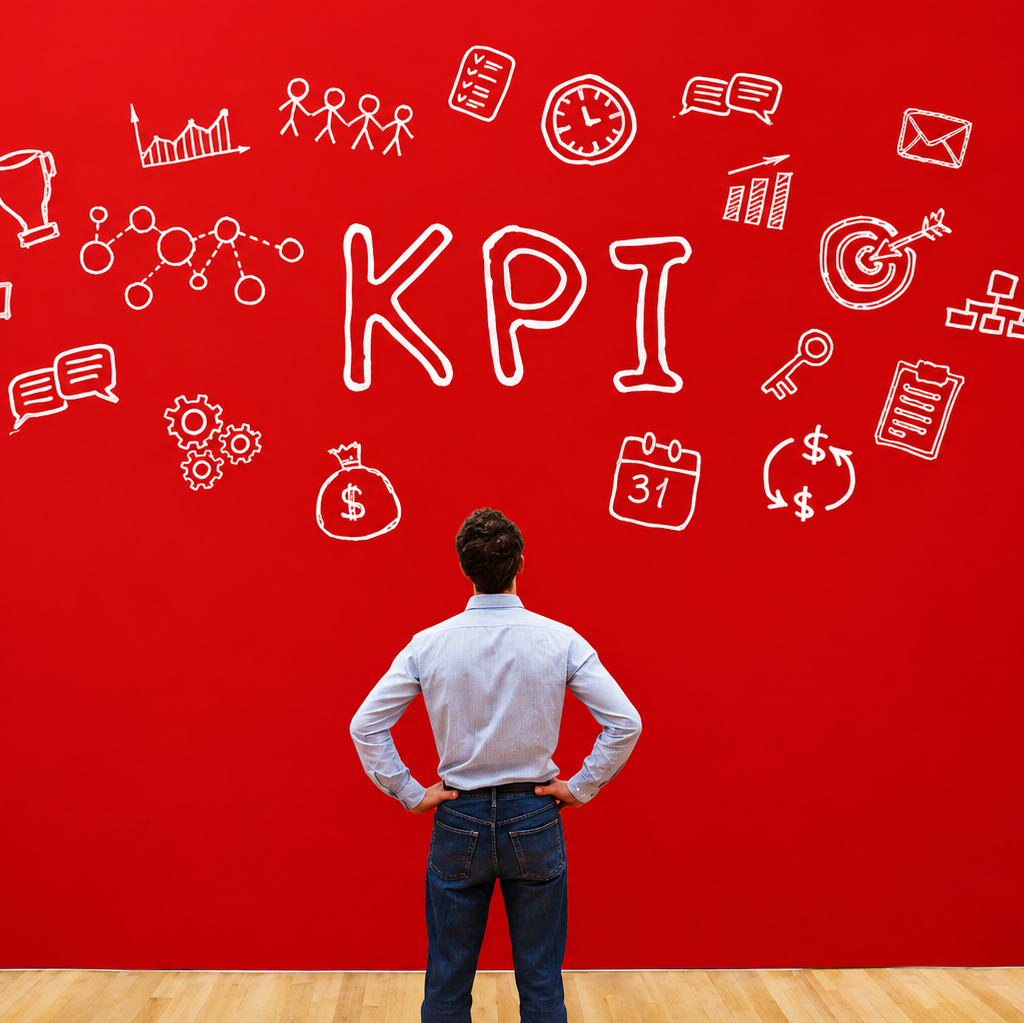
Once the goal is established, businesses need to select Key Performance Indicators (KPIs) that help measure progress toward that goal.
Important Digital Marketing KPIs
Some commonly used KPIs include:
Website Traffic:
Measures how many people visit your website.
Conversion Rate:
Measures the percentage of visitors who complete a desired action.
Cost Per Lead (CPL):
Shows how much it costs to generate one lead.
Customer Acquisition Cost (CAC):
Measures the average cost of acquiring a new customer.
Return on Ad Spend (ROAS):
Measures revenue attributed to advertising relative to advertising spend.
Customer Lifetime Value (CLV):
Estimates the value a customer generates throughout their relationship with the business.
Marketing ROI:
Measures the financial return generated from marketing investments.
For example, if your goal is lead generation, website traffic alone is not enough to measure success. You should also track leads, qualified leads, CPL, lead-to-customer conversion rate, and revenue generated from those leads.
Key takeaway: Start with a clear business objective and choose KPIs that directly connect marketing activity to that objective.
2. Calculate Your Marketing Investment and Revenue
Once goals and KPIs have been established, the next step is to calculate how much you are investing and how much revenue your campaigns are generating.
A basic ROI formula is:
ROI = [(Revenue Generated − Marketing Cost) ÷ Marketing Cost] × 100
For example, imagine a business spends ₹1,00,000 on a digital marketing campaign and generates ₹3,00,000 in attributable revenue.
The calculation would be:
ROI = [(₹3,00,000 − ₹1,00,000) ÷ ₹1,00,000] × 100
ROI = 200%
This means the campaign generated a return equivalent to 200% of the marketing investment under this simplified calculation.
However, measuring digital marketing ROI can become more complicated because businesses often use multiple channels at the same time.
For example, a customer may:
- Discover a brand through Instagram.
- Search for the company on Google.
- Visit the website through organic search.
- Read a blog.
- Click a remarketing advertisement.
- Finally make a purchase.
Which channel deserves credit for the conversion?
This is where attribution becomes important.
Understanding Marketing Attribution
Marketing attribution is the process of assigning credit for a conversion to one or more marketing touchpoints.
Different attribution approaches can produce different results.
For example:
First-touch attribution:
Gives credit to the first marketing interaction.
Last-touch attribution:
Gives credit to the final interaction before conversion.
Multi-touch attribution:
Distributes credit across multiple interactions in the customer journey.
No single model perfectly represents every customer journey. Businesses should select an approach that fits their sales cycle, data availability, and objectives.
Don’t Forget the Full Cost
Another common mistake is calculating ROI using only advertising spend.
For example, if a business spends ₹50,000 on Meta Ads, it may be tempting to consider ₹50,000 as the total marketing cost.
But the campaign may also involve:
- Agency fees
- Creative production
- Video production
- Copywriting
- Marketing software
- Landing page development
- Email marketing tools
- Analytics tools
- Employee time
Depending on the purpose of the analysis, these costs may need to be included to get a more realistic picture of marketing profitability.
Key takeaway: Accurate ROI measurement requires businesses to understand both the revenue generated and the complete cost associated with generating that revenue.

3. Track Conversions and Connect Marketing Data With Sales
One of the biggest challenges in measuring digital marketing ROI is understanding what happens after a user clicks an advertisement or submits a form.
A campaign may generate 1,000 leads, but how many of those leads actually become customers?
This is why businesses should connect their marketing platforms with their CRM and sales data wherever possible.
Consider this example:
A company runs two advertising campaigns.
Campaign A
- Spend: ₹50,000
- Leads: 250
- Qualified leads: 50
- Customers: 10
- Revenue: ₹2,00,000
Campaign B
- Spend: ₹50,000
- Leads: 100
- Qualified leads: 60
- Customers: 25
- Revenue: ₹5,00,000
At first glance, Campaign A appears better because it generates more leads.
But Campaign B produces more qualified leads, more customers, and significantly more revenue.
If the business only measures the number of leads, it may incorrectly decide that Campaign A is the better campaign.
This demonstrates why businesses should measure the entire marketing funnel.
Track the Customer Journey
A useful measurement framework could look like:
Impressions → Clicks → Website Visits → Leads → Qualified Leads → Customers → Revenue
Each stage provides valuable information.
If you receive many impressions but very few clicks, your advertisement or targeting may need improvement.
If you receive many clicks but few leads, your landing page or offer may be the problem.
If you generate many leads but very few customers, the issue could be lead quality or the sales process.
If customers are converting but generating low revenue, your pricing, product mix, or customer value may need attention.
This approach helps businesses identify where money is being lost and where performance can be improved.
Use Conversion Tracking
Proper conversion tracking is essential for measuring ROI.
Businesses can track actions such as:
- Purchases
- Form submissions
- Phone calls
- Demo requests
- Consultation bookings
- Newsletter sign-ups
- App downloads
- Product enquiries
For ecommerce businesses, purchase value can be particularly useful because it allows marketers to compare advertising costs with attributed revenue.
For lead-generation businesses, connecting advertising platforms with CRM data can help determine which campaigns are generating actual customers rather than just enquiries.
Key takeaway: Don’t stop measuring at clicks or leads. Connect marketing activity to qualified leads, customers, and revenue whenever possible.

4. Analyse Performance and Optimise Your Marketing Budget
Measuring ROI is only useful if the insights are used to improve future marketing decisions.
After calculating the ROI of your campaigns, compare performance across different channels, campaigns, audiences, creatives, and customer segments.
For example, you may discover that:
- SEO generates consistent organic leads.
- Instagram generates strong engagement but fewer conversions.
- Google Ads generates high-intent leads.
- Email marketing generates strong repeat purchases.
- Remarketing produces a strong conversion rate.
- One particular audience segment has a significantly lower CAC.
These insights can help you determine where to invest more and where to reduce unnecessary spending.
Compare Channels Based on Business Results
Imagine a business has the following results:
| Channel | Marketing Cost | Revenue | ROI |
|---|---|---|---|
| Google Ads | ₹1,00,000 | ₹3,00,000 | 200% |
| Social Media Ads | ₹1,00,000 | ₹2,00,000 | 100% |
| Email Marketing | ₹50,000 | ₹2,00,000 | 300% |
| SEO | ₹1,50,000 | ₹4,50,000 | 200% |
Based on this simplified example, email marketing delivers the highest ROI.
However, this does not automatically mean the business should stop investing in other channels.
Different channels may play different roles in the customer journey.
SEO may build long-term organic visibility, while paid advertising can generate immediate traffic. Social media may contribute to brand discovery, while email marketing can encourage repeat purchases.
Therefore, businesses should look at ROI as part of a broader marketing performance picture.
Look Beyond Short-Term ROI
Some marketing activities take time to produce results.
SEO, content marketing, and brand-building campaigns may not generate significant revenue immediately.
For example, a business might invest in creating high-quality content today and begin receiving substantial organic traffic several months later.
If the company evaluates the campaign after only a few weeks, it may conclude that the investment was unsuccessful.
This is why ROI should be evaluated according to the expected timeframe and customer buying cycle.
Continuously Test and Optimise
Digital marketing provides businesses with the ability to test different approaches.
You can experiment with:
- Ad creatives
- Headlines
- Landing pages
- Audience segments
- Offers
- Calls-to-action
- Content formats
- Keywords
- Campaign objectives
The goal is to identify which combinations produce better business outcomes.
Over time, continuous optimisation can help businesses improve conversion rates, reduce acquisition costs, and increase marketing efficiency.
Key takeaway: ROI measurement should not be the final step. Use the insights to continuously improve campaigns and allocate your budget more effectively.

Common Mistakes When Measuring Digital Marketing ROI
Even businesses that track their marketing performance can make mistakes.
Focusing Only on Clicks
Clicks show that people interacted with an advertisement, but they do not necessarily indicate revenue or profitability.
Measuring Only Leads
A campaign can generate thousands of leads but produce very few customers. Lead quality matters.
Ignoring Marketing Costs
If you only include advertising spend and ignore other relevant campaign costs, your ROI calculation may be misleading.
Using the Wrong Attribution Model
Giving all credit to one channel can make it difficult to understand the role played by other marketing touchpoints.
Expecting Immediate Results
Some channels, especially SEO and content marketing, can require time before their full value becomes visible.
Tracking Too Many Metrics
More data does not automatically mean better decision-making. Focus on metrics that connect directly to your business goals.
Tools That Can Help Measure Digital Marketing ROI
Businesses can use a combination of tools to track and analyse campaign performance.
These may include:
- Website analytics platforms
- Advertising platform dashboards
- CRM systems
- SEO platforms
- Social media analytics
- Email marketing platforms
- Conversion tracking systems
- Business intelligence dashboards
The most important factor is not the number of tools you use but whether the data from those tools can help answer important business questions.
For example:
Which campaign generates the most qualified customers?
Which channel has the lowest customer acquisition cost?
Which audience generates the highest revenue?
Which marketing activity provides the strongest long-term return?
These questions are much more useful than simply asking how many clicks a campaign received.
Final Thoughts
Measuring the ROI of digital marketing campaigns is essential for businesses that want to make smarter and more profitable marketing decisions.
Instead of judging campaigns based only on impressions, clicks, followers, or website traffic, businesses should connect marketing activity to leads, customers, revenue, and overall business growth.
The four key steps are:
- Define Your Goals and Identify the Right KPIs
- Calculate Your Marketing Investment and Revenue
- Track Conversions and Connect Marketing Data With Sales
- Analyse Performance and Optimise Your Marketing Budget
The goal of ROI measurement is not simply to prove that marketing is working. It is to understand why it is working, where it is working, and how it can work better.
When businesses consistently measure performance, connect marketing data with sales outcomes, and use insights to optimise their campaigns, they can make better use of their budgets and build a more effective digital marketing strategy.
Ultimately, successful digital marketing is not about spending more. It is about understanding what generates value and investing more intelligently in what works.
Frequently Asked Questions
What is digital marketing ROI?
Digital marketing ROI measures the financial return generated from a business’s digital marketing investment. A basic formula is: [(Revenue − Marketing Cost) ÷ Marketing Cost] × 100.
Why is measuring marketing ROI important?
It helps businesses understand whether their marketing investments are generating meaningful results and allows them to make better decisions about future budgets and strategies.
What KPIs should I track to measure digital marketing ROI?
Important KPIs can include conversion rate, CPL, CAC, ROAS, qualified leads, customer lifetime value, revenue, and overall marketing ROI.
Can digital marketing ROI be measured for SEO?
Yes. SEO ROI can be evaluated by tracking organic traffic, conversions, leads, customers, revenue, and the costs associated with SEO activities over an appropriate timeframe.
Is ROAS the same as ROI?
No. ROAS generally measures attributed revenue relative to advertising spend, while ROI considers the return relative to investment and can incorporate broader costs.