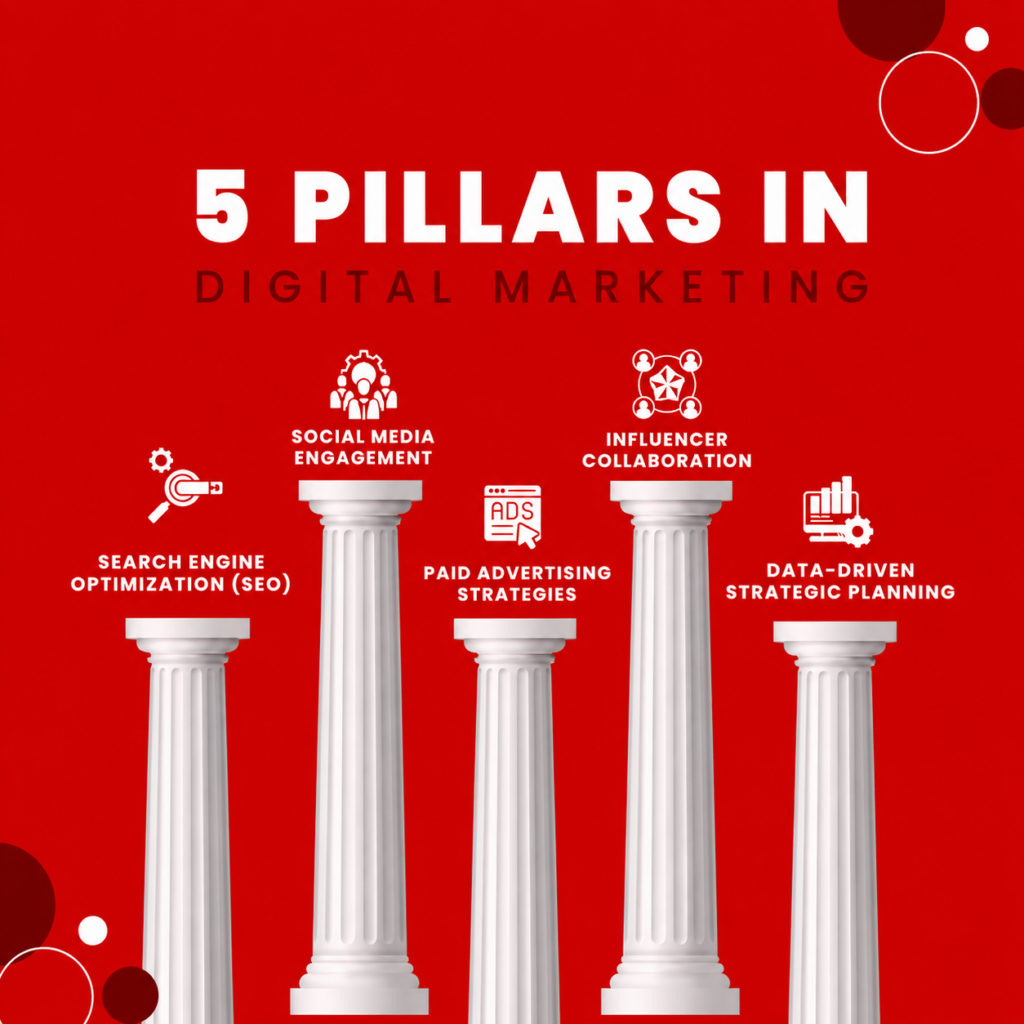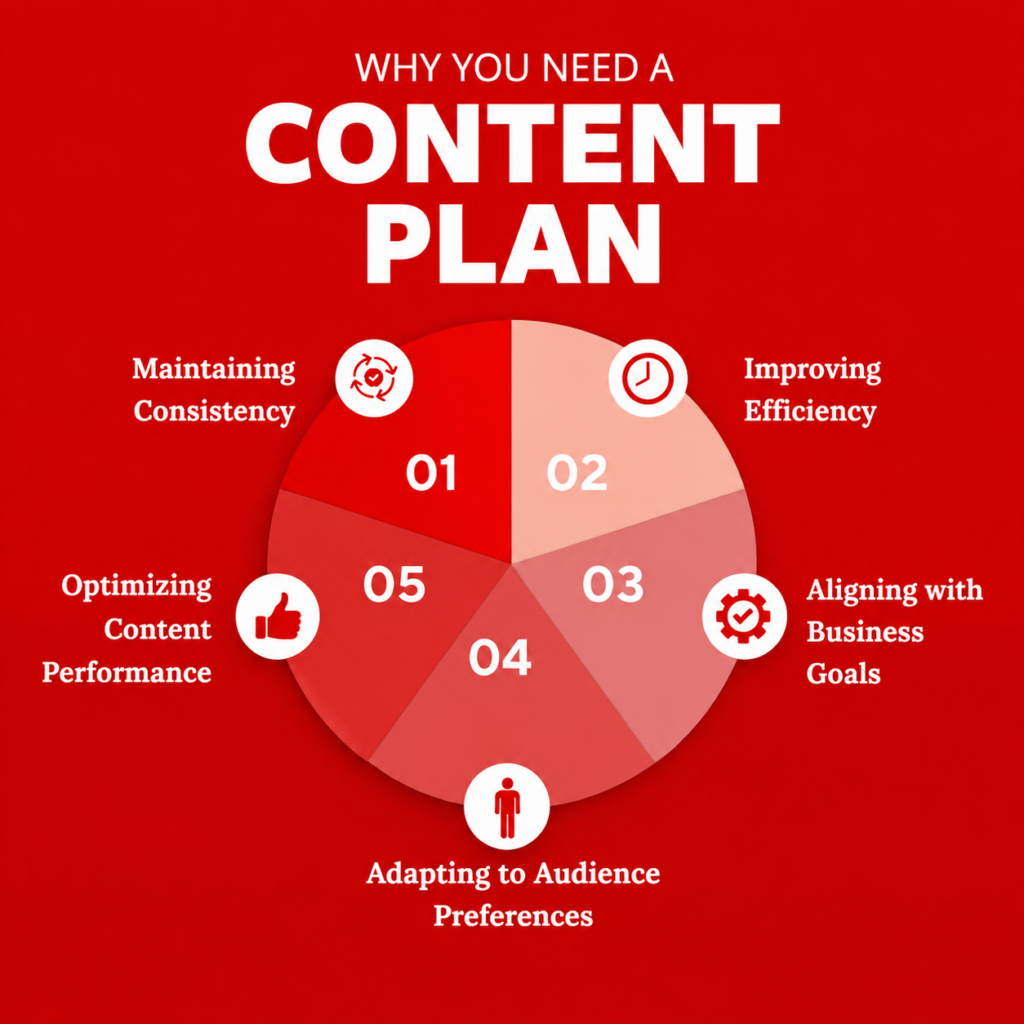
Measuring digital marketing ROI by tracking campaign performance, conversions, revenue, and marketing KPIs.

How to Measure the ROI of Your Digital Marketing Campaigns

Digital marketing gives businesses access to a wide range of opportunities to reach potential customers. From search engine optimisation and social media to paid advertising, email marketing, and content marketing, businesses can use multiple channels to promote their products and services.

But simply investing money in digital marketing does not guarantee success.

The more important question is: Is your digital marketing actually generating a return on your investment?

This is where Digital Marketing ROI (Return on Investment) becomes important.

Measuring ROI helps businesses understand how much value they are generating from their marketing investments. It allows marketers to identify profitable campaigns, improve underperforming strategies, allocate budgets more effectively, and make decisions based on actual business results rather than assumptions.

For example, spending ₹1,00,000 on a digital marketing campaign may sound expensive. But if that campaign generates ₹5,00,000 in attributable revenue, the investment may be worthwhile. On the other hand, a campaign that generates thousands of clicks but very few customers may not be delivering the expected business value.

In this blog, we explore four important steps to measure the ROI of your digital marketing campaigns effectively.


1. Define Your Goals and Identify the Right KPIs

Before measuring ROI, businesses need to clearly define what they want their digital marketing campaigns to achieve.

Not every campaign has the same objective.

An ecommerce brand may want to increase online purchases, while a B2B company may want to generate qualified leads. A new business may focus on brand awareness, while an established company may focus on customer retention and repeat purchases.

Without a clear goal, it becomes difficult to determine whether a campaign has actually been successful.

Common Digital Marketing Goals

Businesses may use digital marketing to:

  • Generate leads
  • Increase online sales
  • Improve website traffic
  • Increase brand awareness
  • Generate app downloads
  • Increase enquiries
  • Improve customer engagement
  • Increase repeat purchases
  • Reduce customer acquisition costs
  • Improve customer lifetime value

Once the goal is established, businesses need to select Key Performance Indicators (KPIs) that help measure progress toward that goal.

Important Digital Marketing KPIs

Some commonly used KPIs include:

Website Traffic:
Measures how many people visit your website.

Conversion Rate:
Measures the percentage of visitors who complete a desired action.

Cost Per Lead (CPL):
Shows how much it costs to generate one lead.

Customer Acquisition Cost (CAC):
Measures the average cost of acquiring a new customer.

Return on Ad Spend (ROAS):
Measures revenue attributed to advertising relative to advertising spend.

Customer Lifetime Value (CLV):
Estimates the value a customer generates throughout their relationship with the business.

Marketing ROI:
Measures the financial return generated from marketing investments.

For example, if your goal is lead generation, website traffic alone is not enough to measure success. You should also track leads, qualified leads, CPL, lead-to-customer conversion rate, and revenue generated from those leads.

Key takeaway: Start with a clear business objective and choose KPIs that directly connect marketing activity to that objective.

2. Calculate Your Marketing Investment and Revenue

Once goals and KPIs have been established, the next step is to calculate how much you are investing and how much revenue your campaigns are generating.

A basic ROI formula is:

ROI = [(Revenue Generated − Marketing Cost) ÷ Marketing Cost] × 100

For example, imagine a business spends ₹1,00,000 on a digital marketing campaign and generates ₹3,00,000 in attributable revenue.

The calculation would be:

ROI = [(₹3,00,000 − ₹1,00,000) ÷ ₹1,00,000] × 100

ROI = 200%

This means the campaign generated a return equivalent to 200% of the marketing investment under this simplified calculation.

However, measuring digital marketing ROI can become more complicated because businesses often use multiple channels at the same time.

For example, a customer may:

  1. Discover a brand through Instagram.
  2. Search for the company on Google.
  3. Visit the website through organic search.
  4. Read a blog.
  5. Click a remarketing advertisement.
  6. Finally make a purchase.

Which channel deserves credit for the conversion?

This is where attribution becomes important.

Understanding Marketing Attribution

Marketing attribution is the process of assigning credit for a conversion to one or more marketing touchpoints.

Different attribution approaches can produce different results.

For example:

First-touch attribution:
Gives credit to the first marketing interaction.

Last-touch attribution:
Gives credit to the final interaction before conversion.

Multi-touch attribution:
Distributes credit across multiple interactions in the customer journey.

No single model perfectly represents every customer journey. Businesses should select an approach that fits their sales cycle, data availability, and objectives.

Don’t Forget the Full Cost

Another common mistake is calculating ROI using only advertising spend.

For example, if a business spends ₹50,000 on Meta Ads, it may be tempting to consider ₹50,000 as the total marketing cost.

But the campaign may also involve:

  • Agency fees
  • Creative production
  • Video production
  • Copywriting
  • Marketing software
  • Landing page development
  • Email marketing tools
  • Analytics tools
  • Employee time

Depending on the purpose of the analysis, these costs may need to be included to get a more realistic picture of marketing profitability.

Key takeaway: Accurate ROI measurement requires businesses to understand both the revenue generated and the complete cost associated with generating that revenue.


3. Track Conversions and Connect Marketing Data With Sales

One of the biggest challenges in measuring digital marketing ROI is understanding what happens after a user clicks an advertisement or submits a form.

A campaign may generate 1,000 leads, but how many of those leads actually become customers?

This is why businesses should connect their marketing platforms with their CRM and sales data wherever possible.

Consider this example:

A company runs two advertising campaigns.

Campaign A

  • Spend: ₹50,000
  • Leads: 250
  • Qualified leads: 50
  • Customers: 10
  • Revenue: ₹2,00,000

Campaign B

  • Spend: ₹50,000
  • Leads: 100
  • Qualified leads: 60
  • Customers: 25
  • Revenue: ₹5,00,000

At first glance, Campaign A appears better because it generates more leads.

But Campaign B produces more qualified leads, more customers, and significantly more revenue.

If the business only measures the number of leads, it may incorrectly decide that Campaign A is the better campaign.

This demonstrates why businesses should measure the entire marketing funnel.

Track the Customer Journey

A useful measurement framework could look like:

Impressions → Clicks → Website Visits → Leads → Qualified Leads → Customers → Revenue

Each stage provides valuable information.

If you receive many impressions but very few clicks, your advertisement or targeting may need improvement.

If you receive many clicks but few leads, your landing page or offer may be the problem.

If you generate many leads but very few customers, the issue could be lead quality or the sales process.

If customers are converting but generating low revenue, your pricing, product mix, or customer value may need attention.

This approach helps businesses identify where money is being lost and where performance can be improved.

Use Conversion Tracking

Proper conversion tracking is essential for measuring ROI.

Businesses can track actions such as:

  • Purchases
  • Form submissions
  • Phone calls
  • Demo requests
  • Consultation bookings
  • Newsletter sign-ups
  • App downloads
  • Product enquiries

For ecommerce businesses, purchase value can be particularly useful because it allows marketers to compare advertising costs with attributed revenue.

For lead-generation businesses, connecting advertising platforms with CRM data can help determine which campaigns are generating actual customers rather than just enquiries.

Key takeaway: Don’t stop measuring at clicks or leads. Connect marketing activity to qualified leads, customers, and revenue whenever possible.


4. Analyse Performance and Optimise Your Marketing Budget

Measuring ROI is only useful if the insights are used to improve future marketing decisions.

After calculating the ROI of your campaigns, compare performance across different channels, campaigns, audiences, creatives, and customer segments.

For example, you may discover that:

  • SEO generates consistent organic leads.
  • Instagram generates strong engagement but fewer conversions.
  • Google Ads generates high-intent leads.
  • Email marketing generates strong repeat purchases.
  • Remarketing produces a strong conversion rate.
  • One particular audience segment has a significantly lower CAC.

These insights can help you determine where to invest more and where to reduce unnecessary spending.

Compare Channels Based on Business Results

Imagine a business has the following results:

ChannelMarketing CostRevenueROI
Google Ads₹1,00,000₹3,00,000200%
Social Media Ads₹1,00,000₹2,00,000100%
Email Marketing₹50,000₹2,00,000300%
SEO₹1,50,000₹4,50,000200%

Based on this simplified example, email marketing delivers the highest ROI.

However, this does not automatically mean the business should stop investing in other channels.

Different channels may play different roles in the customer journey.

SEO may build long-term organic visibility, while paid advertising can generate immediate traffic. Social media may contribute to brand discovery, while email marketing can encourage repeat purchases.

Therefore, businesses should look at ROI as part of a broader marketing performance picture.

Look Beyond Short-Term ROI

Some marketing activities take time to produce results.

SEO, content marketing, and brand-building campaigns may not generate significant revenue immediately.

For example, a business might invest in creating high-quality content today and begin receiving substantial organic traffic several months later.

If the company evaluates the campaign after only a few weeks, it may conclude that the investment was unsuccessful.

This is why ROI should be evaluated according to the expected timeframe and customer buying cycle.

Continuously Test and Optimise

Digital marketing provides businesses with the ability to test different approaches.

You can experiment with:

  • Ad creatives
  • Headlines
  • Landing pages
  • Audience segments
  • Offers
  • Calls-to-action
  • Content formats
  • Keywords
  • Campaign objectives

The goal is to identify which combinations produce better business outcomes.

Over time, continuous optimisation can help businesses improve conversion rates, reduce acquisition costs, and increase marketing efficiency.

Key takeaway: ROI measurement should not be the final step. Use the insights to continuously improve campaigns and allocate your budget more effectively.


Common Mistakes When Measuring Digital Marketing ROI

Even businesses that track their marketing performance can make mistakes.

Focusing Only on Clicks

Clicks show that people interacted with an advertisement, but they do not necessarily indicate revenue or profitability.

Measuring Only Leads

A campaign can generate thousands of leads but produce very few customers. Lead quality matters.

Ignoring Marketing Costs

If you only include advertising spend and ignore other relevant campaign costs, your ROI calculation may be misleading.

Using the Wrong Attribution Model

Giving all credit to one channel can make it difficult to understand the role played by other marketing touchpoints.

Expecting Immediate Results

Some channels, especially SEO and content marketing, can require time before their full value becomes visible.

Tracking Too Many Metrics

More data does not automatically mean better decision-making. Focus on metrics that connect directly to your business goals.


Tools That Can Help Measure Digital Marketing ROI

Businesses can use a combination of tools to track and analyse campaign performance.

These may include:

  • Website analytics platforms
  • Advertising platform dashboards
  • CRM systems
  • SEO platforms
  • Social media analytics
  • Email marketing platforms
  • Conversion tracking systems
  • Business intelligence dashboards

The most important factor is not the number of tools you use but whether the data from those tools can help answer important business questions.

For example:

Which campaign generates the most qualified customers?

Which channel has the lowest customer acquisition cost?

Which audience generates the highest revenue?

Which marketing activity provides the strongest long-term return?

These questions are much more useful than simply asking how many clicks a campaign received.


Final Thoughts

Measuring the ROI of digital marketing campaigns is essential for businesses that want to make smarter and more profitable marketing decisions.

Instead of judging campaigns based only on impressions, clicks, followers, or website traffic, businesses should connect marketing activity to leads, customers, revenue, and overall business growth.

The four key steps are:

  1. Define Your Goals and Identify the Right KPIs
  2. Calculate Your Marketing Investment and Revenue
  3. Track Conversions and Connect Marketing Data With Sales
  4. Analyse Performance and Optimise Your Marketing Budget

The goal of ROI measurement is not simply to prove that marketing is working. It is to understand why it is working, where it is working, and how it can work better.

When businesses consistently measure performance, connect marketing data with sales outcomes, and use insights to optimise their campaigns, they can make better use of their budgets and build a more effective digital marketing strategy.

Ultimately, successful digital marketing is not about spending more. It is about understanding what generates value and investing more intelligently in what works.


Frequently Asked Questions

What is digital marketing ROI?

Digital marketing ROI measures the financial return generated from a business’s digital marketing investment. A basic formula is: [(Revenue − Marketing Cost) ÷ Marketing Cost] × 100.

Why is measuring marketing ROI important?

It helps businesses understand whether their marketing investments are generating meaningful results and allows them to make better decisions about future budgets and strategies.

What KPIs should I track to measure digital marketing ROI?

Important KPIs can include conversion rate, CPL, CAC, ROAS, qualified leads, customer lifetime value, revenue, and overall marketing ROI.

Can digital marketing ROI be measured for SEO?

Yes. SEO ROI can be evaluated by tracking organic traffic, conversions, leads, customers, revenue, and the costs associated with SEO activities over an appropriate timeframe.

Is ROAS the same as ROI?

No. ROAS generally measures attributed revenue relative to advertising spend, while ROI considers the return relative to investment and can incorporate broader costs.



How Remarketing Helps Businesses Recover Lost Customers

How Remarketing Helps Businesses Recover Lost Customers

Not every person who visits a website is ready to make a purchase immediately. A potential customer may browse products, explore services, compare prices, read a blog, or even add something to their cart before leaving the website without completing an action.

For businesses, these visitors can feel like lost opportunities. However, leaving a website does not always mean that a customer has lost interest. They may have been distracted, still comparing options, waiting for the right time to buy, or simply not convinced enough to take the next step.

This is where remarketing becomes an important digital marketing strategy.

Remarketing allows businesses to reconnect with people who have previously interacted with their brand and show them relevant advertisements or messages. Instead of constantly searching for completely new audiences, businesses can continue engaging with people who have already demonstrated some level of interest.

When implemented strategically, remarketing can help businesses bring previous visitors back, recover abandoned purchases, generate additional leads, and improve overall marketing efficiency.

In this blog, we explore four important ways remarketing helps businesses recover lost customers and improve conversions.


1. Remarketing Brings Interested Visitors Back

One of the biggest advantages of remarketing is its ability to reconnect businesses with people who have already visited their website.

Imagine a customer searching for a new laptop. They visit an online electronics store, compare a few models, check the specifications, and then leave the website without making a purchase.

There can be many reasons for this.

Maybe they want to compare prices with other websites. Maybe they need to discuss the purchase with someone. Perhaps they are waiting for their salary or a special offer. Or they may simply need more time before making a decision.

Without remarketing, the business may have very little opportunity to reconnect with that visitor.

With remarketing, however, the business can continue showing relevant advertisements to that person after they leave the website.

For example, the customer may later see an advertisement featuring the product they were interested in, information about its features, customer reviews, or a relevant offer.

This keeps the brand visible while the customer is still considering their options.

Why Staying Visible Matters

Customers are exposed to a huge amount of information every day. They may discover several competing brands while researching a product or service.

If a business disappears from the customer’s consideration immediately after their first website visit, competitors have an opportunity to capture that customer.

Remarketing helps businesses maintain visibility during the consideration stage.

For example, a person researching digital marketing agencies might visit several agency websites before deciding whom to contact. A remarketing campaign can keep a particular agency visible while that person continues their research.

The purpose is not simply to show advertisements repeatedly. The goal is to provide a useful reminder that encourages the customer to return and continue their journey.

Remarketing Can Reach Different Types of Visitors

Businesses can create different audience groups based on how people interacted with their website.

For example:

  • People who visited the homepage
  • People who viewed a particular service
  • People who viewed a product
  • People who visited the pricing page
  • People who started filling out a form
  • People who added an item to their cart
  • People who previously purchased

Each group can receive a different message.

Someone who only visited the homepage may need more information about the brand, while someone who viewed a specific product may respond better to product-focused advertising.

This makes remarketing more relevant and allows businesses to communicate with customers according to their stage in the buying journey.

Key takeaway: Remarketing helps businesses stay connected with interested visitors instead of allowing potential customers to disappear after their first interaction.


2. Remarketing Helps Recover Abandoned Carts and Incomplete Actions

For ecommerce businesses, one of the most valuable applications of remarketing is abandoned cart recovery.

A customer may spend several minutes browsing products, select an item, add it to their shopping cart, and then leave before completing the purchase.

From the business’s perspective, this can be frustrating because the customer has already demonstrated strong purchase intent.

However, an abandoned cart does not necessarily mean the customer has rejected the product.

There could be many reasons behind the decision:

  • Unexpected costs
  • Shipping concerns
  • Need for additional information
  • Comparison with competitors
  • Lack of time
  • Payment issues
  • Change of mind
  • Distraction during checkout

Remarketing gives businesses an opportunity to reconnect with these customers.

For example, a brand can remind a customer about the product they previously considered and direct them back to the checkout page.

The Right Message Matters

Businesses should not assume that every abandoned cart requires a discount.

Sometimes the customer does not need a lower price. They may simply need reassurance.

A remarketing advertisement could highlight:

  • Product reviews
  • Easy returns
  • Delivery information
  • Product benefits
  • Warranty details
  • Customer testimonials
  • Frequently asked questions

For example, instead of immediately offering a discount, an online fashion brand could remind the customer about the product and highlight its easy return policy.

Similarly, a software company could use remarketing to remind someone who started a free trial or demo registration but did not complete the process.

The message should address potential barriers and give customers a clear reason to return.

Remarketing Beyond Ecommerce

Abandoned actions are not limited to shopping carts.

Businesses can also remarket to people who:

  • Started a lead form but did not submit it
  • Viewed a pricing page
  • Started a booking process
  • Watched part of a product video
  • Downloaded content
  • Visited a service page
  • Started a free trial

For example, a real estate company may have visitors who browse several property listings but do not enquire.

A remarketing campaign can reconnect with those visitors and show relevant properties, financing information, testimonials, or consultation options.

This can help move potential customers further through the decision-making process.

Key takeaway: Remarketing can recover incomplete actions by reminding customers about what they previously considered and addressing the reasons that may have prevented conversion.


3. Remarketing Creates More Relevant and Personalised Marketing

One of the biggest weaknesses of traditional advertising is that the same message may be shown to a large audience regardless of their individual interests.

Remarketing provides businesses with an opportunity to create more relevant advertising based on previous customer behaviour.

For example, imagine an online beauty store has three visitors.

Visitor A browsed skincare products.

Visitor B viewed makeup products.

Visitor C added a skincare product to their cart.

Showing all three people the same advertisement would not be the most effective strategy.

Instead, the business could create different remarketing messages.

Visitor A could see educational content about skincare.

Visitor B could see advertisements featuring makeup products.

Visitor C could receive a reminder about the product they added to their cart.

This type of segmentation makes advertising more relevant.

Personalisation Can Improve Customer Experience

Customers are more likely to engage with marketing when the message is connected to their interests.

For example, someone who previously viewed running shoes may find an advertisement about running footwear more relevant than a generic advertisement for an entire sports store.

Similarly, someone who previously visited a digital marketing service page may be more interested in seeing a case study or client success story than a general advertisement about the agency.

This allows businesses to move away from generic advertising and create messages that are connected to the customer’s previous interaction.

Different Messages for Different Customer Stages

Remarketing can also support different stages of the customer journey.

Awareness stage:
Introduce the brand and explain what the business offers.

Consideration stage:
Show testimonials, reviews, comparisons, case studies, or product benefits.

Decision stage:
Provide a strong call-to-action, consultation, demo, or purchase opportunity.

Post-purchase stage:
Promote related products, upgrades, repeat purchases, or loyalty programs.

This approach makes remarketing more than just a reminder campaign. It becomes part of a broader customer journey strategy.

Avoid Overexposure

Personalisation does not mean showing the same advertisement continuously.

If a customer sees the same advertisement too many times, it can become irritating and may create a negative perception of the brand.

Businesses should therefore use appropriate frequency controls, rotate creatives, and exclude customers from campaigns when they have already completed the intended action.

For example, someone who has already purchased a product should generally not continue receiving advertisements asking them to buy that exact product.

Key takeaway: Effective remarketing is relevant, personalised, and appropriately timed rather than repetitive.


4. Remarketing Improves Marketing Efficiency and Customer Value

The ultimate purpose of remarketing is not simply to increase the number of advertisements people see.

It is to make marketing more efficient and help businesses generate greater value from the audiences they have already reached.

A business may spend money attracting thousands of visitors to its website through:

  • Google Ads
  • Social media advertising
  • SEO
  • Influencer marketing
  • Content marketing
  • Email campaigns
  • Referral traffic

But only a percentage of those visitors may convert during their first interaction.

Remarketing gives businesses another opportunity to engage with the remaining audience.

Making Better Use of Existing Traffic

Suppose a business attracts 10,000 website visitors in a month but only 300 become leads or customers.

Instead of focusing entirely on acquiring another 10,000 visitors, the business can also investigate why the remaining visitors did not convert.

Remarketing can be one part of that strategy.

The business can create campaigns for visitors who:

  • Viewed important pages
  • Spent significant time on the website
  • Viewed products
  • Engaged with content
  • Started a conversion action
  • Abandoned their cart

This can help businesses get more value from the traffic they have already paid to acquire.

Measuring the Right Results

Businesses should not judge remarketing campaigns solely by impressions or clicks.

Important metrics include:

  • Conversion rate
  • Cost per conversion
  • Revenue generated
  • Return on ad spend
  • Cost per qualified lead
  • Lead-to-customer conversion rate
  • Customer acquisition cost
  • Repeat purchase rate

For example, a remarketing campaign may have a higher cost per click than another campaign but generate significantly more customers.

In that situation, looking only at clicks could lead to the wrong conclusion.

Businesses should focus on business outcomes rather than vanity metrics.

Remarketing Can Support Customer Retention

Remarketing is also useful after someone has already become a customer.

Businesses can use customer audiences to promote relevant products or services.

For example:

A clothing brand could promote complementary products.

A software company could promote an upgrade.

A fitness business could promote another membership plan.

An ecommerce brand could remind previous customers about products they may need to purchase again.

This can increase customer lifetime value and encourage repeat business.

The objective changes from “How do we get this person to become a customer?” to “How do we continue providing value to this customer?”

This makes remarketing useful across multiple stages of the customer lifecycle.

Key takeaway: Remarketing can improve marketing efficiency by creating additional opportunities from existing audiences while also supporting repeat purchases and long-term customer value.


Best Practices for a Successful Remarketing Strategy

A successful remarketing campaign requires more than simply creating an audience and running advertisements.

Businesses should consider the following practices:

Segment Audiences Carefully

Create different audience groups based on customer behaviour and intent.

Match Ads With Customer Intent

A person who viewed a product should receive a different message from someone who only visited the homepage.

Use Multiple Creatives

Test different images, videos, headlines, offers, and calls-to-action to avoid ad fatigue.

Set Frequency Controls

Avoid showing the same advertisement excessively.

Exclude Converted Users

If a customer has already completed the desired action, remove them from the relevant acquisition campaign.

Improve the Landing Page

Remarketing can bring customers back, but the landing page still needs to provide a smooth experience.

Track Meaningful Conversions

Measure leads, purchases, revenue, qualified leads, and ROI rather than focusing only on clicks and impressions.

Respect Privacy

Businesses should use audience and tracking data responsibly and comply with applicable privacy laws, consent requirements, and advertising platform policies.


Final Thoughts

Losing a potential customer after their first website visit does not necessarily mean losing the customer forever.

People often need time to research, compare options, ask questions, or simply return when they are ready to make a decision.

Remarketing gives businesses another opportunity to reconnect with those potential customers.

The four major ways remarketing helps businesses are:

  1. Bringing interested visitors back
  2. Recovering abandoned carts and incomplete actions
  3. Creating more relevant and personalised marketing
  4. Improving marketing efficiency and customer value

The most successful remarketing strategies are not based on showing advertisements as frequently as possible. They are based on understanding customer behaviour and delivering the right message at the right stage of the customer journey.

When businesses combine effective audience segmentation, relevant creative, strong landing pages, responsible targeting, and accurate performance tracking, remarketing can become a valuable part of their digital marketing strategy.

Ultimately, the goal is simple: turn missed opportunities into meaningful conversations, conversions, and long-term customer relationships.


Frequently Asked Questions

What is remarketing in digital marketing?

Remarketing is a digital advertising strategy that allows businesses to reconnect with people who have previously interacted with their website, app, or brand.

How does remarketing help recover lost customers?

Remarketing keeps businesses connected with potential customers after they leave a website. Relevant advertisements can encourage them to return and complete a purchase, submit an enquiry, or take another desired action.

Is remarketing useful for small businesses?

Yes. Remarketing can help small businesses reconnect with previous website visitors and potential customers instead of relying entirely on acquiring new audiences.

Can remarketing recover abandoned carts?

Yes. Ecommerce businesses can use remarketing campaigns to reconnect with customers who added products to their cart but did not complete their purchase.

What is the difference between remarketing and retargeting?

The terms are often used interchangeably. Both generally refer to strategies designed to reconnect with people who have previously interacted with a brand, although terminology can vary between advertising platforms.

Is remarketing only useful for ecommerce businesses?

No. Remarketing can be used by service businesses, educational institutions, real estate companies, SaaS businesses, agencies, consultants, and many other organisations to reconnect with potential leads and customers.

5 effective ways to reduce cost per lead through digital marketing strategies

5 Ways to Reduce Your Cost Per Lead

Generating leads is an important part of digital marketing, but generating leads at a sustainable cost is what makes a campaign truly effective. Many businesses invest heavily in Google Ads, Meta Ads, social media, and other digital channels without understanding why their Cost Per Lead (CPL) keeps increasing.

Cost Per Lead is calculated by dividing your total marketing or advertising spend by the number of leads generated:

CPL = Total Marketing Spend ÷ Number of Leads Generated

For example, if a business spends ₹50,000 on a campaign and generates 100 leads, its CPL is ₹500.

However, a lower CPL does not automatically mean a better campaign. A ₹300 lead that never responds may be less valuable than a ₹700 lead that becomes a paying customer. Therefore, businesses should focus on reducing CPL while maintaining or improving lead quality.

Here are 5 effective ways to reduce your Cost Per Lead and improve the efficiency of your digital marketing campaigns.

1. Improve Your Landing Page

One of the biggest factors affecting CPL is what happens after someone clicks your advertisement.

You may have an attractive ad and strong targeting, but if your landing page is confusing, slow, or difficult to navigate, visitors may leave without submitting their information.

Instead of sending every visitor to your homepage, create a dedicated landing page that matches the message and objective of your campaign.

Your landing page should have:

  • A clear and relevant headline
  • One primary call-to-action
  • Short and simple forms
  • Strong benefits of your product or service
  • Customer testimonials or social proof
  • Relevant images or videos
  • Mobile-friendly design
  • Fast loading speed
  • Clear contact or enquiry options

For example, if your advertisement says “Get a Free Digital Marketing Consultation,” the landing page should immediately reinforce that offer rather than making users search through multiple pages.

Improving the conversion rate of your landing page can reduce CPL without necessarily increasing your advertising budget.

Key takeaway: Before increasing your ad budget, make sure your landing page is converting the traffic you already have.


2. Target the Right Audience

Your advertising campaign can generate hundreds of leads, but if most of them are irrelevant, your marketing budget is being wasted.

Audience targeting helps businesses reach people who are more likely to be interested in their products or services.

Instead of targeting everyone, define your ideal customer based on factors such as:

  • Age
  • Location
  • Interests
  • Profession
  • Buying behaviour
  • Previous website activity
  • Search intent
  • Previous interactions with your brand

For example, a premium interior design company may not benefit from targeting every person interested in “home décor.” It may achieve better results by targeting homeowners in specific locations who are actively looking for interior design services.

Businesses can also use data from existing customers to create stronger audience segments and improve campaign targeting.

Google recommends using valuable conversion data and appropriate audience signals to help automated campaigns optimise toward better outcomes.

Key takeaway: Better targeting can help you spend your budget on people who are more likely to become genuine prospects.


3. Create Better Ads and Refresh Your Creatives

Your advertisement is often the first interaction a potential customer has with your business.

If your ad fails to capture attention or communicate a clear benefit, people may ignore it. This can result in inefficient spending and higher acquisition costs.
Your ads should clearly communicate:

Problem → Solution → Benefit → Action

For example:

Instead of:

“Digital Marketing Services Available.”

Try:

“Generate More Qualified Leads With a Data-Driven Digital Marketing Strategy.”

The second message communicates a specific benefit and is more likely to attract businesses interested in lead generation.

Businesses should also test different versions of:

  • Headlines
  • Primary copy
  • Images
  • Videos
  • CTAs
  • Offers
  • Ad formats

Creative variety is particularly important for paid social campaigns because audiences can become less responsive when repeatedly exposed to the same content.

Google also recommends providing varied, high-quality creative assets so its advertising systems can test and optimise different combinations.

Key takeaway: Don’t rely on one advertisement. Continuously test and improve your creative strategy.


4. Focus on Lead Quality, Not Just Lead Quantity

One of the biggest mistakes businesses make is trying to achieve the lowest possible CPL.

A cheap lead is not necessarily a good lead.

Imagine two campaigns:

CampaignCPLLeadsQualified Leads
Campaign A₹25020020
Campaign B₹50010050

Campaign A appears cheaper because its CPL is lower. But Campaign B generates more qualified leads despite having a higher CPL.

This is why businesses should track metrics beyond basic CPL, including:

  • Cost Per Qualified Lead
  • Lead-to-customer conversion rate
  • Customer Acquisition Cost
  • Sales-qualified leads
  • Revenue generated
  • Return on Ad Spend

A more expensive lead can ultimately be more profitable if it has a higher probability of becoming a customer.

Google also recommends optimising campaigns toward meaningful conversion goals further down the sales funnel rather than simply optimising for low-level actions.

Key takeaway: The goal isn’t to generate the cheapest leads. The goal is to generate valuable leads at an efficient cost.


5. Analyse Your Campaign Data and Cut Wasted Spend

Reducing CPL requires continuous optimisation.

Instead of running campaigns for weeks without reviewing performance, regularly analyse which campaigns, audiences, keywords, placements, and creatives are generating meaningful results.

Look for:

  • High-spending campaigns with few conversions
  • Keywords generating clicks but no leads
  • Audiences with low conversion rates
  • Ads with poor engagement
  • Landing pages with high drop-off
  • Duplicate or overlapping targeting
  • Low-quality lead sources

For Google Ads, businesses can also use conversion data to guide automated bidding and optimise toward more valuable conversion actions.

For example, if one keyword has generated ₹20,000 worth of clicks but no qualified leads while another has generated ₹15,000 in spend and several high-quality enquiries, budget allocation should be reviewed.

The same principle applies to social media campaigns.

Key takeaway: Don’t let your budget continue flowing into areas that consistently fail to produce meaningful results.


Bonus Tip: Improve Your Lead Follow-Up

Reducing CPL is not only about advertising.

What happens after a lead is generated can also influence the overall profitability of your marketing campaign.

If your sales team takes several hours or days to contact a potential customer, the lead may lose interest or choose a competitor.

Businesses should therefore:

  • Respond quickly to enquiries
  • Use CRM systems to organise leads
  • Score leads based on quality
  • Track lead sources
  • Follow up consistently
  • Connect marketing data with sales results

This allows businesses to understand which marketing campaigns are actually producing customers rather than simply producing form submissions.


How to Know If Your CPL Is Actually Improving

Don’t evaluate CPL in isolation.

A strong campaign should ideally improve several metrics together:

Lower CPL + Better Lead Quality + Higher Conversion Rate + Better Customer Acquisition Cost = More Efficient Marketing

For example, reducing CPL from ₹1,000 to ₹500 sounds impressive. But if the percentage of leads becoming customers falls dramatically, the campaign may not actually be performing better.

Instead, compare:

  • Cost Per Lead
  • Cost Per Qualified Lead
  • Lead-to-Customer Conversion Rate
  • Customer Acquisition Cost
  • Revenue
  • Marketing ROI

This gives you a much clearer picture of campaign performance.


Final Thoughts

Reducing Cost Per Lead isn’t simply about finding cheaper advertising.

It is about improving the entire lead-generation journey from targeting and creative to landing pages, conversion tracking, lead quality, and follow-up.

The five key strategies are:

  1. Improve Your Landing Page
  2. Target the Right Audience
  3. Create Better Ads and Refresh Your Creatives
  4. Focus on Lead Quality, Not Just Lead Quantity
  5. Analyse Campaign Data and Cut Wasted Spend

Businesses that focus only on getting cheap leads may end up sacrificing quality. A better approach is to build a system that generates qualified leads at a sustainable cost.

By continuously testing, analysing, and optimising each stage of the funnel, businesses can make better use of their marketing budget and create stronger opportunities for long-term growth.

Frequently Asked Questions

What is Cost Per Lead?

Cost Per Lead (CPL) is the average amount a business spends to generate one lead. It is calculated by dividing total marketing spend by the number of leads generated.

How can I reduce my Cost Per Lead?

You can reduce CPL by improving your landing page, targeting the right audience, testing better creatives, focusing on qualified leads, and regularly optimising campaign performance.

Is a lower CPL always better?

No. A lower CPL is not necessarily better if the leads are low quality. Businesses should also measure qualified leads, customer acquisition cost, conversion rates, and revenue.

What is more important: CPL or lead quality?

Both matter, but lead quality should not be sacrificed simply to achieve a lower CPL. A higher-cost lead can generate greater revenue if it has a stronger chance of becoming a customer.

How often should I optimise my digital marketing campaigns?

Campaign performance should be reviewed regularly, but optimisation frequency depends on your campaign size, platform, budget, and amount of conversion data. Avoid making major changes based on very small data sets.

7 essential digital marketing KPIs every business should track for better performance

7 Digital Marketing KPIs Every Business Should Track

In today’s competitive digital landscape, simply running marketing campaigns is not enough. Businesses need to understand whether their marketing efforts are actually delivering results. This is where Digital Marketing KPIs (Key Performance Indicators) become important.

KPIs help businesses measure the performance of their digital marketing campaigns, understand customer behaviour, identify what is working, and make better marketing decisions. Whether you are investing in SEO, social media, paid advertising, or content marketing, tracking the right metrics can help you improve your overall digital marketing ROI.

But with hundreds of available metrics, businesses often struggle to identify which KPIs actually matter.

In this blog, we explore 7 important digital marketing KPIs every business should track to measure performance and support sustainable growth.

What Are Digital Marketing KPIs?

Digital marketing KPIs are measurable values that help businesses evaluate the success of their online marketing activities.

For example, if a business runs a Google Ads campaign, simply knowing that the campaign received thousands of clicks does not tell the complete story. A more useful question is: How many of those clicks turned into customers?

KPIs provide businesses with measurable insights into areas such as:

  • Website performance
  • Lead generation
  • Customer acquisition
  • Advertising efficiency
  • Social media engagement
  • Sales and conversions
  • Marketing ROI

The right KPIs allow marketers to move from simply collecting data to making data-driven marketing decisions.


7 Digital Marketing KPIs Every Business Should Track

1. Website Traffic

Website traffic is one of the most basic but important digital marketing KPIs.

It measures the number of people visiting your website over a specific period. Tracking traffic can help businesses understand whether their SEO, social media, content marketing, and paid campaigns are successfully attracting visitors.

Businesses can monitor:

  • Total website visitors
  • New vs returning visitors
  • Traffic sources
  • Organic traffic
  • Paid traffic
  • Social media traffic
  • Referral traffic

For example, if organic traffic increases after publishing a series of SEO-focused blogs, it may indicate that the content strategy is helping the website gain visibility in search results.

However, high traffic alone does not guarantee business growth. The quality and behaviour of those visitors are equally important.

Key takeaway: Use website traffic to understand how effectively your marketing efforts are bringing potential customers to your website.


2. Conversion Rate

Getting visitors to your website is only the first step. The next goal is to encourage them to take a valuable action.

The conversion rate measures the percentage of visitors who complete a desired action.

These actions could include:

  • Filling out a contact form
  • Making a purchase
  • Signing up for a newsletter
  • Booking a consultation
  • Downloading an ebook
  • Registering for an event

The basic conversion rate formula is:

Conversion Rate = (Number of Conversions ÷ Number of Visitors) × 100

For example, if 1,000 people visit your website and 50 complete a desired action, your conversion rate is 5%.

Tracking conversion rates helps businesses identify whether their website and marketing campaigns are successfully turning visitors into leads or customers.

Key takeaway: Traffic brings people to your website, but conversions show whether those visitors are taking meaningful actions.


3. Cost Per Lead (CPL)

For businesses focused on lead generation, Cost Per Lead (CPL) is an important KPI.

CPL measures how much a business spends to generate one lead through its marketing campaigns.

The formula is:

CPL = Total Marketing Spend ÷ Number of Leads Generated

For example, if a business spends ₹50,000 on a campaign and generates 500 leads:

₹50,000 ÷ 500 = ₹100 per lead

A lower CPL can indicate that a campaign is generating leads efficiently. However, businesses should not focus on reducing CPL alone.

A campaign generating inexpensive but low-quality leads may be less valuable than a campaign generating fewer, high-quality leads.

Therefore, CPL should be evaluated alongside lead quality and conversion rates.

Key takeaway: A good CPL is not necessarily the lowest CPL; it is one that generates valuable leads at a sustainable cost.


4. Customer Acquisition Cost (CAC)

Customer Acquisition Cost (CAC) measures how much a business spends to acquire a new customer.

Unlike CPL, which focuses on leads, CAC focuses on actual customers.

The formula is:

CAC = Total Sales and Marketing Costs ÷ Number of New Customers Acquired

For example, if a company spends ₹2,00,000 on sales and marketing and gains 100 new customers:

₹2,00,000 ÷ 100 = ₹2,000 CAC

Tracking CAC helps businesses understand whether their customer acquisition strategy is financially sustainable.

If CAC continues to increase while customer value remains unchanged, the business may need to improve its targeting, conversion process, advertising strategy, or customer retention.

Key takeaway: CAC helps businesses understand the real cost of turning marketing efforts into paying customers.


5. Return on Ad Spend (ROAS)

Businesses investing in paid advertising should closely monitor Return on Ad Spend (ROAS).

ROAS measures the revenue generated for every rupee spent on advertising.

The formula is:

ROAS = Revenue Generated From Ads ÷ Advertising Cost

For example, if a company spends ₹50,000 on advertising and generates ₹2,00,000 in attributed revenue:

₹2,00,000 ÷ ₹50,000 = 4

This means the business generated ₹4 in revenue for every ₹1 spent on advertising.

ROAS can help marketers compare advertising campaigns, identify high-performing channels, and allocate budgets more effectively.

However, ROAS does not account for every business expense. Businesses should consider other costs and profitability metrics before deciding whether a campaign is financially successful.

Key takeaway: ROAS helps businesses evaluate how effectively their advertising budget is generating attributed revenue.


6. Customer Lifetime Value (CLV)

A customer’s value does not necessarily end with their first purchase.

Customer Lifetime Value (CLV) estimates the total value a customer may generate throughout their relationship with a business.

A simplified calculation can be:

CLV = Average Purchase Value × Purchase Frequency × Average Customer Lifespan

For example, if a customer spends ₹2,000 per purchase, makes five purchases per year, and remains a customer for three years:

₹2,000 × 5 × 3 = ₹30,000

This means the estimated customer lifetime value is ₹30,000.

CLV is particularly useful when evaluating customer acquisition costs. If a business spends ₹5,000 to acquire a customer who generates ₹30,000 over time, the acquisition strategy may be more sustainable than the initial acquisition cost suggests.

Key takeaway: CLV helps businesses focus on long-term customer value instead of only looking at the first purchase.


7. Marketing ROI

One of the most important KPIs for business decision-making is Marketing Return on Investment (ROI).

Marketing ROI helps businesses understand whether their overall marketing investment is generating sufficient financial returns.

A commonly used formula is:

Marketing ROI = [(Marketing Revenue − Marketing Cost) ÷ Marketing Cost] × 100

For example, if a business spends ₹1,00,000 on marketing and generates ₹3,00,000 in attributable revenue:

[(₹3,00,000 − ₹1,00,000) ÷ ₹1,00,000] × 100 = 200%

A positive ROI indicates that the return exceeds the measured investment, although the exact calculation should account for the business’s chosen attribution and cost methodology.

Marketing ROI allows business leaders to evaluate their overall marketing performance and make informed decisions about future budgets.

Key takeaway: Marketing ROI connects marketing activity with business outcomes and helps demonstrate the financial impact of marketing investments.


Why Tracking the Right KPIs Matters

Tracking KPIs is not about collecting as much data as possible. It is about identifying the metrics that directly support your business goals.

For example:

If your goal is brand awareness:
Focus on reach, impressions, website traffic, and branded search activity.

If your goal is lead generation:
Focus on leads, conversion rate, CPL, and lead quality.

If your goal is sales:
Focus on conversion rate, CAC, revenue, ROAS, and marketing ROI.

If your goal is customer retention:
Focus on CLV, repeat purchases, retention rate, and customer engagement.

Choosing KPIs based on business objectives makes your marketing reporting more meaningful and actionable.


How to Track Digital Marketing KPIs Effectively

Businesses can use platforms such as website analytics tools, advertising platforms, CRM systems, SEO tools, and social media analytics to monitor their KPIs.

However, simply tracking numbers is not enough.

A good KPI tracking process should involve:

1. Set Clear Marketing Goals

Define what the campaign is expected to achieve before selecting KPIs.

2. Choose Relevant KPIs

Select metrics that directly connect to your marketing and business objectives.

3. Establish Benchmarks

Compare current performance with previous campaigns, industry benchmarks, or internal targets.

4. Review Performance Regularly

Monitor KPIs consistently rather than checking them only at the end of a campaign.

5. Turn Data Into Action

Use performance insights to improve targeting, content, campaigns, landing pages, and marketing budgets.


Common Mistakes Businesses Make When Tracking KPIs

Even businesses that track marketing data can make mistakes. Some common problems include:

  • Focusing only on vanity metrics
  • Tracking too many KPIs
  • Ignoring lead quality
  • Not connecting marketing data with sales data
  • Comparing unrelated campaigns
  • Looking at short-term results only
  • Not establishing clear benchmarks
  • Failing to take action based on insights

For example, thousands of social media likes may look impressive, but if those interactions do not contribute to business objectives, they may have limited value.

The goal should be to focus on meaningful metrics that support business growth.


Final Thoughts

Digital marketing is most effective when decisions are supported by reliable data. Tracking the right KPIs allows businesses to understand what is working, identify areas for improvement, and allocate marketing resources more effectively.

The 7 digital marketing KPIs discussed in this blog are:

  1. Website Traffic
  2. Conversion Rate
  3. Cost Per Lead (CPL)
  4. Customer Acquisition Cost (CAC)
  5. Return on Ad Spend (ROAS)
  6. Customer Lifetime Value (CLV)
  7. Marketing ROI

No single KPI can tell the entire story. The best approach is to evaluate multiple metrics together and connect them to specific business objectives.

When businesses measure the right things, they can make smarter marketing decisions, improve campaign performance, and build a stronger path toward sustainable growth.

Frequently Asked Questions

What are the most important digital marketing KPIs?

Some of the most important KPIs include website traffic, conversion rate, CPL, CAC, ROAS, CLV, and marketing ROI. The most relevant KPIs depend on the business’s specific goals.

Why are digital marketing KPIs important?

KPIs help businesses measure marketing performance, understand customer behaviour, identify opportunities for improvement, and make data-driven decisions.

What is the difference between CPL and CAC?

CPL measures the cost of generating a lead, while CAC measures the overall cost of acquiring an actual customer.

How often should businesses track digital marketing KPIs?

Performance should generally be monitored regularly, but the ideal frequency depends on the campaign and KPI. Fast-moving paid campaigns may require frequent monitoring, while metrics such as CLV are better evaluated over longer periods.

Which KPI is best for measuring advertising performance?

ROAS is commonly used to evaluate the revenue attributed to advertising spend, while CAC and marketing ROI provide additional context about customer acquisition and overall financial performance.

Gen Z influencing digital marketing trends through social media, authentic content, and influencer marketing

Why Gen Z Is Changing Digital Marketing

Generation Z, commonly known as Gen Z, is becoming one of the most influential consumer groups in the digital marketplace. Born into a world of smartphones, social media, streaming platforms, and instant information, Gen Z interacts with brands very differently from previous generations.

For businesses, reaching Gen Z is no longer simply about being present online. Brands need to understand how this generation discovers products, consumes content, evaluates brands, and makes purchasing decisions.

As Gen Z continues to influence consumer culture, it is also changing the way businesses approach digital marketing.

1. Who Is Gen Z and What Makes Them Different?

Gen Z generally refers to people born between the late 1990s and early 2010s. They have grown up surrounded by digital technology, making online platforms a natural part of their everyday lives.

Unlike traditional consumers who may rely heavily on television, newspapers, or search engines, Gen Z often discovers brands through short-form videos, social media, creators, online communities, and recommendations.

They also tend to value authenticity. Highly polished advertisements may not always capture their attention. Instead, relatable content, real experiences, creator recommendations, and genuine brand communication can be more effective.

2. How Gen Z Is Changing Consumer Behaviour

Gen Z has changed how people discover and research products.

Social media is increasingly becoming a place where consumers find inspiration, reviews, trends, and products. Platforms such as Instagram, YouTube, and TikTok have become important parts of the discovery journey.

Gen Z also has access to enormous amounts of information. Before purchasing, they can quickly compare products, read reviews, watch videos, and check what other people are saying about a brand.

This means brands cannot depend only on traditional advertising. They need to build a consistent and trustworthy digital presence across the platforms where their audience spends time.

3. Digital Marketing Strategies That Work With Gen Z

To effectively connect with Gen Z, brands need to focus on content that is authentic, entertaining, useful, and easy to consume.

Some effective strategies include:

  • Short-form video: Reels, Shorts, and other short videos can capture attention quickly.
  • Creator marketing: Relevant creators can help brands build credibility and reach niche communities.
  • User-generated content: Real customers sharing experiences can make a brand feel more trustworthy.
  • Interactive content: Polls, quizzes, challenges, and interactive formats encourage participation.
  • Social commerce: Making it easy for users to discover and purchase products through social platforms can shorten the customer journey.
  • Community building: Brands that create genuine communities can encourage stronger long-term engagement.

The key is to create content that feels native to the platform instead of simply turning traditional advertisements into social media posts.

aab4da95 f255 48aa 8577 f1989446909e

4. Why Traditional Marketing Doesn’t Work the Same Way Anymore

Traditional advertising is not disappearing, but Gen Z has changed the role it plays in the customer journey.

This audience is exposed to advertising constantly and can quickly scroll past content that feels overly promotional or irrelevant.

Gen Z often responds better when brands communicate with them rather than at them.

Instead of focusing only on selling, brands can use storytelling, entertainment, educational content, conversations, and community-driven campaigns to build relationships.

This doesn’t mean brands should avoid promotional content. Instead, promotional messages should be supported by content that provides value and creates a reason for audiences to engage with the brand.

7ede1d73 c4e8 4196 af52 4dd1331c663a

5. How Brands Can Successfully Market to Gen Z

Marketing to Gen Z requires brands to understand that digital audiences are not simply looking for products—they are also looking for experiences, communities, entertainment, and brands they can relate to.

Businesses should:

  • Understand the platforms their target audience uses.
  • Create authentic and relatable content.
  • Experiment with short-form video.
  • Collaborate with relevant creators.
  • Encourage user-generated content.
  • Respond to audiences and participate in conversations.
  • Use data to understand what content performs best.
  • Keep the brand experience consistent across digital channels.

Most importantly, brands should avoid trying too hard to sound “young.” Gen Z can recognize forced trends and messaging. Authenticity should come from the brand’s actual voice, values, and customer experience.

Conclusion

Gen Z is changing digital marketing by shifting the focus from traditional advertising toward authentic content, social discovery, creators, communities, and meaningful engagement.

For businesses, the opportunity is not simply to follow every new trend. It is to understand how Gen Z consumes digital content and create experiences that genuinely connect with them.

Brands that listen to their audience, embrace creativity, and build authentic digital communities will be better positioned to capture Gen Z’s attention and turn that attention into long-term relationships.

Looking to build a digital marketing strategy that connects with today’s consumers? Spectra Digital can help your brand create meaningful digital experiences that drive awareness, engagement, and growth.

Digital marketing campaign strategies for improving lead quality and generating qualified leads

How to Improve Lead Quality From Digital Marketing Campaigns

Generating leads is one of the primary goals of digital marketing. But while a high number of leads may look impressive in a campaign report, lead volume alone does not guarantee business growth.

A campaign can generate hundreds of enquiries and still deliver poor results if most leads are irrelevant, have low purchase intent, fall outside the target audience, or never convert into customers.

This is why businesses need to focus on lead quality, not just lead quantity.

High-quality leads are prospects who match your ideal customer profile, have a genuine need for your product or service, and are more likely to move through the sales funnel and eventually make a purchase.

In this blog, we explore practical ways businesses can improve lead quality from their digital marketing campaigns and turn marketing efforts into more meaningful business results.

What Is Lead Quality?

Lead quality refers to how likely a lead is to become a paying customer.

A high-quality lead generally has characteristics such as:

  • A genuine interest in your product or service
  • A need that your business can solve
  • The ability or willingness to purchase
  • A good fit with your target audience
  • Relevant location, industry, or demographics
  • A reasonable level of purchase intent

For example, imagine a digital marketing agency generates 500 leads in one month.

If only 20 of those leads are genuinely interested in hiring an agency, while the remaining 480 are irrelevant enquiries, the campaign may appear successful based on lead volume but is actually underperforming from a business perspective.

The goal should therefore be to generate fewer but more relevant and conversion-ready leads when that produces better business outcomes.

Why Lead Quality Matters More Than Lead Volume

Businesses often measure digital campaigns using metrics such as impressions, clicks, cost per click and number of leads.

These metrics are useful, but they do not tell the complete story.

Consider two campaigns:

Campaign A

  • 500 leads
  • 50 qualified leads
  • 10 customers

Campaign B

  • 200 leads
  • 80 qualified leads
  • 25 customers

Campaign A generated more leads, but Campaign B created significantly more business value.

This demonstrates why marketers should look beyond the initial form submission and evaluate what happens after a lead enters the sales funnel.

Google recommends mapping the full lead journey from the first interaction through to the sale and using conversion goals that reflect meaningful outcomes such as qualified leads, appointments, requests for quotes or converted leads.

10 Ways to Improve Lead Quality From Digital Marketing Campaigns

1. Define Your Ideal Customer Profile

The first step toward improving lead quality is understanding exactly who you want to attract.

Create a clear Ideal Customer Profile (ICP) based on factors such as:

  • Age
  • Location
  • Industry
  • Job role
  • Business size
  • Income or purchasing power
  • Interests
  • Pain points
  • Buying behaviour
  • Purchase intent

For B2B businesses, you may also want to consider company size, decision-making authority, industry and annual revenue.

The more clearly you define your ideal customer, the easier it becomes to build campaigns around people who are actually valuable to your business.

2. Improve Your Audience Targeting

Poor targeting is one of the biggest reasons businesses receive irrelevant leads.

Instead of trying to reach everyone, campaigns should focus on audiences that are more likely to need the product or service.

Depending on the platform, businesses can use factors such as:

  • Location
  • Demographics
  • Interests
  • Search intent
  • Previous website interactions
  • Customer lists
  • Lookalike or similar audiences
  • Behavioural signals

However, targeting should always be evaluated using actual lead and sales data.

A large audience is not necessarily a valuable audience.

3. Use Better Keywords for Search Campaigns

For businesses running Google Search campaigns, keyword selection plays an important role in lead quality.

Broad, generic keywords can sometimes generate large amounts of traffic but may also attract people who are only looking for information.

For example, a company selling premium business software may receive very different types of traffic from:

“CRM”

versus

“CRM software for small businesses pricing”

The second search indicates stronger commercial intent.

Businesses should identify keywords that reflect different stages of the buyer journey and pay close attention to search-term data.

Irrelevant searches can then be filtered using negative keywords where appropriate. Google specifically recommends reviewing search-term insights and adding irrelevant searches as negative keywords to help improve lead quality.

4. Make Your Ad Copy More Specific

Your advertisements should clearly communicate who your product or service is for.

Generic messaging can attract a broad audience, including people who may not be suitable customers.

Instead of saying:

“Get the Best Digital Marketing Services.”

a more specific message could be:

“Digital Marketing Solutions for Growing Businesses | Generate Better Leads.”

Specific messaging helps prospects understand your offering before they click.

Your ad copy should clearly communicate:

  • What you offer
  • Who it is for
  • The key benefit
  • Why the prospect should choose you
  • What action they should take

When your messaging accurately reflects your offering, people who are not a good fit may be less likely to click.

5. Add Qualifying Questions to Lead Forms

One of the simplest ways to improve lead quality is to ask prospects relevant qualifying questions.

Instead of collecting only:

  • Name
  • Email
  • Phone number

consider collecting information that helps determine whether the person is a suitable prospect.

Depending on the business, questions could include:

  • What service are you interested in?
  • What is your approximate budget?
  • What is your company size?
  • When are you planning to start?
  • What is your biggest business challenge?
  • Which product are you interested in?

However, avoid adding unnecessary questions.

A form that is too long can discourage genuinely interested prospects from completing it.

The objective is to find the right balance between lead volume and lead qualification.

Google also recommends qualifying questions and verification methods such as reCAPTCHA or server-side validation where appropriate to improve lead quality and reduce spam.

6. Create Landing Pages That Match Your Campaigns

A common mistake is sending every advertisement to the same generic website page.

Instead, create landing pages that directly match the campaign, audience and offer.

For example, if your advertisement promotes:

“SEO Services for E-commerce Businesses”

the landing page should immediately explain your SEO services for e-commerce businesses rather than directing visitors to a generic homepage.

A strong landing page should include:

  • A clear headline
  • Relevant messaging
  • Benefits
  • Social proof
  • Testimonials or case studies
  • A strong call to action
  • A simple lead form
  • Trust signals
  • Relevant FAQs

The closer the relationship between the advertisement and landing page, the easier it is for prospects to understand the offer.

7. Optimize for Qualified Leads, Not Just Form Submissions

This is one of the most important changes a business can make.

Many campaigns are optimized for the easiest conversion available: the form submission.

But a form submission does not necessarily equal a valuable lead.

Instead, businesses should track deeper stages of the funnel, such as:

Ad Click → Lead → Qualified Lead → Sales Conversation → Proposal → Customer

The goal is to understand which marketing activities generate customers rather than simply generating forms.

Google recommends using lead-generation-specific conversion goals and, where possible, optimizing toward deeper-funnel actions such as qualified or converted leads.

8. Connect Your CRM With Your Marketing Data

Your CRM contains valuable information about what happens after a lead is generated.

It can help answer questions such as:

  • Which campaigns generate qualified leads?
  • Which sources generate customers?
  • Which keywords produce better prospects?
  • Which audiences have higher conversion rates?
  • How long does it take leads to convert?
  • Which campaigns generate the highest revenue?

Connecting CRM and advertising data creates a more complete view of campaign performance.

Google’s measurement tools support connecting CRM information and importing offline actions so businesses can measure outcomes that happen beyond the website, such as completed applications or signed contracts.

9. Use Lead Scoring

Lead scoring allows businesses to assign a value or score to prospects based on their characteristics and behaviour.

For example:

Lead BehaviourExample Score
Downloads an ebook+5
Visits pricing page+10
Watches product demo+15
Requests a consultation+25
Matches ideal customer profile+20
Provides an unrealistic budget-10
Outside service area-20

The exact scoring model will vary by business.

The purpose is to help sales teams prioritize prospects who are more likely to convert.

10. Follow Up Quickly

Generating a high-quality lead is only part of the process.

If your sales team takes too long to respond, a potential customer may move to a competitor.

Create a clear follow-up process for new leads.

Depending on the business, this could include:

  1. Instant confirmation message
  2. Sales representative notification
  3. Phone call
  4. Email follow-up
  5. WhatsApp or other permitted communication
  6. Sales qualification
  7. Personalized follow-up

Marketing and sales teams should work together to define what happens immediately after a lead is generated.

Measure Lead Quality Using the Right Metrics

To understand whether your campaigns are actually improving, track metrics beyond cost per lead.

Important metrics include:

Cost Per Qualified Lead

This measures how much you spend to generate a qualified prospect.

Cost Per Qualified Lead = Marketing Spend ÷ Number of Qualified Leads

Lead-to-Customer Conversion Rate

This measures how many leads eventually become customers.

Lead-to-Customer Rate = Customers ÷ Total Leads × 100

Qualified Lead Rate

This tells you what percentage of generated leads meet your qualification criteria.

Qualified Lead Rate = Qualified Leads ÷ Total Leads × 100

Customer Acquisition Cost

Customer Acquisition Cost (CAC) measures the average cost of acquiring a customer.

CAC = Total Marketing and Sales Costs ÷ Number of New Customers

Return on Ad Spend

ROAS helps measure the revenue generated in relation to advertising expenditure.

ROAS = Revenue Attributed to Ads ÷ Advertising Spend

Looking at these metrics together provides a much clearer picture than simply reporting the number of leads generated.

How First-Party Data Can Improve Lead Quality

First-party data has become increasingly important for modern digital marketing.

Businesses can use information collected directly from their customers and prospects—such as CRM data, customer interactions and conversion outcomes—to better understand which audiences and campaigns are actually producing valuable results.

Google’s current guidance highlights enhanced conversions for leads as a way to use user-provided data alongside imported offline conversion information to improve measurement accuracy and bidding performance.

This creates a stronger connection between marketing activity and actual business outcomes.

Common Reasons Your Campaigns Generate Poor-Quality Leads

If your campaign is generating many irrelevant leads, consider these potential causes:

1. Your targeting is too broad

Your campaign may be reaching people outside your ideal customer profile.

2. Your messaging is unclear

People may misunderstand what you offer.

3. Your offer attracts the wrong audience

An overly broad or generic offer can encourage low-intent enquiries.

4. Your keywords lack commercial intent

Informational searches may generate traffic without generating customers.

5. Your forms are too easy to submit

Minimal friction can increase volume but may also increase irrelevant submissions.

6. Your landing page doesn’t match the advertisement

A mismatch can attract people who expected something different.

7. You are optimizing for the wrong conversion

If your advertising platform is being told that every form submission is equally valuable, it may focus on maximizing submissions rather than customers.

8. Your sales follow-up is inconsistent

Even good leads can be lost if they are not contacted and nurtured effectively.

A Better Lead Generation Funnel

A strong digital marketing campaign should follow a structured funnel:

Awareness

↓

Reach the right audience with relevant content and advertising.

Interest

↓

Give prospects useful information that addresses their needs.

Lead Generation

↓

Capture contact information through a relevant offer.

Qualification

↓

Determine whether the prospect matches your ideal customer profile.

Sales

↓

Move qualified prospects into the sales process.

Conversion

↓

Turn qualified prospects into customers.

Retention

↓

Build long-term relationships and encourage repeat business.

The objective is not simply to increase the number of people entering the funnel. It is to improve the quality of people moving through each stage.

The Role of Digital Marketing Agencies in Improving Lead Quality

Improving lead quality often requires more than changing an advertisement.

It requires coordination between:

  • Audience research
  • SEO
  • Paid advertising
  • Content marketing
  • Landing pages
  • Conversion optimization
  • CRM systems
  • Analytics
  • Lead scoring
  • Sales follow-up

A digital marketing agency can help businesses analyze the complete customer journey, identify where poor-quality leads are entering the funnel, and optimize campaigns based on actual business outcomes.

For example, instead of asking:

“How can we generate 1,000 leads?”

the better question is:

“How can we generate more qualified prospects who are likely to become customers?”

That shift can completely change how a business approaches digital marketing.

Final Thoughts

Generating leads is important, but generating the right leads is even more important.

Businesses should move beyond vanity metrics such as clicks and total form submissions and focus on metrics that connect marketing activity with real business outcomes.

Start by defining your ideal customer, improving audience targeting, using stronger keywords and messaging, creating relevant landing pages, adding appropriate qualification questions, connecting CRM data, and optimizing campaigns toward qualified and converted leads.

Most importantly, continuously analyze what happens after a lead is generated.

Because the real success of a digital marketing campaign isn’t measured by how many leads you generate.

It’s measured by how many of those leads become valuable customers.

Grow Your Business With Smarter Digital Marketing

At Spectra Digital, the focus should be on building digital marketing strategies that connect visibility, lead generation and business growth.

Whether you need SEO, performance marketing, social media marketing, content strategy or conversion-focused digital campaigns, the right strategy can help your business attract better prospects and turn them into customers.

Ready to improve the quality of your leads? Start building a smarter digital marketing strategy today.

ChatGPT Image Aug 29, 2026, 04 29 18 PM

How to Generate High-Quality Leads Online: Proven Strategies to Grow Your Business

Introduction

Every business wants more leads, but not all leads are created equal. While generating a large number of inquiries may seem impressive, the real goal is to attract high-quality leads people who are genuinely interested in your products or services and are more likely to become paying customers.

In today’s competitive digital landscape, businesses need more than just a website and social media profiles. They need a strategic lead generation plan that attracts the right audience, builds trust, and converts visitors into loyal customers.

Whether you’re a startup, a local business, or an established enterprise, generating high-quality leads online requires the right combination of search engine optimization (SEO), content marketing, paid advertising, social media, email marketing, and website optimization.

At Spectra Digital, we help businesses implement data-driven lead generation strategies that deliver measurable results. In this guide, we’ll explore the most effective ways to generate high-quality leads online and build a sustainable sales pipeline.

ChatGPT Image Aug 29, 2026, 04 29 18 PM

What Are High-Quality Leads?

A high-quality lead is someone who has a genuine interest in your business, matches your ideal customer profile, and is more likely to convert into a customer.

Unlike random inquiries, qualified leads typically:

  • Need your product or service.
  • Have the budget to make a purchase.
  • Show genuine interest in your offerings.
  • Engage with your content.
  • Are ready to make a buying decision or are moving toward one.

Focusing on quality instead of quantity helps businesses improve conversion rates and maximize marketing ROI.

1. Optimize Your Website for Conversions

Your website is often the first impression potential customers have of your business. Even if you attract thousands of visitors, a poorly optimized website can result in lost opportunities.

A high-converting website should include:

  • Fast loading speeds
  • Mobile-friendly design
  • Clear navigation
  • Strong call-to-action (CTA) buttons
  • Contact forms that are easy to complete
  • Trust signals such as testimonials and certifications
  • Clear product or service information

Every page should guide visitors toward taking a specific action, whether it’s filling out a form, requesting a quote, or scheduling a consultation.

2. Invest in Search Engine Optimization (SEO)

SEO is one of the most effective long-term strategies for generating high-quality leads. By ranking higher on search engines like Google, your business attracts users who are actively searching for the products or services you offer.

A successful SEO strategy includes:

  • Keyword research
  • On-page optimization
  • Technical SEO
  • Local SEO
  • Content optimization
  • Link building
  • Website performance improvements

Unlike paid advertising, SEO continues to generate organic traffic over time, making it a cost-effective investment.

3. Create Valuable Content

Content marketing builds trust, establishes authority, and attracts potential customers throughout their buying journey.

Publishing high-quality content helps answer customer questions, solve problems, and position your business as an industry expert.

Some effective content formats include:

  • Blog articles
  • Case studies
  • E-books
  • How-to guides
  • Videos
  • Infographics
  • Industry reports
  • FAQs

Well-optimized content also improves your search engine rankings and drives consistent organic traffic.

4. Use Social Media to Build Relationships

Social media isn’t just for increasing followers it’s a powerful platform for building relationships with potential customers.

Consistently sharing valuable content, engaging with your audience, and participating in conversations helps increase brand awareness and trust.

Businesses should focus on platforms where their target audience is most active, such as:

  • Instagram
  • Facebook
  • LinkedIn
  • X (formerly Twitter)
  • YouTube

Social media also provides opportunities to generate leads through direct messages, lead forms, and targeted advertising.

ChatGPT Image Aug 29, 2026, 04 47 55 PM

5. Run Targeted Pay-Per-Click (PPC) Campaigns

Paid advertising allows businesses to reach highly targeted audiences quickly.

Platforms like Google Ads and Meta Ads enable advertisers to target users based on keywords, demographics, interests, and online behavior.

A successful PPC campaign includes:

  • Relevant keywords
  • Compelling ad copy
  • Optimized landing pages
  • Strong CTAs
  • Continuous performance monitoring

When managed effectively, PPC can generate high-quality leads with measurable ROI.

6. Build High-Converting Landing Pages

Landing pages are designed with a single goal: converting visitors into leads.

Unlike regular website pages, landing pages eliminate distractions and focus on one specific offer, such as:

  • Free consultations
  • E-books
  • Product demos
  • Webinars
  • Free trials
  • Quote requests

A well-designed landing page includes a clear headline, persuasive copy, trust signals, and a simple lead capture form.

Email Marketing

Email marketing remains one of the highest-performing digital marketing channels for lead nurturing.e

Once visitors subscribe or download a resource, businesses can stay connected through personalized email campaigns.

Effective email marketing includes:

  • Welcome emails
  • Educational newsletters
  • Product updates
  • Promotional offers
  • Customer success stories
  • Personalized recommendations

Automation tools help deliver the right message at the right time, improving engagement and conversions.

Why Quality Leads Matter More Than Quantity

Many businesses focus solely on increasing website traffic or generating as many inquiries as possible. However, attracting unqualified leads often wastes time and marketing budget.

High-quality leads offer several advantages:

  • Higher conversion rates
  • Better customer retention
  • Increased revenue
  • Lower customer acquisition costs
  • Improved return on investment
  • Stronger customer relationships

A smaller number of qualified leads often delivers better business results than a large number of unqualified inquiries.

Common Lead Generation Mistakes to Avoid

Businesses often struggle with lead generation because they make avoidable mistakes, including:

  • Targeting the wrong audience
  • Ignoring SEO
  • Creating weak calls-to-action
  • Using slow-loading websites
  • Neglecting follow-up emails
  • Publishing low-value content
  • Failing to analyze campaign performance

Regular optimization and data-driven decision-making help overcome these challenges.

How Spectra Digital Helps Businesses Generate High-Quality Leads

At Spectra Digital, we develop customized lead generation strategies tailored to your business goals and target audience.

Our services include:

  • Search Engine Optimization (SEO)
  • Google Ads Management
  • Meta Ads Campaigns
  • Landing Page Optimization
  • Website Development
  • Content Marketing
  • Social Media Marketing
  • Email Marketing
  • Conversion Rate Optimization (CRO)
  • Marketing Analytics & Reporting

Our approach combines creativity, technology, and performance marketing to attract qualified leads and convert them into loyal customers.

Conclusion

Generating high-quality leads online isn’t about attracting everyone it’s about reaching the right audience with the right message at the right time.

By combining SEO, content marketing, social media, paid advertising, email campaigns, and optimized landing pages, businesses can build a sustainable lead generation strategy that drives long-term growth.

Success requires consistency, continuous optimization, and a deep understanding of your customers’ needs.

At Spectra Digital, we’re committed to helping businesses generate qualified leads that translate into real business opportunities. Whether you’re looking to improve your website, launch targeted campaigns, or strengthen your digital marketing strategy, our team is here to help you achieve measurable results.

Research and Insights

AI vs Human Creativity: Finding the Right Balance in Marketing

Marketing has always been about understanding people. From a memorable television commercial to a social media campaign that suddenly becomes part of popular culture, the most successful marketing often comes from an idea that makes people feel something.Today, however, marketers have a powerful new tool: Artificial Intelligence (AI).AI can generate content, analyze customer behavior, identify trends, create visuals, assist with keyword research, and automate repetitive marketing tasks. It has made marketing faster and, in many cases, more efficient.But this raises an important question: Can AI replace human creativity in marketing?

The answer is no not completely.

AI can help marketers work faster and make better use of data, but human creativity brings emotion, context, originality, experience, and strategic thinking. The real opportunity for businesses is not choosing between AI and people. It is learning how to use both effectively.

What Is AI in Marketing?

AI in marketing refers to the use of artificial intelligence technologies to support different marketing activities. Businesses can use AI to understand customer behavior, automate tasks, analyze large amounts of data, and assist with content creation.

For example, an AI-powered marketing workflow can help a business identify popular search terms, analyze customer preferences, generate content ideas, segment audiences, and evaluate campaign performance.

This doesn’t mean that AI independently creates a complete marketing strategy. Instead, it acts as a tool that can help marketing teams make their processes more efficient.

Why Has AI Become Important in Digital Marketing?

The amount of information available to marketers has grown enormously. Businesses now have access to website analytics, social media data, customer interactions, search behavior, advertising data, and more.

Manually analyzing all this information can take considerable time.

AI can process large datasets quickly and identify patterns that may otherwise be difficult to spot. This makes it particularly useful for research, personalization, automation, and campaign optimization.

For example, an e-commerce business could use AI to identify which products customers are viewing most frequently and use those insights to create more relevant recommendations.

The advantage isn’t simply speed. It is the ability to turn large amounts of information into useful insights.

What Human Creativity Brings to Marketing

While AI is excellent at processing information, marketing requires more than information.

A successful campaign needs an understanding of people.

Human marketers bring experiences, emotions, intuition, cultural awareness, and imagination to the creative process. They understand that the same message can have completely different meanings depending on the audience, situation, and cultural context.

Consider a campaign built around nostalgia.

An AI tool can identify words and themes associated with nostalgia and generate several possible messages. But a human creative team can draw from real cultural experiences, memories, music, conversations, and social trends to create a campaign that feels authentic.

That emotional connection is difficult to replicate through automation alone.

AI vs Human Creativity: Understanding the Difference

The biggest difference between AI and human creativity is how each approaches a problem.

AI works by analyzing patterns and information. It can identify what has worked before and generate possibilities based on those patterns.

Humans can go beyond existing patterns.

They can question assumptions, experiment with unusual ideas, understand emotions, and create connections between seemingly unrelated concepts.

This is particularly important in advertising and branding, where being different can be more valuable than simply being efficient.

AI can suggest ten headlines in seconds. A human marketer decides which one actually sounds like the brand.

AI can generate multiple social media captions. A human understands which caption will resonate with the audience.

AI can analyze campaign performance. A human decides what the results mean for the brand’s next move.

Where AI Can Make Marketers Better

The goal of using AI should not be to remove creativity from marketing. It should be to give creative teams more time and better information.

Research and Insights

AI can help marketers analyze search trends, customer feedback, competitor activity, and audience behavior.

This gives creative teams a stronger foundation before developing campaigns.

Research and Insights

Content Assistance

AI can help with first drafts, content outlines, headlines, social media ideas, email variations, and other repetitive writing tasks.

Instead of spending hours creating a starting point, marketers can use AI to speed up the initial stage and then add their own expertise.

Content Assistance

Personalization

Different customers have different interests and behaviors.

AI can help businesses segment audiences and create more personalized experiences, from email recommendations to advertising campaigns.

Personalization

Where Human Creativity Remains Essential

AI is powerful, but there are areas where human involvement remains critical.

Brand Identity

A brand is more than a collection of words, images, and colors. It represents a personality and a point of view.

Humans need to define what the brand stands for and how it should communicate.

Brand Identity

Emotional Storytelling

People remember stories because stories create emotional connections.

A human creative team can transform an ordinary product into a story that represents a feeling, aspiration, or experience.

Emotional Storytelling

Strategic Thinking

Marketing isn’t simply about producing more content.

A business needs to decide what it wants to achieve, who it wants to reach, why the audience should care, and how success will be measured.

These decisions require business understanding and strategic thinking.

Strategic Thinking

The Risks of Relying Too Much on AI

AI can save time, but using it without human supervision can create new problems.

One of the biggest risks is generic content.

If every brand uses similar AI tools to create similar posts, headlines, and campaigns, the internet can quickly become filled with content that feels repetitive.

Another concern is accuracy. AI-generated information can sometimes be incorrect, incomplete, or outdated. Publishing it without verification can damage a brand’s credibility.

There is also the risk of losing a brand’s personality. If every piece of content is generated and published without human editing, the brand can start sounding robotic.

For this reason, AI-generated output should be treated as a starting point not always the finished product.

The Best Approach: AI + Human Creativity

Instead of asking whether AI or humans are better at marketing, businesses should ask:

What should AI do, and what should humans do?

A practical marketing workflow could look like this:

Human: Defines the business objective and audience.

AI: Helps with research and identifies useful data.

Human: Develops the campaign concept and creative direction.

AI: Assists with content variations and repetitive execution.

Human: Reviews the content for accuracy, tone, originality, and brand consistency.

AI: Helps analyze campaign performance.

Human: Uses those insights to make strategic decisions.

This approach allows businesses to benefit from AI without losing the human element that makes marketing effective.

A Simple Example

Imagine a clothing brand launching a new collection.

AI could help the marketing team analyze which products are receiving the most attention, identify relevant search trends, suggest audience segments, and generate multiple caption ideas.

But the human team might decide to build the campaign around the idea of confidence and self-expression.

They develop the visual concept, storytelling, tone, photography direction, and overall campaign identity.

AI supports the process, but the central idea comes from human understanding.

This combination can produce marketing that is both efficient and emotionally engaging.

How AI Is Changing the Role of Marketers

AI isn’t necessarily eliminating marketing jobs. Instead, it is changing the skills marketers need.

As repetitive tasks become easier to automate, marketers can spend more time developing skills such as:

  • Creative thinking
  • Strategic planning
  • Storytelling
  • Audience psychology
  • Brand building
  • Data interpretation
  • Campaign development
  • Critical thinking

The marketer of the future may not be the person who avoids AI. It may be the person who knows how to use AI while still thinking independently.

Why Businesses Need a Balanced Marketing Strategy

Businesses shouldn’t adopt AI simply because it is a trend.

The technology should solve a specific problem.

If AI helps a team analyze data faster, it should be used for analysis. If it helps generate content ideas, it can support brainstorming. If automation saves time on repetitive tasks, businesses should take advantage of it.

But important creative and strategic decisions should continue to involve people.

The strongest marketing strategies will combine technology, data, creativity, and human understanding.

How Spectra Digital Can Help

At Spectra Digital, we believe technology works best when it supports strong creative thinking.

AI can make marketing processes faster, but effective marketing still starts with understanding the business, audience, and objective.

Our approach combines strategy, creativity, data, and technology across areas such as:

  • SEO
  • Social media marketing
  • Content marketing
  • Performance marketing
  • Paid advertising
  • Website development
  • Branding
  • Analytics

By combining human expertise with modern digital tools, businesses can create marketing campaigns that are not only efficient but also meaningful and results-driven.

Conclusion

The future of marketing isn’t about AI replacing humans. It is about humans learning to use AI effectively.

AI can analyze data, automate repetitive work, generate ideas, and improve efficiency. Human creativity provides emotion, originality, context, strategy, and meaning.

When these strengths are combined, businesses can create marketing that is faster without becoming impersonal and data-driven without losing creativity.

The brands that succeed in the coming years will not necessarily be those that use the most AI. They will be the ones that understand where AI adds value and where human creativity matters most.

AI can accelerate the process. Human creativity gives marketing its purpose.

Define Your Social Media Goals

How to Create a Social Media Content Calendar: A Step-by-Step Guide for Consistent Growth

Introduction

Consistency is one of the biggest factors behind a successful social media strategy. Businesses that post regularly with valuable, well-planned content are more likely to increase engagement, build brand awareness, and attract potential customers. However, creating content at the last minute often leads to inconsistent posting, repetitive ideas, and missed marketing opportunities.

This is where a social media content calendar becomes essential. A content calendar helps you organize your posts, maintain a consistent publishing schedule, align content with business goals, and save valuable time.

Whether you’re managing one social media account or multiple platforms, a well-structured content calendar keeps your marketing organized and ensures your audience always has something valuable to engage with.

At Spectra Digital, we help businesses develop strategic content plans that drive engagement and measurable growth. In this guide, we’ll explain how to create an effective social media content calendar and share best practices to maximize your results.

What Is a Social Media Content Calendar?

A social media content calendar is a planning tool that outlines what content will be published, where it will be posted, and when it will go live. It acts as a roadmap for your social media strategy, helping teams stay organized and consistent.

A typical content calendar includes:

  • Publishing date
  • Social media platform
  • Content format (Reel, Carousel, Static Post, Story, Video, etc.)
  • Caption
  • Visual assets
  • Hashtags
  • Call-to-Action (CTA)
  • Posting time
  • Campaign or objective

Rather than scrambling for ideas each day, businesses can plan weeks or even months of content in advance.

Why Every Business Needs a Content Calendar

Many businesses post randomly without a clear strategy, which often results in inconsistent branding and lower engagement.

A social media content calendar helps businesses:

  • Maintain consistent posting schedules
  • Improve content quality
  • Save time through advance planning
  • Reduce last-minute stress
  • Coordinate campaigns across multiple platforms
  • Balance promotional and educational content
  • Track seasonal events and important dates
  • Improve team collaboration

Most importantly, it ensures that every post supports your overall marketing objectives.

Step 1: Define Your Social Media Goals

Before creating content, determine what you want to achieve.

Your goals may include:

  • Increasing brand awareness
  • Driving website traffic
  • Generating leads
  • Growing followers
  • Improving engagement
  • Promoting products or services
  • Building a loyal community

Each piece of content should support at least one business objective.

Define Your Social Media Goals

Step 2: Understand Your Target Audience

The best content speaks directly to the people you’re trying to reach.

Ask yourself:

  • Who is my ideal customer?
  • Which platforms do they use?
  • What problems are they trying to solve?
  • What type of content do they enjoy?
  • When are they most active online?

Using audience insights from platforms like Instagram, Facebook, and LinkedIn helps create more relevant and engaging content.

 Understand Your Target Audience

Step 3: Choose the Right Content Pillars

Content pillars are the main topics your brand will consistently discuss.

For example, a digital marketing agency like Spectra Digital might use:

  • Educational Tips
  • SEO Insights
  • Social Media Marketing
  • Website Development
  • Client Success Stories
  • Industry News
  • Behind-the-Scenes Content
  • Team Highlights
  • Company Updates

Having clear content pillars makes brainstorming easier and ensures variety.

Choose the Right Content Pillars

Step 4: Decide Your Posting Frequency

Consistency is more important than posting every day.

Choose a schedule your team can realistically maintain.

For example:

  • Instagram – 4–5 posts per week
  • Facebook – 3–4 posts per week
  • LinkedIn – 2–3 posts per week
  • X (Twitter) – Daily updates
  • Stories – Daily
  • Reels – 2–3 per week

Your frequency should depend on your audience, resources, and business goals.

Step 5: Plan Content in Advance

Instead of creating posts daily, dedicate time each month to planning upcoming content.

Include a healthy mix of content formats such as:

  • Educational posts
  • Reels
  • Carousel posts
  • Videos
  • Customer testimonials
  • Infographics
  • Industry news
  • Promotional campaigns
  • Polls and interactive Stories

Planning ahead gives your team enough time to create high-quality visuals and captions.

 Plan Content in Advance

Step 6: Include Seasonal Events and Marketing Campaigns

A strong content calendar incorporates important dates that are relevant to your audience.

Examples include:

  • New Year
  • Republic Day
  • Holi
  • Women’s Day
  • Independence Day
  • Diwali
  • Christmas
  • Industry-specific events
  • Product launches
  • Company milestones

Planning around these occasions allows businesses to create timely and relevant content.

Include Seasonal Events and Marketing Campaigns

Step 7: Track Performance and Optimize

Creating a content calendar isn’t a one-time task. Review your performance regularly to identify what’s working and what needs improvement.

Monitor metrics such as:

  • Reach
  • Engagement
  • Likes
  • Comments
  • Shares
  • Website clicks
  • Follower growth
  • Conversion rates

Use these insights to refine your content strategy each month.

Track Performance and Optimize

Best Practices for an Effective Content Calendar

To maximize your social media success:

  • Plan content at least one month in advance.
  • Maintain consistent branding.
  • Balance educational, entertaining, and promotional content.
  • Use high-quality visuals.
  • Write compelling captions with clear CTAs.
  • Repurpose high-performing content.
  • Leave room for trending topics and real-time marketing.
  • Review analytics regularly.

A flexible calendar allows you to stay organized while adapting to changing trends.

Tools to Create a Social Media Content Calendar

Several tools make content planning easier, including:

  • Google Sheets
  • Microsoft Excel
  • Trello
  • Notion
  • ClickUp
  • Asana
  • Airtable
  • Meta Business Suite
  • Buffer
  • Hootsuite

Choose the tool that best fits your team’s workflow and collaboration needs.

Common Mistakes to Avoid

Many businesses struggle because they:

  • Plan content too late.
  • Post inconsistently.
  • Focus only on promotional content.
  • Ignore audience insights.
  • Skip performance tracking.
  • Forget to optimize captions and hashtags.
  • Don’t leave flexibility for trending topics.

Avoiding these mistakes will help you maintain a stronger and more effective social media presence.

How Spectra Digital Helps Businesses Plan Better Content

At Spectra Digital, we create customized social media strategies designed to improve consistency, engagement, and business growth.

Our services include:

  • Social Media Strategy
  • Monthly Content Calendars
  • Creative Design
  • Reels & Video Marketing
  • Content Writing
  • Community Management
  • Paid Social Media Advertising
  • Performance Analytics
  • Campaign Planning

We help businesses create meaningful content that connects with audiences and delivers measurable results.

Conclusion

A social media content calendar is more than just a schedule it’s a strategic tool that helps businesses stay organized, maintain consistency, and achieve long-term marketing success.

By defining clear goals, understanding your audience, planning content in advance, and regularly reviewing performance, you can create a social media presence that attracts attention, builds trust, and drives business growth.

At Spectra Digital, we believe successful social media marketing starts with smart planning. Whether you’re building your first content calendar or looking to improve your current strategy, our team is ready to help you create content that makes an impact.

Comparison of Wix vs WordPress for SEO, showcasing website performance, customization, SEO features, and the best platform for improving search engine rankings.

Wix vs WordPress for SEO: Which Platform Is Better for Your Business?

Introduction

Your website is the foundation of your digital presence. Whether you’re a startup, a local business, or an established brand, your website plays a crucial role in attracting customers, building credibility, and generating leads. However, simply having a website isn’t enough it needs to be optimized for search engines so potential customers can easily find you online.

When choosing a website platform, two names often dominate the conversation: Wix and WordPress. Both are popular, user-friendly, and capable of creating professional websites, but when it comes to Search Engine Optimization (SEO), there are significant differences.

While Wix has evolved into a much more SEO-friendly platform over the years, WordPress continues to be the preferred choice for businesses that prioritize long-term organic growth and complete customization.

At Spectra Digital, we help businesses build high-performing, SEO-optimized websites that drive traffic and generate measurable results. In this blog, we’ll compare Wix and WordPress across key SEO factors to help you decide which platform best suits your business needs.

What Is Wix?

Wix is a cloud-based website builder that enables users to create websites using a simple drag-and-drop interface. It’s designed for beginners and business owners who want an all-in-one solution without needing coding skills.

Wix provides web hosting, templates, security, and maintenance as part of its platform, allowing users to launch websites quickly. It is commonly used by small businesses, freelancers, restaurants, consultants, and portfolio websites.

One of Wix’s biggest advantages is its simplicity. Users can design visually appealing websites with minimal technical knowledge, making it a popular choice for first-time website owners.

What Is WordPress?

WordPress is the world’s most widely used Content Management System (CMS), powering millions of websites across industries. Unlike Wix, WordPress is an open-source platform, giving users complete control over every aspect of their website.

With WordPress, businesses can choose their hosting provider, customize website functionality through thousands of plugins, and optimize every element of their SEO strategy. Although it requires a bit more technical knowledge, WordPress offers unmatched flexibility and scalability.

From small blogs to enterprise-level websites and e-commerce stores, WordPress is built to grow with your business.

Why SEO Matters When Choosing a Website Platform

SEO determines how easily your website can be found on search engines like Google. A website that ranks higher in search results receives more organic traffic, leading to increased brand visibility, more inquiries, and higher sales.

A good website platform should support essential SEO features such as:

  • Custom meta titles and descriptions
  • Clean and SEO-friendly URLs
  • Fast loading speeds
  • Mobile responsiveness
  • Image optimization
  • XML sitemaps
  • Structured data (Schema Markup)
  • Internal linking
  • Easy content management

Both Wix and WordPress support these features, but they differ in terms of flexibility and control.

Wix vs WordPress: SEO Comparison

Ease of Use

Wix is designed with beginners in mind. Its intuitive drag-and-drop editor makes creating and updating pages incredibly simple. Everything from hosting to security is managed by Wix, reducing the need for technical maintenance.

WordPress has a steeper learning curve. Users need to manage hosting, plugins, updates, and backups. However, once you become familiar with the platform, it offers far greater control.

Winner: Wix

If you’re looking for simplicity and speed, Wix is an excellent option.

Ease of Use

SEO Features

Modern SEO requires more than adding keywords to your content. Businesses need control over metadata, URLs, structured data, redirects, canonical tags, image optimization, and technical SEO settings.

Wix now includes many built-in SEO tools, allowing users to optimize page titles, meta descriptions, alt text, and URLs. It also provides automated XML sitemaps and SEO guidance.

WordPress goes further by supporting advanced SEO plugins such as Rank Math and Yoast SEO. These plugins provide detailed recommendations, keyword optimization, schema markup, content analysis, and technical SEO improvements.

Winner: WordPress

Its advanced customization makes it the preferred choice for businesses serious about SEO.

SEO Features

Website Speed and Performance

Website speed is a confirmed Google ranking factor. Slow websites increase bounce rates and negatively affect user experience.

Wix automatically handles hosting and performance optimization, making it convenient for beginners. However, users have limited control over advanced performance settings.

With WordPress, website speed depends on the quality of hosting, caching, image optimization, and theme selection. When properly optimized, WordPress websites can achieve exceptional loading speeds.

Winner: WordPress

With the right hosting and optimization, WordPress delivers superior performance.

Website Speed and Performance

Blogging and Content Marketing

Content is one of the most effective ways to improve SEO. Publishing valuable blog posts helps attract organic traffic, build authority, and target relevant keywords.

Wix offers a user-friendly blogging system that works well for businesses publishing occasional content.

WordPress was originally built as a blogging platform, making it exceptionally powerful for content creation. It offers advanced categorization, tagging, internal linking, scheduling, and content optimization features that benefit long-term SEO strategies.

Winner: WordPress

For businesses focused on content marketing, WordPress is the stronger option.

Blogging and Content Marketing

Customization and Flexibility

Every business has unique website requirements. As your business grows, you may need advanced forms, multilingual functionality, CRM integrations, e-commerce features, or custom landing pages.

Wix provides a good range of templates and applications but has limitations when it comes to advanced customization.

WordPress offers thousands of themes and plugins, allowing businesses to customize nearly every aspect of their website without restrictions.

Winner: WordPress

Its flexibility makes it suitable for businesses of all sizes.

Customization and Flexibility

Mobile Optimization

With Google’s mobile-first indexing, having a responsive website is no longer optional.

Both Wix and WordPress offer mobile-responsive designs. Wix automatically optimizes most templates for mobile devices, while WordPress users can choose from thousands of responsive themes.

Winner: Tie

Both platforms perform well when configured correctly.

Mobile Optimization

Scalability

Your website should be able to grow alongside your business.

Wix is ideal for simple websites, portfolios, and small business sites. However, businesses with complex requirements may eventually encounter limitations.

WordPress is built for scalability. Whether you’re adding hundreds of blog posts, launching an online store, or expanding internationally, WordPress provides the flexibility to support future growth.

Winner: WordPress

Scalability

Wix vs WordPress: At a Glance

FeatureWixWordPress
Ease of UseExcellentModerate
SEO FlexibilityGoodExcellent
Website SpeedGoodExcellent (with optimization)
BloggingGoodExcellent
CustomizationLimitedExtensive
Plugins & IntegrationsModerateExtensive
ScalabilityGoodExcellent
MaintenanceMinimalUser-managed

Which Platform Should You Choose?

Choose Wix if:

  • You’re building your first website.
  • You want a simple drag-and-drop builder.
  • You don’t have technical expertise.
  • You prefer an all-in-one solution.
  • Your website requirements are relatively straightforward.

Choose WordPress if:

  • SEO is a major priority.
  • You plan to publish regular blog content.
  • You need advanced customization.
  • You expect your website to grow over time.
  • You want full control over your website and its performance.

Why SEO Success Depends on More Than the Platform

While WordPress provides greater SEO flexibility, choosing the right platform is only the first step.

Search engine rankings depend on multiple factors, including:

  • High-quality content
  • Keyword research
  • Technical SEO
  • Website speed
  • Mobile responsiveness
  • User experience
  • Internal linking
  • Quality backlinks
  • Regular website updates

Even the best platform cannot guarantee rankings without a strong SEO strategy.

How Spectra Digital Can Help

At Spectra Digital, we build websites that are designed not just to look great but also to perform exceptionally well in search engines.

Our website and SEO services include:

  • WordPress Website Development
  • Custom Website Design
  • Technical SEO
  • On-Page SEO
  • Website Speed Optimization
  • Local SEO
  • Content Marketing
  • Website Maintenance
  • SEO Audits
  • Performance Tracking

Whether you’re creating a new website or considering a migration from Wix to WordPress, our experts can help you make the right decision and implement an SEO strategy that supports long-term business growth.

Conclusion

Both Wix and WordPress are excellent website-building platforms, but they cater to different types of users.

Wix is perfect for beginners and small businesses looking for a simple, all-in-one website solution with minimal maintenance.

WordPress, on the other hand, stands out for its superior SEO capabilities, flexibility, scalability, and extensive customization options. It remains the preferred platform for businesses that view their website as a long-term marketing asset.

Ultimately, the best choice depends on your business goals, technical requirements, and growth plans. If you’re serious about improving your search rankings, attracting organic traffic, and building a website that can scale with your business, WordPress offers the strongest foundation.

At Spectra Digital, we’re committed to helping businesses create SEO-friendly websites that deliver measurable results. Whether you choose Wix or WordPress, our team can help you build a website that supports your digital marketing success and drives sustainable growth.