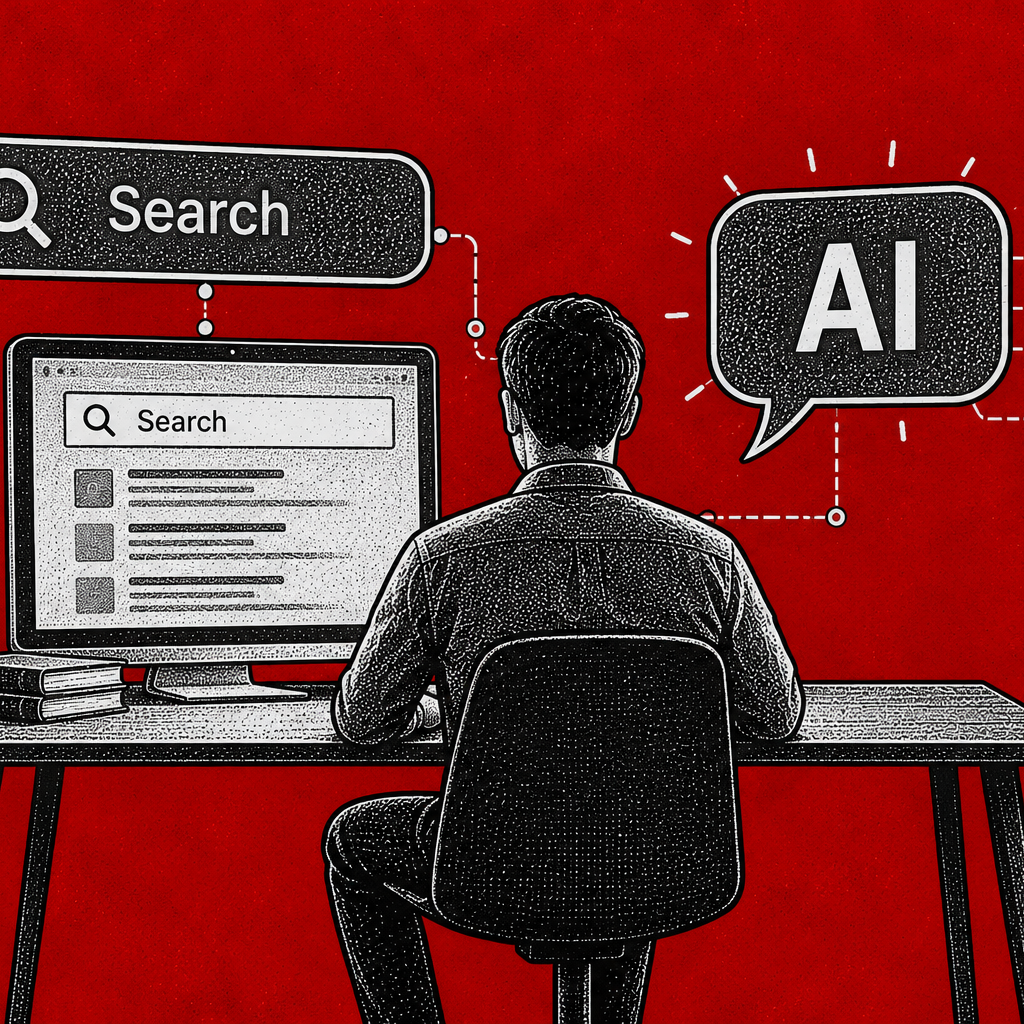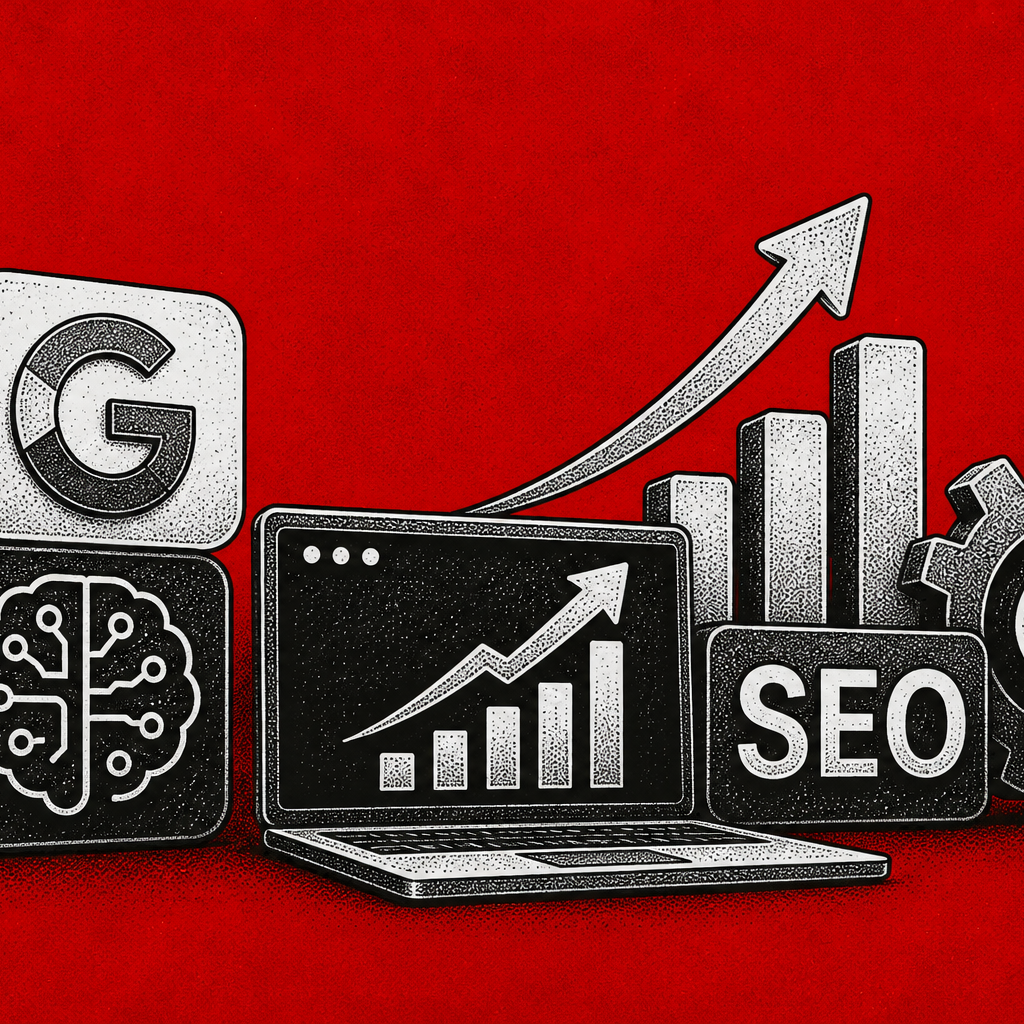
AI Search vs Google Search comparison and future SEO strategies by Spectra Digital

AI Search vs Google Search: Powerful Insights for Businesses in 2026

The way people search for information online is changing rapidly. For years, traditional search engines like Google dominated how users discovered websites, products, and services. However, the rise of AI-powered search platforms is transforming user behavior and redefining digital marketing strategies.

Understanding AI Search vs Google Search has become essential for businesses that want to maintain online visibility and stay ahead of competitors.

As AI-driven search experiences continue to evolve, companies must adapt their SEO and content strategies to meet changing user expectations.

What Is Traditional Google Search?

image

Google Search has long been the primary gateway to information on the internet.

Traditional search works by:

  • Crawling and indexing web pages
  • Ranking websites based on hundreds of ranking factors
  • Displaying results through organic listings, featured snippets, local packs, and advertisements

Users typically enter a query, browse multiple links, and click on websites to find the information they need.

Google’s ranking system focuses heavily on factors such as:

  • Content relevance
  • Backlinks and authority
  • Technical SEO
  • User experience
  • Search intent

For businesses, ranking on the first page of Google has always been a major objective.

What Is AI Search?

image

AI Search uses artificial intelligence and large language models to generate direct answers and conversational responses.

Instead of simply displaying a list of links, AI-powered search platforms provide summarized information by understanding context, intent, and relationships between topics.

AI search experiences often include:

  • Conversational responses
  • Personalized answers
  • Follow-up questions
  • Context-aware recommendations
  • Direct summaries from multiple sources

Users increasingly expect immediate answers rather than manually browsing several websites.

AI Search vs Google Search: Key Differences

1. Search Experience

image

Google Search:
Provides users with a list of websites and allows them to choose which sources to visit.

AI Search:
Delivers direct, conversational answers and summarizes information instantly.

This shift significantly changes how users interact with online content.

2. User Intent Understanding

AI search systems are better at understanding natural language and complex queries.

For example:

Google Search Query:
“Best digital marketing strategies for small businesses.”

AI Search Query:
“What are the most effective digital marketing strategies for a growing small business with a limited budget?”

AI systems can understand context and provide more nuanced responses.

3. Click Behavior

image

Traditional Google Search often drives website traffic through organic clicks.

AI search may reduce direct clicks because users can receive answers without visiting websites.

This means businesses may need to focus more on authority, brand recognition, and content quality.

4. Content Evaluation

image

Google traditionally evaluates:

  • Keywords
  • Backlinks
  • Technical SEO signals

AI search places greater emphasis on:

  • Expertise
  • Content depth
  • Contextual relevance
  • Authority and trustworthiness

High-quality, informative content becomes even more important.

5. Personalization

image

AI search experiences are becoming increasingly personalized based on:

  • User preferences
  • Previous interactions
  • Search history
  • Context and intent

This creates more tailored experiences for users.

Why AI Search Matters for Businesses

The rise of AI search represents one of the biggest changes in digital marketing in recent years.

Businesses need to understand these changes because:

  • Search behavior is evolving.
  • Organic traffic patterns may shift.
  • Content strategies must adapt.
  • Competition for visibility will increase.

Companies that prepare early can gain a significant competitive advantage.

How AI Search Is Changing SEO

image

SEO is not disappearing—it is evolving.

Businesses should focus on:

Creating Helpful Content

Content should answer real user questions and provide genuine value.

Building Topical Authority

Publishing multiple pieces of content within your niche strengthens expertise signals.

Optimizing for Conversational Queries

Users increasingly search using natural language and question-based phrases.

Improving Trust Signals

Expertise, experience, and credibility play a larger role in AI-driven search environments.

Strategies Businesses Should Adopt

1. Focus on High-Quality Content

Thin, keyword-stuffed content is becoming less effective.

Businesses should create:

  • In-depth guides
  • Industry insights
  • Case studies
  • Educational resources

2. Strengthen Brand Authority

Strong brands are more likely to be referenced and trusted within AI-generated responses.

Authority can be improved through:

  • Consistent content publishing
  • Industry recognition
  • Reviews and testimonials
  • Thought leadership initiatives

3. Optimize for User Intent

Understanding why users search is more important than simply targeting keywords.

Businesses should answer:

  • What problem does the user have?
  • What information do they need?
  • What action are they likely to take next?

4. Invest in Technical SEO

Technical foundations remain important.

Businesses should continue improving:

  • Website speed
  • Mobile responsiveness
  • Structured data
  • Site architecture

Strong technical SEO supports both traditional and AI search visibility.

Challenges Businesses May Face

As AI search adoption increases, businesses may experience:

  • Reduced organic click-through rates
  • Increased competition for authority
  • Changes in traffic measurement
  • Greater emphasis on content quality

Adapting quickly will be essential.

Future of Search: AI and Google Together

Rather than replacing Google entirely, AI search and traditional search are likely to coexist.

Google itself is increasingly integrating AI capabilities into its search experience through features such as AI Overviews.

The future of search will likely combine:

  • Traditional search results
  • AI-generated summaries
  • Conversational experiences
  • Personalized recommendations

Businesses that optimize for both environments will be in the strongest position.

How Spectra Digital Helps Businesses Prepare for the Future of Search

At Spectra Digital, we help businesses adapt to evolving search trends through data-driven strategies.

Our services include:

  • SEO strategy development
  • AI-focused content optimization
  • Technical SEO improvements
  • Website performance optimization
  • Authority-building campaigns

We help brands remain visible as search continues to evolve.

Final Thoughts

Understanding AI Search vs Google Search is becoming increasingly important for businesses in 2026.

AI-powered search experiences are changing how users discover information, interact with content, and make decisions online.

While traditional SEO principles remain valuable, businesses must now focus more on content quality, authority, user intent, and conversational experiences.

Companies that embrace these changes early will be better positioned to achieve long-term digital success.

If your business wants to stay ahead of the future of search, Spectra Digital can help you build strategies that improve visibility, increase authority, and drive sustainable growth.

How to rank in Google AI Overviews with AI-focused SEO strategies by Spectra Digital

How to Rank in Google AI Overviews in 2026: Avoid These Costly SEO Mistakes

The world of search engine optimization is evolving rapidly. With the rise of artificial intelligence in search results, businesses are asking one important question: How to rank in Google AI Overviews?

Google’s AI Overviews are transforming the way users discover information online. Instead of simply showing a list of blue links, Google now provides AI-generated summaries that answer users’ questions directly within search results.

For businesses, this means traditional SEO strategies alone are no longer enough. Brands must now optimize their content for both search engines and AI-driven experiences.

In this guide, Spectra Digital explains how Google AI Overviews work and the best strategies to improve your visibility in AI-powered search results.

What Are Google AI Overviews?

How to Rank in Google AI Overviews

Google AI Overviews are AI-generated summaries that appear at the top of search results for certain queries. These summaries provide users with quick answers by gathering information from multiple authoritative sources.

The goal of AI Overviews is to deliver more relevant, contextual, and helpful information to users without requiring them to visit multiple websites.

While AI Overviews improve user experience, they are also changing how businesses approach SEO and organic traffic.

Why Google AI Overviews Are Changing SEO

Traditional SEO focused heavily on:

  • Ranking on the first page
  • Optimizing for keywords
  • Building backlinks
  • Increasing click-through rates

Today, SEO is becoming more focused on:

  • Search intent
  • Content quality
  • Topical authority
  • User experience
  • Trust and expertise

Businesses that adapt to these changes will have a better chance of maintaining visibility in Google’s evolving search landscape.

How to Rank in Google AI Overviews

image

1. Create Helpful, Comprehensive Content

image

Google’s AI systems prioritize content that genuinely helps users.

Instead of creating short articles focused only on keywords, businesses should produce detailed and informative content that answers users’ questions completely.

High-quality content should include:

  • Clear explanations
  • Practical examples
  • Frequently asked questions
  • Actionable insights
  • Updated information

Comprehensive content increases the likelihood of being referenced in AI-generated summaries.

2. Focus on Search Intent

image

Understanding user intent has become more important than ever.

Ask yourself:

  • What problem is the user trying to solve?
  • What information are they looking for?
  • What follow-up questions might they have?

Content that fully satisfies user intent is more likely to be considered valuable by Google’s AI systems.

3. Build Topical Authority

image

Google increasingly rewards websites that demonstrate expertise within specific topics.

Instead of publishing random content, businesses should build clusters around related subjects.

For example, a digital marketing agency can create content around:

  • SEO strategies
  • Performance marketing
  • Social media marketing
  • AI in digital marketing
  • Website optimization

Publishing multiple high-quality articles within your niche strengthens topical authority.

4. Use Clear Content Structure

image

AI systems prefer content that is easy to understand.

Structure your articles using:

  • Clear headings (H2 and H3)
  • Short paragraphs
  • Bullet points
  • Tables where appropriate
  • FAQ sections

Well-organized content makes it easier for search engines and AI systems to extract information.

5. Demonstrate Experience and Expertise

image

Google places significant importance on content credibility.

Businesses should demonstrate:

  • Real-world experience
  • Industry expertise
  • Author credibility
  • Original insights
  • Data-backed information

Sharing case studies, examples, and practical knowledge can improve trustworthiness.

6. Optimize for Long-Tail Keywords

image

AI Overviews often appear for conversational and informational searches.

Examples include:

  • How to improve website SEO
  • What makes a high-converting website
  • How to rank in Google AI Overviews

Targeting long-tail keywords helps businesses capture highly relevant search traffic.

7. Add FAQ Sections

image

FAQs align well with the way people search today.

Examples:

What are Google AI Overviews?

Google AI Overviews are AI-generated summaries displayed at the top of search results that provide quick answers to user queries.

How can businesses rank in AI Overviews?

Businesses can improve visibility by creating helpful content, building authority, and optimizing for search intent.

FAQ sections increase content relevance and improve opportunities for featured visibility.

8. Improve Website User Experience

image

User experience continues to be a major ranking factor.
Businesses should focus on:

  • Fast loading speed
  • Mobile responsiveness
  • Easy navigation
  • Secure browsing experience
  • Low bounce rates

A positive user experience supports better search performance.

9. Build High-Quality Backlinks

image

Backlinks remain an important trust signal.

Links from reputable websites help establish authority and improve credibility in Google’s eyes.

Businesses should focus on earning backlinks through:

  • Valuable content
  • Industry collaborations
  • Guest posting
  • Digital PR initiatives

Quality matters far more than quantity.

10. Keep Content Updated

image

AI systems prefer fresh and relevant information.

Regularly update articles with:

  • New statistics
  • Emerging trends
  • Industry developments
  • Updated examples

Content freshness can improve long-term search visibility.

Common SEO Mistakes in the AI Era

Businesses often struggle because they:

  • Focus only on keywords
  • Publish thin content
  • Ignore search intent
  • Neglect user experience
  • Fail to update content regularly

Modern SEO requires a more strategic and user-focused approach.

Future of SEO in the Age of AI

image

SEO is not disappearing—it is evolving.

In the coming years, successful businesses will focus on:

  • Creating genuinely helpful content
  • Building authority and trust
  • Optimizing for conversational searches
  • Leveraging AI tools responsibly
  • Delivering exceptional user experiences

Brands that adapt to AI-driven search trends will gain a competitive advantage.

How Spectra Digital Helps Businesses Adapt to AI Search

At Spectra Digital, we help businesses stay ahead of changing search trends through data-driven SEO strategies.

Our services include:

  • AI-focused SEO optimization
  • Content strategy development
  • Technical SEO improvements
  • Website performance optimization
  • Authority-building campaigns

We help businesses improve search visibility and prepare for the future of AI-powered search.

Final Thoughts

Understanding how to rank in Google AI Overviews is becoming essential for businesses looking to succeed in modern SEO.

Google’s AI-powered search experience is changing the way users discover information. Businesses that focus on helpful content, topical authority, user experience, and trust will be better positioned to gain visibility in AI Overviews.

SEO is evolving, but one principle remains the same: create valuable content that genuinely helps users.

If your business wants to stay ahead of the latest SEO trends, Spectra Digital can help you develop strategies that improve rankings, visibility, and long-term growth.

AI in digital marketing

How AI Is Changing Digital Marketing in 2026: Powerful Trends Businesses Must Know

Artificial Intelligence (AI) is no longer a futuristic concept—it has become a major force driving innovation in the marketing industry. Businesses across the world are using AI to automate tasks, improve customer experiences, and make smarter marketing decisions.

So, how AI is changing digital marketing in 2026 is one of the most important questions businesses should understand to stay competitive.

From personalized customer experiences to predictive analytics and AI-powered content creation, artificial intelligence is transforming the way brands connect with their audiences. In this blog, Spectra Digital explores the biggest ways AI is reshaping digital marketing in 2026.

Why AI Matters in Digital Marketing

Digital marketing has become increasingly data-driven. Businesses now need to analyze massive amounts of information, understand customer behavior, and deliver personalized experiences across multiple channels.

AI helps marketers by:

  • Automating repetitive tasks
  • Improving campaign performance
  • Delivering personalized customer experiences
  • Enhancing decision-making through data analysis
  • Increasing marketing efficiency and ROI

As competition grows, AI is becoming an essential tool rather than an optional technology.

How AI Is Changing Digital Marketing in 2026

AI Is Changing Digital Marketing

1. Hyper-Personalized Customer Experiences

Personalization has become one of the biggest factors influencing customer decisions.

AI can analyze user behavior, browsing patterns, purchase history, and engagement data to deliver highly personalized experiences.

Businesses are now using AI to:

  • Recommend products based on customer interests
  • Deliver personalized email campaigns
  • Show customized website content
  • Create targeted advertising campaigns

Personalized experiences help businesses improve customer satisfaction and increase conversions.

2. AI-Powered Content Creation

image

Content marketing continues to play a major role in digital success, and AI tools are helping marketers create content faster and more efficiently.

AI is assisting businesses with:

  • Blog topic generation
  • Content research
  • Social media captions
  • Email copywriting
  • Content optimization

However, human creativity remains essential. The most successful brands use AI to improve productivity while maintaining authenticity and brand voice.

3. Smarter SEO Strategies

image

Search engine optimization is evolving rapidly because of AI.

Search engines are becoming better at understanding user intent, context, and content quality.

In 2026, AI is helping marketers:

  • Identify keyword opportunities
  • Analyze competitor strategies
  • Optimize content for search intent
  • Improve technical SEO
  • Predict search trends

Businesses that combine AI insights with high-quality content are likely to achieve stronger search engine rankings.

4. Advanced Predictive Analytics

image

One of the biggest advantages of AI is its ability to predict future behavior.

Predictive analytics allows businesses to:

  • Forecast customer demand
  • Identify potential leads
  • Predict purchasing behavior
  • Improve customer retention strategies

By analyzing historical data, AI helps marketers make better decisions and allocate budgets more effectively.

5. AI in Performance Marketing

Performance marketing has become increasingly data-driven, and AI is making advertising campaigns more efficient.

AI can automatically:

  • Optimize bidding strategies
  • Improve audience targeting
  • Analyze campaign performance
  • Allocate budgets efficiently
  • Increase return on ad spend (ROAS)

Platforms like Google Ads and social media advertising systems increasingly rely on machine learning algorithms to improve campaign performance.

6. AI Chatbots and Customer Support

image

Customer expectations continue to rise, and businesses need to provide instant support.

AI-powered chatbots help companies:

  • Answer customer queries 24/7
  • Generate leads automatically
  • Improve response times
  • Enhance customer experience

Modern AI chatbots can understand user intent better than ever, making customer interactions more natural and efficient.

7. Better Audience Targeting

image

Finding the right audience is critical for marketing success.

AI can analyze large datasets and identify users who are most likely to convert.

This allows businesses to:

  • Reduce wasted ad spend
  • Increase campaign efficiency
  • Improve lead quality
  • Achieve higher conversion rates

Smarter targeting leads to better marketing outcomes and stronger ROI.

8. Enhanced Marketing Automation

image

Marketing automation has evolved significantly with AI integration.

Businesses can now automate:

  • Email campaigns
  • Customer segmentation
  • Lead nurturing workflows
  • Social media scheduling
  • Reporting and analytics

AI helps marketers save time while ensuring more relevant and personalized communication.

9. Voice Search and Conversational Marketing

image

Voice search continues to grow as more consumers use smart devices and voice assistants.

AI is helping businesses optimize for:

  • Conversational search queries
  • Natural language keywords
  • Voice-based customer interactions

Brands that adapt to conversational search trends can gain a competitive advantage in search visibility.

10. Data-Driven Decision Making

image

One of the biggest ways AI is changing digital marketing in 2026 is through smarter decision-making.

AI enables businesses to:

  • Analyze customer behavior in real time
  • Understand campaign performance instantly
  • Identify new market opportunities
  • Make faster strategic decisions

Data-driven marketing reduces guesswork and improves business outcomes.

Challenges of Using AI in Digital Marketing

Although AI offers numerous benefits, businesses should also be aware of potential challenges.

These include:

  • Maintaining content authenticity
  • Protecting customer privacy
  • Managing data quality
  • Avoiding over-automation
  • Ensuring human creativity remains part of marketing strategies

AI should support marketers, not replace strategic thinking and creativity.

Future of AI in Digital Marketing

image

The role of AI in marketing will continue to expand in the coming years.

Businesses can expect:

  • More advanced personalization
  • Improved predictive analytics
  • Greater automation capabilities
  • Better customer insights
  • Increased efficiency across marketing channels

Companies that embrace AI early will be better positioned to stay ahead of competitors.

How Spectra Digital Helps Businesses Leverage AI

At Spectra Digital, we combine AI-driven insights with human creativity to build effective digital marketing strategies.

Our services include:

  • AI-powered performance marketing
  • SEO and content optimization
  • Data-driven advertising strategies
  • Website optimization
  • Lead generation campaigns

We help businesses use the latest technologies to improve efficiency, increase conversions, and achieve sustainable growth.

Final Thoughts

Understanding how AI is changing digital marketing in 2026 is essential for businesses that want to remain competitive in an increasingly digital world.

Artificial intelligence is transforming SEO, advertising, content creation, personalization, and customer engagement. Businesses that successfully integrate AI into their marketing strategies can improve efficiency, enhance customer experiences, and maximize ROI.

As AI continues to evolve, companies that embrace innovation and adapt quickly will gain a significant competitive advantage.

If you’re looking to implement AI-driven marketing strategies, Spectra Digital can help your business stay ahead in the rapidly changing digital landscape.

webiste logo

What Makes a High-Converting Website? 10 Essential Elements Every Business Needs

A high-converting website doesn’t just attract visitors—it turns them into leads, customers, and loyal clients. Whether your goal is generating inquiries, increasing sales, or building brand awareness, your website plays a major role in your business growth.

At Spectra Digital, we help businesses create websites that are not only visually appealing but also designed to deliver measurable results. Let’s explore the essential elements that make a website convert effectively.

What Makes a High-Converting Website?

A high-converting website is designed with the user journey in mind. It guides visitors toward taking specific actions such as filling out a form, booking a consultation, making a purchase, or contacting your business.

The most successful websites combine excellent design, clear messaging, and data-driven optimization to maximize conversions.

1. Clear Value Proposition

Visitors decide within a few seconds whether they want to stay on your website or leave.

Your homepage should immediately answer:

  • Who are you?
  • What do you offer?
  • Why should customers choose you?

A strong headline and concise messaging help visitors understand the value your business provides.

Example:

“Helping Businesses Grow Through Data-Driven Digital Marketing Solutions.”

A clear value proposition builds trust and encourages users to explore further.

2. Fast Website Loading Speed

image

Website speed directly impacts user experience and conversions.

Studies consistently show that slow websites lead to higher bounce rates and lower conversion rates. Users expect pages to load quickly, especially on mobile devices.

Ways to improve speed include:

  • Optimizing images
  • Using reliable hosting
  • Minimizing unnecessary scripts
  • Implementing caching techniques

A faster website creates a better user experience and increases the chances of conversion.

3. Mobile-Friendly Design

image

A significant portion of website traffic now comes from smartphones and tablets.

If your website is difficult to navigate on mobile devices, potential customers may leave before taking action.

A high-converting website should offer:

  • Responsive layouts
  • Easy navigation
  • Fast mobile loading times
  • Clickable buttons and forms

Mobile optimization is no longer optional—it’s essential.

4. Strong Call-to-Action (CTA)

image

Every page should guide users toward a specific action.

Effective call-to-action buttons include:

  • Get a Free Consultation
  • Request a Quote
  • Contact Our Team
  • Book a Demo

Your CTA should be clear, visible, and strategically placed throughout the website.

5. User-Friendly Navigation

Visitors should be able to find information quickly and easily.

Complicated navigation often frustrates users and increases bounce rates.

A well-structured website typically includes:

  • Simple menus
  • Clear service pages
  • Easy access to contact information
  • Logical page hierarchy

Good navigation improves user experience and supports higher conversion rates.

6. Trust Signals and Social Proof

Trust is one of the biggest factors influencing online conversions.

Including trust-building elements can significantly improve credibility.

Examples include:

  • Client testimonials
  • Google reviews
  • Case studies
  • Industry certifications
  • Awards and recognitions
  • Portfolio examples

Showing real results and customer experiences reassures potential clients.

7. High-Quality Content

image

Content plays a major role in educating visitors and building authority.

A high-converting website should provide valuable information through:

  • Service pages
  • Blog articles
  • FAQs
  • Case studies
  • Educational resources

Quality content also improves SEO and helps attract organic traffic.

8. Effective Lead Capture Forms

Forms should be simple and easy to complete.

Asking for too much information can reduce conversions.

Best practices include:

  • Keeping forms short
  • Asking only essential questions
  • Offering something valuable in return, such as a consultation or downloadable resource

Reducing friction increases the likelihood of form submissions.

9. Search Engine Optimization (SEO)

image

Even the best website cannot generate conversions if people cannot find it.

SEO helps businesses attract qualified traffic from search engines.

Important SEO elements include:

  • Keyword optimization
  • Technical SEO
  • Internal linking
  • High-quality content
  • Optimized meta titles and descriptions

Combining SEO with conversion optimization creates long-term growth opportunities.

10. Continuous Testing and Optimization

High-converting websites are never truly finished.

Successful businesses regularly analyze website performance and optimize based on data.

Areas to test include:

  • Headlines
  • CTA buttons
  • Landing page layouts
  • Images and visuals
  • Form designs

Small improvements can lead to significant increases in conversion rates over time.

Common Mistakes That Reduce Website Conversions

Businesses often struggle with conversions because of:

  • Slow website speed
  • Poor mobile experience
  • Weak messaging
  • Lack of trust signals
  • Confusing navigation
  • Too many distractions
  • Unclear call-to-actions

Avoiding these issues can dramatically improve website performance.

Why a High-Converting Website Matters for Business Growth

image

A well-optimized website helps businesses:

  • Generate more leads
  • Increase sales
  • Improve customer trust
  • Lower customer acquisition costs
  • Achieve better marketing ROI

Your website should work as a 24/7 sales tool that consistently brings value to your business.

How Spectra Digital Helps Businesses Build High-Converting Websites

At Spectra Digital, we specialize in creating websites that combine attractive design, SEO best practices, and conversion-focused strategies.

Our services include:

We focus on building websites that not only look professional but also deliver measurable business results.

Final Thoughts

Understanding what makes a high-converting website is essential for any business looking to grow online.

A successful website combines speed, user experience, trust, compelling content, and strategic calls-to-action to turn visitors into customers.

If your current website isn’t generating the results you expect, it may be time to optimize its design and conversion strategy.

At Spectra Digital, we help businesses create high-performing websites that drive traffic, generate leads, and maximize conversions.

SEO vs Google Ads infographic

SEO vs Google Ads: Which One Should Your Business Invest In? (2026 Guide)

SEO vs Google Ads: Discover the differences, costs, ROI, pros and cons to choose the best digital marketing strategy for your business in 2026.

Should I invest in SEO or Google Ads?

The answer isn’t as straightforward as choosing one over the other. Both are powerful digital marketing strategies, but they serve different purposes. The right choice depends on your business goals, budget, timeline, and competition.

In this blog, we’ll break down the differences between SEO and Google Ads, their pros and cons, and help you decide which investment will deliver the best results for your business.

image

SEO vs Google Ads: Understanding SEO

Search Engine Optimization (SEO) is the process of improving your website so it ranks higher on search engines like Google organically (without paying for every click).

image

SEO includes:

  • Keyword research
  • On-page optimization
  • Technical SEO
  • Content marketing
  • Link building
  • Local SEO
  • Website performance optimization

When done correctly, SEO helps your business appear in front of potential customers who are actively searching for your products or services.

Pros of SEO

Long-term, sustainable traffic

Builds trust and credibility

Higher ROI over time

Generates consistent leads

No cost per click

Cons of SEO

Results take time (typically 3–6 months)

Requires continuous optimization

Competitive industries need ongoing effort

SEO vs Google Ads: Understanding Google Ads

Google Ads is Google’s paid advertising platform where businesses bid on keywords to appear at the top of search results instantly.

Unlike SEO, you pay every time someone clicks on your ad (Pay-Per-Click or PPC).

Google Ads is ideal for businesses looking for immediate visibility and quick lead generation.

image

Pros of Google Ads

Instant visibility

Fast lead generation

Highly targeted audience

Easy to measure performance

Scalable campaigns

Cons of Google Ads

Traffic stops when your budget runs out

Cost per click can become expensive

Highly competitive keywords increase advertising costs

SEO vs Google Ads: A Quick Comparison

image
FactorSEOGoogle Ads
ResultsSlow but long-lastingImmediate
CostInvestment in optimizationPay per click
TrafficOrganicPaid
ROIHigh over the long termFaster short-term ROI
TrustHigher user trustMarked as Sponsored
SustainabilityLong-lastingEnds when spending stops

SEO vs Google Ads comparison infographic

When Should You Choose SEO?

SEO is the better investment if you:

  • Want consistent long-term growth
  • Have time to build authority
  • Want to reduce dependency on paid advertising
  • Publish valuable content regularly
  • Want sustainable lead generation

Example:

Imagine you’re a law firm, dental clinic, real estate agency, or interior designer.

People search for these services every day. Ranking organically allows you to receive inquiries continuously without paying for every visitor.

When Should You Choose Google Ads?

Google Ads is ideal if you:

  • Need leads immediately
  • Are launching a new product or service
  • Have limited time
  • Want to promote seasonal offers
  • Need measurable results quickly

Example:

Running a Diwali sale?

Launching a new restaurant?

Opening a gym?

Google Ads can start bringing visitors within hours.

SEO vs Google Ads: Which Gives Better ROI?

image

This is where many businesses get confused.

Short-Term ROI

Google Ads usually wins because it starts generating traffic almost immediately.

Long-Term ROI

SEO wins because once your website ranks well, you continue receiving traffic without paying for every click.

Think of it this way:

  • Google Ads is like renting a house.
  • SEO is like owning one.

Renting gives you immediate access, but once you stop paying, you lose it.

Owning takes longer, but the long-term value keeps growing.

Can You Use Both Together?

image

Absolutely—and for many businesses, this is the smartest strategy.

Here’s how they complement each other:

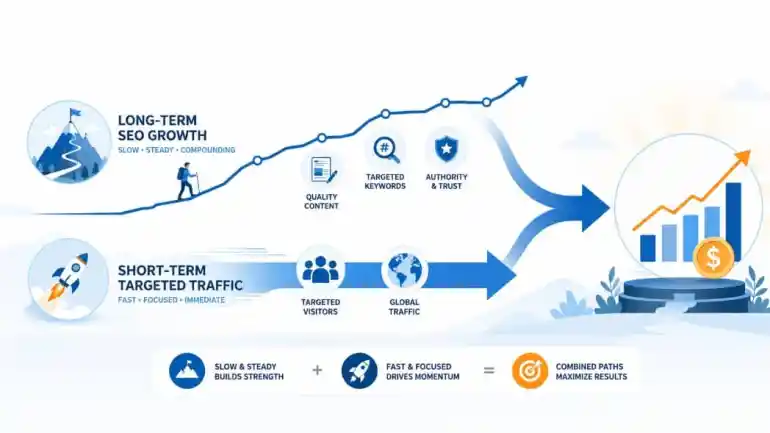
  • Use Google Ads to generate immediate leads while your SEO strategy gains momentum.
  • Use SEO to build long-term visibility and reduce reliance on paid campaigns over time.
  • Analyze high-performing Google Ads keywords and incorporate them into your SEO content.
  • Retarget visitors from organic traffic using paid campaigns for higher conversions.

This balanced approach allows businesses to capture short-term opportunities while investing in sustainable growth.

Common Mistakes Businesses Make

Many businesses waste their marketing budget by:

  • Expecting SEO results in just a few weeks
  • Stopping Google Ads after a few days without enough data
  • Ignoring landing page optimization
  • Targeting the wrong keywords
  • Focusing only on traffic instead of conversions
  • Neglecting website speed and user experience

Remember, neither SEO nor Google Ads can deliver their full potential without a well-optimized website and a clear conversion strategy.

So, Which One Should You Invest In?

There’s no universal answer—it depends on where your business is today.

Choose SEO if you want to build a strong digital presence, increase organic visibility, and generate consistent traffic over time.

Choose Google Ads if your priority is immediate traffic, lead generation, or promoting time-sensitive campaigns.

If your budget allows, combining both strategies often delivers the best results. Google Ads can drive quick wins while SEO lays the foundation for long-term success.

Final Thoughts

image

SEO and Google Ads aren’t competitors—they’re complementary tools in a successful digital marketing strategy.

The most effective businesses don’t rely on just one channel. They build a marketing ecosystem where paid advertising delivers immediate visibility, while SEO creates lasting authority and sustainable growth.

At Spectra Digital, we help businesses develop customized digital marketing strategies that combine SEO, Google Ads, content marketing, and conversion optimization to maximize ROI. Whether you’re looking to grow organically, generate qualified leads, or scale your business online, our team can help you choose the right approach based on your goals.

Ready to grow your business online? Get in touch with Spectra Digital today and let’s build a strategy that delivers measurable results.