IMG 3257Best AI tools for marketers in 2026, including AI-powered solutions for content creation, SEO, social media marketing, email automation, analytics, and digital advertising.

Best AI Tools for Marketers in 2026: The Ultimate Guide to Smarter Digital Marketing

Introduction

Artificial Intelligence (AI) has transformed digital marketing from a trend into a necessity. In 2026, marketers are expected to do more than ever before create engaging content, manage multiple social media platforms, optimize websites for search engines, analyze customer behavior, run high-performing advertising campaigns, and deliver personalized experiences across every touchpoint. The challenge isn’t a lack of opportunities it’s managing them efficiently. That’s where AI comes in. Today’s AI-powered tools help marketers automate repetitive tasks, generate high-quality content, improve SEO, analyze data faster, create stunning visuals, optimize ad campaigns, and make smarter decisions backed by real-time insights. However, with hundreds of AI platforms available, choosing the right ones can be overwhelming. At Spectra Digital, we believe AI should enhance creativity not replace it. The most successful marketing strategies combine human expertise with AI-powered efficiency. In this guide, we’ll explore the best AI tools every marketer should know in 2026 and how they can help businesses grow.

Why AI Is Essential for Digital Marketing in 2026

Digital marketing has become increasingly data-driven. Businesses need to understand customer behavior, respond to trends quickly, and create personalized experiences at scale.

AI helps marketers:

  • Save time by automating repetitive tasks.
  • Generate ideas and marketing content faster.
  • Improve SEO performance.
  • Personalize customer experiences.
  • Optimize advertising campaigns.
  • Analyze large amounts of marketing data.
  • Increase productivity and marketing ROI.

Rather than replacing marketers, AI allows them to focus on creativity, strategy, and decision-making while automation handles routine work.

ChatGPT – The AI Assistant for Content and Strategy

One of the most widely used AI tools in marketing, ChatGPT helps businesses brainstorm ideas, write blog posts, create ad copy, draft emails, generate social media captions, and develop marketing strategies.

Best For

  • Blog writing
  • Social media captions
  • SEO content
  • Email marketing
  • Content planning
  • Marketing strategy
  • Customer support

Why Marketers Love It

ChatGPT speeds up content creation while helping marketers overcome writer’s block. When paired with human editing and brand guidelines, it becomes a powerful productivity tool.

ChatGPT – The AI Assistant for Content and Strategy

Canva AI – Faster Graphic Design

Design is a major part of digital marketing, but not every marketer is a professional designer.

Canva AI enables users to generate presentations, social media creatives, advertisements, banners, videos, and brand assets with minimal effort.

Best For

  • Instagram posts
  • Presentation design
  • Social media graphics
  • Brand kits
  • Video editing
  • Marketing visuals

Key Benefit

Create professional-quality designs without advanced design skills.

Canva AI – Faster Graphic Design

Claude AI – Best for Long-Form Content and Business Writing

Developed by Anthropic, Claude AI has become one of the most trusted AI assistants for marketers, businesses, and content creators. Known for its ability to understand context, produce natural-sounding writing, and handle long documents, Claude is an excellent choice for creating high-quality marketing content.

Unlike many AI tools that focus on short responses, Claude excels at generating detailed blog posts, marketing strategies, research summaries, case studies, reports, and business documentation while maintaining a clear and consistent tone.

Claude AI – Best for Long-Form Content and Business Writing

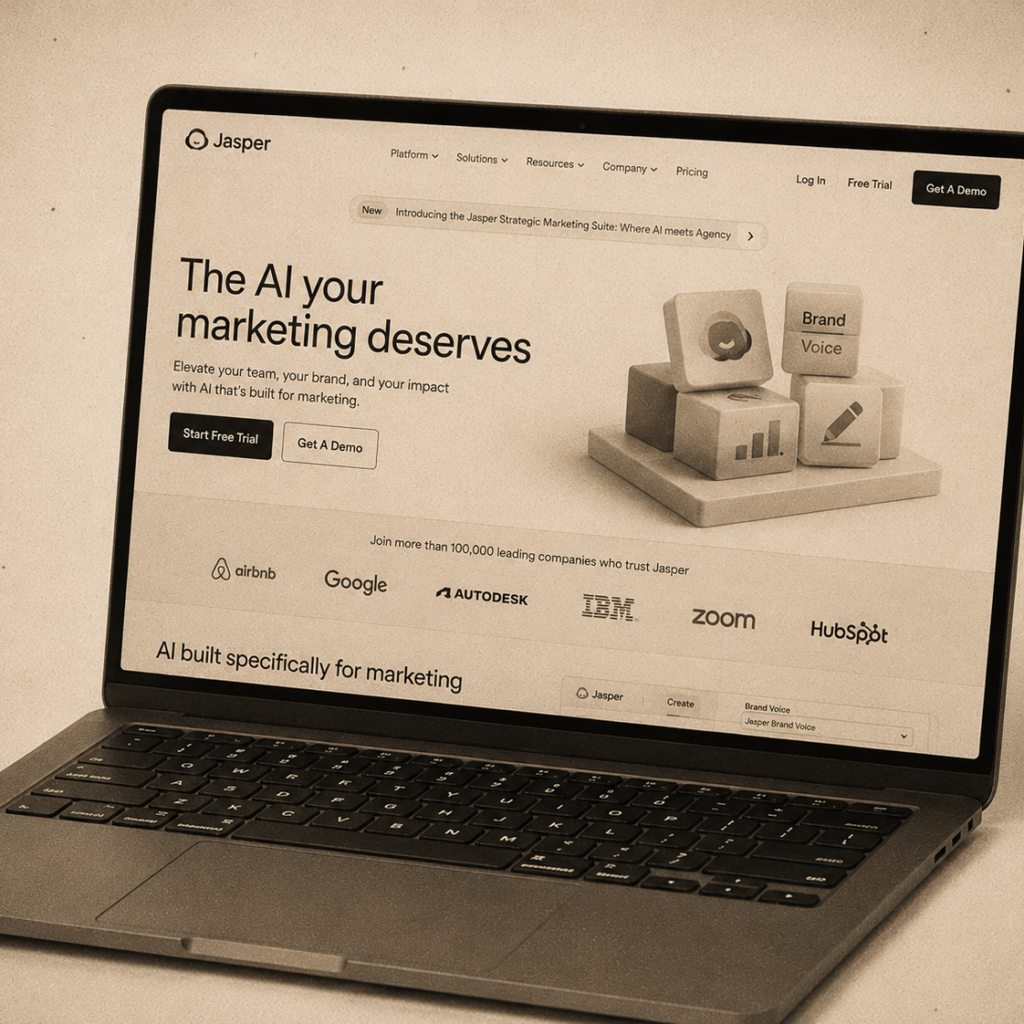
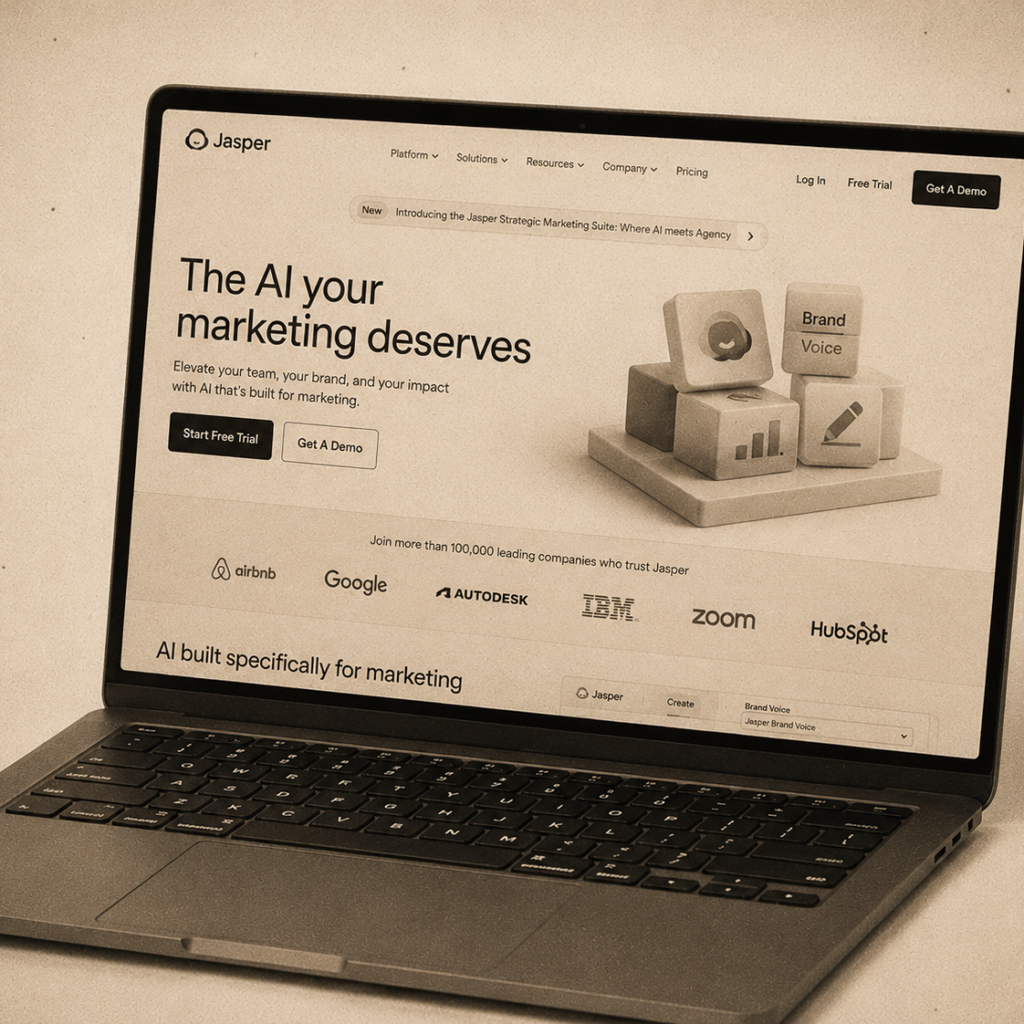
Jasper AI – AI Writing for Marketing Teams

Jasper AI is designed specifically for businesses and marketing teams that produce large volumes of content.

It helps create:

  • Blog articles
  • Landing pages
  • Product descriptions
  • Facebook ads
  • Google Ads copy
  • Website content
  • Email campaigns

Jasper also supports maintaining a consistent brand voice across multiple writers.

Jasper AI – AI Writing for Marketing Teams

Surfer SEO – AI-Powered Search Engine Optimization

Creating content isn’t enough it also needs to rank.

Surfer SEO analyzes top-ranking pages and provides recommendations to improve your content’s search engine performance.

Features

  • Keyword optimization
  • Content scoring
  • NLP recommendations
  • Internal linking suggestions
  • Competitor analysis

Best For

Businesses looking to improve organic search rankings.

Surfer SEO – AI-Powered Search Engine Optimization

Semrush AI Features – Complete Marketing Intelligence

Semrush has evolved into an all-in-one digital marketing platform enhanced with AI capabilities.

Marketers use it for:

  • Keyword research
  • Competitor analysis
  • Site audits
  • Backlink monitoring
  • PPC research
  • Content optimization
  • Market insights

Its AI-powered recommendations help marketers make data-driven SEO and advertising decisions.

Semrush AI Features – Complete Marketing Intelligence

HubSpot AI – Marketing and CRM Automation

HubSpot integrates AI into its CRM and marketing platform to streamline customer interactions.

Its AI features assist with:

  • Email creation
  • Lead nurturing
  • Customer segmentation
  • Workflow automation
  • Chatbots
  • Sales insights

This enables businesses to deliver more personalized customer experiences.

HubSpot AI – Marketing and CRM Automation

Google Gemini – AI for Productivity and Research

Google Gemini enhances productivity across research, brainstorming, writing, and collaboration.

Marketers use it to:

  • Research competitors
  • Generate campaign ideas
  • Summarize reports
  • Draft content
  • Analyze marketing data

Its integration with Google’s ecosystem makes it particularly useful for teams already using Google Workspace.

Google Gemini – AI for Productivity and Research

How AI Is Changing Marketing in 2026

AI is influencing every stage of the marketing journey.

Content Marketing

AI accelerates idea generation, outlines, editing, and optimization while allowing writers to focus on storytelling and originality.

Search Engine Optimization

Modern AI tools simplify keyword research, content optimization, competitor analysis, and technical SEO audits.

Social Media Marketing

AI assists with caption writing, hashtag suggestions, scheduling, audience insights, and engagement analysis.

Paid Advertising

Machine learning helps optimize targeting, bidding strategies, audience segmentation, and campaign performance.

Email Marketing

AI enables personalized email campaigns based on customer preferences and behavior, improving engagement and conversions.

Customer Support

AI-powered chatbots provide instant responses, improving customer satisfaction while reducing support workloads.

How to Choose the Right AI Marketing Tool

Not every business needs every AI platform.

Before investing, ask yourself:

  • What marketing tasks consume the most time?
  • Which processes can be automated?
  • Does the tool integrate with your existing software?
  • Will it improve productivity and ROI?
  • Is it easy for your team to adopt?

Choosing tools based on business goals not trends will deliver the best long-term results.

Best Practices for Using AI in Marketing

AI is a powerful assistant, but human expertise remains essential.

To get the best results:

  • Use AI to support not replace creative thinking.
  • Always fact-check AI-generated content.
  • Maintain your brand’s voice and messaging.
  • Review all outputs before publishing.
  • Protect customer data and privacy.
  • Combine AI insights with human judgment.

The most successful marketers use AI as a productivity partner rather than a complete substitute for strategic thinking.

Why Businesses Partner with Spectra Digital

At Spectra Digital, we embrace AI to enhance efficiency while keeping creativity and strategy at the heart of every campaign.

We combine advanced AI tools with experienced marketing professionals to deliver customized digital marketing solutions that help businesses grow.

Our services include:

  • Search Engine Optimization (SEO)
  • Website Design & Development
  • Content Marketing
  • Social Media Marketing
  • Google Ads
  • Meta Ads
  • Performance Marketing
  • Branding
  • Lead Generation
  • Marketing Analytics

By blending AI-powered insights with human expertise, we create campaigns that are innovative, data-driven, and results-oriented.

Conclusion

Artificial Intelligence is reshaping the future of marketing, making it easier than ever to create content, analyze data, automate workflows, and connect with customers.

From content generation tools like ChatGPT and Jasper AI to SEO platforms like Surfer SEO and Semrush, AI empowers marketers to work faster and smarter.

However, technology alone doesn’t guarantee success. The most effective marketing strategies combine AI’s speed and efficiency with human creativity, strategic thinking, and genuine customer understanding.

As AI continues to evolve, businesses that embrace these tools responsibly will be better positioned to stay competitive, improve productivity, and deliver exceptional customer experiences.

If you’re ready to integrate AI into your marketing strategy, Spectra Digital can help you leverage the right tools and strategies to achieve sustainable business growth.

Customer reviews improving online reputation, business credibility, Google rankings, and customer trust for long-term business growth

How Customer Reviews Improve Your Online Reputation and Drive Business Growth

Imagine you’re looking for a new restaurant, a digital marketing agency, or even a local salon. Before making a decision, what’s the first thing you do? Most likely, you search online and check the customer reviews. In today’s digital-first world, reviews have become one of the most powerful influences on purchasing decisions. Whether it’s a five-star Google review, a detailed testimonial on your website, or positive feedback on social media, customer opinions shape how people perceive your business before they ever contact you. Your online reputation is no longer defined solely by your advertising or website it’s built by the experiences your customers share. Positive reviews create trust, strengthen credibility, and encourage new customers to choose your business over competitors. On the other hand, ignoring reviews or failing to manage your online reputation can lead to missed opportunities and reduced customer confidence. At Spectra Digital, we help businesses build strong digital presences that inspire trust and generate results. In this blog, we’ll explore why customer reviews matter, how they improve your online reputation, and practical strategies to encourage more positive feedback.

Why Customer Reviews Matter More Than Ever

Consumers have more choices than ever before. Before spending money, they want reassurance that they’re making the right decision. Customer reviews provide that reassurance by offering real experiences from people who have already used your products or services.Unlike traditional advertising, reviews feel authentic because they come directly from customers rather than the business itself. A collection of positive reviews tells potential customers that your business consistently delivers quality, reliability, and great service.Whether you’re a startup, local business, or established company, reviews have become an essential part of building trust in the digital marketplace.

What Is Online Reputation?

Your online reputation is the overall perception people have of your business based on information they find online.

It includes:

  • Google Reviews
  • Social media comments
  • Customer testimonials
  • Online ratings
  • Business directory listings
  • Blog mentions
  • News articles
  • Forum discussions

Every interaction contributes to how your brand is perceived. Managing your online reputation means monitoring these conversations and responding in a professional, customer-focused manner.

How Customer Reviews Improve Your Online Reputation

They Build Trust and Credibility

Trust is one of the biggest factors influencing buying decisions. When potential customers see positive reviews from real people, they feel more confident choosing your business.

A business with hundreds of genuine reviews often appears more trustworthy than one with little or no customer feedback. Reviews provide social proof that your products or services deliver on their promises.

The more authentic reviews you receive, the stronger your reputation becomes.

They Build Trust and Credibility

Reviews Influence Purchasing Decisions

Customer reviews often act as the final deciding factor before someone makes a purchase.

Imagine two businesses offering similar services at comparable prices. One has dozens of positive reviews highlighting professionalism, quality, and excellent customer service, while the other has very few reviews. Most customers will naturally choose the business with stronger feedback.

Positive reviews reduce uncertainty and help customers feel confident in their decision.

Reviews Influence Purchasing Decisions

Reviews Improve Local SEO

Search engines like Google consider customer reviews when ranking local businesses.

Factors such as:

  • Number of reviews
  • Average rating
  • Review frequency
  • Review quality
  • Keywords within reviews

all contribute to local search visibility.

Businesses with consistent positive reviews are more likely to appear in Google Search and Google Maps results, making it easier for nearby customers to discover them.

Reviews Improve Local SEO

Reviews Increase Click-Through Rates

Star ratings displayed in search results immediately capture attention.

When users see a business with excellent ratings, they are more likely to click on it than competitors with fewer or lower-rated reviews.

Higher click-through rates often lead to more website traffic, inquiries, and conversions.

Reviews Increase Click-Through Rates

Customer Reviews Create Valuable User-Generated Content

Every review adds fresh, relevant content about your business.

Customers naturally describe their experiences using words and phrases that potential buyers search for online. This user-generated content can reinforce your online presence and provide valuable context for both search engines and future customers.

Customer Reviews Create Valuable User-Generated Content

Reviews Strengthen Brand Reputation

A business with consistent positive feedback develops a reputation for quality, reliability, and customer satisfaction.

Over time, positive reviews become part of your brand identity, helping customers associate your business with professionalism and trust.

This reputation becomes a competitive advantage that competitors cannot easily replicate.

Reviews Strengthen Brand Reputation

Reviews Help You Improve

Not every review will be perfect—and that’s okay.

Constructive feedback helps businesses identify areas where they can improve products, services, or customer experiences.

Businesses that listen, learn, and make improvements based on customer feedback often earn even greater loyalty over time.

Reviews Help You Improve

The Importance of Responding to Reviews

Collecting reviews is only half the process. Responding to them shows customers that you value their opinions.

Respond to Positive Reviews

Thank customers for their feedback and express appreciation for their support.

Example:

“Thank you for your kind words! We’re thrilled you had a great experience and look forward to serving you again.”

Respond to Negative Reviews Professionally

Negative reviews should never be ignored or answered emotionally.

Instead:

  • Acknowledge the issue.
  • Apologize when appropriate.
  • Offer a solution.
  • Invite the customer to continue the conversation privately.

A professional response demonstrates accountability and shows potential customers that your business cares about customer satisfaction.

How to Encourage More Customer Reviews

Many happy customers are willing to leave reviews they simply need a reminder.

Here are some effective ways to increase customer feedback:

Ask at the Right Time

Request reviews shortly after completing a successful project or purchase while the experience is still fresh.

Make It Easy

Share direct review links through email, SMS, WhatsApp, or QR codes to simplify the process.

Follow Up

A polite follow-up message can significantly increase review submissions.

Deliver Excellent Service

Exceptional customer experiences naturally lead to positive reviews and recommendations.

Never Buy Fake Reviews

Authenticity matters. Fake reviews can damage credibility and violate platform guidelines.

Common Mistakes Businesses Make

Avoid these common reputation management mistakes:

  • Ignoring customer reviews
  • Responding defensively to criticism
  • Deleting negative feedback without addressing concerns
  • Asking only a few customers for reviews
  • Posting fake testimonials
  • Failing to monitor review platforms regularly

A proactive and transparent approach builds long-term trust.

How Spectra Digital Helps Businesses Build a Strong Online Reputation

At Spectra Digital, we understand that your reputation is one of your most valuable business assets. Our digital marketing strategies are designed to help businesses earn trust, improve visibility, and build lasting relationships with customers.

Our services include:

  • Online Reputation Management
  • Search Engine Optimization (SEO)
  • Google Business Profile Optimization
  • Social Media Management
  • Content Marketing
  • Website Development
  • Local SEO Strategies
  • Performance Marketing
  • Brand Strategy

We help businesses not only attract more customers but also maintain the positive online reputation needed for long-term success.

Final Thoughts

Customer reviews have evolved from simple feedback into one of the most influential factors in business success. They build trust, improve local SEO, strengthen brand credibility, and help potential customers make confident purchasing decisions.

A strong online reputation isn’t created overnight it’s built through consistently delivering excellent customer experiences and encouraging satisfied customers to share their stories. Businesses that actively manage their reviews, respond professionally, and prioritize customer satisfaction are more likely to stand out in an increasingly competitive digital marketplace.

At Spectra Digital, we believe that every positive customer experience is an opportunity to strengthen your brand. By combining exceptional service with strategic online reputation management, businesses can create lasting trust, attract more customers, and achieve sustainable growth.

Conclusion

Customer reviews are one of the most valuable assets a business can have in today’s digital world. They influence buying decisions, improve search engine visibility, build credibility, and enhance your online reputation. By encouraging genuine feedback, responding thoughtfully to reviews, and consistently delivering outstanding customer experiences, businesses can establish trust and foster long-term customer loyalty. Investing in online reputation management isn’t just about protecting your brand—it’s about creating a positive digital presence that drives growth and success.

Proven Ways of Marketing Automation to Save Time and Increase Sales in 2026

In today’s competitive digital landscape, businesses are expected to engage customers quickly, deliver personalized experiences, and maintain consistent communication across multiple channels. Managing these tasks manually can be time-consuming and inefficient.

This is where marketing automation makes a significant difference.

By automating repetitive marketing tasks, businesses can save valuable time, improve customer engagement, and generate more sales without increasing their workload.

In this guide, Spectra Digital explains how marketing automation works, its key benefits, and how businesses can use it to achieve sustainable growth in 2026.

What Is Marketing Automation?

Marketing automation is the use of software and technology to automate repetitive marketing activities such as email campaigns, lead nurturing, customer segmentation, social media scheduling, and follow-up communications.

Instead of manually completing these tasks, businesses can create automated workflows that deliver the right message to the right audience at the right time.

Marketing automation helps businesses:

  • Save time
  • Increase efficiency
  • Improve customer experiences
  • Generate more qualified leads
  • Increase conversions

Why Marketing Automation Matters in 2026

Consumers now expect fast, relevant, and personalized interactions with brands.

At the same time, businesses must manage growing customer databases, multiple marketing channels, and increasing competition.

Marketing automation allows companies to:

1. Save Time by Automating Repetitive Tasks

image

Many marketing activities consume valuable time when handled manually.

Automation can streamline tasks such as:

  • Welcome emails
  • Follow-up messages
  • Lead nurturing campaigns
  • Appointment reminders
  • Social media scheduling
  • Customer onboarding

This allows marketing teams to focus on strategy, creativity, and business growth.

2. Generate More Qualified Leads

IMG 3243

Not every website visitor is ready to make a purchase immediately.

Marketing automation helps businesses nurture leads by delivering relevant content based on user behavior.

For example, if someone downloads a guide from your website, an automated email sequence can provide additional resources, case studies, and consultation offers.

This keeps prospects engaged until they are ready to buy.

3. Deliver Personalized Customer Experiences

IMG 3241

Modern customers expect brands to understand their interests and preferences.

Marketing automation enables businesses to personalize communications based on:

  • Website activity
  • Purchase history
  • Email engagement
  • Customer interests
  • Geographic location

Personalized marketing improves customer satisfaction and increases conversion rates.

4. Improve Email Marketing Performance

IMG 3239

Email remains one of the highest-performing digital marketing channels.

Automation helps businesses send:

  • Welcome emails
  • Abandoned cart reminders
  • Promotional campaigns
  • Product recommendations
  • Re-engagement campaigns

Automated email workflows ensure timely communication while reducing manual effort.

5. Increase Customer Retention

IMG 3238

Acquiring new customers is important, but retaining existing customers is often more cost-effective.

Marketing automation helps businesses maintain relationships by sending:

  • Loyalty rewards
  • Renewal reminders
  • Birthday offers
  • Customer satisfaction surveys
  • Educational content

Consistent communication encourages repeat business and strengthens customer loyalty.

6. Improve Sales Team Efficiency

IMG 3236

Marketing and sales teams work better together when lead management is automated.

Automation can:

  • Score leads based on engagement
  • Notify sales representatives when prospects are ready
  • Assign leads automatically
  • Track customer interactions

This helps sales teams prioritize high-quality opportunities.

7. Better Campaign Tracking and Analytics

image

Marketing automation platforms provide detailed insights into campaign performance.

Businesses can monitor:

  • Open rates
  • Click-through rates
  • Conversion rates
  • Lead sources
  • Customer journeys
  • Return on investment (ROI)

These insights support smarter decision-making and continuous optimization.

Common Marketing Automation Workflows

Businesses can automate many customer interactions, including:

Lead Nurturing

Guide prospects through the buying journey with educational emails and relevant offers.

Welcome Series

Introduce new subscribers to your brand and services.

Abandoned Cart Recovery

Encourage online shoppers to complete their purchases.

Customer Feedback Requests

Automatically ask customers to leave reviews or complete surveys.

Re-Engagement Campaigns

Reconnect with inactive subscribers through personalized offers.

Best Practices for Marketing Automation

To achieve the best results:

Segment Your Audience

Group contacts based on interests, behavior, or demographics.

Personalize Every Interaction

Use customer data to deliver relevant messages.

Keep Workflows Simple

Avoid creating overly complicated automation sequences.

Test and Optimize

Regularly review performance and improve workflows.

Respect Customer Privacy

Follow data protection regulations and obtain proper consent before sending marketing communications.

Common Mistakes to Avoid

Businesses often reduce the effectiveness of marketing automation by:

  • Sending too many emails
  • Ignoring audience segmentation
  • Creating generic messages
  • Failing to monitor campaign performance
  • Automating without a clear strategy

Automation should enhance customer relationships—not make interactions feel robotic.

The Future of Marketing Automation

Marketing automation continues to evolve with artificial intelligence and machine learning.

Future trends include:

  • AI-powered personalization
  • Predictive lead scoring
  • Intelligent customer segmentation
  • Conversational chatbots
  • Automated content recommendations
  • Cross-channel marketing automation

Businesses that adopt these technologies early can improve efficiency and customer satisfaction.

How Spectra Digital Helps Businesses Implement Marketing Automation

At Spectra Digital, we help businesses implement marketing automation strategies that improve efficiency, generate more qualified leads, and increase sales.

Our services include:

  • Marketing automation setup
  • Email marketing campaigns
  • CRM integration
  • Lead nurturing workflows
  • Customer journey optimization
  • Analytics and reporting

We create automation strategies that save time while delivering measurable business results.

Final Thoughts

Marketing automation is no longer a luxury it has become an essential tool for businesses that want to grow efficiently.

By automating repetitive tasks, personalizing customer experiences, nurturing leads, and improving marketing performance, businesses can save valuable time while increasing sales and customer satisfaction.

When combined with strong content, SEO, and performance marketing, marketing automation becomes a powerful driver of long-term business growth.

If you’re ready to streamline your marketing and scale your business, Spectra Digital can help you build automation strategies that deliver measurable results.

Branding vs. Marketing comparison highlighting business identity, customer trust, digital marketing, and business growth.

Branding vs Marketing: Understanding the Difference and Why Your Business Needs Both

In today’s fast-paced digital world, businesses constantly compete for attention. New brands emerge every day, customers have endless choices, and digital platforms are filled with advertisements, promotions, and content. In such a competitive environment, many business owners focus heavily on marketing while overlooking one of the most important aspects of long-term success branding. Although branding and marketing are closely connected, they are not the same. One defines your business, while the other promotes it. Together, they create a powerful combination that helps businesses attract customers, earn trust, and build lasting relationships. Think about some of the world’s most successful companies. Whether it’s Apple, Nike, or Starbucks, people don’t just buy their products they buy into their identity, values, and promise. Their marketing grabs attention, but their branding creates loyalty. At Spectra Digital, we believe that businesses grow faster and stronger when branding and marketing work together. In this blog, we’ll explore the key differences between branding and marketing, why each matters, and how combining both can help your business stand out in today’s competitive marketplace.

What Is Branding?

Branding is the identity of your business. It is the personality, image, and reputation that people associate with your company. Branding influences how customers feel when they hear your business name, visit your website, or interact with your products and services.

Many people think branding is only about designing a logo, but it’s much more than that. Your logo is just one visual element of your brand. True branding includes your mission, values, messaging, customer experience, visual identity, and the emotions your business creates.

Your brand answers questions like:

  • Who are you?
  • What do you stand for?
  • Why should customers trust you?
  • What makes your business different?

Every customer interaction contributes to your brand image, from your website and social media presence to customer support and product quality.

The Building Blocks of a Strong Brand

Brand Identity

Your brand identity includes visual elements such as your logo, colors, typography, imagery, and design style. These elements make your business recognizable and memorable.

Brand Purpose

A strong brand has a clear purpose beyond selling products or services. Customers appreciate businesses that communicate why they exist and the value they bring to society.

Brand Voice

Whether your communication is formal, friendly, professional, or playful, maintaining a consistent tone across all platforms helps strengthen your brand identity.

Brand Values

Your values influence how customers perceive your business. Companies that demonstrate honesty, innovation, sustainability, or customer-first thinking often build stronger emotional connections.

Customer Experience

Branding is reflected in every interaction customers have with your business. A smooth website experience, responsive customer service, and quality products all reinforce a positive brand image.

Why Branding Matters

Builds Trust

Trust is one of the biggest factors influencing purchasing decisions. Customers are more likely to buy from businesses they recognize and trust. Consistent branding helps create confidence and credibility.

Creates Recognition

Strong branding makes your business easy to remember. Consistent logos, colors, messaging, and customer experiences ensure customers recognize your brand across different platforms.

Encourages Customer Loyalty

When customers connect emotionally with a brand, they are more likely to make repeat purchases and recommend it to others.

Differentiates Your Business

No matter your industry, competition is inevitable. Branding highlights what makes your business unique and gives customers a reason to choose you over others.

Adds Business Value

A recognizable brand increases perceived value, making it easier to attract customers, partners, and even investors.

What Is Marketing?

Marketing is the process of promoting your products or services to potential customers. It involves the strategies, campaigns, and channels used to increase awareness, generate leads, and drive sales.

While branding defines who you are, marketing communicates your value to your audience.

Marketing answers questions like:

  • How will people discover your business?
  • How will you attract customers?
  • Which channels should you use?
  • How can you increase sales?

Marketing is dynamic and constantly evolves with customer behavior, technology, and market trends.

Types of Digital Marketing

Modern businesses use multiple marketing channels to reach customers.

Search Engine Optimization (SEO)

SEO helps your website rank higher on search engines, increasing organic traffic and improving online visibility.

Search Engine Optimization (SEO)

Content Marketing

Publishing blogs, videos, case studies, and educational resources builds authority while attracting qualified visitors.

Content Marketing

Social Media Marketing

Platforms like Instagram, LinkedIn, Facebook, and X help businesses engage audiences, increase brand awareness, and build communities.

Content Marketing

Email Marketing

Email campaigns nurture leads, strengthen customer relationships, and encourage repeat purchases.

Email Marketing

Google Ads & PPC

Paid advertising provides immediate visibility by targeting users searching for specific products or services.

Google Ads & PPC

Influencer Marketing

Partnering with creators allows businesses to reach highly engaged audiences through authentic recommendations.

Email Marketing

Why Marketing Is Important

Expands Your Reach

Marketing introduces your business to potential customers who may never have discovered it otherwise.

Expands Your Reach

Generates Leads

A well-planned marketing strategy attracts people interested in your products or services, increasing the chances of conversions.

Generates Leads

Drives Revenue

Marketing campaigns encourage customers to take action, whether it’s making a purchase, requesting a quote, or booking a consultation.

Drives Revenue

Delivers Measurable Results

Unlike traditional marketing, digital marketing provides valuable insights into website traffic, campaign performance, customer behavior, and return on investment.

Delivers Measurable Results

Branding vs. Marketing: The Key Differences

BrandingMarketing
Defines your business identityPromotes your products and services
Builds trust and credibilityGenerates awareness and leads
Focuses on long-term perceptionFocuses on campaigns and growth
Creates emotional connectionsEncourages customer action
Shapes customer experienceDrives traffic and conversions
Creates loyaltyCreates opportunities

How Branding and Marketing Work Together

Branding and marketing are not competing strategies—they complement each other.

Imagine spending thousands on advertising without a clear brand identity. People may click on your advertisements, but if your messaging, visuals, and customer experience are inconsistent, they’ll quickly lose interest.

Now imagine having an incredible brand with a beautiful website, professional logo, and compelling story but never investing in marketing. Your business may have everything customers want, but they may never discover it.

When branding and marketing work together:

  • Marketing campaigns become more memorable.
  • Customers recognize your business instantly.
  • Trust increases before customers make a purchase.
  • Advertising performs better.
  • Customer loyalty improves.
  • Word-of-mouth referrals increase.

The strongest businesses understand that branding builds the foundation while marketing builds momentum.

Common Mistakes Businesses Make

Treating Branding as Just a Logo

A logo is important, but branding is much broader. Your messaging, customer service, values, and experience are equally important.

Marketing Without a Strategy

Running advertisements without understanding your audience often leads to wasted budgets and poor results.

Inconsistent Messaging

Different colors, fonts, logos, or communication styles across platforms create confusion and weaken brand recognition.

Ignoring Content Marketing

Educational content builds trust, improves SEO, and positions your business as an industry expert.

Neglecting Customer Experience

Marketing attracts customers, but customer experience determines whether they stay.

How to Build a Successful Branding and Marketing Strategy

Know Your Audience

Understand your customers’ needs, interests, and challenges before creating your brand and marketing campaigns.

Create a Strong Brand Identity

Develop consistent visuals, messaging, and values that reflect your business.

Invest in SEO

Publishing optimized content helps customers discover your business through search engines.

Be Consistent

Maintain the same tone, visual style, and messaging across your website, social media, advertisements, and email campaigns.

Measure Performance

Regularly analyze website traffic, conversion rates, engagement, and campaign performance to improve your strategy.

How Spectra Digital Helps Businesses Build Strong Brands

At Spectra Digital, we believe successful businesses need both compelling branding and effective marketing. Our team works closely with businesses to create strategies that strengthen brand identity while delivering measurable marketing results.

Our services include:

  • Brand Strategy & Positioning
  • Logo & Visual Identity Design
  • Website Design & Development
  • Search Engine Optimization (SEO)
  • Social Media Marketing
  • Content Marketing
  • Google Ads & PPC Campaign Management
  • Performance Marketing
  • Digital Marketing Consulting

Whether you’re launching a startup or growing an established business, our integrated approach ensures every marketing effort reinforces your brand and contributes to sustainable growth.

Final Thoughts

Branding and marketing are often described as two sides of the same coin—and for good reason. Branding defines who your business is, what it stands for, and how customers remember it. Marketing ensures that identity reaches the right audience through strategic communication and promotion.

Businesses that focus only on marketing may generate short-term attention but struggle to build loyalty. Businesses that focus only on branding may have a strong identity but miss opportunities to reach new customers.

The real success lies in balancing both. A strong brand gives your marketing purpose, while effective marketing gives your brand visibility. Together, they help businesses build trust, attract quality leads, strengthen customer relationships, and achieve sustainable growth.

As the digital landscape continues to evolve, investing in both branding and marketing is no longer optional—it’s essential. Businesses that combine a clear brand identity with data-driven marketing strategies are better positioned to stand out, adapt to change, and create lasting success.

At Spectra Digital, we’re passionate about helping businesses create brands that people remember and marketing strategies that deliver measurable results. Whether you’re building your identity from the ground up or looking to elevate your digital presence, our team is here to help you grow with confidence.

Conclusion

Branding tells customers who you are, while marketing tells them why they should choose you. Individually, each plays an important role, but together they create a powerful strategy for long-term business success. By investing in a strong brand and supporting it with smart, consistent marketing, businesses can build trust, increase visibility, improve customer loyalty, and drive sustainable growth. In an increasingly competitive digital world, the businesses that succeed are those that don’t just sell productsthey build brands that people believe in.

image

Lead Generation Strategies That Actually Work in 2026 for Business Growth

Lead Generation Strategies That Work in 2026

Generating leads has always been one of the biggest priorities for businesses, but in 2026, simply driving traffic to your website isn’t enough. Consumers are more informed, competition is fiercer, and AI is changing how people discover brands and make purchasing decisions.

To grow consistently, businesses need lead generation strategies that work in 2026—strategies that focus on attracting the right audience, building trust, and converting visitors into loyal customers.

In this guide, Spectra Digital shares the most effective lead generation strategies that businesses should implement to generate high-quality leads and maximize return on investment (ROI).

What Is Lead Generation?

Lead generation is the process of attracting potential customers and encouraging them to show interest in your products or services.

A lead can be someone who:

  • Fills out a contact form
  • Requests a quote
  • Downloads an eBook
  • Signs up for a newsletter
  • Books a consultation
  • Calls your business

The goal isn’t just to generate more leads—it’s to generate qualified leads that are more likely to become paying customers.

Why Lead Generation Matters in 2026

image

Digital marketing is becoming increasingly competitive. Businesses that rely only on referrals or traditional advertising risk missing valuable opportunities.

A strong lead generation strategy helps you:

  • Increase sales opportunities
  • Build a predictable sales pipeline
  • Improve marketing ROI
  • Grow your customer base
  • Scale your business sustainably

10 Effective Lead Generation Strategies That Drive Results

image

1. Optimize Your Website for Conversions

image

Your website should do more than look attractive—it should encourage visitors to take action.

A high-converting website includes:

  • Fast loading speed
  • Mobile-friendly design
  • Clear navigation
  • Strong calls-to-action (CTAs)
  • Simple contact forms
  • Trust signals such as testimonials and reviews

Every landing page should have a clear goal and make it easy for visitors to convert.

2. Invest in SEO

image

Search Engine Optimization (SEO) remains one of the most cost-effective lead generation strategies.

By ranking for relevant keywords, businesses can attract customers who are actively searching for their products or services.

Focus on:

  • High-quality content
  • Technical SEO
  • Local SEO
  • Internal linking
  • Topical authority

Organic traffic often delivers high-quality leads with long-term value.

3. Use AI-Powered Content Marketing

image

Content remains one of the best ways to build trust and attract potential customers.

Publish valuable content such as:

  • Blog articles
  • How-to guides
  • Case studies
  • Industry insights
  • FAQs
  • Videos

AI tools can help speed up content creation, but human expertise is essential for producing original and trustworthy information.

4. Run Performance Marketing Campaigns

image

Paid advertising can generate leads quickly when managed effectively.

Popular platforms include:

Successful campaigns focus on:

  • Precise audience targeting
  • High-quality creatives
  • Optimized landing pages
  • Continuous testing

Performance marketing allows businesses to scale lead generation while tracking measurable results.

5. Create High-Converting Landing Pages

Sending traffic to your homepage is rarely the best strategy.

Dedicated landing pages improve conversions by focusing on one specific offer.

Effective landing pages include:

  • Clear headlines
  • Strong value propositions
  • Customer testimonials
  • Simple forms
  • Compelling CTAs

Removing distractions often leads to better conversion rates.

6. Leverage Email Marketing

image

Email marketing remains one of the highest ROI digital marketing channels.

Businesses can nurture leads by sending:

  • Educational content
  • Product updates
  • Special offers
  • Personalized recommendations
  • Follow-up emails

Automation helps maintain consistent communication with potential customers.

7. Use Social Media Strategically

image

Social media is no longer just for brand awareness.

Businesses can generate leads through:

  • Instagram Reels
  • LinkedIn content
  • Facebook Lead Ads
  • YouTube Shorts
  • Interactive polls and webinars

Sharing valuable and engaging content helps build trust before asking for a sale.

8. Offer Valuable Lead Magnets

image

People are more likely to share their contact information when they receive something valuable in return.

Popular lead magnets include:

  • Free eBooks
  • Industry reports
  • Templates
  • Checklists
  • Free consultations
  • Webinars

Lead magnets should solve a real problem for your target audience.

9. Use Marketing Automation

image

Marketing automation helps businesses manage leads more efficiently.

Automation can:

  • Send welcome emails
  • Nurture prospects
  • Score leads
  • Schedule follow-ups
  • Personalize communication

This improves efficiency while enhancing the customer experience.

10. Track and Optimize with Analytics

image

Data-driven decisions produce better marketing results.

Monitor metrics such as:

  • Website traffic
  • Conversion rate
  • Cost per lead (CPL)
  • Customer acquisition cost (CAC)
  • Return on ad spend (ROAS)
  • Landing page performance

Regular analysis helps identify opportunities for improvement.

Common Lead Generation Mistakes

image

Many businesses struggle because they:

  • Target the wrong audience
  • Ignore website optimization
  • Create weak calls-to-action
  • Fail to follow up with leads
  • Neglect analytics and testing

Avoiding these mistakes can significantly improve lead quality and conversion rates.

Future Trends in Lead Generation

image

As technology evolves, lead generation will become even more personalized and AI-driven.

Emerging trends include:

  • AI-powered chatbots
  • Predictive analytics
  • Conversational marketing
  • Hyper-personalized campaigns
  • Voice and AI search optimization
  • Interactive content experiences

Businesses that adopt these trends early will gain a competitive advantage.

How Spectra Digital Helps Businesses Generate More Leads

At Spectra Digital, we create customized lead generation strategies that help businesses attract qualified prospects and convert them into loyal customers.

Our services include:

  • Search Engine Optimization (SEO)
  • Google Ads and Meta Ads management
  • Website design and conversion optimization
  • Performance marketing
  • Social media marketing
  • Content marketing
  • Marketing analytics and reporting

We focus on measurable results that drive business growth.

Final Thoughts

Successful lead generation in 2026 requires more than simply increasing website traffic. Businesses must combine SEO, paid advertising, content marketing, website optimization, automation, and analytics to attract and convert high-quality leads.

By implementing these lead generation strategies that work in 2026, businesses can build a predictable sales pipeline, improve marketing ROI, and achieve sustainable long-term growth.

If you’re ready to generate more qualified leads and grow your business, Spectra Digital can help you develop a data-driven lead generation strategy that delivers measurable results.

"Evergreen Content vs. Trending Content comparison for SEO, engagement, and business growth."

Evergreen Content vs. Trending Content: Which Content Strategy Is Better for Your Business?

Evergreen Content vs. Trending Content:

In today’s competitive digital landscape, creating content isn’t just about publishing regularly it’s about publishing strategically. Every blog, social media post, video, or infographic should serve a purpose, whether it’s building brand awareness, driving traffic, or generating leads.One of the biggest questions businesses face is whether they should invest in evergreen content or focus on trending content. While both have unique advantages, understanding when and how to use each can significantly improve your content marketing results.At Spectra Digital, we believe the most successful content strategies don’t rely on one approach alone. Instead, they combine evergreen and trending content to achieve both immediate visibility and long-term growth.Let’s explore the differences and discover which strategy is right for your business.

What Is Evergreen Content?

Evergreen content is content that remains useful, relevant, and valuable for months or even years after it is published. It continues attracting readers because the information doesn’t quickly become outdated.Think of evergreen content as a long-term investment. It consistently drives traffic through search engines without requiring constant updates.

Examples of Evergreen Content

  • Beginner’s Guide to SEO
  • How to Build a Digital Marketing Strategy
  • Website Design Best Practices
  • Email Marketing Tips for Small Businesses
  • Social Media Marketing Basics
  • Content Marketing Guide for Startups

These topics solve ongoing problems that businesses and individuals regularly search for.

Benefits of Evergreen Content

Long-Term Organic Traffic

Evergreen articles continue ranking on search engines long after publication. Unlike news articles, they don’t lose relevance quickly, making them a reliable source of organic traffic.

Long-Term Organic Traffic

Better Return on Investment

Since evergreen content continues generating visitors over time, the effort invested in creating it delivers value long after it’s published.

Better Return on Investment

Stronger SEO Performance

Google prioritizes helpful, informative content. High-quality evergreen blogs naturally attract backlinks, improve keyword rankings, and strengthen your website’s authority.

Stronger SEO Performance

Builds Trust and Authority

Publishing educational content positions your business as an industry expert. Customers are more likely to trust brands that consistently provide valuable insights.

Builds Trust and Authority

Supports Lead Generation

Evergreen content attracts visitors throughout the year, making it ideal for capturing leads through newsletters, downloadable resources, or contact forms.

Supports Lead Generation

What Is Trending Content?

Trending content focuses on current events, industry updates, viral topics, or emerging technologies that are generating attention at a specific moment.

Its primary goal is to capture immediate interest while the topic is popular.

Examples of Trending Content

  • Google’s Latest Search Algorithm Update
  • AI Marketing Trends in 2026
  • Instagram’s New Features Explained
  • Digital Marketing Trends for 2026
  • Major Social Media Platform Updates
  • Viral Marketing Campaign Analysis

Trending content often receives a surge of traffic shortly after publication but may decline as the topic becomes less relevant.

Benefits of Trending Content

Higher Short-Term Traffic

Publishing content around trending topics can quickly attract visitors searching for the latest information.

Higher Short-Term Traffic

Increased Social Media Engagement

Trending topics are more likely to be shared, discussed, and commented on across social platforms.

Increased Social Media Engagement

Brand Relevance

Covering current industry developments shows your audience that your business stays informed and adapts to changes.

Brand Relevance

Faster Audience Growth

Trending content can introduce your brand to new audiences who are actively searching for timely information.

Faster Audience Growth

Evergreen Content vs. Trending Content

Evergreen ContentTrending Content
Long-lasting valueShort-term relevance
Consistent organic trafficTraffic spikes quickly
Strong SEO potentialBetter for social engagement
Requires occasional updatesRequires frequent publishing
Builds authority over timeBuilds immediate visibility
Ideal for lead generationIdeal for increasing reach

Which Content Strategy Should Your Business Choose?

The answer isn’t choosing one over the other—it’s using both strategically.

Evergreen content creates a strong foundation for your website by continuously attracting search traffic and establishing authority. Trending content keeps your brand relevant, helps you participate in current conversations, and boosts engagement across social media.

Businesses that combine both approaches often see the best long-term results.

For example:

  • Publish evergreen blogs every month covering core industry topics.
  • Create trending articles whenever major updates or industry news emerge.
  • Refresh evergreen content regularly with updated statistics, examples, and best practices.

This balanced strategy ensures your website remains valuable today while continuing to perform well in the future.

How Spectra Digital Creates High-Performing Content

At Spectra Digital, we develop content strategies that are built for both immediate impact and sustainable growth.

Our content marketing approach includes:

  • SEO-focused blog writing
  • Keyword research and content planning
  • Evergreen content creation
  • Trending topic analysis
  • Website content optimization
  • Social media content strategy
  • Performance tracking and continuous improvement

Whether your goal is to improve Google rankings, generate qualified leads, or strengthen your brand authority, our team creates content that delivers measurable business results.

Best Practices for a Balanced Content Strategy

To maximize the impact of your content marketing:

  • Build a library of evergreen articles targeting your core services and customer questions.
  • Monitor industry news and publish timely insights on important developments.
  • Update evergreen blogs every 6–12 months to keep them accurate and competitive.
  • Optimize all content with relevant keywords, engaging headlines, and clear calls to action.
  • Promote both evergreen and trending content across your social media channels and email campaigns.

A balanced approach helps you maintain steady traffic while also capitalizing on opportunities created by current trends.

Final Thoughts

Evergreen content and trending content each play an important role in a successful digital marketing strategy. Evergreen content builds long-term authority, improves SEO, and generates consistent traffic, while trending content increases visibility, engagement, and brand relevance.

Rather than viewing them as competing strategies, think of them as complementary tools. Together, they help businesses achieve sustainable growth while staying connected to the latest industry developments.

If you’re looking to create content that ranks, engages, and converts, Spectra Digital can help you develop a strategy that combines the lasting value of evergreen content with the excitement of trending topics ensuring your brand stays visible today and continues growing tomorrow.

Conclusion

A successful content marketing strategy isn’t about choosing between evergreen and trending content it’s about finding the right balance. Evergreen content ensures long-term visibility and authority, while trending content helps your brand stay relevant and capture timely opportunities. By combining both, businesses can enjoy consistent organic traffic, stronger engagement, and sustainable growth. At Spectra Digital, we help brands create content strategies that deliver measurable results today and continue performing well into the future.

How to rank in ChatGPT Search using AI-ready SEO and content strategies by Spectra Digital.

How to Rank in ChatGPT Search Proven Guide for Businesses in 2026

Search is evolving beyond traditional search engines. Millions of people now use AI-powered tools like ChatGPT to research products, compare services, and find answers to their questions. As AI search becomes more common, businesses need to rethink how they approach online visibility.

Understanding how to rank in ChatGPT Search is becoming an important part of a modern digital marketing strategy. While ChatGPT doesn’t rank websites the same way as traditional search engines, businesses that create trustworthy, high-quality content are more likely to be surfaced in AI-assisted search experiences.

In this guide, Spectra Digital explains how businesses can improve their visibility in ChatGPT Search and prepare for the future of AI-driven discovery.

What Is ChatGPT Search?

image

ChatGPT Search is an AI-powered search experience that combines conversational responses with information from the web to help users find relevant and up-to-date information.

Instead of simply displaying a list of links, ChatGPT Search can summarize information, compare options, and answer complex questions in natural language. When appropriate, it also cites or links to relevant sources.

For businesses, this means that visibility is no longer only about ranking first in traditional search results. It’s also about creating content that AI systems can easily understand and trust.

Here’s why ChatGPT Search Matters for Businesses

More users are turning to AI tools to:

  • Research products and services
  • Compare businesses
  • Learn new topics
  • Find local providers
  • Make purchasing decisions

As this behavior grows, businesses that optimize for AI-driven search can gain an advantage over competitors that rely only on traditional SEO.

How to Rank in ChatGPT Search

image

1. Create Helpful, Original Content

image

AI systems prioritize content that genuinely helps users.

Instead of publishing content written only for search engines, focus on answering real customer questions with clear, accurate, and original information.

High-quality content should:

  • Solve a specific problem
  • Include practical examples
  • Be easy to understand
  • Stay updated regularly

Helpful content builds trust with both users and AI systems.

2. Build Topical Authority

image

Publishing one article is rarely enough.

Businesses should develop comprehensive content around their expertise.

For example, a digital marketing agency can create articles about:

  • SEO
  • AI marketing
  • Performance marketing
  • Website optimization
  • Google Ads
  • Social media marketing

A strong content library signals expertise and authority.

3. Focus on E-E-A-T

image

Google introduced the concept of Experience, Expertise, Authoritativeness, and Trustworthiness (E-E-A-T), and these principles are also valuable when creating content for AI-driven search.

Build trust by:

  • Sharing real experience
  • Publishing accurate information
  • Including case studies
  • Demonstrating industry knowledge
  • Keeping content updated

Reliable content is more likely to be referenced and recommended.

4. Optimize Your Website’s Technical SEO

image

AI search experiences still rely on websites that are technically sound.

Important areas include:

  • Fast page speed
  • Mobile-friendly design
  • Secure HTTPS connection
  • Clear site structure
  • Proper internal linking

Technical SEO helps search engines and AI systems understand your content more effectively.

5. Answer Questions Clearly

image

Many ChatGPT Search users ask complete questions rather than entering short keywords.

Structure your content to answer questions directly.

For example:

  • What is performance marketing?
  • How does SEO work?
  • Why is website speed important?

Using headings and FAQ sections makes your content easier to understand and reference.

6. Publish Fresh Content Regularly

image

Industries evolve quickly, especially in digital marketing.

Regularly updating your website with:

  • Blog posts
  • Case studies
  • Industry news
  • How-to guides

helps demonstrate that your business remains active and knowledgeable.

7. Strengthen Your Brand Presence

image

AI systems are more likely to recognize businesses with a strong online presence.

Improve your visibility by:

  • Maintaining active social media profiles
  • Earning customer reviews
  • Getting mentioned on reputable websites
  • Publishing thought leadership content

A recognizable brand supports long-term discoverability.

8. Use Structured Content

image

Organize your pages with:

  • Clear H2 and H3 headings
  • Bullet points
  • Tables where appropriate
  • FAQ sections

Well-structured content is easier for both readers and AI systems to interpret.

9. Earn High-Quality Backlinks

image

Backlinks remain an important signal of credibility.

Focus on earning links from:

  • Industry publications
  • Business directories
  • News websites
  • Relevant blogs

Quality backlinks strengthen your website’s authority.

10. Prioritize User Experience

image

A positive user experience supports better engagement.

Businesses should ensure their websites are:

  • Fast
  • Easy to navigate
  • Mobile responsive
  • Accessible

Satisfied visitors are more likely to stay, engage, and return.

Common Mistakes Businesses Should Avoid

Many businesses limit their visibility by:

  • Publishing thin or duplicate content
  • Ignoring technical SEO
  • Writing only for keywords
  • Failing to update content
  • Neglecting website performance

Avoiding these mistakes improves both traditional SEO and AI search visibility.

How ChatGPT Search Differs from Traditional Search

image

While traditional search engines rank pages based on algorithms that consider hundreds of signals, AI-powered search focuses more on understanding user intent and providing direct, useful answers.

This means businesses should shift from simply trying to “rank” for keywords toward becoming trusted sources of information.

How Spectra Digital Helps Businesses Prepare for AI Search

At Spectra Digital, we help businesses adapt to the future of search with strategies that combine SEO best practices and AI-ready content.

Our services include:

  • SEO strategy and optimization
  • Content marketing
  • Technical SEO
  • Website development
  • Performance marketing
  • AI-focused content planning

We help businesses improve visibility across both traditional search engines and emerging AI-powered search experiences.

Final Thoughts

Learning how to rank in ChatGPT Search is becoming an important opportunity for businesses that want to stay ahead in the evolving digital landscape.

Success is no longer just about keywords it requires creating helpful content, building authority, delivering an excellent user experience, and earning trust over time.

Businesses that invest in quality content and strong SEO fundamentals today will be better positioned to succeed as AI-powered search continues to grow.

If you’re ready to prepare your business for the future of AI search, Spectra Digital can help you build strategies that improve visibility, attract qualified traffic, and drive long-term growth.

Content Marketing Trends in 2026 – AI, Video, SEO, Personalization, and Digital Strategy

Content Marketing Trends in 2026

What Every Business Needs to Know

Content marketing has evolved far beyond publishing blogs and social media posts. In 2026, brands are competing not just for visibility but for attention, trust, and meaningful engagement. As consumer behavior continues to change and AI becomes a core part of digital marketing, businesses need to rethink how they create, distribute, and optimize content.


The brands that succeed are those that deliver personalized, valuable, and engaging content across multiple platforms while maintaining authenticity.

At Spectra Digital, we help businesses build future-ready content strategies that drive traffic, generate leads, and increase conversions. Let’s explore the top content marketing trends shaping 2026.

AI-Powered Content Creation Is Becoming the New Standard

Artificial Intelligence has transformed how marketers create content. Instead of replacing creativity, AI is helping businesses produce high-quality content faster by assisting with research, brainstorming, editing, keyword optimization, and content personalization.

However, businesses should remember that AI-generated content performs best when combined with human creativity, industry expertise, and brand storytelling.

Successful brands use AI to improve efficiency while ensuring every piece of content reflects their unique voice.

How businesses can benefit:

  • Faster content production
  • Better SEO optimization
  • Smarter content planning
  • Improved audience insights
  • Higher productivity for marketing teams
AI-Powered Content Creation Is Becoming the New Standard

Short-Form Video Continues to Dominate

Consumers prefer watching over reading, making short-form video one of the strongest content formats in 2026.

Platforms like Instagram Reels, YouTube Shorts, and TikTok continue to drive massive engagement because they deliver information quickly and entertainingly.

Businesses are using videos for:

  • Product demonstrations
  • Customer testimonials
  • Behind-the-scenes content
  • Educational tips
  • Brand storytelling

Short videos are easier to consume, highly shareable, and often receive significantly higher engagement than static posts.

 Short-Form Video Continues to Dominate

Personalized Content Is No Longer Optional

Modern consumers expect brands to understand their needs.

Generic content is becoming less effective as audiences demand personalized experiences based on their interests, purchase history, browsing behavior, and demographics.

Businesses are increasingly using customer data to create:

  • Personalized email campaigns
  • Dynamic website content
  • Product recommendations
  • Customized landing pages
  • Targeted social media campaigns

Personalized content improves customer satisfaction, engagement, and conversion rates.

 Personalized Content Is No Longer Optional

SEO Is Becoming More User-Focused

Search engines now prioritize content that genuinely helps users rather than simply targeting keywords.

In 2026, successful SEO content focuses on:

  • Answering real customer questions
  • Providing in-depth information
  • Improving readability
  • Demonstrating expertise
  • Delivering a great user experience

Businesses should create content that solves problems instead of simply ranking for keywords.

Long-form, informative, and experience-based content continues to outperform thin articles.

SEO Is Becoming More User-Focused

Interactive Content Is Driving Higher Engagement

Static content is giving way to interactive experiences.

Brands are increasingly using:

  • Polls
  • Quizzes
  • Surveys
  • Calculators
  • Interactive infographics
  • Assessment tools

Interactive content encourages users to spend more time engaging with your brand while providing valuable customer insights.

This trend also improves website engagement metrics, which can positively impact SEO.

Interactive Content Is Driving Higher Engagement

Voice Search Optimization Is Becoming Essential

With smart speakers and voice assistants becoming more common, voice search continues to grow.

People search differently using voice than they do by typing.

Instead of typing:

“Best digital marketing agency Mumbai”

Users ask:

“Which is the best digital marketing agency near me?”

Businesses should optimize content using conversational language, FAQs, and natural sentence structures.

Voice Search Optimization Is Becoming Essential

Authentic Storytelling Builds Stronger Brands

Consumers trust brands that are transparent and relatable.

Instead of aggressive promotional content, businesses are sharing:

  • Customer success stories
  • Employee experiences
  • Company values
  • Behind-the-scenes content
  • Founder journeys

Authentic storytelling helps businesses build emotional connections and long-term customer loyalty.

 Authentic Storytelling Builds Stronger Brands

User-Generated Content Builds Trust

Reviews, testimonials, customer photos, and social media mentions continue to influence purchasing decisions.

Potential customers trust real users more than traditional advertising.

Businesses should encourage customers to:

  • Share reviews
  • Upload product photos
  • Create video testimonials
  • Tag brands on social media
  • Participate in campaigns

User-generated content provides social proof while reducing content creation costs.

 User-Generated Content Builds Trust

Omnichannel Content Strategy Is the Future

Customers interact with brands across multiple platforms before making a purchase.

A single blog post can become:

  • LinkedIn article
  • Instagram carousel
  • Reel
  • Email newsletter
  • Infographic
  • YouTube video
  • Podcast episode

Repurposing content allows businesses to maximize reach while maintaining consistency across channels.

Omnichannel Content Strategy Is the Future

Data-Driven Content Marketing Wins

Content decisions should no longer rely on guesswork.

Businesses are increasingly using analytics to understand:

  • Which blogs generate leads
  • Which videos retain viewers
  • Which social posts drive engagement
  • Which landing pages convert best
  • Which keywords bring qualified traffic

Tracking content performance helps marketers continuously improve their strategy and achieve better ROI.

 Data-Driven Content Marketing Wins

How Businesses Can Prepare for Content Marketing in 2026

To stay competitive, businesses should focus on creating content that is valuable, relevant, and tailored to their audience.

Key priorities include:

  • Develop a clear content strategy
  • Invest in high-quality video content
  • Leverage AI responsibly
  • Optimize for SEO and voice search
  • Repurpose content across platforms
  • Personalize customer experiences
  • Track performance using analytics
  • Focus on building trust through authentic storytelling

Companies that adapt to these trends will be better positioned to attract, engage, and retain customers in an increasingly competitive digital landscape.

Why Choose Spectra Digital?

At Spectra Digital, we create content strategies that go beyond rankings—we focus on driving measurable business growth. From SEO-optimized blogs and engaging social media content to compelling video campaigns and performance-driven digital strategies, our team helps brands connect with the right audience at the right time.

Whether you’re looking to increase website traffic, improve search visibility, or generate quality leads, Spectra Digital delivers tailored content marketing solutions designed for long-term success.

Final Thoughts

Content marketing in 2026 is centered around delivering value, personalization, and authentic experiences. Businesses that embrace AI, prioritize high-quality content, invest in video, and make data-driven decisions will stand out in a crowded digital landscape.

Rather than chasing every new trend, focus on creating content that solves problems, answers questions, and builds lasting relationships with your audience. A strategic, customer-first approach is what will drive sustainable growth in the years ahead.

If you’re ready to elevate your content marketing strategy, Spectra Digital is here to help you create impactful content that delivers real business results.

Google Analytics 4 dashboard highlighting key business metrics and performance insights by Spectra Digital.

Google Analytics 4 Powerful Metrics Every Business Should Track in 2026

Data is one of the most valuable assets a business can have. However, collecting data is only the first step the real value comes from understanding which metrics matter and using them to make smarter marketing decisions.

That’s where Google Analytics 4 (GA4) comes in.

Unlike previous versions of Google Analytics, GA4 is built around events, user journeys, and cross platform tracking, giving businesses a more complete picture of customer behavior.

In this guide, we’ll explore the Google Analytics 4 metrics every business should track to improve website performance, optimize marketing campaigns, and drive business growth.

What Is Google Analytics 4?

image

Google Analytics 4 (GA4) is Google’s latest web analytics platform that helps businesses measure how users interact with their websites and apps.

Instead of focusing primarily on pageviews and sessions, GA4 emphasizes user behavior and events, allowing businesses to better understand the customer journey.

With GA4, businesses can:

  • Track website performance
  • Measure marketing campaign success
  • Analyze customer behavior
  • Monitor conversions
  • Make data-driven business decisions

Whether you’re running SEO campaigns, Google Ads, or social media marketing, GA4 provides valuable insights to improve your results.

Why Tracking the Right Metrics Matters

Many businesses collect large amounts of data but struggle to identify which numbers truly impact growth.

Tracking the right GA4 metrics helps you:

  • Understand customer behavior
  • Improve website performance
  • Increase lead generation
  • Optimize marketing budgets
  • Measure return on investment (ROI)

The goal isn’t to track everything, it’s to focus on the metrics that drive better business decisions.

Essential Google Analytics 4 Metrics Every Business Should Track

1. Users and New Users

image

One of the first metrics every business should monitor is the number of users visiting the website.

GA4 distinguishes between:

  • Users: Total unique visitors.
  • New Users: People visiting your website for the first time.

Tracking both helps you understand whether your marketing efforts are attracting new audiences while retaining existing ones.

2. Sessions

image

A session represents a user’s visit to your website.

Monitoring sessions helps businesses evaluate:

  • Website traffic trends
  • Seasonal performance
  • Campaign effectiveness

A growing number of sessions generally indicates increasing visibility and audience interest.

3. Engaged Sessions

image

Unlike older versions of Google Analytics that relied heavily on bounce rate, GA4 introduces Engaged Sessions.

An engaged session typically includes users who:

  • Stay on the site for a meaningful amount of time
  • View multiple pages
  • Complete important interactions

This metric provides a more accurate picture of user engagement.

4. Engagement Rate

image

Engagement Rate measures the percentage of sessions where users actively interacted with your website.

A high engagement rate usually indicates:

  • Relevant content
  • Good user experience
  • Strong audience targeting

Businesses should monitor engagement regularly to identify opportunities for improvement.

5. Average Engagement Time

image

Average Engagement Time shows how long users actively spend interacting with your website.

Longer engagement often indicates:

  • Valuable content
  • Better user experience
  • Higher customer interest

If users leave quickly, it may be time to improve your content or website design.

6. Traffic Acquisition

image

Knowing where visitors come from is essential.

GA4 allows businesses to analyze traffic sources such as:

  • Organic Search
  • Direct Traffic
  • Paid Search
  • Social Media
  • Referral Websites
  • Email Campaigns

Understanding acquisition channels helps businesses allocate marketing budgets more effectively.

7. Conversion Events

Conversions are among the most important metrics in GA4.

Examples include:

  • Contact form submissions
  • Quote requests
  • Newsletter sign-ups
  • Purchases
  • Phone call clicks

Tracking conversions helps you determine which marketing channels generate real business results.

8. Event Count

image

GA4 tracks user interactions as events.

Examples include:

  • Button clicks
  • Video plays
  • Downloads
  • Scroll depth
  • Form submissions

Monitoring event data helps businesses understand how users interact with their websites.

9. Landing Pages

image

Landing page reports show which pages visitors see first.

Businesses should analyze:

  • High-performing landing pages
  • Pages with low engagement
  • Conversion performance
  • Organic search traffic

Optimizing landing pages can significantly improve lead generation.

10. Conversion Rate

image

Traffic alone doesn’t guarantee success.

Conversion Rate measures how effectively your website turns visitors into customers or leads.

A higher conversion rate often reflects:

  • Better website design
  • Strong messaging
  • Effective calls-to-action
  • Improved user experience

Conversion optimization should be an ongoing process.

11. Revenue and Ecommerce Metrics (For Online Stores)

image

If you run an ecommerce business, GA4 provides valuable metrics such as:

  • Total Revenue
  • Purchases
  • Average Purchase Value
  • Items Purchased
  • Shopping Behavior

These insights help optimize product performance and sales strategies.

Common GA4 Mistakes Businesses Should Avoid

Many businesses fail to get value from GA4 because they:

  • Track too many metrics
  • Ignore conversion setup
  • Don’t configure events properly
  • Fail to connect GA4 with Google Ads
  • Never review reports regularly

A properly configured GA4 account delivers far more meaningful insights.

How to Use GA4 Data to Improve Marketing

image

The best businesses use analytics to make informed decisions.

GA4 data can help you:

  • Improve SEO strategies
  • Optimize Google Ads campaigns
  • Increase landing page conversions
  • Understand customer journeys
  • Refine content marketing
  • Reduce marketing costs

Data-driven decisions consistently outperform assumptions.

How Spectra Digital Helps Businesses Use GA4 Effectively

At Spectra Digital, we help businesses set up and optimize Google Analytics 4 to measure meaningful performance metrics.

Our services include:

  • GA4 setup and configuration
  • Conversion tracking
  • Google Tag Manager implementation
  • Marketing performance reporting
  • SEO and paid campaign analytics
  • Data-driven optimization strategies

We ensure your analytics work for your business, not just collect data.

Final Thoughts

Understanding the Google Analytics 4 metrics every business should track is essential for making smarter marketing decisions.

Instead of focusing only on traffic, businesses should monitor engagement, conversions, acquisition channels, and user behavior to understand what truly drives growth.

With the right GA4 setup and regular analysis, you can improve website performance, maximize your marketing ROI, and make confident, data-driven decisions.

If you’re looking to unlock the full potential of Google Analytics 4, Spectra Digital can help you implement tracking strategies that support long-term business success.

AI-powered advertising trends showing how Google and Meta are transforming paid ads in 2026 by Spectra Digital

The Rise of AI-Powered Advertising: How Google and Meta Are Transforming Paid Ads in 2026

Digital advertising is undergoing one of its biggest transformations in recent years. Artificial intelligence is no longer just a supporting technology—it is becoming the foundation of modern paid advertising strategies.

The rise of AI-powered advertising is changing how businesses create campaigns, target audiences, optimize budgets, and measure performance.

Platforms like Google and Meta are increasingly relying on AI-driven systems to automate decision-making and improve campaign efficiency. For businesses, understanding these changes is essential to staying competitive and maximizing return on investment (ROI).

In this blog, Spectra Digital explores how AI-powered advertising is reshaping paid media and what businesses need to know in 2026.

What Is AI-Powered Advertising?

AI-powered advertising trends showing how Google and Meta are transforming paid ads

AI-powered advertising refers to the use of artificial intelligence and machine learning technologies to automate and optimize advertising campaigns.

AI can analyze massive amounts of data and make real-time decisions that help businesses:

  • Identify the right audiences
  • Optimize ad placements
  • Improve bidding strategies
  • Personalize ad experiences
  • Increase conversions

Instead of relying solely on manual optimization, marketers can now use AI to improve efficiency and campaign performance.

Why AI Is Transforming Paid Advertising

image

Consumer behavior has become increasingly complex.

Customers interact with brands across multiple platforms, devices, and touchpoints before making purchasing decisions.

AI helps businesses manage this complexity by:

  • Processing large datasets instantly
  • Identifying patterns and trends
  • Predicting customer behavior
  • Automating campaign optimization

As digital advertising becomes more competitive, AI provides businesses with a significant advantage.

How Google Is Changing Paid Advertising with AI

image

Google has rapidly integrated artificial intelligence across its advertising ecosystem.

1. Performance Max Campaigns

image

Google’s Performance Max campaigns use AI to automate campaign management across multiple channels, including:

  • Google Search
  • YouTube
  • Gmail
  • Display Network
  • Discover

AI automatically determines where ads should appear to maximize performance.

This allows businesses to reach customers more efficiently across Google’s ecosystem.

2. Smart Bidding Strategies

image

Google’s AI-powered bidding systems can optimize campaigns in real time.

AI considers signals such as:

  • Device type
  • User behavior
  • Location
  • Search intent
  • Time of day

This helps advertisers improve conversions while maximizing budget efficiency.

3. Predictive Audience Targeting

image

Google increasingly uses AI to predict which users are most likely to convert.

Predictive targeting helps businesses:

  • Reduce wasted ad spend
  • Improve lead quality
  • Increase conversion rates

Audience targeting is becoming more intelligent and data-driven.

How Meta Is Transforming Paid Ads with AI

image

Meta is also heavily investing in artificial intelligence to improve advertising performance.

1. Advantage+ Campaigns

image

Meta’s Advantage+ campaigns use AI to automate various aspects of advertising, including:

  • Audience selection
  • Budget allocation
  • Creative optimization
  • Ad placements

Businesses can achieve better results while reducing manual campaign management.

2. AI-Driven Creative Optimization

image

Meta’s AI systems can automatically test and optimize creative elements such as:

  • Headlines
  • Images
  • Ad formats
  • Calls-to-action

This enables businesses to identify high-performing combinations more quickly.

3. Improved Audience Expansion

image

AI helps Meta discover new potential customers beyond manually selected targeting criteria.

This expands campaign reach and increases opportunities for conversions.

Benefits of AI-Powered Advertising

image

Better Campaign Performance

AI continuously analyzes data and adjusts campaigns to improve results.

Increased Efficiency

Automation reduces the need for constant manual optimization.

Smarter Budget Allocation

AI identifies the highest-performing opportunities and allocates budgets accordingly.

Improved Personalization

AI enables businesses to deliver more relevant and personalized advertising experiences.

Faster Decision-Making

Real-time optimization helps marketers respond quickly to changing conditions.

Challenges of AI-Powered Advertising

image

Although AI offers numerous benefits, businesses should also understand its limitations.

Reduced Manual Control

Automation can sometimes make campaigns feel less transparent.

Data Dependency

AI performs best when sufficient data is available.

Creative Quality Still Matters

AI can optimize campaigns, but compelling messaging and creative strategy remain essential.

Privacy Considerations

As privacy regulations evolve, businesses must ensure responsible data usage.

How Businesses Should Adapt

To succeed in the age of AI-powered advertising, businesses should:

Focus on High-Quality Creative

AI can optimize delivery, but engaging content still drives results.

Provide Strong Conversion Data

Accurate tracking and measurement help AI make better decisions.

Test Different Approaches

Experimentation remains important even in highly automated environments.

Combine AI with Human Expertise

The most successful strategies balance automation with strategic thinking.

Future of AI-Powered Advertising

image

The future of paid advertising will likely involve even greater automation and personalization.

Emerging trends include:

  • AI-generated ad creatives
  • Predictive campaign planning
  • Real-time personalization
  • Advanced customer journey analysis
  • Deeper integration between platforms and AI systems

Businesses that embrace these technologies early can gain a substantial competitive advantage.

Why AI-Powered Advertising Matters for Businesses

As competition increases, businesses need smarter ways to reach customers and improve marketing efficiency.

AI-powered advertising helps companies:

  • Increase return on ad spend
  • Improve targeting accuracy
  • Reduce wasted budgets
  • Scale campaigns more effectively
  • Deliver better customer experiences

Companies that fail to adapt may struggle to remain competitive in the evolving digital landscape.

How Spectra Digital Helps Businesses Leverage AI Advertising

At Spectra Digital, we help businesses build data-driven advertising strategies that combine the power of AI with human expertise.

Our services include:

  • Google Ads management
  • Meta advertising campaigns
  • Performance marketing strategies
  • Conversion tracking and analytics
  • Creative optimization
  • AI-driven campaign management

We help businesses maximize advertising performance while staying ahead of emerging trends.

Final Thoughts

The rise of AI-powered advertising is fundamentally changing the future of paid marketing.

Google and Meta are increasingly using artificial intelligence to automate targeting, optimize campaigns, and improve advertising performance.

While automation offers significant advantages, businesses should remember that strategy, creativity, and customer understanding remain essential.

The future of successful advertising will belong to brands that effectively combine AI capabilities with human expertise.

If your business wants to leverage AI-driven advertising strategies, Spectra Digital can help you build high-performing campaigns that deliver measurable growth and long-term success.