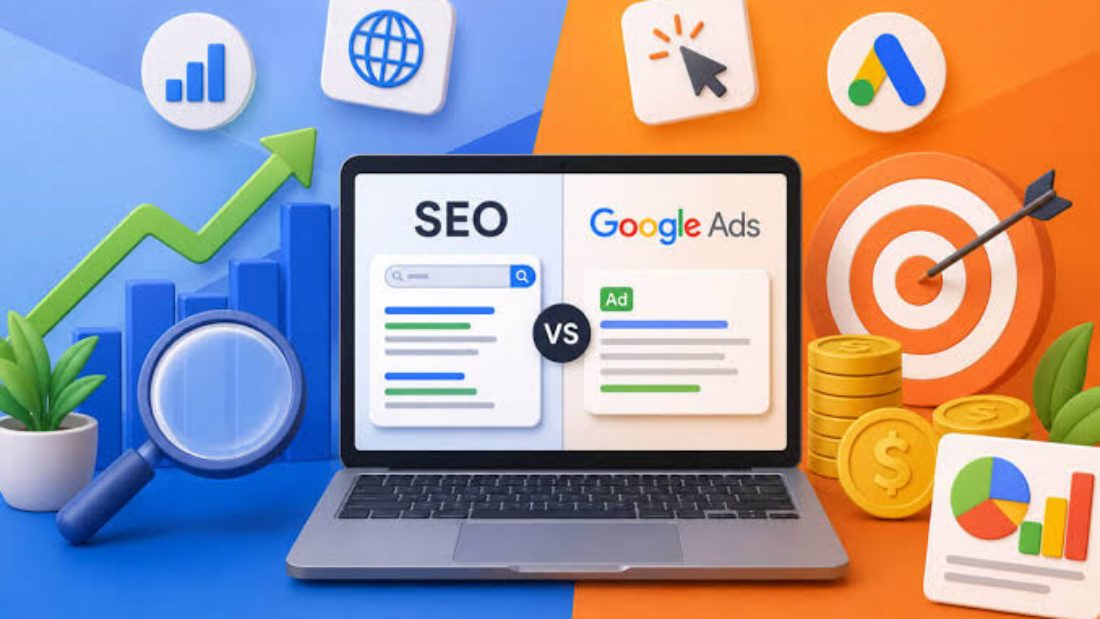
Benefits of Performance Marketing for Businesses with growth analytics, Meta Ads, and Google Ads illustration.

What Are Benefits of Performance Marketing for Businesses? A Complete Guide (2026)

Discover the top benefits of performance marketing for businesses in 2026. Learn how data-driven campaigns help brands increase ROI, generate leads, and drive measurable growth.

In today’s highly competitive digital landscape, businesses can no longer afford to spend marketing budgets without measurable results. This is where performance marketing has become a game-changer. Unlike traditional advertising, performance marketing focuses on outcomes, ensuring brands pay only for specific actions such as clicks, leads, conversions, or sales.

As companies continue to prioritize ROI and data-driven decision-making, performance marketing has emerged as one of the most effective digital marketing strategies in 2026.

In this guide, we’ll explore the major benefits of performance marketing for businesses and why investing in it can accelerate growth and profitability.

Table of Contents

  1. What is Performance Marketing?
  2. Why Businesses Are Adopting Performance Marketing
  3. Top Benefits of Performance Marketing
  4. Performance Marketing Channels
  5. Why Performance Marketing Matters in 2026
  6. Why Choose Spectra Digital
  7. FAQs

What is Performance Marketing?

What is Performance Marketing

Performance marketing is a digital marketing strategy where businesses pay based on measurable results rather than estimated exposure.

These results may include:

  • Website clicks
  • Leads generated
  • App installs
  • Sales conversions
  • Form submissions
  • Customer acquisitions

This results-driven approach allows businesses to optimize campaigns continuously and maximize returns on their marketing investments.

Why Businesses Are Investing More in Performance Marketing

Consumer behavior has changed significantly over the past few years. Businesses now demand transparency, measurable outcomes, and better accountability from their marketing efforts.

Performance marketing provides:

✔ Real-time tracking
✔ Data-driven decision-making
✔ Better budget control
✔ Higher conversion opportunities

As a result, businesses across industries are increasing their investment in performance-driven campaigns.

Top Benefits of Performance Marketing for Businesses

1. Measurable Results and ROI

image

One of the biggest advantages of performance marketing is its ability to provide clear and measurable results.

Businesses can track:

  • Cost Per Click (CPC)
  • Cost Per Lead (CPL)
  • Customer Acquisition Cost (CAC)
  • Return on Ad Spend (ROAS)
  • Conversion Rates

This level of transparency helps brands understand exactly where their money is being spent and what results are being achieved.

2. Cost-Effective Marketing Strategy

image

Traditional advertising often requires large budgets without guaranteed outcomes.

Performance marketing allows businesses to:

  • Pay only for actual results
  • Reduce wasted ad spend
  • Optimize campaigns in real time
  • Improve marketing efficiency

This makes it an excellent strategy for startups, small businesses, and enterprises alike.

3. Better Audience Targeting

image

Modern advertising platforms provide highly advanced targeting options.

Businesses can target audiences based on:

  • Demographics
  • Interests
  • Online behavior
  • Geographic location
  • Purchase intent
  • Device usage

By reaching the right audience, businesses can significantly improve campaign performance and increase conversion rates.

4. Data-Driven Decision Making

image

Performance marketing provides access to valuable customer insights.

Brands can analyze:

  • User behavior
  • Conversion journeys
  • High-performing campaigns
  • Audience preferences
  • Customer engagement metrics

This data enables businesses to make smarter marketing decisions and continuously improve their strategies.

5. Higher Lead Generation and Sales

image

One of the primary goals of performance marketing is generating revenue.

Since campaigns are optimized around conversions, businesses often experience:

  • Increased lead generation
  • Higher website traffic
  • Improved sales performance
  • Better customer acquisition rates

This direct impact on business growth makes performance marketing one of the most effective digital strategies today.

6. Real-Time Campaign Optimization

image

Unlike traditional marketing campaigns that may take weeks or months to evaluate, performance marketing allows immediate adjustments.

Businesses can:

  • Pause underperforming ads
  • Increase budgets on winning campaigns
  • Test different creatives
  • Improve landing pages
  • Optimize targeting strategies

This flexibility significantly improves campaign efficiency and ROI.

7. Scalability and Business Growth

image

Performance marketing campaigns can be easily scaled based on results.

Once a profitable campaign is identified, businesses can:

  • Increase advertising budgets
  • Expand to new markets
  • Launch additional campaigns
  • Reach larger audiences

This scalability supports sustainable business growth.

8. Improved Brand Awareness

image

Although performance marketing focuses heavily on conversions, it also contributes significantly to brand visibility.

Repeated exposure through digital channels helps businesses:

  • Increase brand recognition
  • Build customer trust
  • Strengthen online presence
  • Improve customer recall

This creates long-term value beyond immediate conversions.

9. Multi-Channel Marketing Opportunities

image

Performance marketing can be implemented across various digital channels, including:

Google Ads

Ideal for capturing high-intent users.

Social Media Advertising

Effective for audience engagement and brand awareness.

Affiliate Marketing

Allows businesses to partner with publishers and creators.

Native Advertising

Improves user experience and content engagement.

Influencer Performance Campaigns

Combines creator marketing with measurable outcomes.

Using multiple channels helps businesses maximize reach and conversions.

10. Competitive Advantage

image

Businesses that leverage performance marketing effectively often gain a significant edge over competitors.

Benefits include:

  • Faster customer acquisition
  • Better resource allocation
  • Higher profitability
  • Stronger market positioning

In an increasingly competitive digital environment, data-driven marketing has become essential.

Why Performance Marketing Matters in 2026

Digital advertising continues to evolve rapidly.

Key trends shaping performance marketing include:

  • AI-powered campaign optimization
  • Advanced audience segmentation
  • Predictive analytics
  • First-party data strategies
  • Automation and machine learning
  • Omnichannel attribution models

Businesses that adopt performance marketing strategies today are better positioned to succeed in the future.

Why Choose Spectra Digital for Performance Marketing?

At Spectra Digital, we help businesses achieve measurable growth through strategic, data-driven performance marketing solutions. Our team specializes in creating customized campaigns that focus on generating leads, increasing conversions, and maximizing return on investment.

From paid advertising and audience targeting to campaign optimization and analytics, we leverage the latest tools and technologies to ensure every marketing dollar delivers meaningful results. Whether you’re a startup looking to scale or an established business aiming to improve profitability, Spectra Digital develops performance marketing strategies tailored to your unique business objectives.

Our goal is simple: drive measurable growth and turn marketing investments into real business outcomes.

Final Thoughts

Performance marketing has transformed the way businesses approach digital advertising. Its ability to deliver measurable results, optimize campaigns in real time, and maximize ROI makes it one of the most valuable marketing strategies in 2026.

Businesses that embrace data-driven marketing can improve efficiency, increase conversions, and build sustainable growth in an increasingly competitive market.

Investing in performance marketing is no longer optional—it’s a necessity for brands looking to succeed in the digital age.

image

Meta Ads vs Google Ads: Which Is Better? (2026 Guide)

Compare Meta Ads vs Google Ads to discover which platform is better for your business. Learn about targeting, costs, ROI, and choose the right advertising strategy.

Meta Ads vs Google Ads: Which Is Better for Your Business?

When it comes to online advertising, one of the most common questions businesses ask is: Meta Ads vs Google Ads—which platform is better?

Both `Meta Ads and Google Ads` are among the most powerful digital advertising platforms available today. However, they work differently and are designed to achieve different marketing objectives.

While Google Ads helps you reach users actively searching for products or services, Meta Ads allows you to connect with people based on their interests, behaviors, and demographics—even before they begin searching.

In this guide, we’ll compare Meta Ads vs Google Ads, explain their differences, and help you decide which platform is the right investment for your business.

What Are Meta Ads?

image


Meta Ads are paid advertisements that appear across Meta’s platforms, including Facebook, Instagram, Messenger, and the Audience Network.

These ads allow businesses to reach highly targeted audiences based on:

  • Interests
  • Demographics
  • Online behavior
  • Purchase intent
  • Location
  • Age
  • Custom audiences
  • Lookalike audiences

Meta Ads are excellent for creating brand awareness, increasing engagement, generating leads, and driving online sales.

Benefits of Meta Ads

  • Advanced audience targeting
  • Excellent visual storytelling
  • Cost-effective campaigns
  • High engagement
  • Strong retargeting capabilities
  • Great for brand awareness

What Are Google Ads?

image

Google Ads is Google’s pay-per-click (PPC) advertising platform that displays ads on:

  • Google Search
  • YouTube
  • Google Display Network
  • Gmail
  • Google Shopping
  • Google Maps

Unlike Meta Ads, Google Ads targets users based on search intent. Your ads appear when people actively search for products or services related to your business.

This makes Google Ads particularly effective for generating qualified leads and conversions.

Benefits of Google Ads

  • High purchase intent
  • Immediate visibility
  • Qualified traffic
  • Measurable ROI
  • Flexible budgeting
  • Large advertising network

Meta Ads vs Google Ads: Key Differences

FeatureMeta AdsGoogle Ads
AudienceInterest-basedIntent-based
Best ForBrand awarenessLead generation
TargetingInterests & behaviorKeywords & search intent
Ad FormatImages, videos, Reels, StoriesSearch, Display, Shopping, YouTube
ResultsBuilds demandCaptures demand
CostOften lower CPCCan have higher CPC in competitive industries
Sales FunnelTop & middleBottom & middle

Meta Ads vs Google Ads: Which Platform Generates Better Leads?

image

Both platforms generate high-quality leads, but the type of lead differs.

Meta Ads

Meta Ads help businesses introduce products to potential customers who may not yet be searching.

Ideal for:

  • Fashion
  • Beauty
  • Fitness
  • Restaurants
  • Local businesses
  • Coaches
  • Personal brands
  • E-commerce

Google Ads

Google Ads reaches customers who already know what they need.

Ideal for:

  • Lawyers
  • Doctors
  • Real estate
  • Home services
  • B2B companies
  • Education
  • Repair services

If immediate inquiries are your goal, Google Ads often delivers stronger intent-driven leads.

Which Platform Is More Cost-Effective?

image

Advertising costs vary by industry, competition, and targeting.

Generally:

Meta Ads

  • Lower cost per click
  • Lower cost per thousand impressions (CPM)
  • Better for awareness campaigns

Google Ads

  • Higher CPC
  • Higher conversion rates
  • Better ROI for high-intent searches

Instead of asking which platform is cheaper, businesses should focus on which platform generates the best return on investment.

Meta Ads vs Google Ads: Which Is Better for Brand Awareness?

image

For businesses looking to increase visibility and introduce their brand to new audiences, Meta Ads usually have the advantage.

Features like:

  • Instagram Reels
  • Facebook Stories
  • Carousel Ads
  • Video Ads

allow brands to create engaging visual experiences that build recognition and trust.

Meta Ads vs Google Ads: Which Is Better for Sales?

image

If your customers are actively searching for your product or service, Google Ads is often the stronger choice.

For example:

Someone searching for:

  • “Digital marketing agency near me”
  • “SEO services”
  • “Google Ads expert”

already has buying intent.

Google Ads helps your business appear exactly when customers are ready to make a decision.

Can You Use Meta Ads and Google Ads Together?

Absolutely.

The most successful businesses don’t choose one platform—they combine both.

A powerful strategy looks like this:

  • Use Meta Ads to create awareness and attract new audiences.
  • Retarget interested users with Meta campaigns.
  • Use Google Ads to capture high-intent customers actively searching for your services.
  • Track conversions and optimize campaigns using data.

This integrated approach creates a complete marketing funnel that improves conversions and maximizes return on investment.

Common Mistakes Businesses Make

Businesses often struggle with paid advertising because they:

  • Target the wrong audience
  • Use poor-quality creatives
  • Ignore landing page optimization
  • Fail to track conversions
  • Set unrealistic budgets
  • Stop campaigns too early
  • Don’t test multiple ad variations

Avoiding these mistakes can significantly improve campaign performance.

Meta Ads vs Google Ads: Which One Should You Choose?

The answer depends on your business goals.

Choose Meta Ads if you want to:

  • Build brand awareness
  • Increase social media engagement
  • Promote visually appealing products
  • Grow your audience
  • Drive website traffic

Choose Google Ads if you want to:

  • Generate qualified leads
  • Capture purchase intent
  • Increase inquiries
  • Drive immediate conversions
  • Reach customers searching for your services

If your marketing budget allows, combining both platforms often produces the best results

How Spectra Digital Can Help

At Spectra Digital, we create data-driven advertising strategies that help businesses maximize their online growth.

Our paid advertising services include:

  • Meta Ads Management
  • Google Ads Management
  • Search Campaigns
  • Display Advertising
  • Instagram & Facebook Advertising
  • Lead Generation Campaigns
  • Conversion Tracking
  • Landing Page Optimization
  • Performance Analytics
  • Campaign Optimization

Our team develops customized advertising strategies based on your business goals, target audience, and budget to ensure every campaign delivers measurable results.

Final Thoughts

The debate around Meta Ads vs Google Ads doesn’t have a single winner because both platforms serve different purposes. Meta Ads help businesses build awareness, engage audiences, and create demand, while Google Ads capture existing demand from users actively searching for solutions.

For many businesses, the most effective approach is to combine both platforms into a single, data-driven strategy. By leveraging the strengths of each, you can increase visibility, generate qualified leads, and achieve sustainable business growth.

If you’re looking to launch high-performing advertising campaigns, Spectra Digital can help you choose the right platform, optimize your ad spend, and deliver measurable results.

Ready to grow your business with paid advertising? Contact Spectra Digital today and let’s build a strategy that drives real growth.

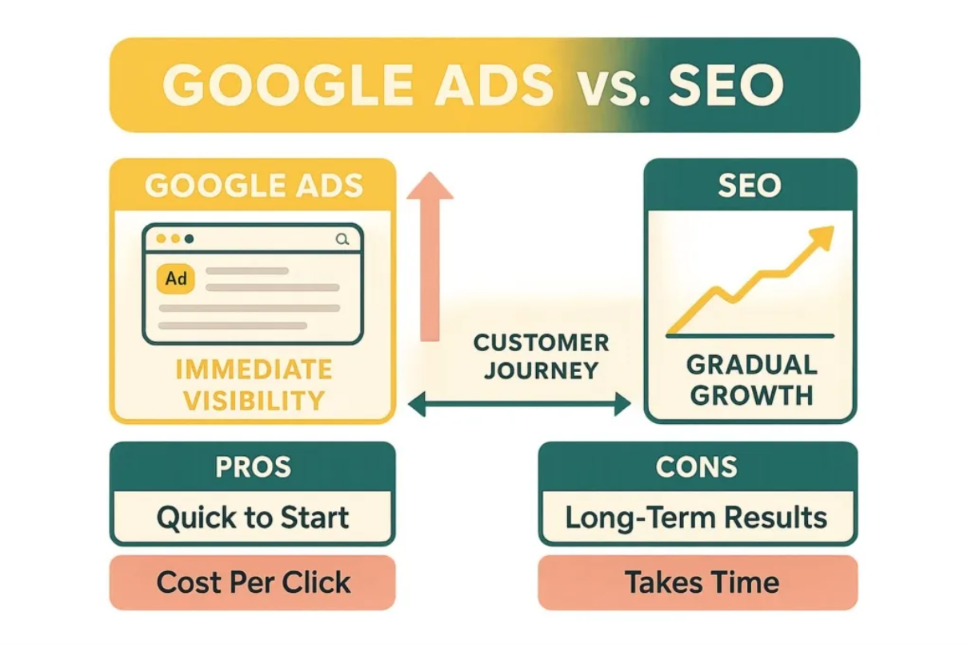
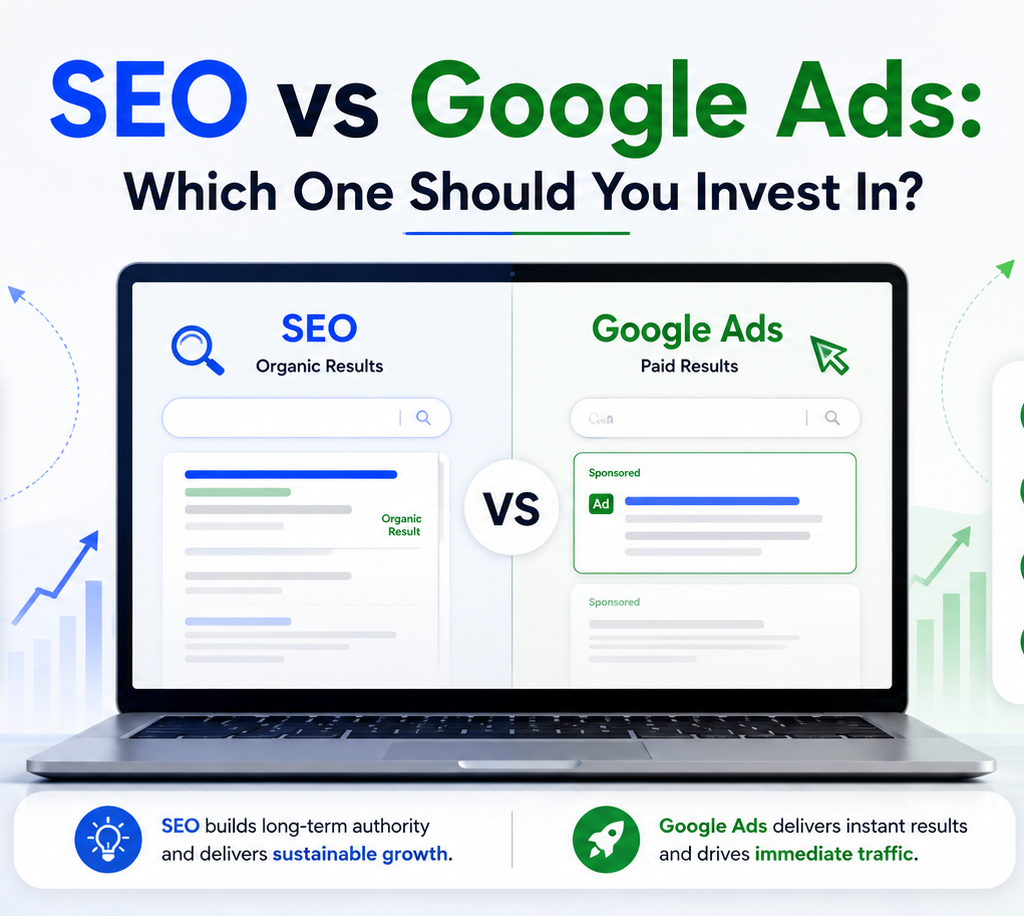
SEO vs Google Ads infographic

SEO vs Google Ads: Which One Should Your Business Invest In? (2026 Guide)

SEO vs Google Ads: Discover the differences, costs, ROI, pros and cons to choose the best digital marketing strategy for your business in 2026.

Should I invest in SEO or Google Ads?

The answer isn’t as straightforward as choosing one over the other. Both are powerful digital marketing strategies, but they serve different purposes. The right choice depends on your business goals, budget, timeline, and competition.

In this blog, we’ll break down the differences between SEO and Google Ads, their pros and cons, and help you decide which investment will deliver the best results for your business.
image

SEO vs Google Ads: Understanding SEO

Search Engine Optimization (SEO) is the process of improving your website so it ranks higher on search engines like Google organically (without paying for every click).
image

SEO includes:

  • Keyword research
  • On-page optimization
  • Technical SEO
  • Content marketing
  • Link building
  • Local SEO
  • Website performance optimization

When done correctly, SEO helps your business appear in front of potential customers who are actively searching for your products or services.

Pros of SEO

Long-term, sustainable traffic

Builds trust and credibility

Higher ROI over time

Generates consistent leads

No cost per click

Cons of SEO

Results take time (typically 3–6 months)

Requires continuous optimization

Competitive industries need ongoing effort

SEO vs Google Ads: Understanding Google Ads

Google Ads is Google’s paid advertising platform where businesses bid on keywords to appear at the top of search results instantly.

Unlike SEO, you pay every time someone clicks on your ad (Pay-Per-Click or PPC).

Google Ads is ideal for businesses looking for immediate visibility and quick lead generation.
image

Pros of Google Ads

Instant visibility

Fast lead generation

Highly targeted audience

Easy to measure performance

Scalable campaigns

Cons of Google Ads

Traffic stops when your budget runs out

Cost per click can become expensive

Highly competitive keywords increase advertising costs

SEO vs Google Ads: A Quick Comparison
image
FactorSEOGoogle Ads
ResultsSlow but long-lastingImmediate
CostInvestment in optimizationPay per click
TrafficOrganicPaid
ROIHigh over the long termFaster short-term ROI
TrustHigher user trustMarked as Sponsored
SustainabilityLong-lastingEnds when spending stops

SEO vs Google Ads comparison infographic

When Should You Choose SEO?

SEO is the better investment if you:

  • Want consistent long-term growth
  • Have time to build authority
  • Want to reduce dependency on paid advertising
  • Publish valuable content regularly
  • Want sustainable lead generation

Example:

Imagine you’re a law firm, dental clinic, real estate agency, or interior designer.

People search for these services every day. Ranking organically allows you to receive inquiries continuously without paying for every visitor.

When Should You Choose Google Ads?

Google Ads is ideal if you:

  • Need leads immediately
  • Are launching a new product or service
  • Have limited time
  • Want to promote seasonal offers
  • Need measurable results quickly

Example:

Running a Diwali sale?

Launching a new restaurant?

Opening a gym?

Google Ads can start bringing visitors within hours.

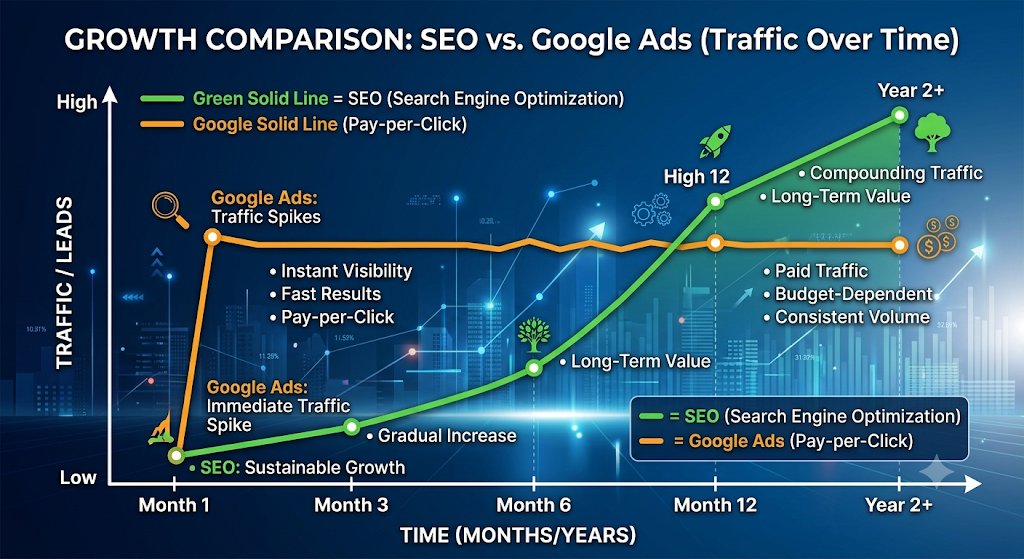
SEO vs Google Ads: Which Gives Better ROI?
image

This is where many businesses get confused.

Short-Term ROI

Google Ads usually wins because it starts generating traffic almost immediately.

Long-Term ROI

SEO wins because once your website ranks well, you continue receiving traffic without paying for every click.

Think of it this way:

  • Google Ads is like renting a house.
  • SEO is like owning one.

Renting gives you immediate access, but once you stop paying, you lose it.

Owning takes longer, but the long-term value keeps growing.

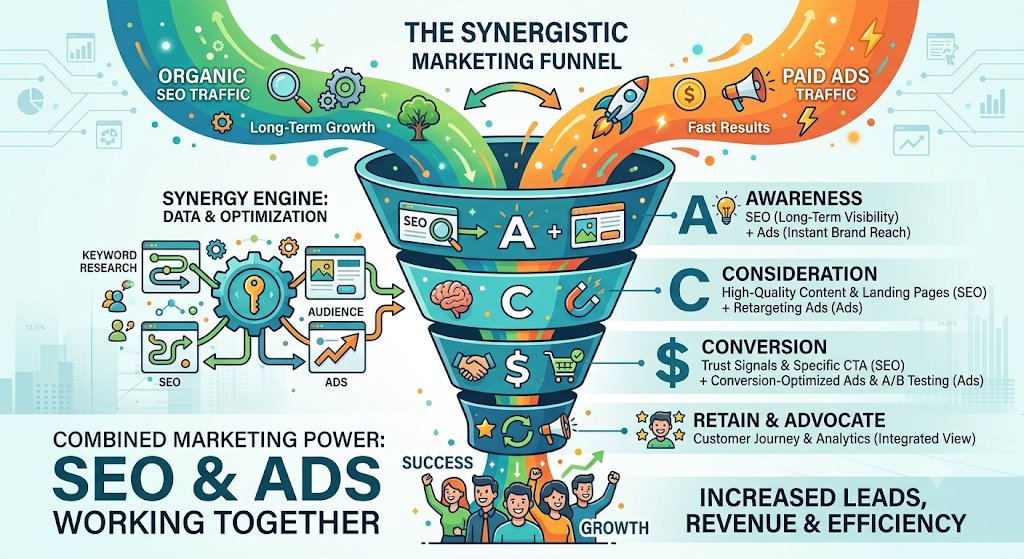
Can You Use Both Together?
image

Absolutely—and for many businesses, this is the smartest strategy.

Here’s how they complement each other:

  • Use Google Ads to generate immediate leads while your SEO strategy gains momentum.
  • Use SEO to build long-term visibility and reduce reliance on paid campaigns over time.
  • Analyze high-performing Google Ads keywords and incorporate them into your SEO content.
  • Retarget visitors from organic traffic using paid campaigns for higher conversions.

This balanced approach allows businesses to capture short-term opportunities while investing in sustainable growth.

Common Mistakes Businesses Make

Many businesses waste their marketing budget by:

  • Expecting SEO results in just a few weeks
  • Stopping Google Ads after a few days without enough data
  • Ignoring landing page optimization
  • Targeting the wrong keywords
  • Focusing only on traffic instead of conversions
  • Neglecting website speed and user experience

Remember, neither SEO nor Google Ads can deliver their full potential without a well-optimized website and a clear conversion strategy.

So, Which One Should You Invest In?

There’s no universal answer—it depends on where your business is today.

Choose SEO if you want to build a strong digital presence, increase organic visibility, and generate consistent traffic over time.

Choose Google Ads if your priority is immediate traffic, lead generation, or promoting time-sensitive campaigns.

If your budget allows, combining both strategies often delivers the best results. Google Ads can drive quick wins while SEO lays the foundation for long-term success.

Final Thoughts
image

SEO and Google Ads aren’t competitors—they’re complementary tools in a successful digital marketing strategy.

The most effective businesses don’t rely on just one channel. They build a marketing ecosystem where paid advertising delivers immediate visibility, while SEO creates lasting authority and sustainable growth.

At Spectra Digital, we help businesses develop customized digital marketing strategies that combine SEO, Google Ads, content marketing, and conversion optimization to maximize ROI. Whether you’re looking to grow organically, generate qualified leads, or scale your business online, our team can help you choose the right approach based on your goals.

Ready to grow your business online? Get in touch with Spectra Digital today and let’s build a strategy that delivers measurable results.