How to rank in Google AI Overviews with AI-focused SEO strategies by Spectra Digital

How to Rank in Google AI Overviews in 2026: Avoid These Costly SEO Mistakes

The world of search engine optimization is evolving rapidly. With the rise of artificial intelligence in search results, businesses are asking one important question: How to rank in Google AI Overviews?

Google’s AI Overviews are transforming the way users discover information online. Instead of simply showing a list of blue links, Google now provides AI-generated summaries that answer users’ questions directly within search results.

For businesses, this means traditional SEO strategies alone are no longer enough. Brands must now optimize their content for both search engines and AI-driven experiences.

In this guide, Spectra Digital explains how Google AI Overviews work and the best strategies to improve your visibility in AI-powered search results.

What Are Google AI Overviews?

How to Rank in Google AI Overviews

Google AI Overviews are AI-generated summaries that appear at the top of search results for certain queries. These summaries provide users with quick answers by gathering information from multiple authoritative sources.

The goal of AI Overviews is to deliver more relevant, contextual, and helpful information to users without requiring them to visit multiple websites.

While AI Overviews improve user experience, they are also changing how businesses approach SEO and organic traffic.

Why Google AI Overviews Are Changing SEO

Traditional SEO focused heavily on:

  • Ranking on the first page
  • Optimizing for keywords
  • Building backlinks
  • Increasing click-through rates

Today, SEO is becoming more focused on:

  • Search intent
  • Content quality
  • Topical authority
  • User experience
  • Trust and expertise

Businesses that adapt to these changes will have a better chance of maintaining visibility in Google’s evolving search landscape.

How to Rank in Google AI Overviews

image

1. Create Helpful, Comprehensive Content

image

Google’s AI systems prioritize content that genuinely helps users.

Instead of creating short articles focused only on keywords, businesses should produce detailed and informative content that answers users’ questions completely.

High-quality content should include:

  • Clear explanations
  • Practical examples
  • Frequently asked questions
  • Actionable insights
  • Updated information

Comprehensive content increases the likelihood of being referenced in AI-generated summaries.

2. Focus on Search Intent

image

Understanding user intent has become more important than ever.

Ask yourself:

  • What problem is the user trying to solve?
  • What information are they looking for?
  • What follow-up questions might they have?

Content that fully satisfies user intent is more likely to be considered valuable by Google’s AI systems.

3. Build Topical Authority

image

Google increasingly rewards websites that demonstrate expertise within specific topics.

Instead of publishing random content, businesses should build clusters around related subjects.

For example, a digital marketing agency can create content around:

  • SEO strategies
  • Performance marketing
  • Social media marketing
  • AI in digital marketing
  • Website optimization

Publishing multiple high-quality articles within your niche strengthens topical authority.

4. Use Clear Content Structure

image

AI systems prefer content that is easy to understand.

Structure your articles using:

  • Clear headings (H2 and H3)
  • Short paragraphs
  • Bullet points
  • Tables where appropriate
  • FAQ sections

Well-organized content makes it easier for search engines and AI systems to extract information.

5. Demonstrate Experience and Expertise

image

Google places significant importance on content credibility.

Businesses should demonstrate:

  • Real-world experience
  • Industry expertise
  • Author credibility
  • Original insights
  • Data-backed information

Sharing case studies, examples, and practical knowledge can improve trustworthiness.

6. Optimize for Long-Tail Keywords

image

AI Overviews often appear for conversational and informational searches.

Examples include:

  • How to improve website SEO
  • What makes a high-converting website
  • How to rank in Google AI Overviews

Targeting long-tail keywords helps businesses capture highly relevant search traffic.

7. Add FAQ Sections

image

FAQs align well with the way people search today.

Examples:

What are Google AI Overviews?

Google AI Overviews are AI-generated summaries displayed at the top of search results that provide quick answers to user queries.

How can businesses rank in AI Overviews?

Businesses can improve visibility by creating helpful content, building authority, and optimizing for search intent.

FAQ sections increase content relevance and improve opportunities for featured visibility.

8. Improve Website User Experience

image

User experience continues to be a major ranking factor.

Businesses should focus on:

  • Fast loading speed
  • Mobile responsiveness
  • Easy navigation
  • Secure browsing experience
  • Low bounce rates

A positive user experience supports better search performance.

9. Build High-Quality Backlinks

image

Backlinks remain an important trust signal.

Links from reputable websites help establish authority and improve credibility in Google’s eyes.

Businesses should focus on earning backlinks through:

  • Valuable content
  • Industry collaborations
  • Guest posting
  • Digital PR initiatives

Quality matters far more than quantity.

10. Keep Content Updated

image

AI systems prefer fresh and relevant information.

Regularly update articles with:

  • New statistics
  • Emerging trends
  • Industry developments
  • Updated examples

Content freshness can improve long-term search visibility.

Common SEO Mistakes in the AI Era

Businesses often struggle because they:

  • Focus only on keywords
  • Publish thin content
  • Ignore search intent
  • Neglect user experience
  • Fail to update content regularly

Modern SEO requires a more strategic and user-focused approach.

Future of SEO in the Age of AI

image

SEO is not disappearing—it is evolving.

In the coming years, successful businesses will focus on:

  • Creating genuinely helpful content
  • Building authority and trust
  • Optimizing for conversational searches
  • Leveraging AI tools responsibly
  • Delivering exceptional user experiences

Brands that adapt to AI-driven search trends will gain a competitive advantage.

How Spectra Digital Helps Businesses Adapt to AI Search

At Spectra Digital, we help businesses stay ahead of changing search trends through data-driven SEO strategies.

Our services include:

  • AI-focused SEO optimization
  • Content strategy development
  • Technical SEO improvements
  • Website performance optimization
  • Authority-building campaigns

We help businesses improve search visibility and prepare for the future of AI-powered search.

Final Thoughts

Understanding how to rank in Google AI Overviews is becoming essential for businesses looking to succeed in modern SEO.

Google’s AI-powered search experience is changing the way users discover information. Businesses that focus on helpful content, topical authority, user experience, and trust will be better positioned to gain visibility in AI Overviews.

SEO is evolving, but one principle remains the same: create valuable content that genuinely helps users.

If your business wants to stay ahead of the latest SEO trends, Spectra Digital can help you develop strategies that improve rankings, visibility, and long-term growth.

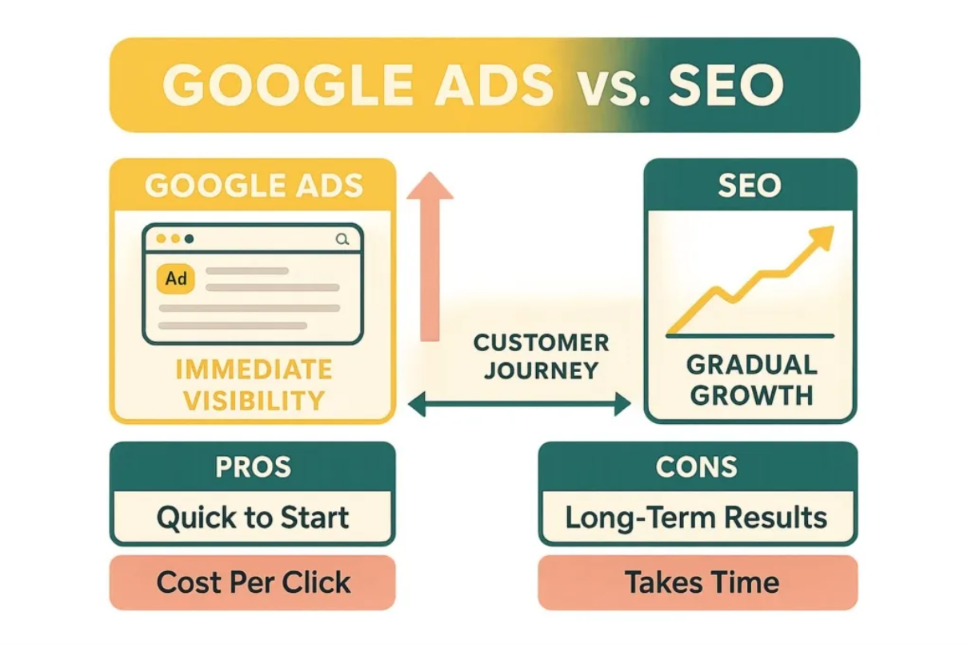
SEO vs Google Ads infographic

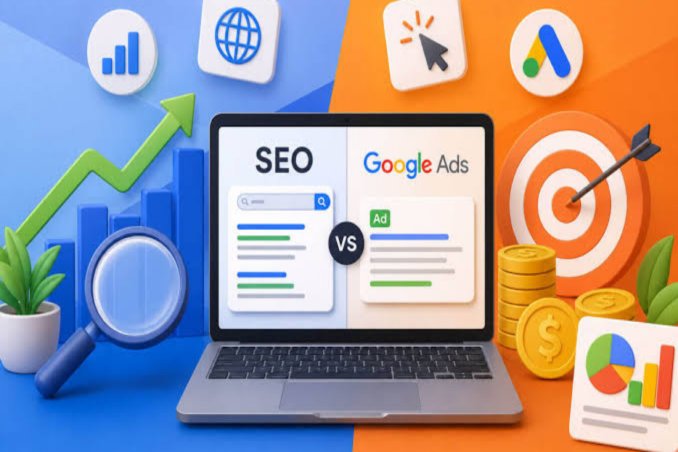
SEO vs Google Ads: Which One Should Your Business Invest In? (2026 Guide)

SEO vs Google Ads: Discover the differences, costs, ROI, pros and cons to choose the best digital marketing strategy for your business in 2026.

Should I invest in SEO or Google Ads?

The answer isn’t as straightforward as choosing one over the other. Both are powerful digital marketing strategies, but they serve different purposes. The right choice depends on your business goals, budget, timeline, and competition.

In this blog, we’ll break down the differences between SEO and Google Ads, their pros and cons, and help you decide which investment will deliver the best results for your business.
image

SEO vs Google Ads: Understanding SEO

Search Engine Optimization (SEO) is the process of improving your website so it ranks higher on search engines like Google organically (without paying for every click).
image

SEO includes:

  • Keyword research
  • On-page optimization
  • Technical SEO
  • Content marketing
  • Link building
  • Local SEO
  • Website performance optimization

When done correctly, SEO helps your business appear in front of potential customers who are actively searching for your products or services.

Pros of SEO

Long-term, sustainable traffic

Builds trust and credibility

Higher ROI over time

Generates consistent leads

No cost per click

Cons of SEO

Results take time (typically 3–6 months)

Requires continuous optimization

Competitive industries need ongoing effort

SEO vs Google Ads: Understanding Google Ads

Google Ads is Google’s paid advertising platform where businesses bid on keywords to appear at the top of search results instantly.

Unlike SEO, you pay every time someone clicks on your ad (Pay-Per-Click or PPC).

Google Ads is ideal for businesses looking for immediate visibility and quick lead generation.
image

Pros of Google Ads

Instant visibility

Fast lead generation

Highly targeted audience

Easy to measure performance

Scalable campaigns

Cons of Google Ads

Traffic stops when your budget runs out

Cost per click can become expensive

Highly competitive keywords increase advertising costs

SEO vs Google Ads: A Quick Comparison
image
FactorSEOGoogle Ads
ResultsSlow but long-lastingImmediate
CostInvestment in optimizationPay per click
TrafficOrganicPaid
ROIHigh over the long termFaster short-term ROI
TrustHigher user trustMarked as Sponsored
SustainabilityLong-lastingEnds when spending stops

SEO vs Google Ads comparison infographic

When Should You Choose SEO?

SEO is the better investment if you:

  • Want consistent long-term growth
  • Have time to build authority
  • Want to reduce dependency on paid advertising
  • Publish valuable content regularly
  • Want sustainable lead generation

Example:

Imagine you’re a law firm, dental clinic, real estate agency, or interior designer.

People search for these services every day. Ranking organically allows you to receive inquiries continuously without paying for every visitor.

When Should You Choose Google Ads?

Google Ads is ideal if you:

  • Need leads immediately
  • Are launching a new product or service
  • Have limited time
  • Want to promote seasonal offers
  • Need measurable results quickly

Example:

Running a Diwali sale?

Launching a new restaurant?

Opening a gym?

Google Ads can start bringing visitors within hours.

SEO vs Google Ads: Which Gives Better ROI?
image

This is where many businesses get confused.

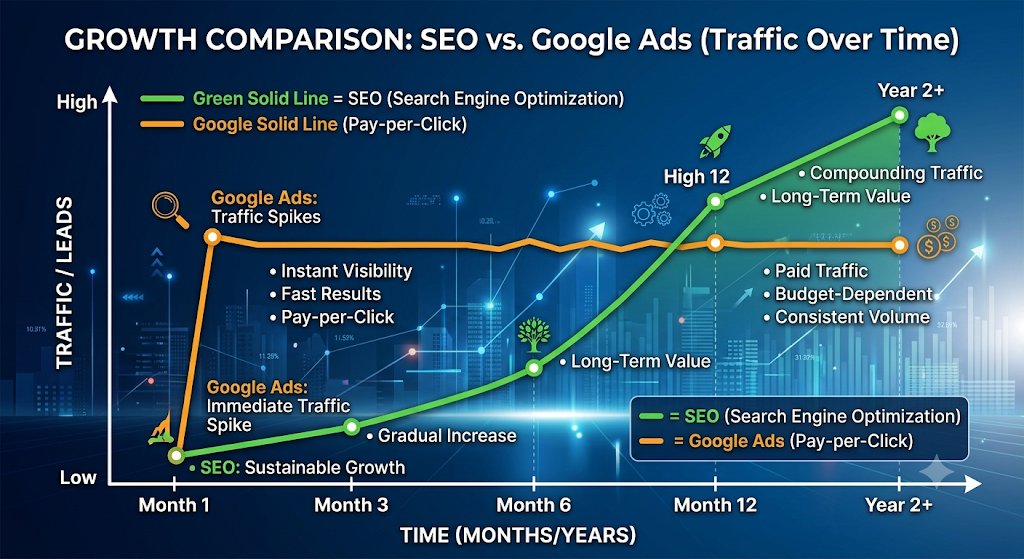
Short-Term ROI

Google Ads usually wins because it starts generating traffic almost immediately.

Long-Term ROI

SEO wins because once your website ranks well, you continue receiving traffic without paying for every click.

Think of it this way:

  • Google Ads is like renting a house.
  • SEO is like owning one.

Renting gives you immediate access, but once you stop paying, you lose it.

Owning takes longer, but the long-term value keeps growing.

Can You Use Both Together?
image

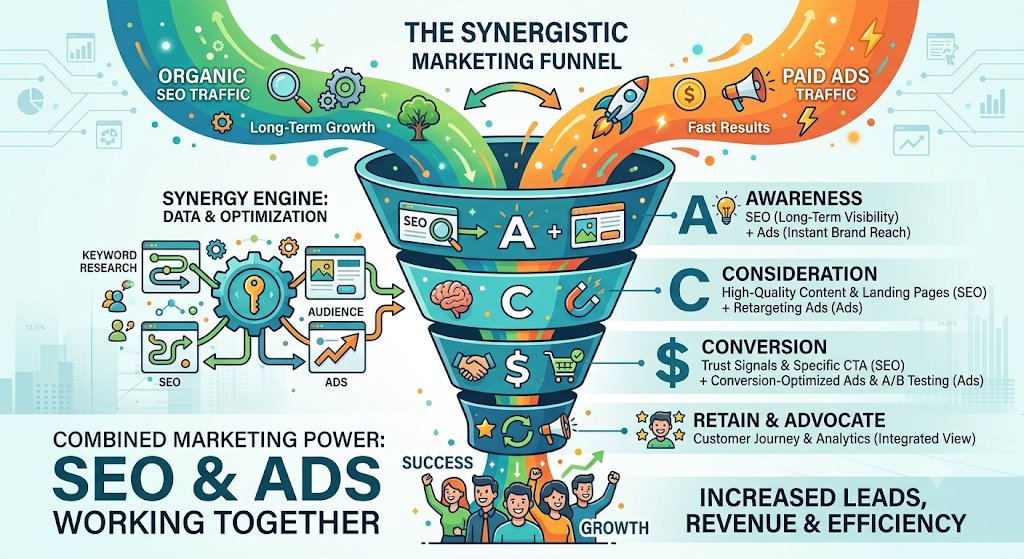
Absolutely—and for many businesses, this is the smartest strategy.

Here’s how they complement each other:

  • Use Google Ads to generate immediate leads while your SEO strategy gains momentum.
  • Use SEO to build long-term visibility and reduce reliance on paid campaigns over time.
  • Analyze high-performing Google Ads keywords and incorporate them into your SEO content.
  • Retarget visitors from organic traffic using paid campaigns for higher conversions.

This balanced approach allows businesses to capture short-term opportunities while investing in sustainable growth.

Common Mistakes Businesses Make

Many businesses waste their marketing budget by:

  • Expecting SEO results in just a few weeks
  • Stopping Google Ads after a few days without enough data
  • Ignoring landing page optimization
  • Targeting the wrong keywords
  • Focusing only on traffic instead of conversions
  • Neglecting website speed and user experience

Remember, neither SEO nor Google Ads can deliver their full potential without a well-optimized website and a clear conversion strategy.

So, Which One Should You Invest In?

There’s no universal answer—it depends on where your business is today.

Choose SEO if you want to build a strong digital presence, increase organic visibility, and generate consistent traffic over time.

Choose Google Ads if your priority is immediate traffic, lead generation, or promoting time-sensitive campaigns.

If your budget allows, combining both strategies often delivers the best results. Google Ads can drive quick wins while SEO lays the foundation for long-term success.

Final Thoughts
image

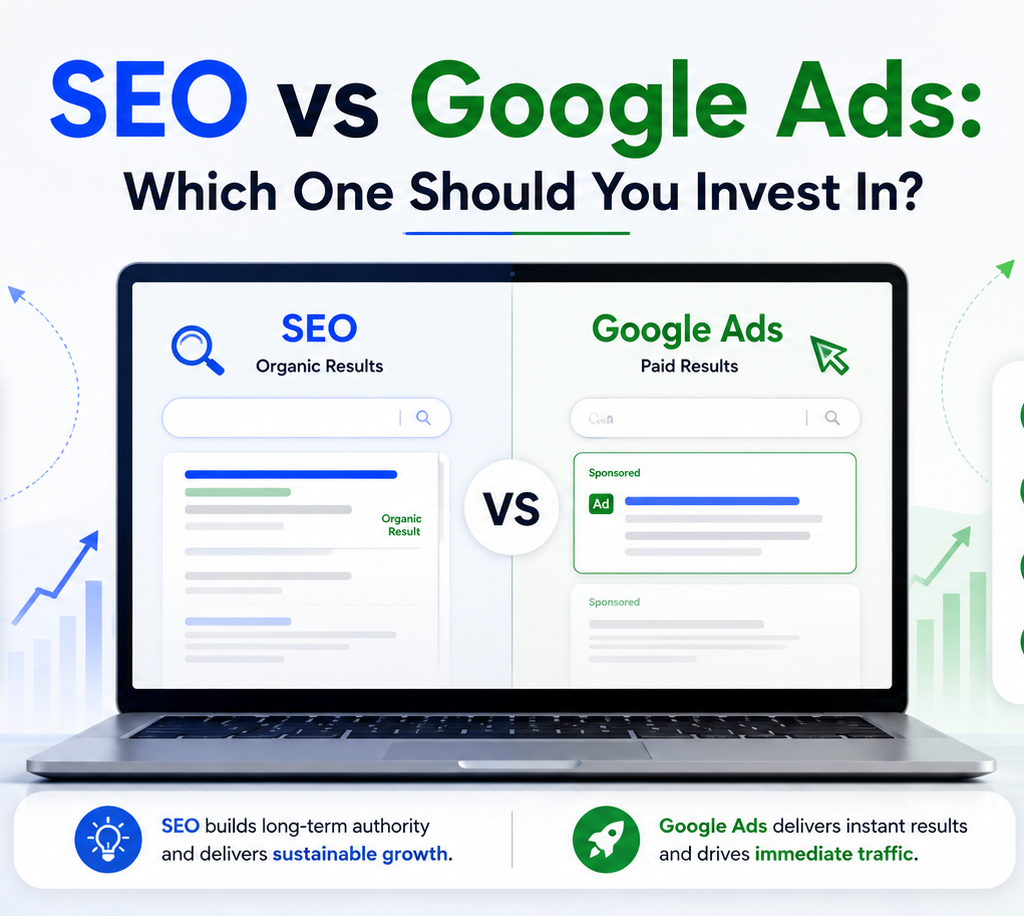
SEO and Google Ads aren’t competitors—they’re complementary tools in a successful digital marketing strategy.

The most effective businesses don’t rely on just one channel. They build a marketing ecosystem where paid advertising delivers immediate visibility, while SEO creates lasting authority and sustainable growth.

At Spectra Digital, we help businesses develop customized digital marketing strategies that combine SEO, Google Ads, content marketing, and conversion optimization to maximize ROI. Whether you’re looking to grow organically, generate qualified leads, or scale your business online, our team can help you choose the right approach based on your goals.

Ready to grow your business online? Get in touch with Spectra Digital today and let’s build a strategy that delivers measurable results.