Going viral used to feel like the ultimate social media win. One unexpected Reel, a clever meme, a celebrity moment or a perfectly timed trend could put a brand in front of millions overnight.
But in 2026, virality works differently.
The internet is more crowded, audiences are more selective, and platforms are becoming increasingly discovery-driven. Short-form video continues to dominate attention, creators are becoming powerful distribution channels, and audiences are not simply consuming content anymore. They are searching, commenting, sharing, remixing and actively participating in conversations.
In India, Meta reports that 97% of surveyed users watch video on its platforms daily, while 89% of surveyed Gen Z users engage with Reels daily. (About Facebook) Meanwhile, TikTok’s 2026 trend forecast highlights curiosity, real-world relevance, community and emotional value as important drivers of engagement. (TikTok Newsroom)
So, what does it actually take to go viral in 2026?
The answer is no longer simply “make something people will watch.”
It is about making something people want to watch, share, discuss, search for and remember.
Here are the new rules of going viral in 2026.
1. Stop Chasing Virality. Start With a Reason to Share
The first rule of going viral in 2026 is understanding why people share content.
People rarely share something simply because it has a lot of views. They share because the content makes them:
- Laugh
- Feel understood
- Learn something
- Look informed
- Express an opinion
- Relate to a situation
- Enter a conversation
- Make someone else laugh
- Discover something unexpected
This means brands need to move beyond asking, “Will this get views?”
The better question is:
“Why would someone send this to another person?”
A relatable observation, an unexpected brand response, a useful tip or a culturally relevant joke can have stronger sharing potential than an expensive production with no clear emotional trigger.
Virality begins when content becomes socially useful.
2. The First Few Seconds Matter More Than Ever
Attention is the entry point to virality.
People scroll quickly, which means your content needs to create curiosity almost immediately.
That does not necessarily mean shouting a controversial statement or using clickbait. It means giving the audience a reason to stay.
Your opening could be:
- A surprising statement
- A question
- An unexpected visual
- A strong opinion
- A relatable situation
- A problem people recognise
- The beginning of a story
- A result shown before the explanation
For example, instead of:
“Here are five social media trends brands should know in 2026.”
Try:
“Your brand doesn’t need more content. It needs this.”
The second approach creates an information gap. The audience wants to know what “this” is.
That curiosity can be the difference between a scroll and a view.
3. Originality Is Becoming a Distribution Advantage
In 2026, copying what already went viral is becoming less useful.
Platforms are increasingly focused on original content and recommendations. Meta said that 75% of Instagram recommendations in the US in Q4 2025 came from original posts. (About Facebook)
That does not mean trends are dead.
It means your interpretation of a trend matters more than simply participating in it.
Instead of copying a trending format exactly, ask:
How can our brand make this trend feel like ours?
A fashion brand could reinterpret a meme through styling.
A coffee brand could turn a cultural moment into a coffee-related observation.
A travel brand could use a trending audio to tell a destination story.
A filmmaker could use a trend to reveal something about a character.
The trend gets attention.
Your point of view creates differentiation.
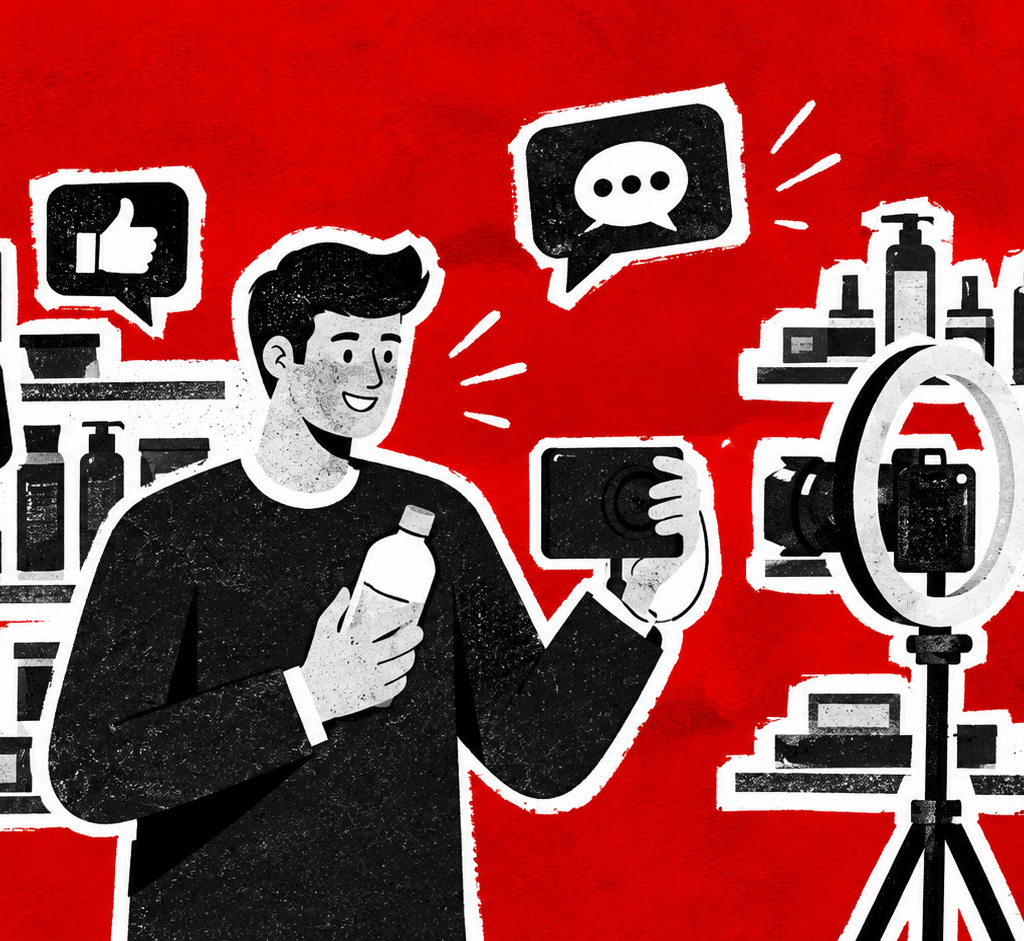
4. Authenticity Is Not the Opposite of Strategy
There is a misconception that authentic content means unplanned content.
It doesn’t.
The most effective “raw” content can still have a strong strategy behind it.
A phone-shot video can have:
- A carefully written hook
- A clear narrative
- A defined audience
- Strategic editing
- A strong CTA
- A specific business objective
The difference is that it doesn’t necessarily feel like advertising.
TikTok’s 2026 trend forecast specifically highlights real stories, humour, imperfection and human connection as important elements of brand engagement. (TikTok Newsroom)
This is particularly important in an environment where audiences are increasingly exposed to AI-generated content.
When everything can look polished, polished alone becomes less distinctive.
Sometimes the shaky camera, imperfect delivery or spontaneous reaction is exactly what makes a piece of content feel believable.
5. Build for the Platform, Not Just for the Feed
One piece of content cannot simply be copied everywhere and expected to perform the same way.
Instagram, YouTube Shorts, TikTok, LinkedIn and other platforms have different cultures, audiences and consumption behaviours.
A 20-second Instagram Reel might work because of its visual storytelling.
A YouTube Short might work as an entry point into a longer piece of content.
A LinkedIn post might need more context and a stronger professional insight.
The idea can remain the same.
The execution should change.
YouTube itself has highlighted that Shorts views do not automatically translate into long-term fans, encouraging creators to think about how short-form viewers can move into deeper engagement with their content. (blog.youtube)
The lesson for brands is simple:
Don’t create one piece of content and distribute it everywhere. Build one idea and adapt it for every platform.
6. Searchability Is Part of Virality

Going viral is no longer limited to someone’s feed.
People are searching social platforms for answers, recommendations, products, opinions, tutorials and ideas.
TikTok’s 2026 forecast describes users increasingly entering the platform with active curiosity and discovering useful information beyond their original search. (TikTok Newsroom)
This changes how brands should think about viral content.
A viral video should not only be entertaining. When relevant, it should also be discoverable.
That means thinking about:
- Keywords in captions
- Search-friendly titles
- Spoken keywords
- On-screen text
- Relevant hashtags
- Questions people actually search
- Clear descriptions of the topic
For example, instead of creating a generic video titled:
“Things I wish I knew earlier…”
A creator could use:
“5 Instagram SEO mistakes small businesses make”
The second one has a clearer search intent.
Virality can bring attention.
Searchability can help that attention continue after the initial spike.
7. Make Content People Can Participate In
The strongest viral moments increasingly turn audiences from viewers into participants.
Ask questions.
Create debates.
Invite opinions.
Use comments as part of the content.
Give people something to complete.
Create formats that encourage responses.
YouTube’s own guidance around Shorts emphasises the difference between simply generating views and building an actual community, with conversation and interaction playing an important role in turning viewers into fans. (blog.youtube)
For brands, this could look like:
“Which one are you?”
“Complete this sentence.”
“Unpopular opinion…”
“Tell us your city’s version of this.”
“What would you choose?”
The objective isn’t to manufacture comments.
It is to create content where commenting feels like a natural part of the experience.
8. Creators Are Not Just Amplifiers
Influencer marketing used to be largely about borrowing someone’s audience.
In 2026, creators can play a much bigger role.
They can contribute:
- Ideas
- Cultural context
- Storytelling
- Community insight
- Credibility
- Distribution
- Platform-native execution
Meta’s 2026 research on India highlights creators as a major part of discovery and says Reels generates significantly higher creator engagement than other surveyed short-form video platforms. (About Facebook)
This means brands should not always ask:
“Which creator has the biggest following?”
A better question is:
“Which creator understands the audience we want to reach?”
A smaller creator with a highly relevant community can sometimes offer something a massive creator cannot: contextual credibility.
The right creator should feel like part of the idea, not an advertisement inserted into it.
9. Culture Beats Calendar Content
Brands have historically planned social media weeks or months in advance.
But culture moves much faster.
A meme can peak and disappear within days.
A phrase can suddenly become everywhere.
A celebrity moment can change the conversation overnight.
A new format can emerge without warning.
TikTok’s 2026 forecast recommends leaving room for brands to respond to conversations as they develop rather than locking every piece of content months in advance. (TikTok Newsroom)
This doesn’t mean abandoning content calendars.
It means leaving space for spontaneity.
A good 2026 social media calendar should have two layers:
Planned content
Campaigns, launches, product stories, educational content and brand narratives.
Reactive content
Memes, cultural moments, conversations, trends and unexpected opportunities.
The brands that can move quickly without losing their identity have an advantage.
10. Emotion Is More Powerful Than Information
Information tells people something.
Emotion gives them a reason to care.
That is why some of the most shareable content isn’t necessarily the most informative.
It makes people feel something.
Think about the emotions that naturally trigger sharing:
| Emotion | Possible Content Direction |
|---|---|
| Humour | Relatable situations |
| Nostalgia | Memories and cultural references |
| Surprise | Unexpected reveals |
| Inspiration | Transformations and journeys |
| Curiosity | Mysteries and unanswered questions |
| Anger | Strong opinions or cultural observations |
| Joy | Celebrations and feel-good moments |
| Belonging | Community-specific experiences |
TikTok’s 2026 forecast refers to this shift as “Emotional ROI”, arguing that audiences increasingly respond to content that provides meaning, relevance and emotional value rather than simply pushing a product. (TikTok Newsroom)
The takeaway:
Don’t just ask what your content says. Ask what your audience feels after watching it.
11. Don’t Confuse Views With Impact
A million views can look impressive.
But views alone don’t tell you whether the content helped your brand.
A viral post should be evaluated based on what happens after people see it.
Depending on the campaign objective, brands should look at:
Awareness
- Reach
- Impressions
- Video views
- Unique viewers
- Watch time
- Completion rate
Engagement
- Shares
- Saves
- Comments
- Replies
- Mentions
- Profile visits
Consideration
- Website visits
- Product-page views
- Search activity
- DMs
- Branded searches
- Content interactions
Conversion
- Leads
- Sign-ups
- Purchases
- Revenue
- Conversion rate
- Cost per acquisition
- ROAS
Loyalty
- Repeat engagement
- Community growth
- User-generated content
- Returning customers
- Brand advocacy
This is why a Reel with 200,000 highly relevant views can potentially be more valuable to a business than a Reel with 5 million views from an unrelated audience.
Reach tells you how far content travelled. Impact tells you what it actually did.
12. Think Beyond the Viral Post
The biggest mistake brands make after going viral is doing nothing with the attention.
Imagine a Reel suddenly reaches millions of people.
What happens next?
Do people know what the brand does?
Is the profile optimised?
Is there another piece of content waiting?
Can they find the product?
Is there a clear CTA?
Can they understand the brand in five seconds?
Virality creates a temporary increase in attention.
Your job is to convert that attention into something lasting.
That could mean:
Viral Reel → Profile visit → Follow → Community → Website visit → Purchase
Or:
Viral Reel → Comment → Conversation → Creator collaboration → Campaign → Brand affinity
The viral post should be treated as the beginning of a journey, not the destination.
The New Viral Content Checklist
Before publishing content designed to break through, ask:
1. Is there a clear reason to watch?
If the audience doesn’t understand why they should stay, the hook needs work.
2. Is there a reason to share?
Would someone genuinely send this to a friend?
3. Does it feel native to the platform?
Or does it look like an advertisement copied onto a social platform?
4. Does it have a point of view?
Could another 100 brands post exactly the same thing?
5. Does it create an emotion?
What should someone feel after watching?
6. Can people participate?
Is there an opportunity to comment, remix, respond or contribute?
7. Is it searchable?
Could someone discover this content through a relevant search?
8. Is there a next step?
What do you want people to do after watching?
9. Can you build on the idea?
Could one viral post become a series?
10. Are you measuring more than views?
What business or brand outcome does the content contribute to?
So, What Does Going Viral Actually Mean in 2026?
The definition of viral is changing.
It is no longer simply about creating a piece of content that reaches millions of people.
It is about creating something that travels because people choose to carry it forward.
They share it.
They discuss it.
They search for it.
They recreate it.
They tag someone in it.
They remember it.
And eventually, they connect it back to the brand that created it.
Short-form video, creators and social discovery are making the opportunity for mass reach bigger than ever. In India, Meta’s latest research describes Reels as increasingly central to discovery, creator engagement and commerce. (About Facebook)
But the brands that understand virality in 2026 will look beyond the view count.
They will focus on originality over imitation, relevance over randomness, participation over passive consumption, and impact over vanity metrics.
Because going viral can get you noticed.
Creating something worth remembering is what makes the attention matter.