Measuring digital marketing ROI by tracking campaign performance, conversions, revenue, and marketing KPIs.

How to Measure the ROI of Your Digital Marketing Campaigns

Digital marketing gives businesses access to a wide range of opportunities to reach potential customers. From search engine optimisation and social media to paid advertising, email marketing, and content marketing, businesses can use multiple channels to promote their products and services.

But simply investing money in digital marketing does not guarantee success.

The more important question is: Is your digital marketing actually generating a return on your investment?

This is where Digital Marketing ROI (Return on Investment) becomes important.

Measuring ROI helps businesses understand how much value they are generating from their marketing investments. It allows marketers to identify profitable campaigns, improve underperforming strategies, allocate budgets more effectively, and make decisions based on actual business results rather than assumptions.

For example, spending ₹1,00,000 on a digital marketing campaign may sound expensive. But if that campaign generates ₹5,00,000 in attributable revenue, the investment may be worthwhile. On the other hand, a campaign that generates thousands of clicks but very few customers may not be delivering the expected business value.

In this blog, we explore four important steps to measure the ROI of your digital marketing campaigns effectively.


1. Define Your Goals and Identify the Right KPIs

Before measuring ROI, businesses need to clearly define what they want their digital marketing campaigns to achieve.

Not every campaign has the same objective.

An ecommerce brand may want to increase online purchases, while a B2B company may want to generate qualified leads. A new business may focus on brand awareness, while an established company may focus on customer retention and repeat purchases.

Without a clear goal, it becomes difficult to determine whether a campaign has actually been successful.

Common Digital Marketing Goals

Businesses may use digital marketing to:

  • Generate leads
  • Increase online sales
  • Improve website traffic
  • Increase brand awareness
  • Generate app downloads
  • Increase enquiries
  • Improve customer engagement
  • Increase repeat purchases
  • Reduce customer acquisition costs
  • Improve customer lifetime value

Once the goal is established, businesses need to select Key Performance Indicators (KPIs) that help measure progress toward that goal.

Important Digital Marketing KPIs

Some commonly used KPIs include:

Website Traffic:
Measures how many people visit your website.

Conversion Rate:
Measures the percentage of visitors who complete a desired action.

Cost Per Lead (CPL):
Shows how much it costs to generate one lead.

Customer Acquisition Cost (CAC):
Measures the average cost of acquiring a new customer.

Return on Ad Spend (ROAS):
Measures revenue attributed to advertising relative to advertising spend.

Customer Lifetime Value (CLV):
Estimates the value a customer generates throughout their relationship with the business.

Marketing ROI:
Measures the financial return generated from marketing investments.

For example, if your goal is lead generation, website traffic alone is not enough to measure success. You should also track leads, qualified leads, CPL, lead-to-customer conversion rate, and revenue generated from those leads.

Key takeaway: Start with a clear business objective and choose KPIs that directly connect marketing activity to that objective.

2. Calculate Your Marketing Investment and Revenue

Once goals and KPIs have been established, the next step is to calculate how much you are investing and how much revenue your campaigns are generating.

A basic ROI formula is:

ROI = [(Revenue Generated − Marketing Cost) ÷ Marketing Cost] × 100

For example, imagine a business spends ₹1,00,000 on a digital marketing campaign and generates ₹3,00,000 in attributable revenue.

The calculation would be:

ROI = [(₹3,00,000 − ₹1,00,000) ÷ ₹1,00,000] × 100

ROI = 200%

This means the campaign generated a return equivalent to 200% of the marketing investment under this simplified calculation.

However, measuring digital marketing ROI can become more complicated because businesses often use multiple channels at the same time.

For example, a customer may:

  1. Discover a brand through Instagram.
  2. Search for the company on Google.
  3. Visit the website through organic search.
  4. Read a blog.
  5. Click a remarketing advertisement.
  6. Finally make a purchase.

Which channel deserves credit for the conversion?

This is where attribution becomes important.

Understanding Marketing Attribution

Marketing attribution is the process of assigning credit for a conversion to one or more marketing touchpoints.

Different attribution approaches can produce different results.

For example:

First-touch attribution:
Gives credit to the first marketing interaction.

Last-touch attribution:
Gives credit to the final interaction before conversion.

Multi-touch attribution:
Distributes credit across multiple interactions in the customer journey.

No single model perfectly represents every customer journey. Businesses should select an approach that fits their sales cycle, data availability, and objectives.

Don’t Forget the Full Cost

Another common mistake is calculating ROI using only advertising spend.

For example, if a business spends ₹50,000 on Meta Ads, it may be tempting to consider ₹50,000 as the total marketing cost.

But the campaign may also involve:

  • Agency fees
  • Creative production
  • Video production
  • Copywriting
  • Marketing software
  • Landing page development
  • Email marketing tools
  • Analytics tools
  • Employee time

Depending on the purpose of the analysis, these costs may need to be included to get a more realistic picture of marketing profitability.

Key takeaway: Accurate ROI measurement requires businesses to understand both the revenue generated and the complete cost associated with generating that revenue.


3. Track Conversions and Connect Marketing Data With Sales

One of the biggest challenges in measuring digital marketing ROI is understanding what happens after a user clicks an advertisement or submits a form.

A campaign may generate 1,000 leads, but how many of those leads actually become customers?

This is why businesses should connect their marketing platforms with their CRM and sales data wherever possible.

Consider this example:

A company runs two advertising campaigns.

Campaign A

  • Spend: ₹50,000
  • Leads: 250
  • Qualified leads: 50
  • Customers: 10
  • Revenue: ₹2,00,000

Campaign B

  • Spend: ₹50,000
  • Leads: 100
  • Qualified leads: 60
  • Customers: 25
  • Revenue: ₹5,00,000

At first glance, Campaign A appears better because it generates more leads.

But Campaign B produces more qualified leads, more customers, and significantly more revenue.

If the business only measures the number of leads, it may incorrectly decide that Campaign A is the better campaign.

This demonstrates why businesses should measure the entire marketing funnel.

Track the Customer Journey

A useful measurement framework could look like:

Impressions → Clicks → Website Visits → Leads → Qualified Leads → Customers → Revenue

Each stage provides valuable information.

If you receive many impressions but very few clicks, your advertisement or targeting may need improvement.

If you receive many clicks but few leads, your landing page or offer may be the problem.

If you generate many leads but very few customers, the issue could be lead quality or the sales process.

If customers are converting but generating low revenue, your pricing, product mix, or customer value may need attention.

This approach helps businesses identify where money is being lost and where performance can be improved.

Use Conversion Tracking

Proper conversion tracking is essential for measuring ROI.

Businesses can track actions such as:

  • Purchases
  • Form submissions
  • Phone calls
  • Demo requests
  • Consultation bookings
  • Newsletter sign-ups
  • App downloads
  • Product enquiries

For ecommerce businesses, purchase value can be particularly useful because it allows marketers to compare advertising costs with attributed revenue.

For lead-generation businesses, connecting advertising platforms with CRM data can help determine which campaigns are generating actual customers rather than just enquiries.

Key takeaway: Don’t stop measuring at clicks or leads. Connect marketing activity to qualified leads, customers, and revenue whenever possible.


4. Analyse Performance and Optimise Your Marketing Budget

Measuring ROI is only useful if the insights are used to improve future marketing decisions.

After calculating the ROI of your campaigns, compare performance across different channels, campaigns, audiences, creatives, and customer segments.

For example, you may discover that:

  • SEO generates consistent organic leads.
  • Instagram generates strong engagement but fewer conversions.
  • Google Ads generates high-intent leads.
  • Email marketing generates strong repeat purchases.
  • Remarketing produces a strong conversion rate.
  • One particular audience segment has a significantly lower CAC.

These insights can help you determine where to invest more and where to reduce unnecessary spending.

Compare Channels Based on Business Results

Imagine a business has the following results:

ChannelMarketing CostRevenueROI
Google Ads₹1,00,000₹3,00,000200%
Social Media Ads₹1,00,000₹2,00,000100%
Email Marketing₹50,000₹2,00,000300%
SEO₹1,50,000₹4,50,000200%

Based on this simplified example, email marketing delivers the highest ROI.

However, this does not automatically mean the business should stop investing in other channels.

Different channels may play different roles in the customer journey.

SEO may build long-term organic visibility, while paid advertising can generate immediate traffic. Social media may contribute to brand discovery, while email marketing can encourage repeat purchases.

Therefore, businesses should look at ROI as part of a broader marketing performance picture.

Look Beyond Short-Term ROI

Some marketing activities take time to produce results.

SEO, content marketing, and brand-building campaigns may not generate significant revenue immediately.

For example, a business might invest in creating high-quality content today and begin receiving substantial organic traffic several months later.

If the company evaluates the campaign after only a few weeks, it may conclude that the investment was unsuccessful.

This is why ROI should be evaluated according to the expected timeframe and customer buying cycle.

Continuously Test and Optimise

Digital marketing provides businesses with the ability to test different approaches.

You can experiment with:

  • Ad creatives
  • Headlines
  • Landing pages
  • Audience segments
  • Offers
  • Calls-to-action
  • Content formats
  • Keywords
  • Campaign objectives

The goal is to identify which combinations produce better business outcomes.

Over time, continuous optimisation can help businesses improve conversion rates, reduce acquisition costs, and increase marketing efficiency.

Key takeaway: ROI measurement should not be the final step. Use the insights to continuously improve campaigns and allocate your budget more effectively.


Common Mistakes When Measuring Digital Marketing ROI

Even businesses that track their marketing performance can make mistakes.

Focusing Only on Clicks

Clicks show that people interacted with an advertisement, but they do not necessarily indicate revenue or profitability.

Measuring Only Leads

A campaign can generate thousands of leads but produce very few customers. Lead quality matters.

Ignoring Marketing Costs

If you only include advertising spend and ignore other relevant campaign costs, your ROI calculation may be misleading.

Using the Wrong Attribution Model

Giving all credit to one channel can make it difficult to understand the role played by other marketing touchpoints.

Expecting Immediate Results

Some channels, especially SEO and content marketing, can require time before their full value becomes visible.

Tracking Too Many Metrics

More data does not automatically mean better decision-making. Focus on metrics that connect directly to your business goals.


Tools That Can Help Measure Digital Marketing ROI

Businesses can use a combination of tools to track and analyse campaign performance.

These may include:

  • Website analytics platforms
  • Advertising platform dashboards
  • CRM systems
  • SEO platforms
  • Social media analytics
  • Email marketing platforms
  • Conversion tracking systems
  • Business intelligence dashboards

The most important factor is not the number of tools you use but whether the data from those tools can help answer important business questions.

For example:

Which campaign generates the most qualified customers?

Which channel has the lowest customer acquisition cost?

Which audience generates the highest revenue?

Which marketing activity provides the strongest long-term return?

These questions are much more useful than simply asking how many clicks a campaign received.


Final Thoughts

Measuring the ROI of digital marketing campaigns is essential for businesses that want to make smarter and more profitable marketing decisions.

Instead of judging campaigns based only on impressions, clicks, followers, or website traffic, businesses should connect marketing activity to leads, customers, revenue, and overall business growth.

The four key steps are:

  1. Define Your Goals and Identify the Right KPIs
  2. Calculate Your Marketing Investment and Revenue
  3. Track Conversions and Connect Marketing Data With Sales
  4. Analyse Performance and Optimise Your Marketing Budget

The goal of ROI measurement is not simply to prove that marketing is working. It is to understand why it is working, where it is working, and how it can work better.

When businesses consistently measure performance, connect marketing data with sales outcomes, and use insights to optimise their campaigns, they can make better use of their budgets and build a more effective digital marketing strategy.

Ultimately, successful digital marketing is not about spending more. It is about understanding what generates value and investing more intelligently in what works.


Frequently Asked Questions

What is digital marketing ROI?

Digital marketing ROI measures the financial return generated from a business’s digital marketing investment. A basic formula is: [(Revenue − Marketing Cost) ÷ Marketing Cost] × 100.

Why is measuring marketing ROI important?

It helps businesses understand whether their marketing investments are generating meaningful results and allows them to make better decisions about future budgets and strategies.

What KPIs should I track to measure digital marketing ROI?

Important KPIs can include conversion rate, CPL, CAC, ROAS, qualified leads, customer lifetime value, revenue, and overall marketing ROI.

Can digital marketing ROI be measured for SEO?

Yes. SEO ROI can be evaluated by tracking organic traffic, conversions, leads, customers, revenue, and the costs associated with SEO activities over an appropriate timeframe.

Is ROAS the same as ROI?

No. ROAS generally measures attributed revenue relative to advertising spend, while ROI considers the return relative to investment and can incorporate broader costs.



7 essential digital marketing KPIs every business should track for better performance

7 Digital Marketing KPIs Every Business Should Track

In today’s competitive digital landscape, simply running marketing campaigns is not enough. Businesses need to understand whether their marketing efforts are actually delivering results. This is where Digital Marketing KPIs (Key Performance Indicators) become important.

KPIs help businesses measure the performance of their digital marketing campaigns, understand customer behaviour, identify what is working, and make better marketing decisions. Whether you are investing in SEO, social media, paid advertising, or content marketing, tracking the right metrics can help you improve your overall digital marketing ROI.

But with hundreds of available metrics, businesses often struggle to identify which KPIs actually matter.

In this blog, we explore 7 important digital marketing KPIs every business should track to measure performance and support sustainable growth.

What Are Digital Marketing KPIs?

Digital marketing KPIs are measurable values that help businesses evaluate the success of their online marketing activities.

For example, if a business runs a Google Ads campaign, simply knowing that the campaign received thousands of clicks does not tell the complete story. A more useful question is: How many of those clicks turned into customers?

KPIs provide businesses with measurable insights into areas such as:

  • Website performance
  • Lead generation
  • Customer acquisition
  • Advertising efficiency
  • Social media engagement
  • Sales and conversions
  • Marketing ROI

The right KPIs allow marketers to move from simply collecting data to making data-driven marketing decisions.


7 Digital Marketing KPIs Every Business Should Track

1. Website Traffic

Website traffic is one of the most basic but important digital marketing KPIs.

It measures the number of people visiting your website over a specific period. Tracking traffic can help businesses understand whether their SEO, social media, content marketing, and paid campaigns are successfully attracting visitors.

Businesses can monitor:

  • Total website visitors
  • New vs returning visitors
  • Traffic sources
  • Organic traffic
  • Paid traffic
  • Social media traffic
  • Referral traffic

For example, if organic traffic increases after publishing a series of SEO-focused blogs, it may indicate that the content strategy is helping the website gain visibility in search results.

However, high traffic alone does not guarantee business growth. The quality and behaviour of those visitors are equally important.

Key takeaway: Use website traffic to understand how effectively your marketing efforts are bringing potential customers to your website.


2. Conversion Rate

Getting visitors to your website is only the first step. The next goal is to encourage them to take a valuable action.

The conversion rate measures the percentage of visitors who complete a desired action.

These actions could include:

  • Filling out a contact form
  • Making a purchase
  • Signing up for a newsletter
  • Booking a consultation
  • Downloading an ebook
  • Registering for an event

The basic conversion rate formula is:

Conversion Rate = (Number of Conversions ÷ Number of Visitors) × 100

For example, if 1,000 people visit your website and 50 complete a desired action, your conversion rate is 5%.

Tracking conversion rates helps businesses identify whether their website and marketing campaigns are successfully turning visitors into leads or customers.

Key takeaway: Traffic brings people to your website, but conversions show whether those visitors are taking meaningful actions.


3. Cost Per Lead (CPL)

For businesses focused on lead generation, Cost Per Lead (CPL) is an important KPI.

CPL measures how much a business spends to generate one lead through its marketing campaigns.

The formula is:

CPL = Total Marketing Spend ÷ Number of Leads Generated

For example, if a business spends ₹50,000 on a campaign and generates 500 leads:

₹50,000 ÷ 500 = ₹100 per lead

A lower CPL can indicate that a campaign is generating leads efficiently. However, businesses should not focus on reducing CPL alone.

A campaign generating inexpensive but low-quality leads may be less valuable than a campaign generating fewer, high-quality leads.

Therefore, CPL should be evaluated alongside lead quality and conversion rates.

Key takeaway: A good CPL is not necessarily the lowest CPL; it is one that generates valuable leads at a sustainable cost.


4. Customer Acquisition Cost (CAC)

Customer Acquisition Cost (CAC) measures how much a business spends to acquire a new customer.

Unlike CPL, which focuses on leads, CAC focuses on actual customers.

The formula is:

CAC = Total Sales and Marketing Costs ÷ Number of New Customers Acquired

For example, if a company spends ₹2,00,000 on sales and marketing and gains 100 new customers:

₹2,00,000 ÷ 100 = ₹2,000 CAC

Tracking CAC helps businesses understand whether their customer acquisition strategy is financially sustainable.

If CAC continues to increase while customer value remains unchanged, the business may need to improve its targeting, conversion process, advertising strategy, or customer retention.

Key takeaway: CAC helps businesses understand the real cost of turning marketing efforts into paying customers.


5. Return on Ad Spend (ROAS)

Businesses investing in paid advertising should closely monitor Return on Ad Spend (ROAS).

ROAS measures the revenue generated for every rupee spent on advertising.

The formula is:

ROAS = Revenue Generated From Ads ÷ Advertising Cost

For example, if a company spends ₹50,000 on advertising and generates ₹2,00,000 in attributed revenue:

₹2,00,000 ÷ ₹50,000 = 4

This means the business generated ₹4 in revenue for every ₹1 spent on advertising.

ROAS can help marketers compare advertising campaigns, identify high-performing channels, and allocate budgets more effectively.

However, ROAS does not account for every business expense. Businesses should consider other costs and profitability metrics before deciding whether a campaign is financially successful.

Key takeaway: ROAS helps businesses evaluate how effectively their advertising budget is generating attributed revenue.


6. Customer Lifetime Value (CLV)

A customer’s value does not necessarily end with their first purchase.

Customer Lifetime Value (CLV) estimates the total value a customer may generate throughout their relationship with a business.

A simplified calculation can be:

CLV = Average Purchase Value × Purchase Frequency × Average Customer Lifespan

For example, if a customer spends ₹2,000 per purchase, makes five purchases per year, and remains a customer for three years:

₹2,000 × 5 × 3 = ₹30,000

This means the estimated customer lifetime value is ₹30,000.

CLV is particularly useful when evaluating customer acquisition costs. If a business spends ₹5,000 to acquire a customer who generates ₹30,000 over time, the acquisition strategy may be more sustainable than the initial acquisition cost suggests.

Key takeaway: CLV helps businesses focus on long-term customer value instead of only looking at the first purchase.


7. Marketing ROI

One of the most important KPIs for business decision-making is Marketing Return on Investment (ROI).

Marketing ROI helps businesses understand whether their overall marketing investment is generating sufficient financial returns.

A commonly used formula is:

Marketing ROI = [(Marketing Revenue − Marketing Cost) ÷ Marketing Cost] × 100

For example, if a business spends ₹1,00,000 on marketing and generates ₹3,00,000 in attributable revenue:

[(₹3,00,000 − ₹1,00,000) ÷ ₹1,00,000] × 100 = 200%

A positive ROI indicates that the return exceeds the measured investment, although the exact calculation should account for the business’s chosen attribution and cost methodology.

Marketing ROI allows business leaders to evaluate their overall marketing performance and make informed decisions about future budgets.

Key takeaway: Marketing ROI connects marketing activity with business outcomes and helps demonstrate the financial impact of marketing investments.


Why Tracking the Right KPIs Matters

Tracking KPIs is not about collecting as much data as possible. It is about identifying the metrics that directly support your business goals.

For example:

If your goal is brand awareness:
Focus on reach, impressions, website traffic, and branded search activity.

If your goal is lead generation:
Focus on leads, conversion rate, CPL, and lead quality.

If your goal is sales:
Focus on conversion rate, CAC, revenue, ROAS, and marketing ROI.

If your goal is customer retention:
Focus on CLV, repeat purchases, retention rate, and customer engagement.

Choosing KPIs based on business objectives makes your marketing reporting more meaningful and actionable.


How to Track Digital Marketing KPIs Effectively

Businesses can use platforms such as website analytics tools, advertising platforms, CRM systems, SEO tools, and social media analytics to monitor their KPIs.

However, simply tracking numbers is not enough.

A good KPI tracking process should involve:

1. Set Clear Marketing Goals

Define what the campaign is expected to achieve before selecting KPIs.

2. Choose Relevant KPIs

Select metrics that directly connect to your marketing and business objectives.

3. Establish Benchmarks

Compare current performance with previous campaigns, industry benchmarks, or internal targets.

4. Review Performance Regularly

Monitor KPIs consistently rather than checking them only at the end of a campaign.

5. Turn Data Into Action

Use performance insights to improve targeting, content, campaigns, landing pages, and marketing budgets.


Common Mistakes Businesses Make When Tracking KPIs

Even businesses that track marketing data can make mistakes. Some common problems include:

  • Focusing only on vanity metrics
  • Tracking too many KPIs
  • Ignoring lead quality
  • Not connecting marketing data with sales data
  • Comparing unrelated campaigns
  • Looking at short-term results only
  • Not establishing clear benchmarks
  • Failing to take action based on insights

For example, thousands of social media likes may look impressive, but if those interactions do not contribute to business objectives, they may have limited value.

The goal should be to focus on meaningful metrics that support business growth.


Final Thoughts

Digital marketing is most effective when decisions are supported by reliable data. Tracking the right KPIs allows businesses to understand what is working, identify areas for improvement, and allocate marketing resources more effectively.

The 7 digital marketing KPIs discussed in this blog are:

  1. Website Traffic
  2. Conversion Rate
  3. Cost Per Lead (CPL)
  4. Customer Acquisition Cost (CAC)
  5. Return on Ad Spend (ROAS)
  6. Customer Lifetime Value (CLV)
  7. Marketing ROI

No single KPI can tell the entire story. The best approach is to evaluate multiple metrics together and connect them to specific business objectives.

When businesses measure the right things, they can make smarter marketing decisions, improve campaign performance, and build a stronger path toward sustainable growth.

Frequently Asked Questions

What are the most important digital marketing KPIs?

Some of the most important KPIs include website traffic, conversion rate, CPL, CAC, ROAS, CLV, and marketing ROI. The most relevant KPIs depend on the business’s specific goals.

Why are digital marketing KPIs important?

KPIs help businesses measure marketing performance, understand customer behaviour, identify opportunities for improvement, and make data-driven decisions.

What is the difference between CPL and CAC?

CPL measures the cost of generating a lead, while CAC measures the overall cost of acquiring an actual customer.

How often should businesses track digital marketing KPIs?

Performance should generally be monitored regularly, but the ideal frequency depends on the campaign and KPI. Fast-moving paid campaigns may require frequent monitoring, while metrics such as CLV are better evaluated over longer periods.

Which KPI is best for measuring advertising performance?

ROAS is commonly used to evaluate the revenue attributed to advertising spend, while CAC and marketing ROI provide additional context about customer acquisition and overall financial performance.

Digital marketing campaign strategies for improving lead quality and generating qualified leads

How to Improve Lead Quality From Digital Marketing Campaigns

Generating leads is one of the primary goals of digital marketing. But while a high number of leads may look impressive in a campaign report, lead volume alone does not guarantee business growth.

A campaign can generate hundreds of enquiries and still deliver poor results if most leads are irrelevant, have low purchase intent, fall outside the target audience, or never convert into customers.

This is why businesses need to focus on lead quality, not just lead quantity.

High-quality leads are prospects who match your ideal customer profile, have a genuine need for your product or service, and are more likely to move through the sales funnel and eventually make a purchase.

In this blog, we explore practical ways businesses can improve lead quality from their digital marketing campaigns and turn marketing efforts into more meaningful business results.

What Is Lead Quality?

Lead quality refers to how likely a lead is to become a paying customer.

A high-quality lead generally has characteristics such as:

  • A genuine interest in your product or service
  • A need that your business can solve
  • The ability or willingness to purchase
  • A good fit with your target audience
  • Relevant location, industry, or demographics
  • A reasonable level of purchase intent

For example, imagine a digital marketing agency generates 500 leads in one month.

If only 20 of those leads are genuinely interested in hiring an agency, while the remaining 480 are irrelevant enquiries, the campaign may appear successful based on lead volume but is actually underperforming from a business perspective.

The goal should therefore be to generate fewer but more relevant and conversion-ready leads when that produces better business outcomes.

Why Lead Quality Matters More Than Lead Volume

Businesses often measure digital campaigns using metrics such as impressions, clicks, cost per click and number of leads.

These metrics are useful, but they do not tell the complete story.

Consider two campaigns:

Campaign A

  • 500 leads
  • 50 qualified leads
  • 10 customers

Campaign B

  • 200 leads
  • 80 qualified leads
  • 25 customers

Campaign A generated more leads, but Campaign B created significantly more business value.

This demonstrates why marketers should look beyond the initial form submission and evaluate what happens after a lead enters the sales funnel.

Google recommends mapping the full lead journey from the first interaction through to the sale and using conversion goals that reflect meaningful outcomes such as qualified leads, appointments, requests for quotes or converted leads.

10 Ways to Improve Lead Quality From Digital Marketing Campaigns

1. Define Your Ideal Customer Profile

The first step toward improving lead quality is understanding exactly who you want to attract.

Create a clear Ideal Customer Profile (ICP) based on factors such as:

  • Age
  • Location
  • Industry
  • Job role
  • Business size
  • Income or purchasing power
  • Interests
  • Pain points
  • Buying behaviour
  • Purchase intent

For B2B businesses, you may also want to consider company size, decision-making authority, industry and annual revenue.

The more clearly you define your ideal customer, the easier it becomes to build campaigns around people who are actually valuable to your business.

2. Improve Your Audience Targeting

Poor targeting is one of the biggest reasons businesses receive irrelevant leads.

Instead of trying to reach everyone, campaigns should focus on audiences that are more likely to need the product or service.

Depending on the platform, businesses can use factors such as:

  • Location
  • Demographics
  • Interests
  • Search intent
  • Previous website interactions
  • Customer lists
  • Lookalike or similar audiences
  • Behavioural signals

However, targeting should always be evaluated using actual lead and sales data.

A large audience is not necessarily a valuable audience.

3. Use Better Keywords for Search Campaigns

For businesses running Google Search campaigns, keyword selection plays an important role in lead quality.

Broad, generic keywords can sometimes generate large amounts of traffic but may also attract people who are only looking for information.

For example, a company selling premium business software may receive very different types of traffic from:

“CRM”

versus

“CRM software for small businesses pricing”

The second search indicates stronger commercial intent.

Businesses should identify keywords that reflect different stages of the buyer journey and pay close attention to search-term data.

Irrelevant searches can then be filtered using negative keywords where appropriate. Google specifically recommends reviewing search-term insights and adding irrelevant searches as negative keywords to help improve lead quality.

4. Make Your Ad Copy More Specific

Your advertisements should clearly communicate who your product or service is for.

Generic messaging can attract a broad audience, including people who may not be suitable customers.

Instead of saying:

“Get the Best Digital Marketing Services.”

a more specific message could be:

“Digital Marketing Solutions for Growing Businesses | Generate Better Leads.”

Specific messaging helps prospects understand your offering before they click.

Your ad copy should clearly communicate:

  • What you offer
  • Who it is for
  • The key benefit
  • Why the prospect should choose you
  • What action they should take

When your messaging accurately reflects your offering, people who are not a good fit may be less likely to click.

5. Add Qualifying Questions to Lead Forms

One of the simplest ways to improve lead quality is to ask prospects relevant qualifying questions.

Instead of collecting only:

  • Name
  • Email
  • Phone number

consider collecting information that helps determine whether the person is a suitable prospect.

Depending on the business, questions could include:

  • What service are you interested in?
  • What is your approximate budget?
  • What is your company size?
  • When are you planning to start?
  • What is your biggest business challenge?
  • Which product are you interested in?

However, avoid adding unnecessary questions.

A form that is too long can discourage genuinely interested prospects from completing it.

The objective is to find the right balance between lead volume and lead qualification.

Google also recommends qualifying questions and verification methods such as reCAPTCHA or server-side validation where appropriate to improve lead quality and reduce spam.

6. Create Landing Pages That Match Your Campaigns

A common mistake is sending every advertisement to the same generic website page.

Instead, create landing pages that directly match the campaign, audience and offer.

For example, if your advertisement promotes:

“SEO Services for E-commerce Businesses”

the landing page should immediately explain your SEO services for e-commerce businesses rather than directing visitors to a generic homepage.

A strong landing page should include:

  • A clear headline
  • Relevant messaging
  • Benefits
  • Social proof
  • Testimonials or case studies
  • A strong call to action
  • A simple lead form
  • Trust signals
  • Relevant FAQs

The closer the relationship between the advertisement and landing page, the easier it is for prospects to understand the offer.

7. Optimize for Qualified Leads, Not Just Form Submissions

This is one of the most important changes a business can make.

Many campaigns are optimized for the easiest conversion available: the form submission.

But a form submission does not necessarily equal a valuable lead.

Instead, businesses should track deeper stages of the funnel, such as:

Ad Click → Lead → Qualified Lead → Sales Conversation → Proposal → Customer

The goal is to understand which marketing activities generate customers rather than simply generating forms.

Google recommends using lead-generation-specific conversion goals and, where possible, optimizing toward deeper-funnel actions such as qualified or converted leads.

8. Connect Your CRM With Your Marketing Data

Your CRM contains valuable information about what happens after a lead is generated.

It can help answer questions such as:

  • Which campaigns generate qualified leads?
  • Which sources generate customers?
  • Which keywords produce better prospects?
  • Which audiences have higher conversion rates?
  • How long does it take leads to convert?
  • Which campaigns generate the highest revenue?

Connecting CRM and advertising data creates a more complete view of campaign performance.

Google’s measurement tools support connecting CRM information and importing offline actions so businesses can measure outcomes that happen beyond the website, such as completed applications or signed contracts.

9. Use Lead Scoring

Lead scoring allows businesses to assign a value or score to prospects based on their characteristics and behaviour.

For example:

Lead BehaviourExample Score
Downloads an ebook+5
Visits pricing page+10
Watches product demo+15
Requests a consultation+25
Matches ideal customer profile+20
Provides an unrealistic budget-10
Outside service area-20

The exact scoring model will vary by business.

The purpose is to help sales teams prioritize prospects who are more likely to convert.

10. Follow Up Quickly

Generating a high-quality lead is only part of the process.

If your sales team takes too long to respond, a potential customer may move to a competitor.

Create a clear follow-up process for new leads.

Depending on the business, this could include:

  1. Instant confirmation message
  2. Sales representative notification
  3. Phone call
  4. Email follow-up
  5. WhatsApp or other permitted communication
  6. Sales qualification
  7. Personalized follow-up

Marketing and sales teams should work together to define what happens immediately after a lead is generated.

Measure Lead Quality Using the Right Metrics

To understand whether your campaigns are actually improving, track metrics beyond cost per lead.

Important metrics include:

Cost Per Qualified Lead

This measures how much you spend to generate a qualified prospect.

Cost Per Qualified Lead = Marketing Spend ÷ Number of Qualified Leads

Lead-to-Customer Conversion Rate

This measures how many leads eventually become customers.

Lead-to-Customer Rate = Customers ÷ Total Leads × 100

Qualified Lead Rate

This tells you what percentage of generated leads meet your qualification criteria.

Qualified Lead Rate = Qualified Leads ÷ Total Leads × 100

Customer Acquisition Cost

Customer Acquisition Cost (CAC) measures the average cost of acquiring a customer.

CAC = Total Marketing and Sales Costs ÷ Number of New Customers

Return on Ad Spend

ROAS helps measure the revenue generated in relation to advertising expenditure.

ROAS = Revenue Attributed to Ads ÷ Advertising Spend

Looking at these metrics together provides a much clearer picture than simply reporting the number of leads generated.

How First-Party Data Can Improve Lead Quality

First-party data has become increasingly important for modern digital marketing.

Businesses can use information collected directly from their customers and prospects—such as CRM data, customer interactions and conversion outcomes—to better understand which audiences and campaigns are actually producing valuable results.

Google’s current guidance highlights enhanced conversions for leads as a way to use user-provided data alongside imported offline conversion information to improve measurement accuracy and bidding performance.

This creates a stronger connection between marketing activity and actual business outcomes.

Common Reasons Your Campaigns Generate Poor-Quality Leads

If your campaign is generating many irrelevant leads, consider these potential causes:

1. Your targeting is too broad

Your campaign may be reaching people outside your ideal customer profile.

2. Your messaging is unclear

People may misunderstand what you offer.

3. Your offer attracts the wrong audience

An overly broad or generic offer can encourage low-intent enquiries.

4. Your keywords lack commercial intent

Informational searches may generate traffic without generating customers.

5. Your forms are too easy to submit

Minimal friction can increase volume but may also increase irrelevant submissions.

6. Your landing page doesn’t match the advertisement

A mismatch can attract people who expected something different.

7. You are optimizing for the wrong conversion

If your advertising platform is being told that every form submission is equally valuable, it may focus on maximizing submissions rather than customers.

8. Your sales follow-up is inconsistent

Even good leads can be lost if they are not contacted and nurtured effectively.

A Better Lead Generation Funnel

A strong digital marketing campaign should follow a structured funnel:

Awareness

↓

Reach the right audience with relevant content and advertising.

Interest

↓

Give prospects useful information that addresses their needs.

Lead Generation

↓

Capture contact information through a relevant offer.

Qualification

↓

Determine whether the prospect matches your ideal customer profile.

Sales

↓

Move qualified prospects into the sales process.

Conversion

↓

Turn qualified prospects into customers.

Retention

↓

Build long-term relationships and encourage repeat business.

The objective is not simply to increase the number of people entering the funnel. It is to improve the quality of people moving through each stage.

The Role of Digital Marketing Agencies in Improving Lead Quality

Improving lead quality often requires more than changing an advertisement.

It requires coordination between:

  • Audience research
  • SEO
  • Paid advertising
  • Content marketing
  • Landing pages
  • Conversion optimization
  • CRM systems
  • Analytics
  • Lead scoring
  • Sales follow-up

A digital marketing agency can help businesses analyze the complete customer journey, identify where poor-quality leads are entering the funnel, and optimize campaigns based on actual business outcomes.

For example, instead of asking:

“How can we generate 1,000 leads?”

the better question is:

“How can we generate more qualified prospects who are likely to become customers?”

That shift can completely change how a business approaches digital marketing.

Final Thoughts

Generating leads is important, but generating the right leads is even more important.

Businesses should move beyond vanity metrics such as clicks and total form submissions and focus on metrics that connect marketing activity with real business outcomes.

Start by defining your ideal customer, improving audience targeting, using stronger keywords and messaging, creating relevant landing pages, adding appropriate qualification questions, connecting CRM data, and optimizing campaigns toward qualified and converted leads.

Most importantly, continuously analyze what happens after a lead is generated.

Because the real success of a digital marketing campaign isn’t measured by how many leads you generate.

It’s measured by how many of those leads become valuable customers.

Grow Your Business With Smarter Digital Marketing

At Spectra Digital, the focus should be on building digital marketing strategies that connect visibility, lead generation and business growth.

Whether you need SEO, performance marketing, social media marketing, content strategy or conversion-focused digital campaigns, the right strategy can help your business attract better prospects and turn them into customers.

Ready to improve the quality of your leads? Start building a smarter digital marketing strategy today.

Google Analytics 4 dashboard highlighting key business metrics and performance insights by Spectra Digital.

Google Analytics 4 Powerful Metrics Every Business Should Track in 2026

Data is one of the most valuable assets a business can have. However, collecting data is only the first step the real value comes from understanding which metrics matter and using them to make smarter marketing decisions.

That’s where Google Analytics 4 (GA4) comes in.

Unlike previous versions of Google Analytics, GA4 is built around events, user journeys, and cross platform tracking, giving businesses a more complete picture of customer behavior.

In this guide, we’ll explore the Google Analytics 4 metrics every business should track to improve website performance, optimize marketing campaigns, and drive business growth.

What Is Google Analytics 4?

image

Google Analytics 4 (GA4) is Google’s latest web analytics platform that helps businesses measure how users interact with their websites and apps.

Instead of focusing primarily on pageviews and sessions, GA4 emphasizes user behavior and events, allowing businesses to better understand the customer journey.

With GA4, businesses can:

  • Track website performance
  • Measure marketing campaign success
  • Analyze customer behavior
  • Monitor conversions
  • Make data-driven business decisions

Whether you’re running SEO campaigns, Google Ads, or social media marketing, GA4 provides valuable insights to improve your results.

Why Tracking the Right Metrics Matters

Many businesses collect large amounts of data but struggle to identify which numbers truly impact growth.

Tracking the right GA4 metrics helps you:

  • Understand customer behavior
  • Improve website performance
  • Increase lead generation
  • Optimize marketing budgets
  • Measure return on investment (ROI)

The goal isn’t to track everything, it’s to focus on the metrics that drive better business decisions.

Essential Google Analytics 4 Metrics Every Business Should Track

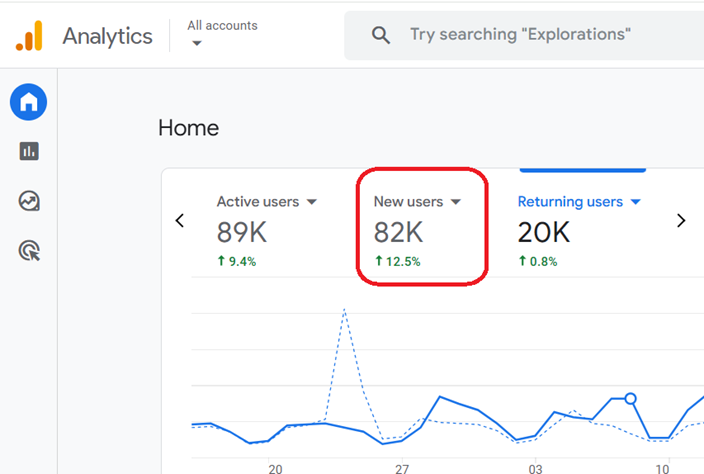
1. Users and New Users

image

One of the first metrics every business should monitor is the number of users visiting the website.

GA4 distinguishes between:

  • Users: Total unique visitors.
  • New Users: People visiting your website for the first time.

Tracking both helps you understand whether your marketing efforts are attracting new audiences while retaining existing ones.

2. Sessions

image

A session represents a user’s visit to your website.

Monitoring sessions helps businesses evaluate:

  • Website traffic trends
  • Seasonal performance
  • Campaign effectiveness

A growing number of sessions generally indicates increasing visibility and audience interest.

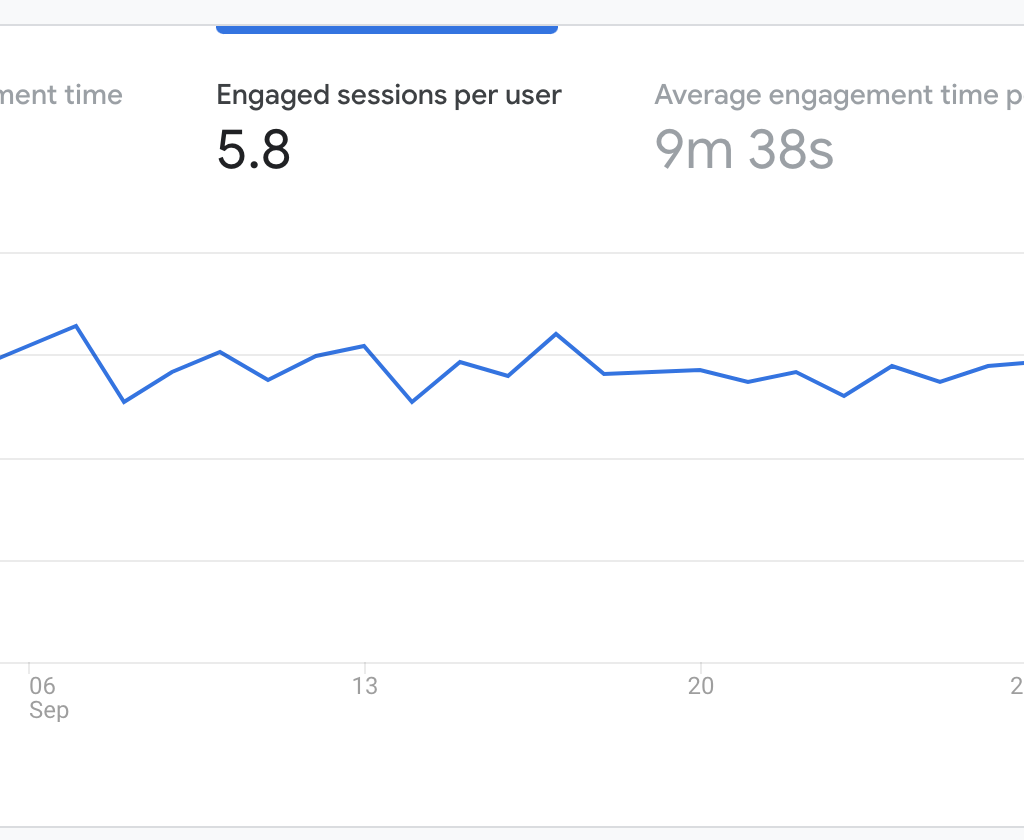
3. Engaged Sessions

image

Unlike older versions of Google Analytics that relied heavily on bounce rate, GA4 introduces Engaged Sessions.

An engaged session typically includes users who:

  • Stay on the site for a meaningful amount of time
  • View multiple pages
  • Complete important interactions

This metric provides a more accurate picture of user engagement.

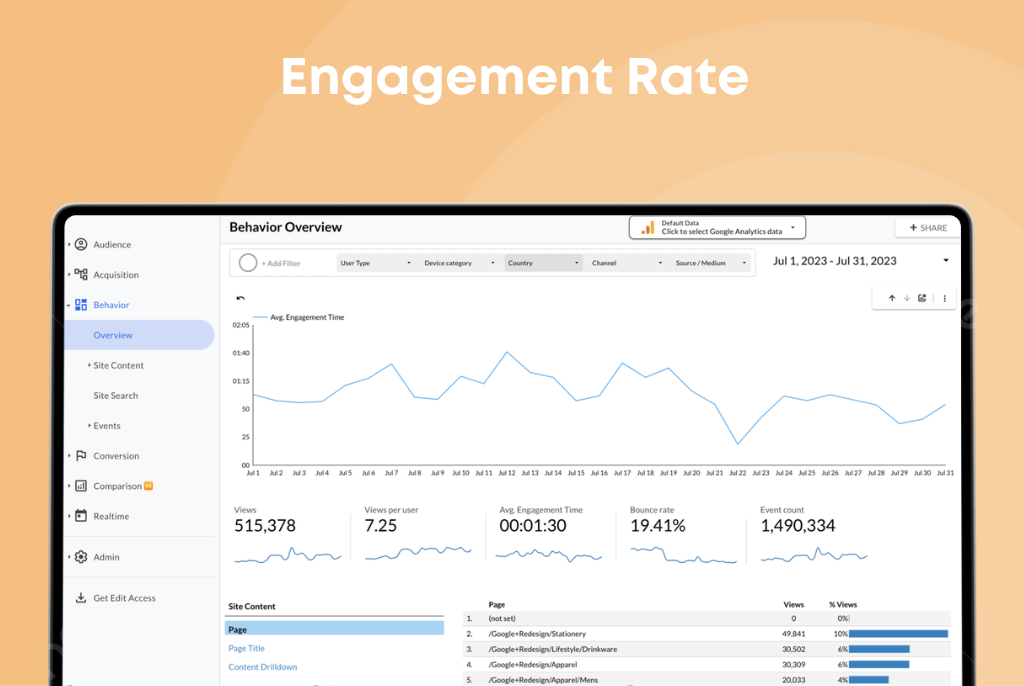
4. Engagement Rate

image

Engagement Rate measures the percentage of sessions where users actively interacted with your website.

A high engagement rate usually indicates:

  • Relevant content
  • Good user experience
  • Strong audience targeting

Businesses should monitor engagement regularly to identify opportunities for improvement.

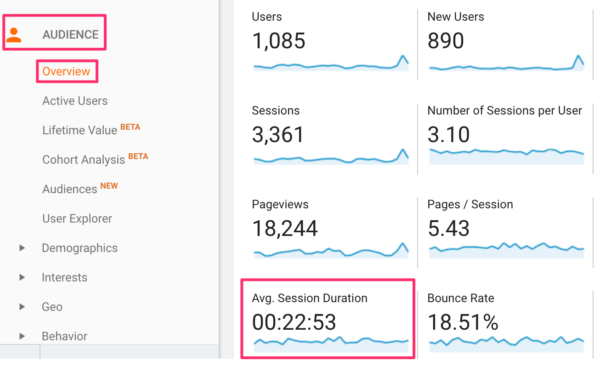
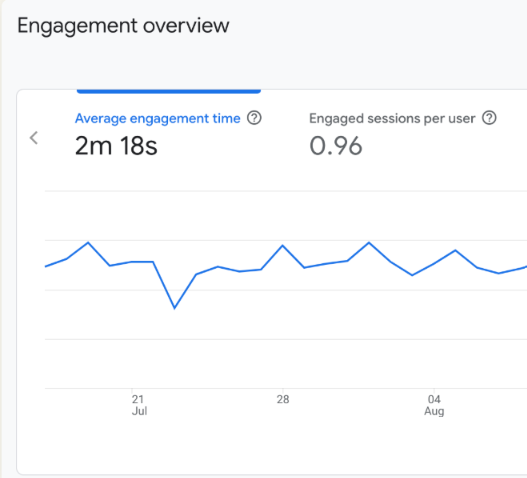
5. Average Engagement Time

image

Average Engagement Time shows how long users actively spend interacting with your website.

Longer engagement often indicates:

  • Valuable content
  • Better user experience
  • Higher customer interest

If users leave quickly, it may be time to improve your content or website design.

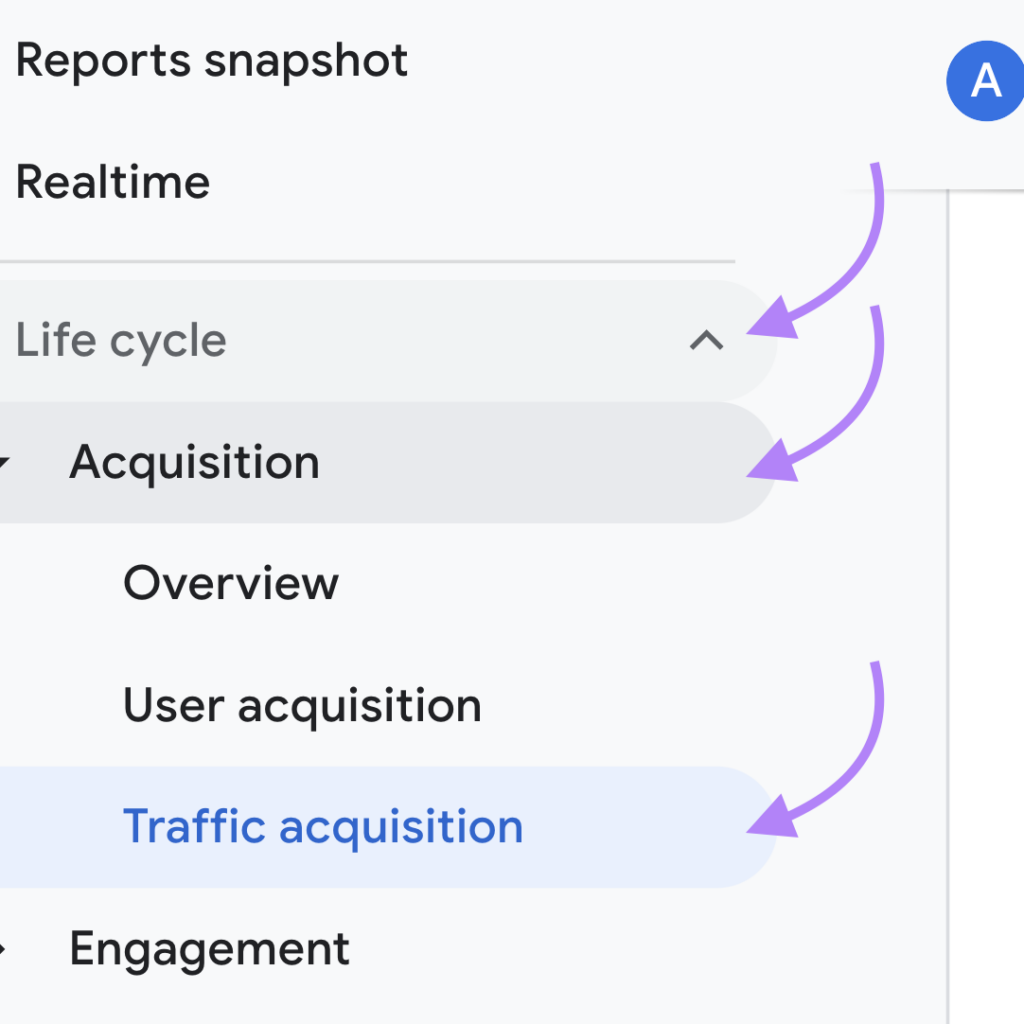
6. Traffic Acquisition

image

Knowing where visitors come from is essential.

GA4 allows businesses to analyze traffic sources such as:

  • Organic Search
  • Direct Traffic
  • Paid Search
  • Social Media
  • Referral Websites
  • Email Campaigns

Understanding acquisition channels helps businesses allocate marketing budgets more effectively.

7. Conversion Events

Conversions are among the most important metrics in GA4.

Examples include:

  • Contact form submissions
  • Quote requests
  • Newsletter sign-ups
  • Purchases
  • Phone call clicks

Tracking conversions helps you determine which marketing channels generate real business results.

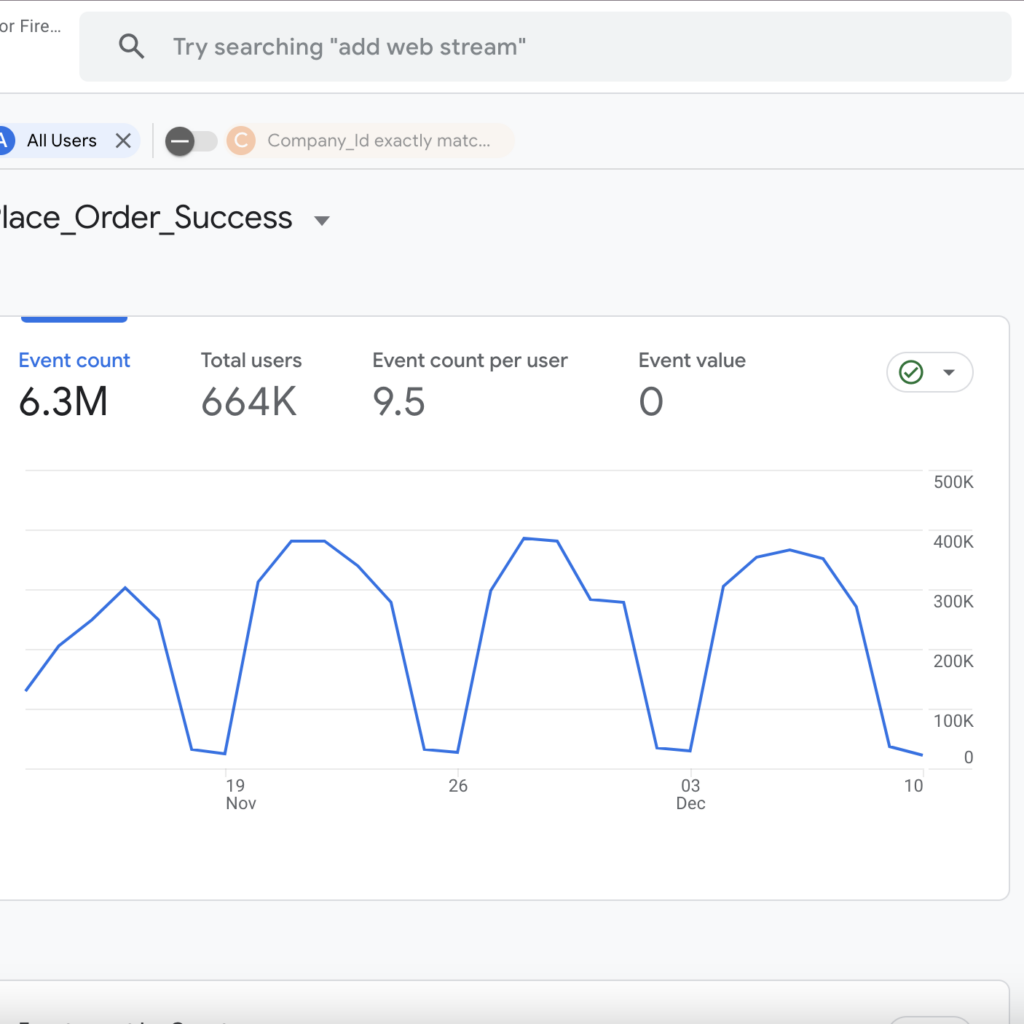
8. Event Count

image

GA4 tracks user interactions as events.

Examples include:

  • Button clicks
  • Video plays
  • Downloads
  • Scroll depth
  • Form submissions

Monitoring event data helps businesses understand how users interact with their websites.

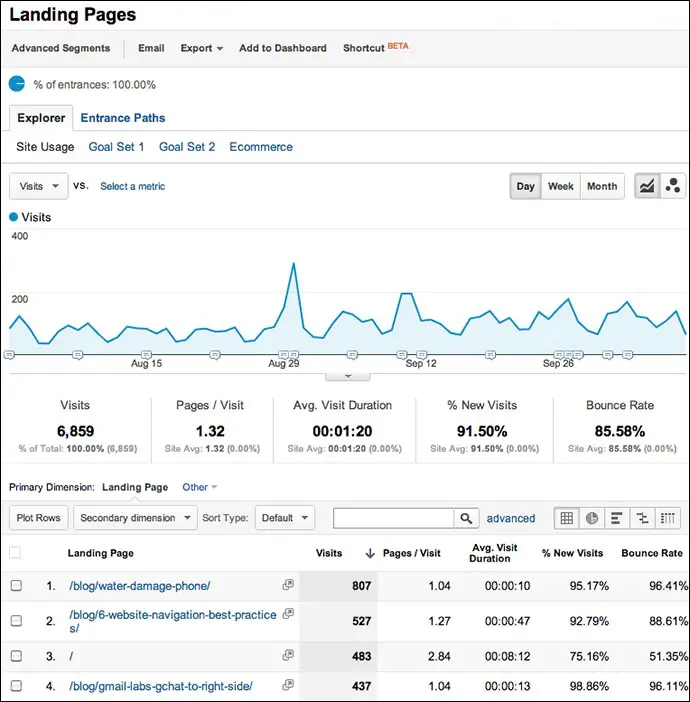
9. Landing Pages

image

Landing page reports show which pages visitors see first.

Businesses should analyze:

  • High-performing landing pages
  • Pages with low engagement
  • Conversion performance
  • Organic search traffic

Optimizing landing pages can significantly improve lead generation.

10. Conversion Rate

image

Traffic alone doesn’t guarantee success.

Conversion Rate measures how effectively your website turns visitors into customers or leads.

A higher conversion rate often reflects:

  • Better website design
  • Strong messaging
  • Effective calls-to-action
  • Improved user experience

Conversion optimization should be an ongoing process.

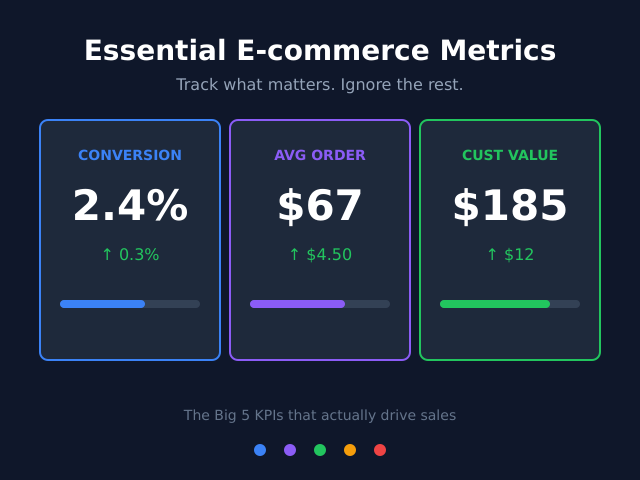
11. Revenue and Ecommerce Metrics (For Online Stores)

image

If you run an ecommerce business, GA4 provides valuable metrics such as:

  • Total Revenue
  • Purchases
  • Average Purchase Value
  • Items Purchased
  • Shopping Behavior

These insights help optimize product performance and sales strategies.

Common GA4 Mistakes Businesses Should Avoid

Many businesses fail to get value from GA4 because they:

  • Track too many metrics
  • Ignore conversion setup
  • Don’t configure events properly
  • Fail to connect GA4 with Google Ads
  • Never review reports regularly

A properly configured GA4 account delivers far more meaningful insights.

How to Use GA4 Data to Improve Marketing

image

The best businesses use analytics to make informed decisions.

GA4 data can help you:

  • Improve SEO strategies
  • Optimize Google Ads campaigns
  • Increase landing page conversions
  • Understand customer journeys
  • Refine content marketing
  • Reduce marketing costs

Data-driven decisions consistently outperform assumptions.

How Spectra Digital Helps Businesses Use GA4 Effectively

At Spectra Digital, we help businesses set up and optimize Google Analytics 4 to measure meaningful performance metrics.

Our services include:

  • GA4 setup and configuration
  • Conversion tracking
  • Google Tag Manager implementation
  • Marketing performance reporting
  • SEO and paid campaign analytics
  • Data-driven optimization strategies

We ensure your analytics work for your business, not just collect data.

Final Thoughts

Understanding the Google Analytics 4 metrics every business should track is essential for making smarter marketing decisions.

Instead of focusing only on traffic, businesses should monitor engagement, conversions, acquisition channels, and user behavior to understand what truly drives growth.

With the right GA4 setup and regular analysis, you can improve website performance, maximize your marketing ROI, and make confident, data-driven decisions.

If you’re looking to unlock the full potential of Google Analytics 4, Spectra Digital can help you implement tracking strategies that support long-term business success.